Best Overall

Alpcour Indoor Bike Trainer Stand with Magnetic Resistance
Quiet operation with noise reduction technology.
Six adjustable resistance settings for varied workouts.
Portable design with foldable frame and carry bag.
 Brianna York
Quiet operation with noise reduction technology.
Six adjustable resistance settings for varied workouts.
Portable design with foldable frame and carry bag.

Smooth, quiet ride with noise reduction technology.
Simple setup with secure dual-lock system.
Compatible with both road and mountain bikes.
Quiet operation for a peaceful workout.
Integrated app offers guided fitness courses.
Sturdy build supports up to 300lbs.
Smooth and quiet resistance for a realistic ride.
Easy setup and compatible with many bikes.
Works seamlessly with Zwift for interactive training.

Seamless connectivity with Zwift app.
Quiet operation for indoor use.
Adjustable resistance mimics real road feel.

Adjustable height for personalized comfort.
Non-slip surface ensures stability.
Lockable wheels for secure positioning.

300 Lb High Weight Capacity, Sturdy for All Workouts
Exclusive App & Fitness Courses, Smart Workout Experience
Magnetic Quiet Design, Low-Noise Indoor Riding

Adjustable design fits various bike sizes.
Foldable for easy storage and portability.
Built-in resistance for effective training sessions.

Quiet magnetic driving system for smooth operation.
3-in-1 versatility for varied workouts.
16 resistance levels for adjustable intensity.

Quiet operation with silent belt drive.
Comfortable seat cushion enhances long rides.
High weight capacity supports up to 350 lbs.
The first question is whether the product securely fits both you and your bike. Look for a complete compatibility chart covering wheel size, tire width, rear dropout spacing, quick-release and thru-axle dimensions, cassette or drivetrain requirements, brake clearance, and any frame exclusions. A stated fit range is not enough when the manual gives a different range. Never assume an included adapter works with every axle or frame. For fixed bikes, check the stated rider limit, saddle and handlebar adjustment, floor clearance, and whether the manual's capacity differs from the marketplace listing.
Stability depends on more than a wide-looking frame. Useful setup information includes a level, firm surface; secure axle retention; correctly tightened hardware; leveling feet; a specified roller-tension or clutch setting; and instructions for mounting and dismounting. A product that allows the bike to sway, release, or tip during sprinting deserves caution even if its static load rating looks high. Exposed wheels, rollers, flywheels, belts, pedals, and resistance units also require guarding, warnings, and instructions about pinch points, hot surfaces, stopping, and cooldown.
Headline performance figures need conditions. “Power accuracy” should identify the exact model, test equipment, protocol, calibration state, operating temperature, and uncertainty. Independent ride tests can be useful, but they are not the same as an accredited laboratory report. A claimed maximum wattage or simulated grade does not prove that the resistance curve is accurate, repeatable, or suitable for every rider. Virtual power estimated from wheel speed is not measured rider power. Noise figures should name the speed, tire, surface, and test method; tire pressure and roller tension can change both sound and power readings.
For stronger safety evidence, look for a current, model-specific report from an ISO/IEC 17025-accredited laboratory or a verifiable listing from UL Solutions, Intertek ETL, CSA Group, or another recognized issuer, tied to relevant stationary-equipment standards such as ISO 20957-1, ISO 20957-5, ISO 20957-10, ASTM F1250, or ASTM F3023 where applicable. A seller's compliance wording is not equivalent to independent certification. Recall and incident checks should cover the exact model through the CPSC Recall Database and SaferProducts.gov.
Finally, consider service life and waste. Wheel-on trainers consume rear tires and may require a harder-compound trainer tire. Direct-drive trainers avoid that tire wear but add electronics, a cassette requirement, and responsible end-of-life handling. Prefer documented warranties, replacement parts, repair instructions, firmware support, and specific recycling or take-back information over vague durability or environmental language.
Across the supplied products, recurring cautions include incomplete or conflicting compatibility information, no model-specific independent safety certification, unverified power and noise claims, tire wear on wheel-on designs, and exposed moving parts. Several products also require special care for thru-axles, unusual frames, unstable floors, sprinting, mounting, or dismounting. People with balance limitations, recent injuries, concerning symptoms, or clinician-directed rehabilitation needs should not treat general product instructions as individualized clearance. Children and pets should be kept away from operating equipment.
## Health and Ecology The scores below reflect the supplied reviews and topic definitions. Higher scores indicate more complete, specific, and supported information; they do not turn a product into medical equipment or prove that an environmental claim is true.
This measures whether the product gives realistic health guidance and usable fit, intensity, and setup instructions. For bike trainers, that includes rider limits, progressive use, bike position, warm-up advice, and when to stop. Higher-scoring products supplied clearer adjustment or exercise guidance, while lower scores reflected missing intensity plans, contraindications, or unresolved fit information.
This measures resistance to sliding, tipping, bike release, and structural failure during setup, riding, sprinting, and dismounting. A high score is associated with level-surface requirements, secure axle retention, leveling or support features, and useful stability instructions. Lower scores appeared where products swayed, depended on rider balance, lacked a rider limit, or had reported instability during hard efforts.
This measures whether buyers can verify wheel, tire, frame, brake, cassette, quick-release, and thru-axle fit without improvising. High-scoring products supplied specific hub widths, wheel and tire limits, adapters, and exclusions. Lower-scoring products had conflicting wheel ranges or omitted thru-axle dimensions, tire-width limits, frame clearance, or adapter requirements.
This measures protection and guidance around spinning tires, rollers, flywheels, belts, pedals, pinch points, sharp edges, and hot resistance units. Higher scores reflected emergency brakes, enclosed or controlled moving parts, warnings, and practical inspection guidance. Lower scores reflected exposed rotating equipment, missing cooldown information, or limited instructions for foreseeable contact and heat risks.
This measures whether advertised wattage, grade, resistance, noise, accuracy, capacity, app, and health claims are qualified and consistent with the manual. Higher scores went to products whose claims were more specific or matched independent checks. Lower scores reflected conflicting specifications, unsupported quiet or weight-loss language, and omitted operating conditions.
This measures whether the exact product has a credible third-party safety report or certification, rather than seller-issued compliance wording. Scores were generally limited across the supplied set because no model-specific certification or accredited laboratory safety report was located for the products reviewed. A high score here would require a verifiable issuer, exact model, relevant method, and current evidence.
This measures reproducible third-party measurements of power, resistance, simulated grade, cadence, and noise under stated conditions. Higher-scoring products had independent ride tests showing close agreement with reference power meters, although some still showed low-power or short-interval deviations. Lower scores reflected marketing estimates without disclosed protocols, equipment, conditions, or uncertainty.
This measures powered hardware, wireless identity, app support, privacy information, firmware policy, supported protocols, and access to core functions without hidden subscription dependence. Higher scores reflected an FCC-authorized radio, documented protocols, calibration or firmware tools, or non-connected operation. Lower scores reflected unverified Bluetooth or app claims, missing privacy or firmware information, or uncertain offline functionality.
This measures whether the frame, resistance unit, bearings, electronics, adapters, and other parts have meaningful warranty and service support. Higher-scoring products supplied replacement parts, repairable resistance units, or clearer warranty coverage. Lower scores reflected short or conflicting warranties, no parts catalog or repair manual, and uncertainty about long-term support, increasing replacement risk.
This measures tire and rubber wear, consumables, packaging, recycled-content claims, electronics end-of-life, take-back, and repair support. Direct-drive products scored better on the specific benefit of avoiding rear-tire abrasion, while wheel-on products carry ongoing tire wear. Lower scores reflected missing recycling, packaging, take-back, and substantiated material disclosures rather than a proven environmental failure.
This is a wheel-on indoor trainer that clamps a bicycle by the rear axle while a roller bears on the rear tire. It is a nonpowered magnetic unit with a handlebar cable controller, supplied replacement quick-release skewer, front-wheel block, and carry bag. Alpcour states that the frame is stainless steel and that the product fits road and mountain bikes with 26 to 28 inch or 700c tires. The operating manual gives useful basic safety directions, including level-surface use, tire inflation, axle security, warm-up, and a 120 kg maximum user weight. It also says a loose resistance adjustment can let the bike come out during use. The product information is inconsistent, however. The sales page specifies six resistance settings and 26 to 28 inch wheels, while the manual says seven settings and 26 to 29 inch wheels. I found no model-specific independent safety certification or published resistance, power, or noise test.
This product suits an adult cyclist with a conventional road or mountain bike who wants simple indoor pedaling without electricity, apps, or connected training features. It is most appropriate for riders at or below the manual's 120 kg user limit who can confirm a secure rear-axle fit, use a properly inflated tire, and place the trainer on a level floor. Its foldable frame, carry bag, and included front-wheel block make it practical for occasional home use where equipment must be stored after sessions.
It is not a good fit for riders who need documented power, cadence, noise, or resistance accuracy for structured training. It also needs extra caution for bikes with thru-axles, unusual dropout shapes, very wide tires, or other nonstandard rear-axle arrangements because the published compatibility information lacks measurements and adapter guidance. Households with children or pets should not leave it accessible during use because the manual warns to keep them away from the spinning wheel. Riders unable to secure and inspect the bike should use supervised equipment instead.
Indoor cycling can support aerobic fitness and other health measures when used progressively. A systematic review of indoor cycling found possible improvements in aerobic capacity, blood pressure, lipid profile, and body composition, while noting limited randomized evidence. This product's manual appropriately calls for a warm-up and physician consultation before starting exercise, but it does not provide an intensity plan, heart-rate guidance, or contraindications for specific conditions. The manual gives meaningful mechanical precautions, including a level surface, secure inflation and axle retention, keeping hands away from the spinning wheel, and avoiding finger pinches while folding. No model-specific CPSC recall or public incident report was identified in the searches performed, but no independent certification or test report was located either. The stainless-steel frame is manufacturer-stated. Alpcour offers a one-year warranty, but does not publish repair parts, recycling, packaging, or tire-wear disclosures. Rear-tire contact remains a consumable and waste consideration.
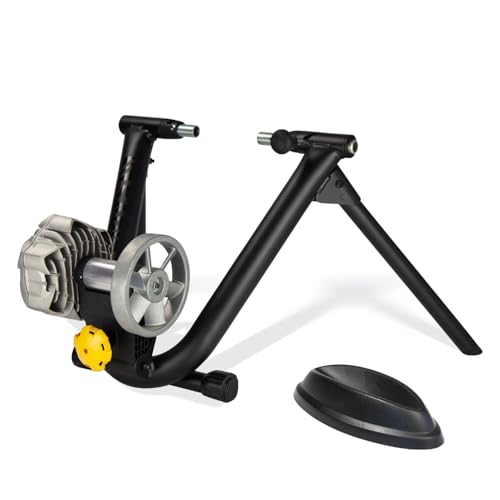
This is a wheel-on indoor trainer that holds a bicycle by its rear quick-release skewer while a roller presses against the rear tire. Pedaling turns a fluid resistance unit, so resistance rises with wheel speed rather than through an electronic control. The manual specifies road or mountain bikes with 26 to 28 inch or 700C wheels, a supplied quick-release skewer, a front-wheel riser, and use on a level surface. Alpcour states that the folding steel stand has anti-slip pads, a dual-lock arrangement, progressive fluid resistance, and a carry bag. The manual gives practical mounting and safety directions, including centering the wheel, locking the ring, keeping children away, and avoiding the spinning roller. However, it provides no rider-weight limit, power curve, noise figure, heat cooldown instruction, or third-party safety test record. The product page also says 26 to 29 inch compatibility, which conflicts with the manual's 26 to 28 inch range.
This product suits an adult rider with a conventional rear quick-release road or mountain bicycle that falls within the manual's 26 to 28 inch or 700C guidance. It is most appropriate for self-directed indoor aerobic riding, warmups, and cadence work where resistance can be adjusted through bicycle gearing and pedaling speed. It also fits users who need a foldable, non-connected setup and are willing to inspect tire pressure, skewer retention, roller tension, and the levelness of the floor before every ride.
It is not a safe fit to assume for riders with thru-axle bikes, unusual axle systems, wheel sizes outside the manual range, or bikes needing confirmed frame and brake clearance. It is also unsuitable for users who need validated power data, app-based workouts, controlled resistance targets, or a documented maximum rider capacity. Households with unsupervised children or pets near the training area need stronger access control because the rear wheel and roller remain exposed while in motion. Avoid use on uneven or unstable flooring.
Indoor cycling can support aerobic fitness when exercise is progressed appropriately, but this product does not provide a workout prescription, heart-rate guidance, or rider-specific intensity limits. Its manual does advise warming up and consulting a physician before starting a workout. It also gives useful basic safeguards, including level-floor use, secure tire inflation and mounting, no sudden braking, hands kept on the handlebars, and no contact with the spinning wheel. No electrical, battery, wireless, or app hardware was identified, so there is no electronic waste stream or software access dependency from the trainer itself. The tradeoff is tire contact. Roller pressure can wear the rear tire, and the manual specifically warns that over-tightening can damage the tire and unit. Alpcour makes no substantiated recycled-content, packaging, take-back, or end-of-life recycling claims for this product. No CPSC recall or model-specific independent safety certification was located in the reviewed sources.
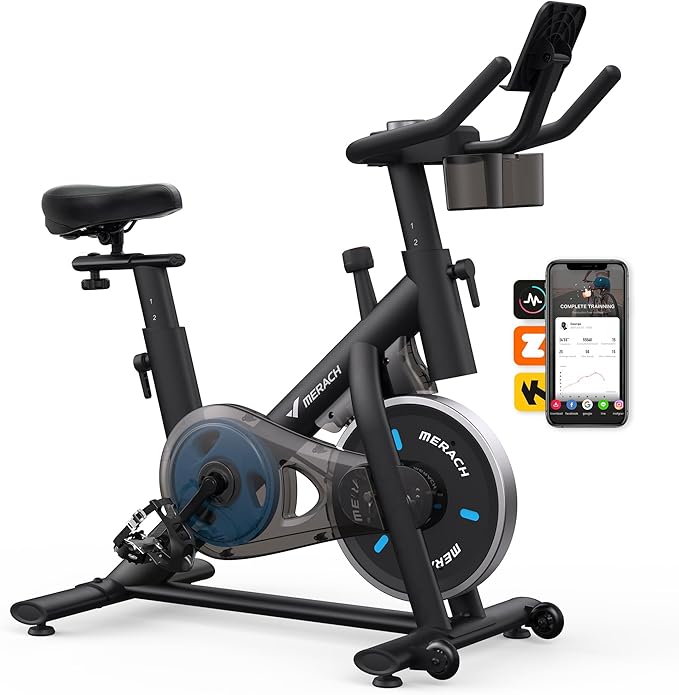
This is a home-use, fixed-wheel indoor cycling bike with a manual friction-resistance knob, belt drive, battery-powered monitor, Bluetooth connection, tablet holder, transport wheels, and adjustable saddle and handlebar. The manufacturer manual identifies an alloy-steel bike weighing about 63.5 pounds, with a 42.6 by 19.3 inch footprint and a 270 pound user limit. Its most material safety feature is the fixed-moving pedal and flywheel arrangement. The manual warns riders not to dismount while pedals are still rotating and describes pressing the resistance knob as an emergency brake. It also specifies level flooring, clearance around the bike, pre-use fastener checks, and adjustable foot pads. The Bluetooth radio module is identified with an FCC authorization, but no model-specific independent stationary-bike safety or performance test report was located.
It suits an adult home exerciser who wants a self-contained indoor cycling bike rather than a trainer that holds an outdoor bicycle. It is most appropriate for someone at or below the 270 pound limit stated in the manual, with enough floor area for the bike plus the specified clearance, and who is willing to check bolts, pedals, leveling feet, and adjustment knobs routinely. It can also suit riders who value basic cadence, speed, distance, and Bluetooth app tracking without requiring independently validated power data.
It is not appropriate for anyone over 270 pounds, despite the higher figure in the product listing, because the manufacturer manual gives the lower limit. It is also a poor fit for households where children or pets can access the bike during use, people unable to safely manage a fixed-moving pedal system, or users with balance limitations who need independently tested stability features. Riders seeking accurate power-based training, verified noise levels, commercial-use coverage, or detailed long-term parts support need documentation not found for this product.
Indoor cycling can support aerobic fitness and mobility when used progressively. Systematic reviews report health benefits from stationary-bike interventions, including improvements in cardiorespiratory and functional outcomes in studied populations. This product's manual appropriately tells users with relevant medical conditions or medicines affecting heart rate, blood pressure, or cholesterol to consult a clinician, and tells users to stop for chest pain, dizziness, shortness of breath, or other symptoms. The manual also gives meaningful moving-part precautions for its fixed flywheel and pedals, plus emergency-brake, leveling, maintenance, and loose-clothing guidance. No product-specific CPSC recall or safety warning was located. The FCC record supports the identity of the Bluetooth radio module, not the mechanical safety of the whole product. The friction system uses a wear item, and the monitor uses replaceable batteries. No substantiated recycled-content, packaging, take-back, or certified electronics-recycling program was located.
This is a foldable, wheel-on fluid trainer that holds a bicycle by its rear axle while an alloy roller contacts the rear tire. Resistance rises progressively as wheel speed increases, so the rider changes effort primarily by shifting the bike's gears. Saris lists a 300 lb combined rider-and-bike limit, 69 dB at 20 mph, adjustable leveling feet, and a clutch knob intended to set roller pressure consistently. The manufacturer provides unusually specific fit limits. It includes a steel quick-release skewer for 120 mm, 130 mm, and 135 mm rear dropout spacing. It can also use separately sold 142 x 12 mm or 148 x 12 mm thru-axle adapters. It fits 650b and 700c wheels, 27.5-inch tires up to 2 inches, and treadless 29-inch tires up to 1.5 inches. It excludes 26-inch, 650c, and treaded or wider 29-inch tires. The basic product needs a separately purchased speed or cadence sensor for app use.
It suits an adult road, hybrid, gravel, or compatible mountain-bike rider who wants a non-powered indoor setup and can confirm the rear wheel, tire width, and axle arrangement before installation. It is most appropriate for steady aerobic rides, basic interval work, and riders who are comfortable shifting gears to change resistance. It also suits people who value replaceable mechanical parts and do not need direct power data, automatic resistance changes, or a bundled sensor for training apps.
It is not appropriate for bikes with 26-inch or 650c wheels, treaded 29-inch tires, or 29-inch tires wider than 1.5 inches. Riders using thru-axles need the correct separately sold adapter, not the included quick-release skewer. It is also a poor fit for households with unsupervised children or pets near exercise equipment, riders above the 300 lb combined rider-and-bike limit, or people planning frequent maximal sprints. The reported rocking under big efforts and exposed rotating wheel require extra caution.
The supplied manual has meaningful health and injury guidance. It says to consult a health professional before beginning an exercise program, stop for chest pain, irregular heartbeat, breathlessness, faintness, or discomfort, and build up before attempting high cadence or standing riding. Indoor cycling can improve aerobic capacity and may improve several cardiometabolic measures, but the supporting systematic-review evidence is limited and does not validate product-specific health outcomes. Saris specifies a 300 lb combined load limit, leveling feet, a rear-axle retention system, and explicit compatible wheel and tire limits. The product has no identified active recall. A 2009 Saris recall concerned separate Pro Series trainers, not this model. Ecologically, the wheel-on design deliberately wears the rear tire. Saris recommends a dedicated trainer tire, while its replacement resistance unit and parts availability can extend service life. No specific recycling, take-back, recycled-material, or packaging disclosure was found.
This is a wheel-on smart indoor trainer that clamps a bicycle by its rear axle and presses an alloy roller against the rear tire. Saris lists a 300 lb combined rider and bike limit, a foldable frame, leveling feet, electromagnetic resistance, ANT+ FE-C and Bluetooth control, and integrated speed, cadence, and power reporting. It needs mains power for smart resistance. Fit information is unusually specific for this format. Saris supports 650b, 700c, 27.5 inch tires up to 2.0 inches, and 29 inch tires up to 1.5 inches without tread. It includes a steel quick-release skewer, while 142x12 mm and 148x12 mm thru-axle adapters are separate. Saris states 1,500 W maximum resistance, 15 percent grade simulation, 69 dB at 20 mph, and plus or minus 5 percent power accuracy. An independent ride test found good agreement near FTP after calibration, but meaningful error at lower power.
It suits an adult cyclist with a compatible quick-release road or mountain bike, or a 142x12 mm or 148x12 mm bike with the correct separate adapter, who wants app-controlled indoor riding without removing the rear wheel. It is most practical for repeatable endurance and threshold sessions where the rider can maintain tire pressure, use the clutch setting correctly, warm up, and perform spin-down calibration. A dedicated slick or trainer tire and a firm, level floor make the setup more predictable.
It is not suitable for bikes outside Saris's stated wheel and tire limits, including 26 inch and 650c wheels, or 29 inch tires with tread or wider than 1.5 inches. It also does not suit households needing very low noise, people unable to keep children or pets away from an exposed spinning rear wheel, or riders who cannot safely mount and dismount a clamped bicycle. Users who require clinically guided exercise progression should seek individualized advice because the product documentation is not a rehabilitation protocol.
Indoor cycling itself has evidence for improving aerobic capacity and may help blood pressure, body composition, and lipid outcomes, although the systematic-review evidence base is limited and does not establish a health effect unique to this product. The trainer provides resistance control, but it is not medical equipment and its manual lacks detailed health screening or progressive-training guidance. Follow the supplied setup steps, use the supplied skewer, fully lock the axle clamp, keep the unit level, and keep children and pets away while the rear wheel is turning. The wheel-on mechanism is the main lifecycle tradeoff. Saris explicitly says trainer use reduces rear-tire life and recommends a harder-compound trainer tire. It sells replacement parts and provides meaningful home-use coverage for the frame, electronics, and resistance-unit bearings, which can reduce premature replacement. Saris does not make product-specific recycled-content, packaging, take-back, or electronics-recycling claims. A 2009 CPSC recall affected different Saris Pro Series trainer models, not this M2 model.
This product is a freestanding, manually height-adjustable metal workstation intended to sit beside or over an existing indoor bike, trainer, recumbent bike, or other exercise setup. It is not itself a bicycle trainer, resistance unit, or exercise bike. The manufacturer and an independent retailer both list a 33.5 to 47 inch height range, plus a non-slip top, tablet and phone slots, cable inlets, and lockable wheels. Its core function is practical access to a screen, drink, charger, or work items while pedaling. The available information does not provide a rider limit, tabletop load rating, footprint dimensions, leveling instructions, or a model-specific stability test. Alpcour offers a manufacturer-stated one-year warranty, but no repair manual, parts catalog, or independent safety certification was located.
It suits an adult who already owns a stable indoor cycling, recumbent-bike, walking-pad, or standing-work setup and needs a movable place for a tablet, phone, drink, or charging cable. The stated 33.5 to 47 inch height range gives some placement flexibility for seated or standing use. It is most appropriate where the buyer can measure the bike, handlebars, knee path, and surrounding floor space before assembly, and can lock the wheels before use.
It is not for someone seeking an actual trainer to hold a bicycle, add resistance, measure watts, connect to training apps, or support progressive fitness programming. It is also unsuitable where children, pets, uneven flooring, cramped dismount space, or unstable exercise equipment could make a wheeled workstation a trip or tip concern. Buyers who need a guaranteed laptop load limit, medical-grade ergonomic setup, replacement parts, or independently certified stability should seek documentation that this product does not publish.
Indoor cycling itself has evidence for potential aerobic and cardiometabolic benefits, although outcomes depend on the bike, resistance, exercise dose, and the rider. This product does not create that exercise dose or provide health guidance. Its contribution is limited to placing personal items within reach. Set it so it does not interfere with handlebars, knees, pedals, mounting, or dismounting, and lock the wheels before riding. The product is described as metal, with a non-slip work surface and no electronics. That avoids charger, battery, radio, and electronic-waste issues within the product itself. However, Alpcour does not publish recycled-content, packaging, take-back, material-recycling, consumable, spare-parts, or service information for this desk. No product-specific CPSC recall or safety warning was located in the checked public sources, and no third-party safety listing was found.
This product is a home indoor cycling bike, not a trainer that clamps an existing bicycle. It has a belt drive, a flywheel, cage pedals, a manually adjusted resistance control, a basic battery-powered monitor, a tablet holder, and app connectivity. It is intended for seated and standing cycling workouts, with an emergency brake to stop the flywheel. Its available product documentation gives useful home-use safety directions, including a level surface, a mat, secure bolts, proper footwear, pre-use inspection, and a stated 300 lb rider limit. The same documentation states a four-way seat and two-way handlebar adjustment for riders about 4 ft 8 in to 6 ft 1 in. However, the product information is internally inconsistent. Separate materials describe friction or magnetic resistance, and conflict on flywheel weight and weight capacity. No model-specific independent safety or performance report was located.
It suits an adult household user who wants a self-contained home cycling setup and does not need to mount a road or mountain bike. The stated fit range, four-way seat adjustment, two-way handlebars, cage pedals, tablet holder, and manually controlled resistance make it most appropriate for general cardio sessions at a level, dedicated indoor space. It also fits a buyer who can assemble the product carefully, recheck fasteners before use, and remain within the stated 300 lb user limit.
It is not for riders who need documented power accuracy, tested resistance curves, verified noise figures, or dependable smart-training integration. It is also unsuitable for commercial or institutional use, which the available instructions exclude. People above the stated 300 lb limit, people unable to mount and dismount a high-saddle cycling bike safely, and households where children or pets can approach an operating flywheel need a different setup or close safeguards. Buyers needing independently verified certification should not treat the displayed certification language as confirmation.
Indoor cycling can provide low-impact aerobic exercise, and systematic reviews report potential fitness and health benefits from stationary-bike programs. That evidence supports cycling as an activity, not a guarantee that this particular product causes weight loss. The available instructions appropriately tell users to consult a clinician before beginning exercise, use a flat stable surface, inspect the product, keep children and pets away, and avoid loose clothing. No recall or regulator warning specific to this product was located in the sources checked. The product documentation includes a replaceable brake pad and the manufacturer states parts support, which can help avoid premature disposal. Still, no verified model-specific safety certificate, repair manual, parts catalog, recycled-content claim, packaging disclosure, take-back program, or electronics recycling program was found. The battery-powered monitor should be handled through local battery or electronics collection options when it reaches end of life.
This product is a folding, free-rolling indoor trainer for using a conventional bicycle indoors. It supports the tires on three aluminum rollers rather than clamping the bicycle by its rear axle, so the rider must balance while pedaling. ROCKBROS states that its adjustable frame fits 16 to 29 inch wheels, including road, mountain, and folding bikes, and weighs 6.5 kg. The manufacturer describes parabolic rollers as improving stability and provides a two-year product warranty. It does not publish a model-specific maximum rider weight, tire-width limit, wheelbase range, setup manual, power figure, resistance curve, noise measurement, or third-party safety test. The store page calls it a trainer with resistance, but its listed specifications provide only one setting and do not identify or quantify the resistance system. Independent testing located for this product did not provide reproducible resistance, power, or noise measurements.
This product suits an experienced cyclist who already understands basic roller technique and wants a compact, non-connected way to pedal indoors. It is most appropriate for steady, controlled riding on a level floor, with clear space on both sides and a wall or doorway nearby for initial mounting practice. The stated 16 to 29 inch wheel range is useful for riders whose bicycle falls within that broad diameter range, provided they independently check wheelbase, tire clearance, and tire condition before use.
It is not suited to first-time indoor riders who need hands-free stability, people with impaired balance, or anyone returning to exercise after a condition that makes a fall especially consequential. It is also a poor fit for households with children, pets, tight walkways, or fragile objects near the riding area because the bicycle is not axle-retained. Riders seeking structured power intervals, verified wattage, app control, quiet-operation data, or a confirmed high-load sprint capacity need specifications that this product does not publish.
Indoor cycling can provide meaningful aerobic exercise, although the available systematic-review evidence is mainly from stationary-bike and class settings rather than this particular roller product. It can also impose a high physiological demand, so progressive sessions and an intensity level appropriate to the rider are important. ROCKBROS does not provide contraindications, heart-rate guidance, a progressive training plan, or a product-specific maximum user load. The balance demand of rollers adds fall risk during learning and at low speed. ROCKBROS identifies aluminum as the frame and roller material and states a two-year warranty, both of which can support continued use if warranty service is accessible. However, no replacement-parts catalog, repair manual, take-back program, recycled-content claim, packaging disclosure, or environmental certification was located. The product has no electronics, which avoids battery and e-waste concerns, but the manufacturer provides no tire-wear or consumable-belt replacement guidance. No product-specific CPSC recall or SaferProducts report was located in the searches performed.
This product is a freestanding cardio climber, not a wheel-on or direct-drive bike trainer. It combines an inclined elliptical stepping path with moving and fixed handlebars, a manual magnetic resistance control, and a basic console. Published dimensions are 38 by 21 by 62 inches, with a stated 300-pound user limit and 16 resistance settings. It is intended for indoor, standing cardiovascular exercise. The available instructions give useful baseline precautions, including level-floor placement, pre-use inspection, handhold use while mounting, and stopping for dizziness or pain. Those are manufacturer-stated directions, not independent safety validation. Retail and manual materials also make app, quiet-operation, stride-length, flywheel, and warranty claims, but the sources conflict on some specifications and do not provide independently measured performance or a model-specific safety certification.
It suits an adult who specifically wants a compact, freestanding standing elliptical and cardio-climber motion, has a flat indoor floor, and is within the stated 300-pound limit. The user should be comfortable assembling and periodically checking a 94.6-pound machine, using handholds during mounting, and treating the console as a basic activity display rather than a validated training instrument. It is most appropriate for self-directed low to moderate home cardio, with intensity increased gradually through the stated resistance settings.
It is not for someone shopping for a bicycle trainer, since it cannot retain or connect to a road, mountain, quick-release, or thru-axle bike. It is also a poor fit for users needing independently verified load, stability, resistance, noise, heart-rate, or calorie accuracy data. People with poor balance, recent falls, severe joint symptoms, unexplained chest symptoms, dizziness, or a clinician-directed rehabilitation plan should not treat its general instructions as individualized clearance or supervision.
The available operating guidance includes sensible basic health safeguards. It tells users to consult a physician before beginning an exercise program, use a level stable surface, inspect for loose or worn parts, wear athletic footwear, observe the 300-pound stated limit, and stop if they feel faint, dizzy, or pain. General evidence supports regular physical activity for health, but this product has no published model-specific evidence establishing particular weight-loss, joint-protection, or fitness outcomes. No product-specific CPSC recall was located in the recall search performed, but absence of a located recall is not independent safety clearance. No independently verifiable safety certification, third-party performance report, parts catalog, take-back program, recycled-content disclosure, or electronics-recycling plan was located. The mechanical magnetic format may avoid a powered drive system, yet the manufacturer does not provide lifecycle, packaging, repairability, or end-of-life material information. The conflicting published warranty and specification details make written confirmation of current support terms important.
This is a belt-driven, magnetic indoor cycling bike with a fixed frame, caged pedals, manually adjusted resistance, a basic workout monitor, and a tablet holder. It is intended for home cardio sessions rather than mounting a rider's own bicycle. The current brand storefront identifies the corresponding product as a 86 pound unit with a 45 pound flywheel, 350 pound stated rider limit, four-way seat and handlebar adjustment, and a stated 27 to 35 inch inseam range. Those fit and capacity figures are manufacturer-stated, not independently load-tested figures. Indoor cycling has evidence for improving aerobic capacity and can support blood pressure, lipid, and body-composition changes when used as part of an appropriate exercise plan. This product itself does not provide a verified power output, intensity-accuracy specification, or clinical exercise prescription. The product record also conflicts with current brand materials on flywheel weight, warranty, and connected-app details.
It suits an adult home exerciser who wants a conventional fixed indoor bike with manually variable magnetic resistance, caged pedals, and a tablet holder, and who can confirm their inseam falls within the manufacturer's stated 27 to 35 inch range. It is also relevant for households that need to avoid bicycle and axle compatibility work, because it is a complete stationary bike. Riders should be comfortable setting their own pace and resistance rather than relying on verified watts, structured app control, or calibrated training data.
It is not appropriate for buyers who need independently verified rider-load, tip-resistance, power-accuracy, or noise data for heavy daily use, supervised rehabilitation, or clinical exercise programming. People with unstable balance, recent falls, significant joint symptoms, cardiovascular restrictions, or other conditions requiring individualized intensity limits should seek clinician guidance and equipment with clearer setup and safety documentation. It also does not fit users needing confirmed smart-platform compatibility, secure account and privacy disclosures, firmware support, or subscription-independent connected features.
Stationary cycling is a practical low-impact aerobic exercise format, and systematic-review evidence indicates that indoor cycling may improve aerobic capacity, blood pressure, lipid profile, and body composition. Those are exercise effects, not results established for this particular product. The stated adjustment range can help with basic setup, but no independent ergonomic assessment, power calibration, or health-risk guidance specific to this bike was found. No exact-product CPSC recall or regulator warning was located in the reviewed U.S. sources. No independent safety certification was found either. The manufacturer currently lists replacement brake-knob, crank, and pedal parts for this model family, which is a meaningful repair positive. However, there is no published take-back program, recycled-content claim, packaging disclosure, or electronics end-of-life guidance. Because this is a fixed bike, it does not consume a road-bike tire as a wheel-on trainer would, but its materials and eventual disposal pathway remain undisclosed.


