Best Overall
18% off

Portable Breast Milk Cooler Lite
Dual-layer insulation ensures 24-hour cooling.
Compact design is perfect for travel.
Includes storage bottles for easy use.
 Brianna York
Dual-layer insulation ensures 24-hour cooling.
Compact design is perfect for travel.
Includes storage bottles for easy use.
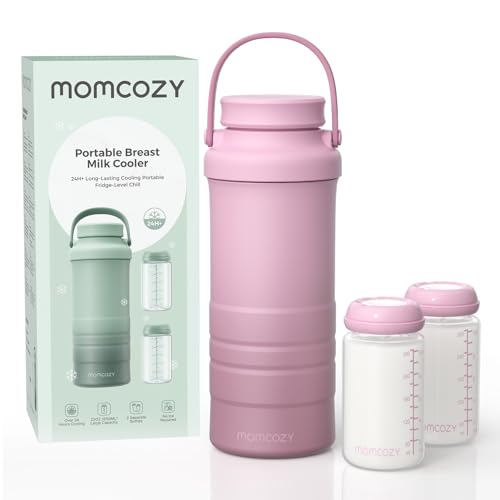
Keeps milk cool for 24 hours.
Includes two baby bottles for storage.
Larger capacity for convenient travel use.

Keeps milk fresh for 24 hours.
Includes two baby bottles for convenience.
Ideal for work and travel use.

Keeps milk fresh for a full day.
Includes two BPA-free storage bottles.
Large capacity ideal for extended outings.

Keeps milk cool for up to 36 hours.
Includes two stainless steel baby bottles.
Compact and portable for easy travel.

Keeps milk cool for over 30 hours.
Rapidly chills milk to 40℉.
Includes two bottles with large capacity.

Keeps milk cool for up to 23 hours.
Durable, high-quality 304 stainless steel design.
Compact and perfect for travel and outdoor use.

Keeps milk cool for 24 hours.
Includes two storage bottles.
Large capacity for convenient travel.

Convenient cooler compartment for milk storage.
Discreet design suitable for on-the-go use.
Comfortable and adjustable strap for easy carrying.

Convenient temperature display ensures milk safety.
Keeps milk fresh for 24 hours.
Compact design ideal for travel.
The central question is not whether a product feels cold or advertises “360° cooling.” It is whether the milk itself stays at or below 40°F for the stated time. CDC guidance identifies 40°F as the refrigerator benchmark and supports transporting expressed milk in an insulated cooler with frozen ice packs for up to 24 hours. A substantiated product-specific temperature test should identify the exact model, milk load, ambient temperature, bottle fill, probe locations, opening schedule, duration, and pass/fail results. The laboratory’s ISO/IEC 17025 accreditation scope should also be checkable through A2LA or ANAB. A claimed 24 hours, 30 hours, or 36 hours without those details is a marketing claim, not proof of refrigerator-level storage.
Headline figures can mislead in several ways. “Below 50°F” or “below 59°F” is not the same as staying at or below 40°F. A chamber-air display may not measure the milk, and a display without a stated tolerance or calibration record cannot verify safe storage. “No ice needed” usually means a tube, ring, phase-change pack, or metal core must be frozen beforehand; it does not mean the product creates cold without preparation. A closed-container test may not represent a hot car, repeated openings, partial filling, or a delayed trip. Claims such as “fresh,” “safe,” “preserves nutrients,” “TSA-approved,” or “CPC certified” also need precise qualifications. TSA rules concern screening and the condition of ice or gel packs, while a Children's Product Certificate is a manufacturer or importer certificate based on applicable testing, not an independent safety badge.
Materials deserve the same scrutiny. Look for a complete bill of materials covering bottles, lids, threads, valves, seals, coatings, adhesives, and coolant-contact parts. “BPA-free,” “food-grade,” stainless steel, or glass describes only part of the system unless supported by supplier declarations, migration testing, and food-contact compliance appropriate to human milk. Coolant systems should remain sealed through freezing, drops, compression, repeated use, and aging; a safety data sheet and product-specific leak testing are useful evidence. Milk-contact parts should come apart far enough to wash, dry, inspect, and replace seals. Leak, vibration, closure-torque, orientation, and drop testing matter because a cold product that spills or mixes batches is not dependable in transit.
Across the supplied reviews, recurring cautions are clear: no product had publicly located proof of 40°F-or-below performance for its full headline duration; most lacked complete material and coolant documentation; and built-in displays, where present, lacked calibration or measured chamber air rather than milk. Several products require upright use or can leak when tipped. One product’s own test recorded one bottle above 40°F and another close to freezing. Products advertised below 50°F or below 59°F do not establish safe refrigerated storage. These coolers should not be treated as substitutes for refrigeration in hot, frequently opened, unpredictable, or medically sensitive situations; use a reliable thermometer and transfer milk promptly when conditions matter.
These topics distinguish a cooler that is merely convenient from one with evidence supporting safe handling, cleanability, responsible materials, and accountable claims. Scores reflect the supplied reviews; a higher score means the reviewed product provided stronger evidence or design support for that topic, not that every claim was independently proven.
This measures whether milk demonstrably stays at or below 40°F without freezing for the stated time under realistic temperature, fill, and opening conditions. It is the most important health topic for a cooler. Higher-scoring products reached 70, but their reviews still lacked public independent 40°F time-temperature proof; lower scores, such as 42–54, reflected explicit temperature mismatches, conflicting claims, or weak evidence.
This covers every milk-contact surface, including bottles, lids, seals, coatings, and adhesives, not just a stainless-steel or glass bottle. High scores, up to 76, came with clearer material descriptions or reusable steel and glass formats. Lower scores, including 52, reflected missing polymer identities, supplier declarations, migration reports, or compliance evidence for the complete milk-contact system.
This measures whether gel, phase-change material, ice rings, or cooling cores stay sealed and separated from milk through freezing, ordinary use, drops, pressure, and aging. Higher scores, such as 77, reflected ordinary ice-water designs or better-described containment. Lower scores reflected acknowledged cracking, bulging, leakage, or missing coolant safety and freeze-thaw testing. A damaged cold source should not remain in service near stored milk.
A cooler must allow bottles, threads, lids, valves, seals, and cooling interfaces to be disassembled, washed, dried, inspected, and replaced where needed. Higher scores reached 80 where instructions gave specific cleaning steps and dishwasher guidance. Lower scores reflected incomplete parts diagrams, hand-wash burdens, or no replacement-seal information. Dishwasher-safe claims still need to match the actual milk-contact components.
This concerns bottle closure, orientation, vibration, drops, and batch separation during commuting and travel. Higher scores, up to 74, generally came with separate bottles or clear containment designs, but the reviews still found few product-specific leak, torque, vibration, or drop reports. Lower scores reflected upright-only instructions, reported sideways leaks, or unsupported “leak-proof” claims.
A display is useful only if it measures the milk or storage chamber accurately across the refrigerated range, states its tolerance, and explains that chamber temperature may differ from milk temperature. Scores ranged from 48 to 100, but no supplied product had public calibration evidence sufficient to replace a reliable thermometer. A display that reads air, or uses a below-50°F safety threshold, is not proof of safe milk temperature.
This checks whether the responsible U.S. business, model or batch details, warnings, contacts, and applicable compliance records are identifiable, and whether claims such as “CPC certified” are accurately scoped. Higher scores reached 77 where support details and documentation were clearer. Lower scores reflected missing business contacts, batch traceability, certificates, or claims that could not be authenticated. A CPC is not an independent certification badge.
This measures whether claims such as 24-hour cooling, “safe” milk, “360°,” “no ice,” BPA-free, or TSA approval are qualified and supported by normal-use evidence. Higher scores, up to 74, came from more restrained wording or clearer limits. Lower scores reflected inconsistent durations, unsafe temperature thresholds, unsupported nutrient or safety implications, and marketing language that exceeded CDC’s 40°F and 24-hour context.
This measures current, product-specific reports from competent independent laboratories for temperature, materials, coolant, leakage, or display accuracy. A strong report identifies the exact model, methods, samples, dates, results, and laboratory accreditation, and can be authenticated. Scores reached 76, but the reviews still commonly found no public full report. A mismatched report, generic badge, or unverified certificate does not establish product performance.
This measures reusable construction, replaceable bottles, caps, seals, and cold sources, plus warranty, repair, packaging, and end-of-life guidance. Higher scores, up to 76, reflected reusable bottles, cooling parts, warranties, or stated support. Lower scores reflected no replacement catalog, repair path, recycling guidance, or unclear coolant and battery disposal. Reuse can reduce disposable bags or ice-pack waste, but only if sanitation and parts availability support continued use.
This is a compact, bottle-shaped breast milk cooler for carrying one stated 12 oz storage bottle. It uses a removable cooling core that the manufacturer says should be frozen before use, rather than separate loose ice packs. The manufacturer positions it for errands, daycare drop-offs, commuting, and lighter pumping days. Momcozy states that the pre-frozen core can cool milk for up to 24 hours and that the bottle is BPA-free and leak-proof. Those are manufacturer claims, not independently validated results. I did not locate a product-specific time-temperature report showing that milk stays at or below 40°F for 24 hours across stated ambient temperatures, fills, openings, and probe locations. It has no temperature display, so users need an external thermometer if they need to verify storage temperature.
This format suits a parent carrying a single expressed-milk bottle for a commute, short shift, errand block, daycare handoff, or travel segment where bag space and loose ice packs are inconvenient. Its stated 12 oz capacity fits lighter daily pumping volumes or a single session better than a multi-bottle setup. It is most appropriate for someone prepared to pre-freeze the core, keep the unit closed as much as possible, use clean milk-contact parts, and independently check the milk temperature when storage conditions matter.
It is not a strong fit for families needing to transport several pumping sessions, separate bottles, or a full day of milk, because it holds one stated 12 oz bottle. It is also not appropriate for anyone who must document that milk stayed at or below 40°F throughout a trip, including some childcare, medical, or high-risk infant situations, because no product-specific independent temperature validation was located. Choose a setup with enough capacity and a verified temperature-monitoring plan when conditions are hot, the cooler will be opened repeatedly, or the trip is unpredictable.
The product uses a pre-frozen cooling core and a reusable bottle format, which can reduce reliance on disposable ice bags or single-use storage during routine transport. Momcozy and a retail listing describe the bottle as BPA-free and food-grade, but public materials reviewed did not provide a component-by-component material declaration, migration testing, or food-contact compliance documents for the bottle, lid, seal, coatings, and cooling-core enclosure. CDC guidance supports transporting expressed milk for up to 24 hours in an insulated cooler with frozen ice packs, while maintaining cold conditions and transferring milk promptly to refrigeration or freezing on arrival. The manufacturer’s 24-hour ice-free claim has not been independently substantiated with a published test matching that use. No product-specific recall, regulatory warning, or independently published laboratory report was located in the sources reviewed. Public replacement-part, repair, and end-of-life guidance was also not located.
This is a reusable, vertical passive cooler for carrying expressed milk. It stores up to 22 ounces across two removable 11-ounce bottles, with frozen cooling tubes placed around the bottles inside the outer shell. Momcozy specifies freezing the tube at about 0°F for at least 12 hours before use. The cooler measures about 4.11 by 4.13 by 11.42 inches and weighs about 3.56 pounds with its frozen tube, according to the manufacturer. Momcozy states that a fully frozen tube can keep milk chilled for 24 or more hours when the cooler remains closed. That timing has not been backed by a public independent time-temperature report showing milk temperatures, ambient heat, fill level, or opening cycles. The product documentation does not identify a built-in temperature display, so safe handling still depends on keeping it closed, monitoring conditions, and moving milk to refrigeration or freezing at arrival.
This suits a pumping parent who needs to carry up to 22 ounces through a workday, car trip, airport transfer, or outing and can freeze the cooling tubes overnight. The dual-bottle format is useful when milk from separate sessions needs to stay apart. It is most practical for users who can keep the product upright, minimize opening, and promptly transfer milk to a refrigerator or freezer at the destination. It also suits someone willing to use a separate thermometer when conditions are warm or travel runs long.
This is not for households that need documented proof that milk remains at or below 40°F through heat, repeated opening, or long travel delays. It is also a poor fit for users who need a temperature readout, must carry the cooler sideways or upside down, or cannot freeze the cooling tubes for at least 12 hours beforehand. Parents of premature, medically fragile, or immunocompromised infants should use storage practices set with their clinical team rather than depend on an unverified passive-cooling duration.
The milk-contact bottles and lids are described by Momcozy as food-grade and BPA-free. Its support specification identifies polyethylene, food-grade plastic bottles, and a cold gel layer. Polyethylene can be used in FDA-regulated food-contact applications when the specific resin and formulation meet the applicable requirements, but Momcozy has not published product-specific migration reports or full identities for the bottle resin, seals, colorants, or gel. The BPA-free statement is a manufacturer claim, not a disclosed third-party certification. The cooling tube is intended to stay separate from the milk, which limits a direct contamination path if it remains intact. No public gel safety data sheet or freeze-thaw, compression, and leak-test report was located. The reusable shell, bottles, and separately available replacement cooling tubes may reduce replacement waste. However, no end-of-life or packaging-material guidance was found. Searches reviewed did not identify a product-specific CPSC recall for this cooler.
This is a passive breast milk transport system with a freeze-ahead metal chilling core, two claimed 22 oz bottles, caps, and a carrying strap. GROWNSY says the core is food-grade 316 stainless steel, should be frozen for 12 hours before use, and cools around the bottles for over 24 hours. The product does not use electricity or loose gel packs. The central limitation is evidence quality. The brand publishes claims of over-24-hour cooling, leak resistance, a four-foot drop test, and dishwasher durability, but no public product-specific temperature log, laboratory report, calibration record, or test method was located. CDC guidance allows breast milk in an insulated cooler with frozen ice packs for up to 24 hours, but this product's performance has not been independently shown to keep milk at a verified safe temperature through realistic travel conditions.
This product suits a pumping parent who needs a compact, passive way to transport expressed milk during a commute, a workday, or a day trip, and who can reliably freeze the core overnight before each use. Its stated two-bottle format may help separate pumping sessions and reduce handling. It is most appropriate for someone willing to use a separate thermometer and follow conservative milk-storage decisions rather than relying only on the claimed cooling duration.
It is not suited to caregivers who need documented proof that milk remains at refrigerator temperature for a full work shift, flights with extended delays, hot-car exposure, or repeated opening. It also does not fit users who need visible temperature confirmation, easy access to replacement seals and caps, or detailed material-compliance records. Households caring for medically fragile infants should use storage equipment with validated temperature performance and independently check milk temperature throughout transport.
The relevant health positive is the stated use of a sealed stainless steel chilling core rather than a separate gel pack. GROWNSY also states that the core is 316 stainless steel and the bottles are BPA-free. Those are useful material disclosures, but they do not identify every milk-contact polymer, seal, coating, or adhesive, and no public migration reports were found. CDC guidance supports transporting breast milk in an insulated cooler with frozen ice packs for up to 24 hours. This product instead relies on a frozen metal core, and its over-24-hour claim is not backed by a public independent temperature study. No product-specific recall, CPSC warning, or public incident report was located in the checks performed. The reusable core and bottles could reduce disposable ice-pack waste, but public information does not show replacement parts, repair instructions, packaging specifications, or end-of-life guidance.
This is a passive, portable breast-milk cooler with two inner bottles, a stated 22 oz total capacity, pre-freezable cooling tubes, and a touch-activated digital temperature display. The seller says the tubes should be frozen for 12 hours before use, then inserted into the cooler. It is intended for commuting, travel, and other periods away from refrigeration. The product page states that its phase-change cooling system keeps milk chilled for up to 24 hours without separate ice packs, but no product-specific time-temperature study was found. In particular, there is no independent evidence showing milk stayed at or below 40°F through a stated ambient temperature, load, opening schedule, and full 24-hour period. The display is described as showing the large container’s temperature, not a calibrated milk-temperature measurement.
This product is most suited to a pumping parent who needs a compact container for short work, commute, or outing periods and is prepared to freeze the cooling tubes in advance. The two-bottle format may be useful when keeping separate pumping sessions apart, and the stated 22 oz capacity can accommodate a moderate daily collection volume. It is better suited to someone who can independently check milk temperature with a reliable thermometer and transfer milk to refrigeration promptly at the destination.
It is not suited to caregivers who need verified 24-hour cold-chain performance, especially for summer travel, long flights, overnight use, or situations with frequent opening. It is also a poor fit when a display reading will be relied on as the only safety check, because no accuracy or calibration evidence was located. Families with premature, medically fragile, or immunocompromised infants should use especially cautious storage procedures and prefer documented temperature control.
CDC guidance supports transporting expressed milk for up to 24 hours in an insulated cooler with frozen ice packs. This product instead uses internal tubes that the listing says must be frozen for 12 hours. Its claimed 24-hour performance has not been independently demonstrated at a defined safe milk temperature, so the display and cooling duration should be treated as manufacturer claims rather than validated storage assurance. The listing calls the bottles BPA-free and food-grade, but it does not identify the specific plastics, seals, phase-change material, or migration testing behind those claims. It also advertises CPC certification, although no public certificate or laboratory report was located. No product-specific CPSC recall or public incident report was located in the searched databases. No warranty, replacement seals, replacement bottles, replacement cooling tubes, or end-of-life guidance was found, which limits evidence for repairability and waste reduction.
This is a reusable, passive breast milk cooler with two 10-ounce stainless-steel storage bottles, for a stated total capacity of 20 ounces. The intended use is to freeze its internal ice chambers for at least 12 hours, place filled bottles inside, add the chambers around them, and carry the assembled cooler for work, travel, or daily pumping. Papablic states that the design keeps milk below 40°F for up to 36 hours, although the product page uses less specific all-day language. That performance claim was not supported by a product-specific independent time-temperature report showing ambient conditions, bottle fill, probe placement, openings, and results. The available instructions do provide concrete cleaning directions, including washing, sterilizing, and dishwasher cleaning for the supplied stainless-steel bottles.
This product fits a pumping parent who wants a compact, reusable way to carry up to 20 ounces in two separate stainless-steel containers during a normal workday or short trip. It is most suited to someone able to freeze the chambers for at least 12 hours in advance, follow the assembly orientation, and transfer milk to a refrigerator promptly on arrival. It also suits users who value bottles that the published instructions say can be dishwasher cleaned and sterilized.
It is not appropriate for a caregiver who needs independently documented proof that milk stays at or below 40°F for a specified duration in hot weather, after repeated opening, or at a particular fill level. It is also a poor fit for trips where refrigeration may remain unavailable beyond CDC's 24-hour cooler guidance. Buyers who require complete food-contact material specifications, a verified coolant safety sheet, or validated drop and leak testing should not rely on the public documentation currently available.
The supplied bottles are described as stainless steel, and the published care instructions say they can be washed, dishwasher cleaned, boiled, or steam sterilized. Separate bottles also keep milk physically apart from the frozen cooling chambers during normal use. However, stainless steel alone does not document the composition or migration safety of caps, seals, coatings, and other milk-contact parts. FDA specifically treats materials contacting human milk as a food-contact safety issue requiring appropriate assessment. Papablic publicly claims BPA-free, lead-free, FDA-approved materials and accredited third-party testing. Those claims did not hold up cleanly in this review because the linked Intertek report is for Nike necklaces. A 2024 CPSC recall involved a separate Papablic infant swing, not this cooler, so it is not evidence of a cooler defect. No cooler-specific recall or public safety warning was found. Reusable steel bottles may reduce disposable container use, but public replacement-parts, repair, warranty, and end-of-life details were limited.
This is a rigid, vacuum-insulated breast milk cooler that holds two separate 11-ounce bottles, for 22 ounces total. It uses four removable ice rings that the manufacturer says should be frozen for at least 12 hours. The brand lists an approximately 4.44-inch diameter, 10.06-inch height, and 3.34-pound weight with frozen rings, so it is intended for a bag rather than a typical cup holder. The manufacturer states that the cooler can keep milk below 40°F for up to 24 hours when all four rings are fully frozen and the lid remains closed. That is not independently verified. More importantly, the brand's own published water test recorded the upper bottle at 41.6°F after 11 to 12 hours, while the lower bottle measured 32.7°F. This makes the stated 24-hour below-40°F claim unsuitable as a stand-alone safety assurance.
This format suits a pumping parent who wants to carry up to 22 ounces in two separate bottles during a commute, office day, or short outing, and who can freeze the four rings for at least 12 hours beforehand. It is also practical for someone who values a rigid container and removable replacement parts over a soft cooler bag. Safe use requires treating it as a cooler with ice packs, checking actual milk temperature when possible, and moving milk to reliable refrigeration promptly at the destination.
It does not suit families who need documented assurance that milk remains at or below 40°F for an overnight, 24-hour, or hot-weather trip. The brand's own test reported one upper bottle at 41.6°F by 11 to 12 hours, and no independent validation was located. It is also a poor fit for people needing a lightweight cup-holder-sized carrier, dishwasher-validated cleaning, detailed food-contact compliance records, or confirmed leak and drop testing for frequent air travel and rough commuting.
The principal health issue is temperature evidence. CDC guidance says expressed milk can travel in an insulated cooler with frozen ice packs for up to 24 hours, and refrigerated storage should be 40°F or below. The brand claims below-40°F cooling for up to 24 hours, but its own described test measured the top bottle at 41.6°F after 11 to 12 hours. The product has no built-in temperature display, so it cannot independently confirm milk temperature during use. The brand states that the outer cup uses 316 stainless steel and that the bottles are food-grade and BPA-free. Exact bottle polymer, silicone formulation, coatings, migration reports, and coolant composition were not published. No product-specific CPSC recall or public safety warning was located in the reviewed sources. On waste, separately sold replacement ice rings and bottles are a meaningful positive, although no end-of-life guidance or warranty coverage specific to this cooler was found.
This is a compact, double-wall breast milk cooler with an outer stainless-steel vessel, a removable inner vessel, a screw lid, and a silicone seal. Published instructions describe three setups. The most insulated setup places up to 10 oz of milk in the inner vessel and ice water around it. Other listed arrangements hold up to 12 oz, or up to 22 oz after removing the inner vessel. Paruu and a retailer state that the product uses 304 stainless steel, BPA-free plastic, and food-grade silicone, and that its cooling period is 14 to 23 hours. Those are manufacturer-stated specifications, not independently authenticated material or temperature-test results. The available instructions advise pre-chilling, using sufficient ice and water, and minimizing opening, but provide no time-temperature data showing that milk stays at or below 40°F under stated conditions.
This product fits a pumping parent who wants a narrow reusable container for short outings, commuting, daycare transfers, or overnight pumping, and who is comfortable managing ice and water. The 10 oz arrangement is the clearest option when physical separation between milk and coolant matters. It also suits someone able to wash, dry, and inspect the separate vessels and seal after each use. Because cooling performance is not independently documented, it is best used with a separate thermometer and a conservative storage plan.
It is not suited to caregivers who need documented proof that milk remains at 40°F or below through a full workday, hot-weather travel, frequent opening, or air travel. It is also a poor fit for anyone who needs a temperature readout, validated spill testing, or published food-contact migration reports for infant milk use. Households that cannot thoroughly hand-wash the outer vessel and lid, dry components between uses, or reliably supply ice and clean water should choose a simpler, fully documented storage method.
The milk-contact system is stated to include 304 stainless steel, BPA-free plastic, and food-grade silicone. Stainless steel is durable and reusable, and the removable inner vessel may help with washing and visual inspection. The instructions say to disassemble after use, wash all parts, rinse well, and air dry completely. They also say to inspect the silicone seal and replace it if damaged, although a replacement-parts catalog was not located. The cooling system relies on ordinary ice and water rather than a gel coolant pack, which avoids a gel-leak pathway. However, the product has no built-in temperature display and no located independent temperature or material-migration report. CDC guidance describes insulated coolers with frozen ice packs for up to 24 hours and a 40°F refrigerator benchmark. The product's 14 to 23 hour claim should therefore not substitute for checking actual milk temperature. No product-specific CPSC recall or regulatory warning was located in the searched public sources.
This is a reusable, 22-ounce breast milk transport cooler built around a stainless-steel outer chamber, a freezer-conditioned gel ring, and two included 11-ounce bottles. The product is intended for workdays, outings, and travel, with the two-bottle arrangement meant to keep milk expressed at different times separate. The manufacturer states that the vacuum-insulated steel body, copper-plated inner layer, and gel ring hold milk below 50°F for up to 24 hours after the ring is frozen. That is not the same as documented storage at 40°F or below, the refrigerator benchmark in CDC guidance. The product claims BPA-free bottles and leak resistance, but no public product-specific material migration report, gel safety data sheet, leak test, or independent cooling report was located.
This product fits a pumping parent who wants a compact reusable vessel for carrying up to 22 ounces in two separate bottles during a normal commute or workday, and who can transfer milk promptly to a verified refrigerator on arrival. Its two-bottle setup is most relevant for users who prefer not to combine milk from different pumping times. It is better suited to someone willing to freeze the gel ring in advance and independently check milk temperature than to someone relying on the stated cooling duration alone.
It does not suit caregivers who need evidence that milk will remain at or below 40°F for a long trip, hot vehicle, frequent opening, or delayed access to refrigeration. The stated performance ceiling is below 50°F, not the CDC refrigerator benchmark. It is also a poor fit for households needing fully documented milk-contact plastics, seals, coolant chemistry, replacement parts, or independently validated leak and sanitation performance. Anyone transporting previously frozen milk should monitor for thawing and follow CDC handling guidance.
The health concern is temperature control. CDC guidance permits transport in an insulated cooler with frozen ice packs for up to 24 hours, while identifying 40°F or below as the refrigerator benchmark. This product's own stated test outcome is below 50°F for up to 24 hours, so that claim does not establish safe refrigerated storage throughout that period. A thermometer check and prompt refrigeration remain important. The product is described as stainless steel with BPA-free bottles, but the public listing does not provide the polymer identities, seal composition, food-contact migration testing, gel safety data sheet, or an independently authenticated test report. No product-specific CPSC recall was located in the public recall database during this review. Reusable steel construction may reduce disposable-container use, but no public warranty, replacement bottle, cap, seal, gel-ring, repair, or end-of-life guidance was located.
This is a compact, double-layer carry bag for a wearable breast pump, pump parts, bottles, and a reusable ice pack. Manufacturer information reproduced by an independent reseller describes separate upper and lower compartments, backpack or top-handle carry, a waterproof mat, a removable foil liner, and capacity for up to six 10-ounce bottles. The listed dimensions are about 8.3 by 3.9 by 9.8 inches. The cooling system is passive insulation plus an ice pack, not an active refrigerator. That can be appropriate for milk transport, but no product-specific time-temperature test was located showing that this bag holds milk at or below 40°F under defined use conditions. The brand's own product page also contains clearly unrelated bottle-warmer claims, including heating and display features that this bag does not appear to have, which weakens confidence in its product documentation.
This bag suits a person who already uses closed bottles or sealed milk-storage containers and wants a small, organized way to take a wearable pump, accessories, and several bottles between home, work, daycare, or short local trips. Its stated separate compartments, removable liner, mat, and included ice pack fit a routine where the user can refrigerate milk promptly at each end of the trip. It is most appropriate when the buyer is prepared to use a separate thermometer to verify conditions if transport runs long.
It is not suited to anyone who needs documented assurance that milk stays at or below 40°F for a particular commute, flight delay, hot-car exposure, or all-day outing. The available product information does not provide a tested cooling duration, probe data, ambient conditions, or an opening schedule. It also is not for buyers seeking verified food-contact material documentation, ice-pack chemistry disclosure, tested leak resistance, or readily available replacement components. Households transporting milk for medically vulnerable infants should use a setup with validated cold-chain performance.
The bag itself is a carrier, so milk should remain in bottles or other sealed containers rather than contacting the liner or ice pack. The available materials information identifies polyester for the bag in the marketplace record, but no product-specific food-contact declarations, migration testing, or coolant safety data sheet was located. That matters because FDA treats materials intended to contact human milk as a food-contact safety issue requiring appropriate supporting information. Public searches did not locate a matching CPSC recall or publicly indexed safety report for this product. The brand has a general sustainability page that says purchases support tree planting, but no product-specific packaging specification, recycled-content claim, end-of-life guidance, replacement-parts catalog, or warranty coverage for this bag was located. The reusable bag, liner, mat, and ice pack can reduce reliance on disposable carrying supplies, although durability and repairability remain undocumented.
This is a portable breast-milk cooler with a stated 20-ounce total capacity, two separate inner bottles, a removable freeze-ahead cooling tube, carry handle, and external temperature display. It is intended to hold expressed milk during commuting, travel, work, or outings without carrying separate ice packs. The product listing states that its surround cooling system keeps milk cold for up to 24 hours and that the inner bottles are food-grade, BPA-free, detachable, and compatible with a bottle washer. Those are manufacturer-stated claims, not independently verified performance or material findings. No product-specific time-temperature report, calibration record, food-contact compliance file, coolant safety data sheet, leak test, parts diagram, or warranty and replacement-parts documentation was located. CDC guidance supports up to 24 hours in an insulated cooler with frozen ice packs, but the product has not documented that it meets this use condition or stays at or below 40°F throughout use.
This product suits a parent who wants a compact, stated 20-ounce, two-bottle carrier for short workdays, commutes, or outings and is prepared to freeze its cooling tube in advance. It is most appropriate when the milk can be transferred promptly to a known refrigerator on arrival and the user independently checks milk temperature with a reliable thermometer. The separate-bottle format may be useful for keeping pumped milk from different sessions apart before storage.
It is not suited to caregivers who need documented evidence that milk remains at or below 40°F for a full day, especially in hot cars, outdoor heat, frequent-opening situations, or long flights. It is also unsuitable for households needing verified food-contact material disclosures, proven display accuracy, or replacement seals and bottles. Parents of medically vulnerable infants may prefer storage equipment supported by clear instructions and independently documented temperature performance.
CDC says expressed breast milk may be transported for up to 24 hours in an insulated cooler with frozen ice packs. This product uses a freeze-ahead internal cooling tube, but no product-specific report was found showing its milk temperature, test conditions, duration, or performance after opening. Its stated temperature display also lacks a published accuracy tolerance or calibration record, so it should not be treated as proof that milk is at a safe refrigerated temperature. The listing states that the inner bottles are food-grade and BPA-free, but those broad claims are not supported by a materials list, supplier declarations, or migration testing for human-milk contact. No product-specific U.S. recall or regulatory warning was located in the searched CPSC sources. Ecological claims are limited because no warranty, repair instructions, replacement bottles, seals, cooling-tube availability, packaging specification, or end-of-life guidance was found.



