Best Overall

LIFMOCER GS300 Car Battery Jump Starter
High capacity for larger engine types.
Convenient USB quick charging feature.
Easy-to-read LCD display for status updates.
 Daniel Kenitz
High capacity for larger engine types.
Convenient USB quick charging feature.
Easy-to-read LCD display for status updates.
High power for large engines up to 12.0L Diesel & all Gas.
Dustproof, Waterproof, Drop-Proof, Rugged Protection.
300 Lumen Flashlight with 3 Modes.
Convenient dual-function jump starter and air compressor.
Compact design with cordless auto-shutoff inflator.
Reliable performance for both gas and diesel engines.
Reliable 36-month warranty coverage.
Maintenance-free, hassle-free operation.
Strong performance in extreme weather conditions.

Powerful jump-start for large engines.
Integrated air compressor for tire inflation.
Fast charging and large battery capacity.

Long-lasting 36-month warranty coverage.
Reliable 680 CCA for cold starts.
Convenient rechargeable start-stop technology.

Powerful jump starter for large gas and diesel engines.
Convenient built-in tire inflator with auto-shutoff.
Compact and portable design for easy storage.

High capacity 24000mAh battery for multiple jumps.
65W quick charger for fast recharging.
Supports both gas and diesel engines up to 10L.

Compatible with widely-used Dewalt 20V battery.
Offers 7 variable speeds for precise control.
Includes 16 polishing accessories for versatility.

High cold cranking amps for reliable starts.
Maintenance-free design for easy upkeep.
Durable performance in various vehicle types.
The first check is fit, not headline power. Compare the vehicle owner’s manual or OEM parts catalog with the product’s BCI group, dimensions, terminal positions, polarity, venting, hold-down, and battery chemistry. AGM is not automatically interchangeable with a flooded lead-acid battery, and a product described as “universal” does not confirm vehicle compatibility. Portable jump starters are not replacement batteries, chargers, or solutions for a damaged, leaking, frozen, swollen, or repeatedly failing vehicle battery.
For replacement batteries, CCA, reserve capacity, and amp-hour figures are meaningful only when their conditions are stated. The supplied products use figures such as 710–850 CCA, 90–140 minutes of reserve capacity, and 60–70 Ah, but most had no independent model-specific report. A useful specification identifies the test temperature, discharge current, cutoff voltage, and relevant procedure, such as SAE J537. A stated peak current on a jump starter is not the same as a measured cold-cranking rating. “8,000A,” “4,000A,” or “3,000A” claims can be difficult to compare when the test method, pulse duration, battery state, temperature, and clamp-current method are absent. Capacity claims also need units and conditions: watt-hours are more comparable than unexplained milliamp-hour numbers, and advertised engine size or number of starts is not proof of performance.
Independent evidence should identify the exact model and test conditions. The supplied reviews found useful model-specific testing for several jump starters and participation in laboratory car-battery testing for some replacement batteries, but not always publicly available measured results. Safety claims deserve the same discipline. A manufacturer’s statement about reverse-polarity, short-circuit, overcurrent, overcharge, thermal, or spark protection is not equivalent to a current model-specific listing in UL Product iQ, Intertek ETL, or CSA records. For lithium portable power packs, ANSI/CAN/UL 2743 is the relevant standard named in the review framework; transport testing such as UN 38.3 is not a consumer product safety certification.
Also check the delivery and ownership details. A replacement battery should arrive undamaged and sufficiently charged; one supplied installation guide uses 12.4V as a minimum open-circuit check, while another warranty specifies 12.5V for online shipments. Date coding and remedies for old stock were often missing. Compare the written warranty with the marketplace listing because several products had conflicting coverage periods or restrictive return conditions.
Recurring safety caveats are important: no supplied product had confirmed current model-specific UL, ETL, or CSA certification; manual override or force-start modes can disable protections and create sparks or high heat; lithium products should be kept away from heat, damage, water, and improper charging; and lead-acid batteries remain sources of lead, corrosive sulfuric acid, explosive gas, and high short-circuit current. Do not use a product outside its stated 12V or chemistry limits, and do not put either lithium or lead-acid batteries in household trash or curbside recycling.
The scores below compare the supplied products against the frozen health, ecology, and evidence topics. A higher score means the review found stronger documentation or performance evidence for that specific issue; it does not remove the need to verify vehicle fit and follow the product manual.
This measures protection against reverse connection, sparks, overcurrent, overcharge, overheating, and fire. It matters because jump starters connect high-energy lithium packs directly to vehicle terminals, while replacement batteries can deliver very high fault current. Among the supplied products, stronger scores around 80–82 reflect documented protection logic; lower scores around 69–76 generally reflect manufacturer-stated safeguards without equivalent independent confirmation.
This measures whether hazards from lead-acid batteries, sulfuric acid, charging, ventilation, lifting, and ignition are clearly explained, or whether lithium products warn about damage, charging, leakage, and thermal events. It matters during installation, roadside use, and storage. Scores reached 90 where detailed lead-acid handling and exposure information was supplied; lower scores near 65–75 reflected less complete product-specific safety documentation.
This measures whether voltage, chemistry, BCI group, dimensions, terminal layout, hold-down, and start-stop requirements are precise and checkable. A wrong battery can fail to start, damage cables, fit unsafely, or conflict with vehicle charging controls. High scores in the supplied set, such as 87, came with manufacturer or OEM fitment tools and detailed dimensions; scores near 52–70 reflected conflicting measurements, missing terminal information, or no complete vehicle cross-reference.
This measures whether the maker or U.S. importer is identifiable and reachable, with model or lot information, manuals, support, warranty registration, and recall information. It matters when a battery overheats, leaks, arrives damaged, or becomes subject to corrective action. Higher scores around 78–82 reflected identifiable support and warranty channels; lower scores near 66–74 reflected limited contact, unclear traceability, or less complete safety-response information.
This measures whether CCA, reserve capacity, watt-hours, or jump-start output was tested for the exact model under stated, repeatable conditions. It matters because peak-current marketing does not establish sustained starting ability. The supplied scores ranged from 52 to 90: higher scores reflected independent capacity or repeated-start testing, while lower scores reflected conflicting specifications or manufacturer claims without a model-specific report.
This measures current, model-specific certification by a qualified third party, rather than a seller or manufacturer claim. Relevant checks include UL Product iQ, Intertek ETL, CSA records, applicable NRTL scope, and ANSI/CAN/UL 2743 for portable jump starters. Scores were mostly 68–70 because no reviewed product had a confirmed current public UL, ETL, or CSA listing, even where listings or marketing materials mentioned certification.
This measures evidence of useful life through heat, cycling, storage, and normal use, plus a clear, enforceable U.S. warranty. It matters because both installed batteries and emergency packs can sit unused, age in heat, or lose capacity. Higher scores around 78–80 combined a defined warranty with stronger testing or service support; scores near 52–62 reflected conflicting warranty terms, short coverage, or no life-cycle evidence.
This measures whether the product should arrive charged, undamaged, and within an acceptable manufacturing-age window, with date coding, storage guidance, acceptance checks, and remedies for old stock. It matters especially for sealed batteries bought online. Scores around 74–75 reflected useful storage or arrival-voltage checks; scores near 68–70 reflected no date-code guide, no delivery charge criterion, or no clear remedy for aged inventory.
This measures whether claims state test conditions and remain internally consistent. It catches common problems such as peak amps presented like cold-cranking power, unexplained milliamp-hours, conflicting capacity or engine-size limits, and unsupported start-count or fuel-saving claims. Scores near 77–80 reflected more complete and consistent technical information; scores around 50–55 reflected material conflicts or vague claims that prevented fair comparison.
This measures durability, replaceability, core return, take-back access, and chemistry-specific disposal guidance. Lead-acid automotive batteries have an established retailer and hazardous-waste route, often supported by a core charge; lithium jump starters require separate battery recycling or household hazardous-waste handling. Scores around 83–85 reflected clear return pathways, while scores near 69–75 reflected no product-specific take-back route or incomplete disposal instructions.
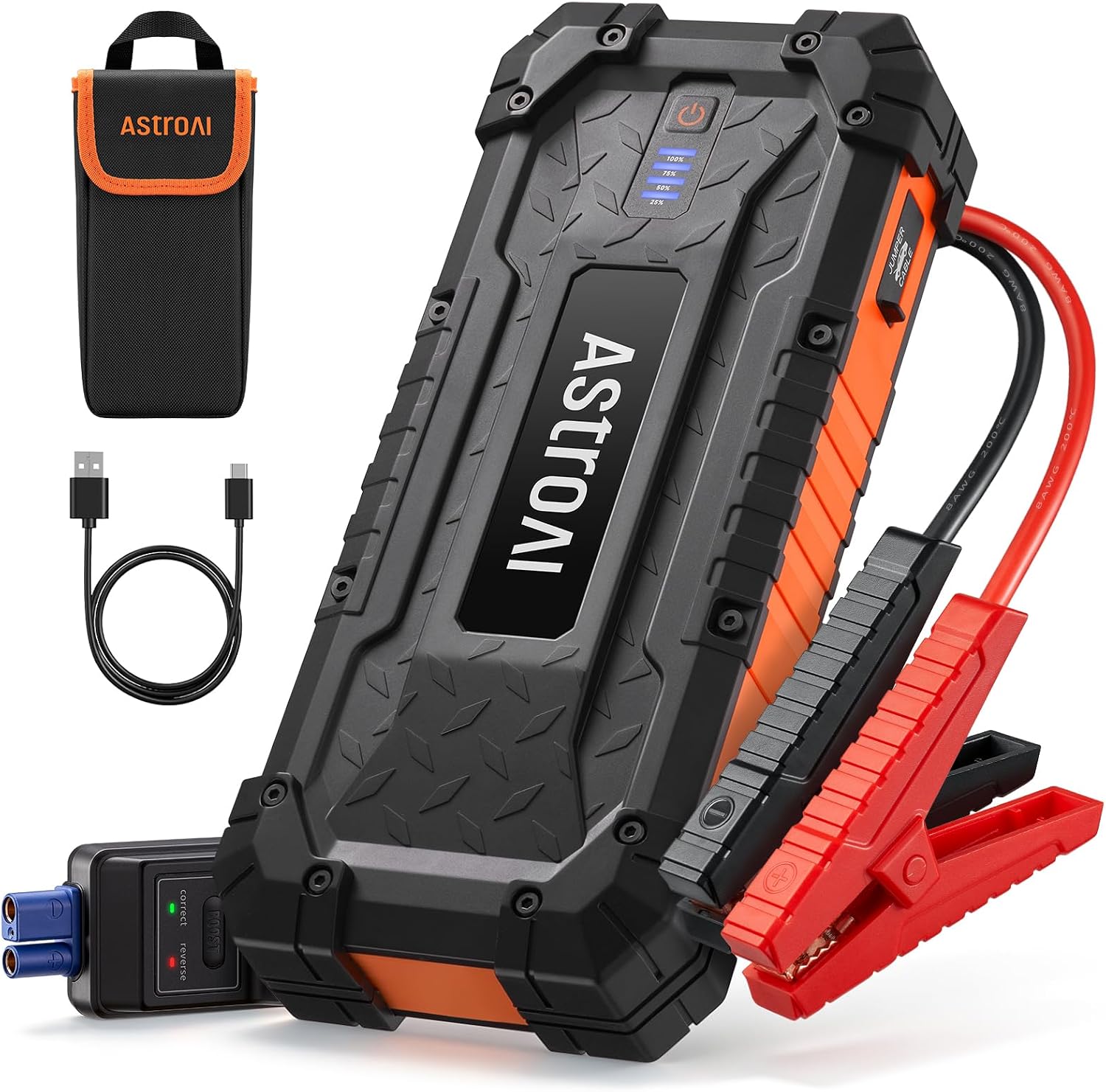
This is a rechargeable lithium-polymer portable jump starter for 12V vehicle batteries. It connects through supplied smart clamp leads and also serves as a USB power bank and three-mode LED light. The accessible instruction material identifies a 59.2Wh battery, 3000A peak-current claim, force-start mode for a battery below 2V, and a storage case. The manufacturer states compatibility up to 10.0L gasoline and 8.0L diesel engines, plus a 10-item protection system. Those performance and protection claims were not backed by an identified independent laboratory report or a public model-specific UL, ETL, or CSA certification record. Published product information is inconsistent, including 25 versus 50 starts per charge, 59.2Wh versus 20,000mAh capacity language, and two versus five years of warranty coverage.
This product suits a driver seeking a compact emergency tool for a conventional 12V passenger vehicle, motorcycle, ATV, or light truck, who will keep it charged, inspect it periodically, and follow a clamp-by-clamp instruction sequence. Its documented case, battery display, LED modes, and USB output are useful for roadside preparedness and short-duration backup power. It is most appropriate where the buyer treats the stated 3000A and engine-size limits as manufacturer claims rather than independently verified performance guarantees.
It is not suited to buyers who need independently certified electrical safety, independently tested cranking output, or an unambiguous warranty before relying on a jump starter in a high-consequence setting. It also is not a vehicle replacement battery or a vehicle-specific fitment part. Avoid relying on it for 24V systems, damaged or leaking vehicle batteries, or any situation where battery polarity cannot be confidently identified. Households unable to store, charge, and dispose of lithium batteries carefully should select a service-supported alternative.
This is a sealed lithium-polymer power product, not a lead-acid starter battery, so routine lead and sulfuric-acid handling is not the primary concern. The relevant risks are damage, overheating, short circuits, incorrect clamp connection, and unsafe charging or storage. Available instructions advise charging after use, keeping the product in its case, avoiding direct sun and extreme temperatures, checking clamp connections, and keeping it away from children. The manufacturer claims multiple electronic protections, but no public model-specific safety certification was verified. No product-specific take-back or recycling program was located. EPA guidance says lithium-ion batteries and devices containing them should not go in household trash or curbside recycling because damage or crushing can start fires. At end of life, use a battery recycler or household hazardous-waste program that accepts lithium batteries, and follow local instructions for a damaged device. The manufacturer is reachable through published Hong Kong contact details, but its company names and warranty statements are not fully consistent across its own materials.
This is a compact 12 V lithium jump starter for starting a depleted vehicle battery, with detachable smart clamps, an LED flashlight, USB-C input and output, two USB-A outputs, and a storage bag. The version sold on this Amazon listing has a 4,000 A peak output. AstroAI has clarified to us that the S8U is sold in different versions for different sales channels, which can differ in configuration, appearance, pricing, and specifications. For the battery capacity and engine limits of the Amazon version, refer to this Amazon listing and the manual included in the box. AstroAI's published manual provides concrete operating limits, including 12 V vehicles only, no use while charging, a minimum 75 percent pack charge for best starting performance, and 60-second breaks between repeated starts. Its clamp instructions and indicator table address reverse polarity and low vehicle-battery voltage. On independent testing, AstroAI states that the Amazon-channel S8U has been tested by an independent laboratory in accordance with applicable NRTL standards, and it shared excerpts of those reports with us. The full reports were provided to Amazon and are confidential, so they are not publicly verifiable, and no public listing was located showing the finished product certified by UL, ETL, or CSA.
This fits a driver who wants a small 12 V emergency jump starter for a passenger vehicle or light-duty use, and who is willing to maintain it rather than leave it untouched in a vehicle for years. The Amazon version's compact storage-bag format, flashlight, and low-power USB outputs suit a roadside kit where compactness matters. It is better suited to a buyer who will inspect the clamps, keep the pack above the stated charge threshold, and follow the stated three-month storage charging routine.
It is not suited to buyers who require publicly verifiable safety certification or published laboratory data for the finished product: the independent test reports AstroAI cites are confidential, so the buyer cannot review them. It should not be used on 24 V vehicles, aircraft, or boats, and the manual says not to start a vehicle while the pack is charging. Buyers with engines near the advertised limit should confirm the limit stated on this Amazon listing and in the manual included in the box, because S8U versions sold through other channels carry different specifications. It is also not a substitute for diagnosing a damaged battery, corroded terminals, or a vehicle fault.
The product contains an internal lithium battery pack, so heat, impact, damaged cables, and incorrect connections matter. AstroAI's manual warns against high-temperature storage, nearby flammables, damaged clamps, operation while charging, and repeated starts without rest periods. It also describes reverse-polarity indication and an overheating shutdown feature. AstroAI states that the Amazon-channel product was tested by an independent laboratory in accordance with applicable NRTL standards and that the full reports were provided to Amazon; we reviewed excerpts of those reports. That is a stronger signal than a bare marketplace certification badge, but it is not a public third-party certification a buyer can look up, and no UL, ETL, or CSA registry listing for the finished product was located. No product-specific U.S. recall or safety warning was located for this jump starter. AstroAI did have a separate 2025 U.S. recall involving certain mini fridges after fire reports, which does not establish a defect in this product. For disposal, AstroAI gives only general local-recycling advice. EPA guidance is more specific: lithium battery devices should not enter household trash or curbside recycling, and should go to an appropriate battery collection or household hazardous-waste route. No exact-pack UN 38.3 test summary was publicly located.
This is a compact 12V lithium jump starter with an integrated tire inflator, USB power-bank output, LED light, clamps, adapters, hose, and storage bag. AstroAI’s current product page rates this S8 Air configuration for engines up to 6.0L gasoline or 3.0L diesel, with a 150 PSI inflator. Its manual specifies a 37Wh pack, equivalent to 10,000mAh at 3.7V, and a 2.4-pound format. The manual documents reverse-polarity indication, thermal shutoffs, a 10-minute cooling interval after 10 minutes of inflation, and automatic inflation shutoff at the selected target. These are manufacturer-stated protections, not independently certified safety findings. The 3000A peak claim lacks published test conditions or an independent report for this product. Published specifications also conflict across sources, so engine size and output claims should be checked against the current manual before use.
This product suits a driver of a 12V passenger vehicle, motorcycle, or light vehicle that falls within AstroAI’s current 6.0L gasoline or 3.0L diesel engine limit. It is most appropriate as an occasional roadside backup for a maintained vehicle, especially where carrying both jumper cables and a tire top-up inflator is useful. The owner should be willing to read the clamp and inflation instructions, keep it above the stated charge threshold, and recharge it at least every three months while stored.
It is not suitable for 24V vehicles, aircraft, or boats, and it should not be selected for engines above AstroAI’s current stated limits. It also is not for users who need independently certified, model-specific electrical safety evidence or laboratory-verified cranking performance. Do not use it as a replacement for a vehicle battery, while it is charging, with damaged clamps, or near flammables and high heat. Households with young children should keep its small adapters inaccessible.
The product uses a rechargeable lithium battery pack, rather than lead-acid chemistry, so lead and sulfuric-acid handling are not its primary exposure concerns. Its manual does give relevant lithium-device warnings: avoid damage, heat, humidity, flammables, disassembly, and repeated rapid jump attempts. It also directs the user to stop use, remove clamps, and contact support if overheating, smoke, or burning occurs. The manual identifies reverse-polarity indication and temperature-related shutdown behavior, but a public model-specific NRTL safety listing was not verified. AstroAI has identifiable U.S. support contacts and a two-year limited warranty. A 2025 CPSC recall involved AstroAI minifridges, not this jump starter. At end of life, the manual only gives general local-recycling guidance. EPA advises that lithium-ion products should not go into household trash or curbside recycling, and should instead go to an appropriate battery or household hazardous-waste collection route.
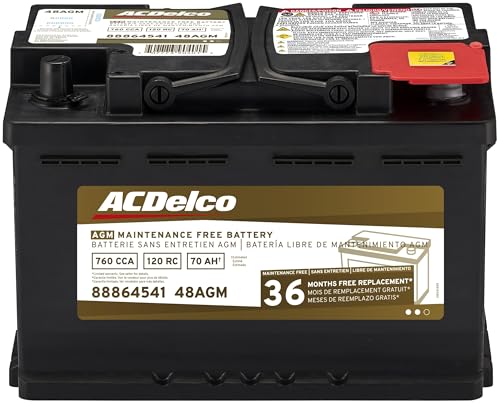
This is a 12 V absorbed glass mat, or AGM, lead-acid starting battery in BCI Group 48. It uses top posts and is intended as a vehicle-specific replacement, including certain GM vehicles that require an AGM battery. It is a heavy component, about 45 to 46 pounds, so installation requires secure lifting and correct hold-down hardware. GM documentation independently identifies this product as an AGM Group 48 battery with 760 cold-cranking amps for listed vehicle applications. A separate parts catalog lists 120 minutes of reserve capacity at a 25-amp load, plus dimensions of 10.9 by 6.9 by 7.5 inches. The stated 36-month replacement warranty is meaningful accountability, but no model-specific independent laboratory life or starting test report was located. No current model-specific UL, ETL, or CSA certification listing was found in the public sources reviewed.
This product suits an owner whose vehicle manual or OEM parts catalog specifically calls for a 12 V AGM Group 48 battery, and whose required cold-cranking and reserve figures do not exceed 760 CCA and 120 minutes. It is especially relevant for the GM applications documented by GM, including some vehicles equipped with stop-start systems. The buyer should be able to verify terminal placement, tray dimensions, hold-down fit, required vent connection, and whether the vehicle needs battery registration or battery-management-system reset after installation.
It is not for buyers choosing only by vehicle brand, engine size, or the Group 48 label. Do not substitute it where the vehicle requires a different group size, a higher specified reserve capacity, a different terminal layout, or a vented battery arrangement that this unit cannot correctly serve. It is also unsuitable for anyone unable to safely handle a roughly 46-pound lead-acid battery, or for installation where sparks, open flame, poor ventilation, damaged cables, or missing protective equipment create an ignition, acid, or lead-exposure risk.
This is a valve-regulated AGM lead-acid battery. Its safety data sheet says hazardous internal substances are not expected to be released during normal handling, but misuse or damage can release electrolyte. The documentation identifies serious risks from sulfuric acid exposure, including skin and eye injury, and recognizes lead-related health hazards. Battery charging can also generate flammable hydrogen, so installation and charging require ventilation, spark control, and correct polarity. Lead-acid batteries have a practical U.S. recycling route. EPA says they can contain substantial lead and corrosive lead-contaminated sulfuric acid, and should be returned to a battery retailer or household hazardous-waste program rather than placed in trash or curbside recycling. GM's official parts store applies a refundable core charge to this product, which supports returning the spent battery. No current model-specific public recall was located in the reviewed federal recall sources.
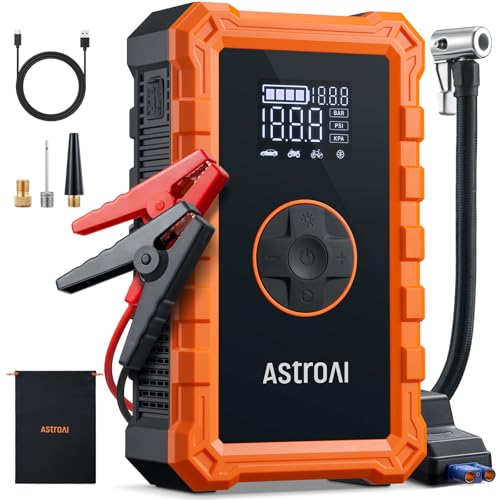
This is a rechargeable lithium-ion emergency tool for 12V vehicle batteries. It combines smart-clamp jump starting, a built-in tire compressor, USB power output, a DC output, and an LED light in a 5.3-pound unit. The manufacturer manual specifies 88.8Wh and 24,000mAh capacity, 1,000A start current, 4,000A peak current, and a 65W USB-C input and output port. The manufacturer says it is intended for gasoline and diesel engines up to 10L, has a 160 PSI compressor, and can provide about 40 starts per charge. Those are manufacturer claims, not results from an identified independent laboratory test of this exact product. The manual documents reverse-polarity indication, overcurrent and short-circuit protection, temperature cutoffs, and clear limits on use with 12V vehicles only.
This product suits a driver of a 12V passenger vehicle, motorcycle, pickup, or similar equipment who wants a stored emergency tool that can address both a low starter battery and routine tire-pressure correction. It is most appropriate for someone willing to read the manual, keep the unit charged at least every three months, inspect the clamps and hose, and use a separate compatible USB-C PD charger. Its 5.3-pound size is better suited to trunk, cargo-area, or garage storage than a glove box.
It is not for owners of 24V vehicles or anyone who needs confirmed cold-weather starting output, certified electrical safety, or independently verified engine-size capability for a critical fleet or remote-use application. It is also unsuitable as a substitute for diagnosing or replacing a failing vehicle battery. People unable to safely work near a lead-acid vehicle battery, including those who cannot avoid sparks, metal jewelry, damaged cables, or flammable vapors, should not use it without qualified assistance.
The relevant exposure risk is lithium-ion battery damage and the vehicle battery connection, not lead or acid inside the product itself. The manual warns against damaged clamps, reversed polarity, short circuits, fire, extreme heat, water immersion, impacts, disassembly, and use near flammable vapors. It also gives temperature limits for charging and says leaked battery liquid should not be handled bare-handed. The manual tells users to dispose of lithium battery products according to local rules, but no brand take-back route or product-specific recycling program was located. U.S. EPA guidance says lithium-ion products should not go in household trash or curbside recycling, because damaged batteries can cause fires. Use a battery or electronics collection program that accepts lithium-ion devices, and isolate terminals or bag the device if required by the collection site. No product-specific CPSC recall was located in the checked public sources.
This is a 12 V absorbed glass mat, or AGM, automotive starting battery in BCI Group 47, also called H5. It is intended for passenger cars and SUVs, including vehicles with start-stop systems where the vehicle manufacturer specifies an AGM battery of this size. A separately published retailer listing repeats the key fit details, 60 Ah capacity, 680 cold-cranking amps, 100-minute reserve capacity, 9.52 by 6.89 by 7.48 inch dimensions, and left-negative, right-positive tapered terminals. Those output figures and the start-stop claim remain manufacturer-stated. No model-specific independent laboratory report was located to confirm cold-cranking or reserve-capacity performance under SAE test conditions. The product states a 36-month warranty, but complete terms, a manufacturing date-code guide, storage instructions, and a documented U.S. warranty-claim contact were not located.
This product suits a buyer replacing an existing AGM Group 47 H5 battery after confirming all fit points in the vehicle manual and on the old battery. That means matching 12 V operation, H5 dimensions, the hold-down, left-negative and right-positive terminal layout, and the vehicle's required AGM specification. It is most relevant to a buyer who can inspect manufacturing date and case condition on arrival, has a battery tester or installer available, and is comfortable verifying the manufacturer's stated 680 CCA and 100-minute reserve figures against the vehicle's requirement.
It is not for anyone choosing from group size alone, or for a vehicle whose manual specifies another battery group, terminal layout, hold-down, chemistry, vent arrangement, or programming procedure. It is also unsuitable for buyers who need independently verified starting and reserve testing, a publicly listed third-party safety certification, or a clearly documented domestic warranty route before installation. Do not use it where the battery compartment is damaged, the cables are corroded, or the charging system is faulty. Those conditions can create spark, overheating, acid, and starting problems regardless of battery choice.
An AGM battery is still a lead-acid battery. The absorbed electrolyte design can reduce free-liquid spill risk compared with a conventional flooded design, but it does not remove lead, sulfuric-acid, electrical, or hydrogen-gas hazards. U.S. safety guidance for battery work emphasizes avoiding sparks and flames, preventing metal objects from bridging terminals, using suitable eye and hand protection, and providing ventilation during charging. Product-specific safety instructions and a safety data sheet were not found, so the purchaser should not assume special protective circuitry or misuse safeguards beyond normal automotive-battery practice. At end of life, this battery should go to a battery retailer or local household hazardous-waste collection program, never household trash or curbside recycling. EPA notes that automotive lead-acid batteries contain lead and corrosive sulfuric acid, while the lead, plastic, and acid can be recovered through established recycling channels. No Daakmax take-back program or product-specific recycling instructions were located. No U.S. recall or regulator action for this product was found in the sources checked.
This product is a 3.6-pound lithium-polymer emergency unit that combines a 12V jump starter, tire inflator, USB power bank, LED light, and SOS light. It is intended for passenger vehicles and light trucks with 12V electrical systems, not for vehicle-battery replacement or installation. The included smart clamp lead is meant to connect directly to the vehicle battery, while the integrated pump uses a preset pressure and automatic shutoff. GOOLOO states 3000A peak output, support for engines up to 9.0L gasoline or 6.5L diesel, a 150 PSI inflator, and ten electronic protections. The manufacturer also provides specific operating instructions, including reverse-polarity indication, a three-start limit before a pause, and heat and storage warnings. Those claims are manufacturer-stated. Public searches did not identify a model-specific UL, ETL, or CSA certification listing, or an independent laboratory report validating peak-current, start-count, cycle-life, or compressor-performance claims.
This product fits a driver who wants a compact emergency tool for an occasional 12V no-start or low tire, and who can follow clamp-polarity, cooling, and charging instructions. It is especially relevant for a commuter, family vehicle, or road-trip kit where carrying separate jumper cables and a small inflator is inconvenient. The user should be prepared to recharge it at least every three months, keep it out of prolonged high heat, and verify the vehicle owner manual's jump-start points before use.
It is not suited to 24V vehicles, aircraft, boats, or any vehicle whose manufacturer prohibits direct jump-starting at the battery. It is also a poor fit for users who require independently certified safety compliance, independently verified cold-weather starting output, or documented long-term cycling results. Do not treat it as a substitute for diagnosing a failing vehicle battery, repairing a tire leak, or maintaining high-demand commercial fleets. Households unable to store lithium products away from extreme heat, impacts, and children should use additional caution.
The key health issue is lithium-battery handling rather than lead or sulfuric acid. GOOLOO's instructions warn against reverse connection, use while charging, physical damage, water, and high heat. It specifies storage away from temperatures above 140°F and says prolonged heat can damage cells and create swelling concerns. The stated smart-clamp protections are useful design claims, but a public model-specific certification listing was not located, so they should not be treated as independently certified safeguards. No product-specific U.S. recall or regulatory action was located in the searched public sources. The maker and support information are identifiable, although the warranty duration varies by sales source. At end of life, the internal lithium battery should not go in household trash or curbside recycling. EPA recommends a dedicated battery recycler or household hazardous-waste collection point, with terminals protected when applicable. GOOLOO does not publish a clear U.S. take-back or battery-recycling program for this product.
The WOLFBOX MegaVolt24 is a rechargeable lithium-ion jump starter for 12V vehicle batteries. It is a compact 3.38-pound unit with jumper clamps, USB-C and USB-A device charging, an LED display, and steady, strobe, and SOS lighting. The manufacturer specifies 88.8Wh capacity, 1,000A starting current, 4,000A peak current, and a supplied 65W USB-C charger. Its safety documentation is unusually concrete for this type of product. The manual describes reverse-polarity alerting, overcurrent response, and high and low temperature output cutoffs, alongside instructions not to use damaged cables or packs. An independent product review reported strong real-world jump-start performance, but no public model-specific certification listing to the relevant portable power-pack safety standard was located. The advertised 10L engine claim remains manufacturer-stated rather than laboratory-documented with test conditions.
This suits a driver who wants a compact emergency jump starter for a conventional 12V gasoline or diesel vehicle, plus phone charging and emergency lighting in one stored kit. It is particularly relevant for road trips, seasonal vehicles, or households with more than one vehicle, where a dead starter battery is an occasional problem. The documented polarity alert and thermal cutoffs add useful guidance for an owner who will read the manual, charge the unit before travel, and inspect the clamps and cable condition before use.
It is not for electric-vehicle traction batteries, 24V systems, or any application other than temporarily starting a 12V vehicle battery. It also is not appropriate for someone who requires a publicly verifiable third-party safety certification for a lithium power pack, because no model-specific listing was found. Avoid relying on it if the housing, cable, clamps, or connector are damaged, or if it has been exposed to fire, excessive heat, water immersion, or swelling. It should not replace diagnosis or replacement of a failing vehicle battery.
This is a lithium-ion power pack, not a lead-acid replacement battery, so its relevant risks are damaged cells, heat, short circuits, and electrolyte leakage rather than lead or sulfuric-acid handling. The manual gives meaningful precautions, including limits on charging temperature, warnings against damaged packs and clamps, and instructions to avoid metal jewelry, flammable environments, fire, and water immersion. It also describes polarity, overcurrent, and temperature protections. Those are manufacturer-documented safeguards, not independently certified claims. No product-specific U.S. recall was located in the checked federal recall sources. WOLFBOX provides an email address, phone number, manual, and two-year limited warranty. At end of life, the manual says to follow local rules, but does not provide a take-back program. EPA guidance is more specific, lithium-ion devices should not enter household trash or curbside recycling because damaged batteries can start fires. Use a dedicated battery collection or household hazardous-waste route instead.
This product is a bare cordless rotary buffer polisher, not a vehicle starter battery. It uses a separately purchased DeWalt 20V battery and is intended for paint polishing, waxing, and buffing. Ecarke's own storefront independently confirms the product format, 7-inch pad, brushless motor claim, seven speed settings, 6,000 RPM maximum, accessory kit, and storage bag. The manufacturer states that it is compatible with DeWalt 20V batteries, but the supplied record does not identify the exact battery models accepted or provide a technical manual for this exact polisher. No independent laboratory performance test, model-specific safety certification listing, or test report was located in this review. The battery-focused scoring framework has limited direct applicability because the product contains no battery or charger.
This product suits a home detailer or garage user who already owns a compatible DeWalt 20V battery and wants cordless access around a vehicle, without purchasing a battery and charger in the kit. Its manufacturer-stated 7-inch pad, variable-speed control, accessory assortment, and storage bag make its intended use clear for waxing, buffing, and general paint-polishing work. It is most appropriate for someone prepared to verify fit with their particular battery before use.
It is not for someone seeking a car battery, jump starter, charger, or any product that supplies vehicle starting power. It also does not suit a buyer who needs independently verified performance, a publicly listed third-party safety certification, a documented exact-model manual, or confirmed durability testing. New detailers without rotary-polisher experience should be cautious, because the review found no exact-model guidance establishing paint-safe operating limits, pad selection, or heat-management procedures.
The product is a bare power tool, so it does not itself contain lead-acid electrolyte or a bundled lithium battery. Its electrical and thermal risk depends in part on the separately sourced battery pack. Ecarke's public materials confirm battery-platform compatibility and say the product is sold without the battery, but no exact-model safety manual or independent certification record was located. Use an undamaged compatible battery and stop use if the tool, pad, or battery becomes unusually hot. Ecarke provides a public support email, a listed U.S. address, a 30-day return policy, and a stated one-year warranty. No product-specific recycling, take-back, repair-parts, or disposal instructions were found. The practical end-of-life path is therefore stronger for the separately owned battery, which should follow local lithium-ion battery recycling guidance, than for the polisher itself. No product-specific CPSC recall or safety warning was located in the review.
This is a 12-volt, 60Ah absorbed-glass-mat lead-acid automotive battery in Group 47, also called H5 or L2, format. It is intended as a replacement starting battery for vehicles that specify this case size, terminal arrangement, chemistry, and electrical rating. HQST lists SAE top-post terminals, 9.5 x 6.9 x 7.6 inch dimensions, 39 pound weight, 680 CCA, and 100 minutes of reserve capacity at 25 amps. Those electrical figures are manufacturer-stated, not supported by a located independent test report for this exact product. The maker also advertises sealed, maintenance-free construction, start-stop suitability, and a three-year material warranty. However, the same product page contains a conflicting FAQ statement that it is not suitable for engine cranking, despite marketing it as a car starting battery.
This product suits a technically careful vehicle owner whose owner's manual or OEM parts information specifically calls for a 12-volt AGM Group 47, H5, or L2 battery with compatible dimensions, hold-down, terminal orientation, and at least the required starting rating. It is most relevant to a buyer who can confirm whether their vehicle needs AGM chemistry and, if equipped with start-stop charging management, can perform or arrange any required battery registration. The buyer should inspect the delivered case, date marking, voltage, terminals, and shipping condition before installation.
It is not suited to buyers who need a clearly third-party-tested starting battery, a publicly verifiable safety certification, or detailed product-specific handling documentation. Do not use it where the vehicle requires another group size, reversed terminal layout, a different hold-down, flooded chemistry, or higher OEM reserve and cranking specifications. It is also unsuitable for anyone relying on the page's claims without checking the vehicle manual, because the maker's FAQ contradicts the product's advertised starter-battery role. Damaged, swollen, leaking, or heavily corroded batteries require professional handling, not installation.
This is a lead-acid battery, so its construction involves lead-containing components and sulfuric-acid electrolyte. AGM construction can immobilize electrolyte relative to a conventional flooded design, but it does not remove the hazards if the case is damaged or improperly charged. OSHA identifies battery acid as corrosive and notes the need to control explosive gas accumulation during charging. HQST describes this unit as sealed and leak-resistant, but no product-specific SDS or detailed safety manual was located. Used automotive lead-acid batteries have an established U.S. collection and recycling pathway. EPA reports that lead-acid batteries are highly recycled, while also stressing that lead and acid require controlled handling and recycling. HQST provides support contact details and requests serial-number information for service, but no product-specific recall page, recycling instruction, or take-back process was located. Return a spent battery through an automotive retailer, dealer, recycler, or local approved collection channel rather than household trash.


