Best Overall

BODEGA 53 Quart Dual Zone Portable Fridge
Dual zone temperature control offers flexibility.
Energy-efficient design ensures longer battery life.
Compact size fits easily in small spaces.
 Daniel Kenitz
Dual zone temperature control offers flexibility.
Energy-efficient design ensures longer battery life.
Compact size fits easily in small spaces.

Ultra-quiet operation at just 31dB.
Convenient app control for easy temperature management.
Waterproof design suitable for outdoor use.

Efficient cooling from -4℉ to 68℉.
Convenient app control for easy adjustments.
Dual power options for versatile use.

Convenient app control enhances user experience.
Efficient cooling range down to -4℉.
Versatile power options for home and travel.

Energy-efficient cooling for longer battery life.
Compact design ideal for travel convenience.
Quiet operation enhances user experience.

Efficient dual-zone temperature control.
Spacious 42-quart capacity.
Energy-saving with low power consumption.
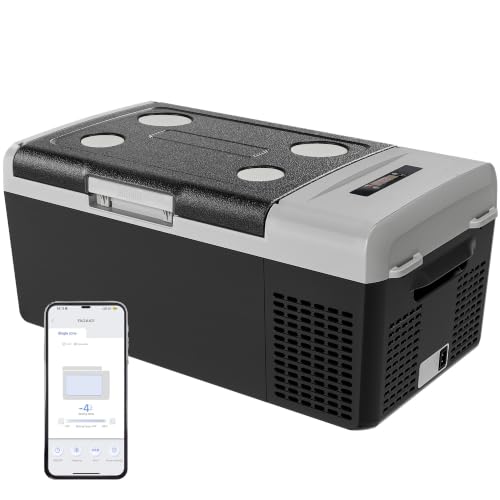
Efficient cooling from -4℉ to 68℉.
Compact size ideal for tight spaces.
Low power consumption for extended use.

Versatile power options for travel convenience.
Dual baskets for organized storage.
Efficient cooling range from -4℉ to 68℉.

Energy-efficient cooling system saves power.
Compact design fits easily in vehicles.
Dual-zone temperature control for versatile storage.
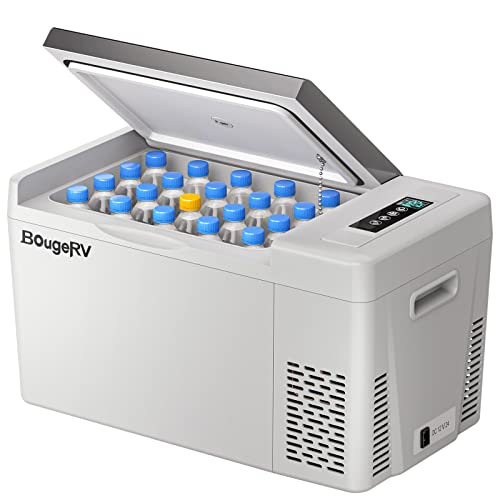
Efficient cooling from -7℉ to 50℉ range.
Dual power options: DC and AC compatibility.
Compact design perfect for travel and camping.
What matters most is the temperature inside the food compartment, not the number shown on the control panel. FDA guidance calls for refrigeration at 40°F or below and freezing at 0°F or below. A substantiated product should have independent temperature logging that identifies ambient conditions, setpoint, load, sensor locations, runtime, and cycling range. A display that reaches -4°F or -8°F is only a setpoint claim unless testing shows that food-level temperatures actually remain there. The supplied reviews repeatedly found that displays can differ from measured temperatures, that temperatures vary within a compartment, or that freezer settings do not produce 0°F conditions.
Look for usable temperature controls, independent appliance-thermometer checks, and alarms where unattended storage matters. For vehicle use, the manual should clearly specify 12/24-volt operation, cord and fuse requirements, low-voltage cutoff and restart thresholds, and protection against reverse polarity, short circuits, and overheating. A claim such as “battery protection” is much more useful when those thresholds are documented. Never assume a fridge will protect a vehicle battery simply because it has an ECO mode.
Electrical safety claims should be traceable to the exact product and model in UL Product iQ, Intertek’s ETL directory, or CSA’s certified-product listings, with the certifier recognized through OSHA’s Nationally Recognized Testing Laboratory program. A seller’s “safety certified,” “FCC,” or “UL energy certified” wording is not equivalent to a model-specific electrical-safety listing. No supplied product had independently verified temperature performance and a clearly confirmed U.S. NRTL listing together.
Refrigerant information also needs to be specific. The nameplate or manual should identify the refrigerant and charge, explain ventilation and leak precautions, and provide service and disposal guidance. R-600a and R-290 can have lower climate impact but are flammable and require appropriate safety controls. R-134a avoids ozone depletion but has a reported global-warming potential of 1,430. At end of life, refrigerant-containing products should go to a recycler or recovery program rather than ordinary waste.
Capacity, wattage, annual energy use, noise, cooling time, and temperature range are common sources of misleading comparisons. A stated 50 or 80 liters does not establish usable food volume; annual kilowatt-hour figures may lack ambient temperature, load, setpoint, and test duration; and “fast cooling” may describe an empty compartment or an undisclosed condition. Independent watt-hour and temperature tests are meaningful only when their conditions are disclosed. Also check the actual delivered dimensions, ventilation clearance, cord routing, warranty terms, and parts support.
Across the supplied products, the recurring safety limitation is lack of independently demonstrated food-safe temperature stability. Several also lack verified exact-model electrical certification, clear refrigerant or food-contact material information, or published cutoff details. Do not rely on these products alone for medicines, infant feeding, high-risk perishables, or other temperature-critical storage without independent thermometers and a backup plan. Thermoelectric models are especially unsuitable for freezer use and unattended warm-vehicle storage. Keep every unit ventilated, protect cords from crushing or water, and confirm warranty coverage when buying through a marketplace.
These topics distinguish a portable cold-storage product that merely advertises a cold setting from one with evidence about food safety, vehicle operation, environmental burden, and long-term ownership. Scores are relative to the products supplied; a higher score indicates stronger evidence or documented safeguards, not a guarantee of safe use.
This measures whether the product independently demonstrates stable internal temperatures of 40°F or below for refrigeration and 0°F for freezing, with accurate controls and useful alarms. It matters because a compressor’s setpoint is not the same as food temperature. Among the supplied products, the strongest evidence came from products with independent measurements; low-scoring products had only displays or manufacturer ranges and no loaded temperature logging.
This measures protection against damaged cords, short circuits, overheating, shock, and ignition on both household and vehicle power. A high score requires credible third-party certification for the exact model and no unresolved relevant recall pattern. Scores were generally moderate because many products had manuals and operating precautions but no confirmed UL, ETL, or CSA listing. A seller badge or FCC reference is not equivalent.
This measures whether the refrigerant, charge, sealed system, ventilation instructions, and flammability controls are identified for the exact product. It matters because R-600a and R-290 are flammable, while an unidentified charge makes leak response and service harder. Higher-scoring products disclosed more about the refrigerant or design; lower-scoring products omitted the refrigerant, charge, nameplate details, or model-specific safety certification.
This measures whether 12/24-volt operation, plugs, cords, fusing, voltage limits, and low-voltage cutoffs are clearly specified and protected. It matters because a fridge can overheat wiring or discharge a starter battery. Higher-scoring products documented selectable cutoff thresholds, restart behavior, fusing, or reverse-polarity protection. Lower-scoring products merely claimed battery protection without voltages, fuse details, cord ratings, or independent verification.
This measures whether liners, baskets, drains, seals, and interior surfaces can be identified, cleaned, and kept sanitary after spills and condensation. It matters because portable units are moved, packed tightly, and often manually defrosted. Higher scores reflected removable baskets, drains, wipe-clean interiors, and practical cleaning instructions. Lower scores reflected missing food-contact material declarations, awkward cleanup, or little information about seals and liners.
This measures whether capacity, temperature range, cooling time, noise, wattage, battery protection, and certification claims match the exact product and state meaningful conditions. Higher-scoring products had model-specific manuals or independent measurements. Lower-scoring products had conflicting dimensions, capacities, warranty terms, refrigerant details, or energy figures, or used vague labels such as “DOE” or “safety certified” without a test method.
This measures whether authoritative third-party records support the exact model’s safety, refrigerant compliance, and performance claims. It matters because seller-issued certificates and generic brand claims are difficult to verify. Higher scores belonged to products with independent temperature or energy evidence and more traceable documentation. Scores remained limited where no exact UL, ETL, CSA, DOE, or other authoritative record could be confirmed.
This measures electricity used to maintain food-safe temperatures under disclosed conditions, including compressor cycling and standby use. It matters for vehicle batteries, power stations, and emissions over repeated trips. Higher scores were supported by independent watt-hour testing with stated conditions, such as a full-day test. Lower scores relied on annual or daily claims without ambient temperature, load, setpoint, duration, or measurement method.
This measures refrigerant climate burden, leak management, repairability, and disposal guidance. A lower-impact refrigerant helps only when the sealed system is safely documented and the product can enter a recovery stream. Higher-scoring products identified lower-impact refrigerants or avoided a conventional refrigerant loop and offered some disposal guidance. Lower-scoring products used or identified high-impact refrigerants without clear recovery, service, or charge information.
This measures whether compressors, controls, seals, cords, adapters, and handles are supported by meaningful warranties and replaceable parts. It matters because a failed small component can otherwise turn a portable fridge into e-waste. Higher scores reflected two- or three-year compressor coverage, longer warranties, technical support, or stated parts support. Lower scores reflected one-year or conflicting warranties and no parts or repair documentation.
This is a 50 L, 53-quart compressor-powered chest refrigerator and freezer for vehicles, camping, RV use, or AC wall power. It has two compartments with a removable divider, two baskets, wheels, a retractable handle, app control, and 12 V, 24 V, or 100 to 240 V input. BODEGA states a -4°F to 68°F setting range, 60 W maximum draw, and High, Medium, and Low vehicle-battery protection. Hands-on testing gives some useful, but limited, performance evidence. One reviewer using an external thermometer and loaded compartments found the refrigerator zone reached and remained at 38°F, while the freezer recovered to 0°F after airflow was improved. Another reviewer logged 479 Wh over 24 hours on 12 V at roughly 70°F ambient with empty zones set to 41°F and 0°F. Neither report is a laboratory temperature-logging certification.
This unit suits a road-tripper, camper, van user, or tailgater who has reliable 12 V, 24 V, or AC power and needs roughly 50 L of ice-free food storage. It is especially suited to users who can organize food for air circulation, pre-cool it before loading, and monitor both compartments with separate thermometers. The wheels, pull handle, removable baskets, drain, and flexible divider are useful where the fridge will be moved between a vehicle and campsite rather than carried long distances.
It is not suited to anyone who must rely on an independently certified appliance for safety-critical food storage, including long unattended storage of raw meat, infant food, medicines, or food for highly vulnerable people. Buyers who cannot independently check temperature with appliance thermometers should avoid treating the display as proof of safe food temperature. It also is not ideal for users with limited vehicle-battery capacity, no backup power, poor ventilation around the compressor, or a need to keep every freezer item continuously at 0°F or below.
For food safety, the strongest evidence is limited hands-on testing rather than a controlled laboratory report. A loaded refrigerator zone reached 38°F in one test, below the FDA 40°F target. The freezer was reported to cycle between 0°F and about 10°F at a 0°F setpoint, and sensor readings varied by location and airflow. Check both zones with independent thermometers, avoid overpacking, and clean spills promptly. The product has a drain plug and removable baskets that can help with cleaning. BODEGA states a 24-month warranty for the cooler and accessories, plus lifetime customer support, but accessible parts and refrigerant-service documentation are not established. R-600a and R-290 can have low climate impact but are flammable refrigerants. This model lacks clear, model-specific public refrigerant identification and independently traceable electrical certification. No relevant CPSC recall or regulatory warning was located in the checked public sources.
This product is a 40 L, single-compartment compressor car refrigerator that can be used as either a refrigerator or freezer. It is intended for vehicle travel, camping, RVs, and backup cooling, with 12 V or 24 V DC operation and AC use through an adapter. The product record lists a 33-pound unit measuring about 25.9 by 15.8 by 15.5 inches. Manufacturer documentation for the matching MCD40 configuration states a -4°F to 68°F setting range, 60 W rated power, ECO and MAX modes, Bluetooth app control, and a display that shows compartment temperature. It also documents three selectable low-voltage protection levels with stated DC cutout and restart thresholds. These are manufacturer-stated specifications, not independent temperature or energy tests. No model-specific temperature-logging report, electrical safety listing, or third-party performance certification was located.
This product suits a road-trip, camping, truck, or RV user who needs roughly 40 L of portable single-zone storage and can choose one temperature target for the whole compartment. Its documented 12 V and 24 V operation, AC adapter use, and adjustable battery cutout are useful for someone who will pre-cool it at home and run it from a vehicle while traveling. It is most appropriate for users willing to verify the actual compartment temperature with a separate appliance thermometer before storing perishable food.
It is not well suited to anyone who needs independently verified cold-chain performance for infant food, medicines, high-risk foods, commercial transport, or long unattended storage. Those uses need documented temperature stability, calibrated monitoring, alarms, and traceable safety certification, none of which were independently established here. It also does not suit buyers needing separate refrigerator and freezer temperatures at the same time because it is a single-zone unit. Avoid relying on the display alone for food safety, especially in hot weather or with a warm load.
Food safety depends on actual food temperature, not a displayed setpoint. FDA guidance calls for refrigerators at 40°F or below and freezers at 0°F or below, checked with appliance thermometers. This product can be set below those thresholds, but no independent logging test was located for its temperature accuracy, cycling, loaded performance, or hot-ambient operation. Use a separate thermometer and leave room for air circulation. The matching manual gives useful cleaning and manual defrost directions, and identifies low-voltage protection and overheating error handling. It also warns that the refrigerant circuit contains flammable material and instructs users to keep ignition sources away during use, service, and disposal. R-600a is an EPA-acceptable low-climate-impact refrigerant under conditions for household refrigeration, but this product's refrigerant type, charge, safety certification, service parts, and end-of-life recovery instructions were not verified. The stated one-year warranty offers limited protection against early component failure.
This is a single-compartment, compressor-powered portable refrigerator and freezer for a vehicle, campsite, boat, or AC outlet. The stated capacity is 18 liters, or 19 quarts, and the supplied equipment includes a DC vehicle cord and an AC adapter. It is a compact chest-style unit intended for drinks, groceries, and small quantities of chilled or frozen food. The model-specific manual supports 12V and 24V DC operation, selectable battery protection, touch controls, and a MAX or ECO compressor mode. Its listed temperature-control range reaches below freezing, but no independent temperature-logging test was found for this exact product. That matters because a displayed setpoint does not prove that food stays at 40 F or below throughout the compartment, or that frozen food remains at 0 F or below.
This product suits a driver, camper, or boater who needs a small single-zone cooler for day trips, weekend travel, drinks, packed meals, or a limited amount of frozen food. It is most appropriate where a 12V or 24V outlet is available and the user can place an appliance thermometer inside, keep ventilation clear, and monitor the food temperature. The documented adjustable battery cutoff is useful for people powering it from a vehicle, provided they understand their vehicle battery condition and outlet wiring.
It is not suited to anyone who needs independently demonstrated cold-chain control for infant food, medicines, raw meat during extended travel, or other high-risk perishables. Choose another arrangement if a stable verified 40 F refrigeration temperature, 0 F freezing temperature, temperature alarm, or formal safety certification is required. It is also a poor fit for larger households, multi-day bulk storage, or people needing separate refrigerator and freezer zones. Do not rely on the display alone, especially in a hot parked vehicle.
For food safety, use an appliance thermometer inside. FDA guidance calls for refrigerators to remain at 40 F or below and freezers at 0 F or below. This product has an adjustable cold setpoint and a compressor, but independent testing of its actual internal temperature stability was not located. The manual instructs users to clean the interior regularly, wipe spills, avoid corrosive liquids, and maintain ventilation. It does not identify food-contact plastics or provide detailed material declarations. The manual identifies R134a refrigerant. EPA lists this nonflammable refrigerant with a global-warming potential of 1,430, so leak prevention and professional end-of-life handling matter. The product documentation found does not provide refrigerant-recovery or disposal instructions. No model-specific certification record in the major UL, ETL, or CSA registers was located during this review, and no relevant U.S. recall was surfaced in the CPSC recall search. Euhomy offers a one-year limited warranty and says replacement parts can be purchased through support.
This is a single-lid, compressor-powered portable refrigerator or freezer for vehicle, campsite, truck, and household use. It is supplied for 12V and 24V DC use and through an AC adapter, with touch controls, Bluetooth app control, a removable basket, and a stated temperature setting range of -4°F to 68°F. The manufacturer documentation specifies a 15A DC fuse, 60W average power consumption, and R600a refrigerant at 20 g. The cooling range is a manufacturer claim, not an independently logged food-temperature result. No independent test was found that identifies this unit, ambient conditions, internal sensor locations, load, cycling range, and energy use. That matters because FDA food storage guidance calls for verified internal temperatures at or below 40°F for refrigeration and 0°F for freezing. Documentation also conflicts on capacity, with the sales page calling it 59 quarts while the instruction manual lists 49.15 L for this size.
It suits a driver, camper, or truck user who needs a portable, single-temperature food compartment and can provide continuous 12V, 24V, or AC power. It is particularly relevant where battery management matters, because the manual provides selectable low-voltage protection settings and DC current ratings. The user should have room for a roughly 27 by 14 by 21 inch appliance, keep ventilation space around the compressor, and use an independent refrigerator thermometer to confirm actual food temperatures.
It is not suited to people storing temperature-sensitive medicines, high-risk perishables without an independent thermometer, or food that must remain documented at a narrow temperature range. The manual itself says to verify medicine requirements first. It is also a poor fit for anyone expecting two independently controlled temperature zones, unattended operation after power is disconnected, or a fully verified safety certification record. Do not use it where it cannot remain level, ventilated, and continuously powered.
The manual gives practical electrical and vehicle-use safeguards. It calls for the original DC cord, a 15A inline fuse for direct battery wiring, adequate compressor ventilation, and protection against reverse polarity and low input voltage. Those are useful design and operating details, but the catalog's UL statement was not independently traceable to a public model-specific listing in this review. No matching CPSC recall was located in the reviewed public recall resources. The documented refrigerant is 20 g of R600a, isobutane. EPA lists R600a as a low global-warming-potential refrigerant that is acceptable only subject to conditions, and it is flammable. The manual requires ventilation and warns against damaging the product. End-of-life guidance is incomplete in the product materials reviewed, so owners should use an appliance recycler or disposal service that handles refrigerant-containing equipment. The one-year warranty and stated availability of replacement parts offer some waste-prevention support, though no repair manual or parts catalog was found.
This is a single-compartment, compressor-powered portable chest refrigerator and freezer for vehicle travel, camping, RV use, or supplemental cold storage. It is sold with an AC adapter and a 12/24V DC cord, wheels, handles, and a claimed 85-quart, or 80-liter, capacity. The listing says its adjustable setpoint range is minus 4 F to 68 F and that it has MAX and ECO modes. The most material evidence gap is performance verification. No independent temperature-log test was located for this exact product, so its display accuracy, cycling range, food-load performance, and ability to hold food-safe temperatures in heat remain unconfirmed. The listing also claims UL certification, but it provides no file number or model-specific certification record that could be independently checked. Its own dimensions conflict between two listing sections.
This product suits a traveler, camper, truck driver, or RV user who needs a sizable single-zone chest for drinks, frozen packs, or groceries and can accommodate a roughly 39-pound appliance with wheels. It is most appropriate where both a vehicle outlet and wall power may be used, and where the owner can run an independent refrigerator thermometer inside the compartment. The stated battery-protection setting is relevant for users who understand their vehicle battery and outlet limits.
It is not appropriate for buyers who need documented temperature stability for infant formula, high-risk medical nutrition, or other safety-critical perishables. It also does not suit anyone who requires a verified electrical certification record, specified refrigerant, declared food-contact materials, or measured watt-hour consumption before use. Do not rely on its displayed setpoint alone for food safety. Users without adequate ventilation, a compatible fused vehicle outlet, or a way to monitor battery voltage should choose a more fully documented setup.
FDA guidance calls for refrigeration at or below 40 F and freezing at 0 F or below, verified with appliance thermometers. This product's claimed minus 4 F to 68 F setpoint range can encompass both targets, but no independent test was found showing actual internal temperatures, display accuracy, alarms, or recovery under a food load. Use an independent thermometer and treat the screen as a control setting until its performance is checked. The listing claims UL certification and three-level battery protection, but lacks a file number, test record, or model-specific listing that would make either safety evidence traceable. No relevant CPSC recall was located in the public search resources reviewed. Refrigerant identity and charge, food-contact materials, parts availability, and end-of-life instructions were not disclosed. Refrigerant-containing appliances should be sent through disposal channels that recover refrigerant rather than discarded intact.
This is a 40-liter, compressor-powered portable chest refrigerator and freezer for cars, RVs, campsites, and AC use at home. It measures about 23.9 by 14.4 by 20.2 inches and weighs 32.4 pounds. The supplied documentation identifies two independently controlled compartments, with a manufacturer-stated setpoint range of -4°F to 68°F, plus control from the unit or its phone app. Its most useful documented provisions are 12/24V DC and 100-240V AC operation, selectable H/M/L vehicle-battery protection, a removable basket, and a bottom drain for cleaning. Those are manufacturer statements, not independent performance findings. No model-specific temperature-logging report was located, so the display and setpoint range do not demonstrate stable food-safe internal temperatures under heat, load, or vehicle conditions.
It suits a road-trip, camping, or RV user who needs roughly 40 liters of powered cold storage and can provide stable 12/24V DC or AC power. The two documented adjustable compartments are practical for separating drinks from frozen packs or keeping one compartment colder than the other. It is also better suited to a user prepared to check internal temperatures with separate appliance thermometers, especially when carrying meat, dairy, seafood, or other perishable food.
It is not for anyone who needs independently verified cold-chain performance for medications, temperature-sensitive commercial food transport, infant feeding supplies, or high-risk perishables. It is also a poor fit for users unable to monitor voltage settings and battery condition in a vehicle. Buyers who require a publicly traceable electrical-safety certification, confirmed refrigerant labeling, specific food-contact materials, or a documented repair-parts program need more evidence than is available for this product.
The product documentation gives practical safety directions, including keeping vents clear, using the supplied adapters, disconnecting power before cleaning, and selecting H/M/L battery protection. It also documents manual defrosting, a removable basket, and a drain hole. These features can support safer operation and cleaning, but the product has not been independently shown to hold the FDA food-safety targets of 40°F or below for refrigerated food and 0°F for frozen food. Use separate appliance thermometers in both compartments. The available product record refers to R-290 or R-600a, which are low climate-impact hydrocarbon refrigerants but are flammable and require a design meeting applicable safety conditions. The exact refrigerant, charge, and model-specific safety certification could not be verified. No product-specific disposal guidance or parts catalog was located. At end of life, use an appliance recycler that can properly recover refrigerant rather than disposing of the unit with general waste.
This product is a compact, single-compartment compressor cooler intended for vehicle, camping, RV, and outdoor use. Published specifications describe 16 liters of storage, dimensions of 24.5 by 13.5 by 10.5 inches, and a weight of 22.2 pounds. It includes a DC cord and an AC adapter or cord, according to retailer-published product information. The seller states that the control range is -4 F to 68 F, with MAX and ECO modes and three levels of battery protection. Those are useful operating claims, but no independent temperature-logging test was located for this product. The claimed safety certification does not name an issuer, standard, listing number, or certified model, so it could not be verified in a public certification register.
This product suits a driver, camper, or RV traveler who needs a compact compressor cooler for drinks, shelf-stable supplies, or short trips and is prepared to monitor its actual temperature with an appliance thermometer. Its published 16-liter size and 22.2-pound weight fit a limited-space use case better than bulk food storage. It also suits users who can place it upright before first use, allow ventilation around the compressor area, and supervise vehicle battery draw rather than relying solely on the stated protection settings.
It is not suited to households using it as the primary storage location for meat, dairy, infant food, medicines, or other temperature-sensitive items. No independent temperature stability or alarm performance evidence was found, so the displayed setting should not be treated as proof of food-safe internal temperature. It is also a poor fit for users who require documented electrical certification, known refrigerant details, repair parts, or service support. Buyers needing large capacity, long unattended operation, or verified hot-weather performance need more documentation.
For food safety, FDA guidance calls for refrigerators at or below 40 F and freezers at 0 F, verified with appliance thermometers. This product's stated -4 F to 68 F range can encompass both targets, but no independent test established that the interior remains at those temperatures under load, through cycling, or in warm outdoor conditions. Use an independent thermometer and clean spills promptly. The seller's statement that the product passed safety certification could not be traced to UL, ETL, CSA, or another identified public listing. Accessible product information also does not identify refrigerant, refrigerant charge, food-contact materials, or disposal instructions. At end of life, EPA advises using a recycler or disposer that recovers refrigerant, rather than cutting lines or discarding a refrigerated appliance with its sealed system intact.
This is a wheeled, compressor-powered portable refrigerator or freezer intended for vehicle, camping, boat, and household use. The product is listed as a 35 L, or 37 quart, single-zone unit with a claimed control range of -4°F to 68°F, plus 12/24 V DC and 110-240 V AC operation. EUHOMY's current 35 L product page independently confirms the capacity, temperature range, AC/DC format, and R600a refrigerant charge, although it uses a different product designation. Its most concrete documented safety feature is the manufacturer manual's multilevel low-voltage monitor, reverse-polarity protection, and fuse guidance for direct battery wiring. The manual also says the displayed sensor is located around the cabinet middle and that temperatures vary within the compartment. No independent temperature-logging test was located for this product, so a cold displayed setpoint should not substitute for a thermometer placed with perishables.
This product fits a road-trip, camping, truck, or boat user who needs roughly 35 L of powered cold storage and can provide a stable 12 V or 24 V supply, or use the included AC adapter at a destination. It is especially suited to someone comfortable setting the battery monitor and checking the cabinet with an independent thermometer. The wheeled format and removable baskets can also help a user who moves groceries or drinks between a vehicle and campsite rather than installing a permanent refrigerator.
It is not suited to anyone who must document food-safe temperatures, such as a buyer storing temperature-sensitive medicine, raw food for extended periods, or supplies where a verified alarm and calibrated temperature record are required. It is also a poor fit for unattended use in a vehicle with an uncertain outlet circuit or weak starting battery, especially if the user cannot follow the manual's wiring and ventilation guidance. Buyers needing published replacement parts, a longer warranty, or independently traceable electrical certification should seek clearer documentation.
R600a is a low-global-warming-potential refrigerant. EPA lists it with a global-warming potential of 3, but it is flammable and is acceptable only under specific equipment and safety conditions. EUHOMY identifies a 20 g R600a charge for its 35 L configuration, yet no model-specific third-party safety listing was located to verify compliance with the applicable refrigeration safety standard. Keep ventilation clear, do not use damaged cords, and do not attempt sealed-system repair. The manual provides cleaning directions, asks users to dry the unit after washing, and advises storing it with the lid not fully closed to limit mold and odor. It also gives general responsible-disposal advice. However, it does not provide a materials declaration for food-contact surfaces, refrigerant recovery instructions, or a public replacement-parts catalog. EUHOMY states a one-year warranty on its current product page, which is limited support for a portable compressor appliance.
This is a single-zone, compressor-powered portable car refrigerator or freezer with a listed 50 L capacity and exterior dimensions of 16.13 by 26.06 by 18.07 inches. It includes AC and DC power cords and is intended for use in vehicles or from household power. The retailer page identifies R-600a refrigerant and a one-year manufacturer warranty. The stated control range is -4 F to 68 F, which includes food-safe refrigeration and freezing setpoints. However, no independent test of this exact product was located showing actual internal temperatures, cycling, sensor accuracy, food load, or performance in hot vehicle conditions. The seller also states three-level battery protection, 32 dB operation, app control, and cooling to a desired temperature in 15 minutes, but does not give the test conditions needed to verify those claims.
This product suits a road-trip, camping, truck, RV, or backup-cooling user who needs a relatively large single-zone cooler that can run from a vehicle outlet or household power. It is most appropriate for beverages, packed foods, and short-term perishables when the owner independently verifies the internal temperature with an appliance thermometer. The stated low-voltage protection may also be useful for users who understand their vehicle battery system and keep the compressor ventilation area clear.
It is not suited to anyone who needs documented temperature stability for medicine, infant feeding, high-risk perishables, commercial food service, or unattended long-duration storage. Those uses require model-specific temperature data, reliable alarms, and traceable safety certification that were not found here. It is also a poor fit where an appliance must have confirmed replaceable parts or service support, or where a flammable-refrigerant appliance cannot be kept ventilated and protected from physical damage.
The product page lists R-600a, also called isobutane. EPA recognizes R-600a as an acceptable refrigerant for new household refrigeration equipment when applicable use conditions are met. It has no ozone-depletion potential and is generally a lower climate-burden alternative to many older HFC refrigerants. It is also flammable, so the safety of the sealed system, electrical components, ventilation guidance, and repair procedures matters. For this product, no model-specific UL, ETL, or CSA listing was confirmed, despite a general seller statement that it has passed safety certification. No exact independent cooling or energy-use test was found. There was also no detailed materials declaration for food-contact surfaces and no accessible parts, repair, refrigerant-recovery, or disposal documentation. No EKOJUCE-specific CPSC recall was located in the reviewed recall search, but an absence of a recall does not establish product certification or long-term reliability.
This is a single-compartment, compressor-powered chest refrigerator or freezer for vehicle and wall power. The documented CR22 configuration holds 22 L, measures about 22.7 by 12.6 by 13.0 inches, and uses 12 V or 24 V DC plus 110 to 240 V AC. It is intended for road trips, camping, and similar mobile food storage. BougeRV documentation states a -8°F to 50°F setpoint range, R-134a refrigerant, 45 W Eco and 60 W Max modes, and a three-level battery monitor. These are manufacturer statements, not independent performance results. The manual also says compartment temperature can fluctuate by ±5°C and a user's reading may be 3°C above the display, so the displayed setpoint alone is not evidence that perishables remain at a food-safe temperature.
This product suits a solo traveler, couple, or occasional camper who needs roughly 22 L of chilled or frozen capacity in a narrow, portable chest and can power it from a 12 V or 24 V vehicle outlet, a power station, or AC. It is most appropriate for users willing to pre-cool it, keep compressor vents clear, use the high battery-protection setting with a starter battery, and independently monitor food temperature with an appliance thermometer.
It is not appropriate for anyone who needs independently verified refrigerator or freezer temperature stability for medicines, high-risk foods, infant feeding, or long unattended storage. It also does not suit buyers requiring a traceable U.S. third-party electrical certification for the complete product and adapter, documented food-contact materials, or a low-climate-impact refrigerant. Avoid relying on the display alone for raw meat, dairy, seafood, or other perishables, particularly in hot vehicles or with frequent lid opening.
The key health issue is temperature verification. FDA guidance calls for refrigerators at or below 40°F and freezers at 0°F, checked with appliance thermometers. This product can be set well below those limits, but no independent loaded temperature test was located. Its own manual states that temperatures may fluctuate by ±5°C and that a separate measurement can be 3°C higher than the display. Clean spills promptly and use a separate thermometer rather than treating the setpoint as proof of food safety. The product has a manufacturer-documented three-level low-voltage cutoff, which can reduce vehicle-battery depletion risk when correctly set. No relevant CPSC recall or warning was located in the searches performed, but no model-specific UL, ETL, or CSA record was located either. BougeRV identifies R-134a as the refrigerant. EPA lists HFC-134a with a global warming potential of 1,430, so leak prevention and responsible recovery at end of life matter. The manual offers general recycling advice but no detailed recovery plan.


