Best Overall
16% off

TOPDON AD500 OBD2 Diagnostic Scanner
Comprehensive diagnostics for multiple car systems.
Lifetime free Wi-Fi updates included.
User-friendly interface with AutoVIN feature.
 Daniel Kenitz
Comprehensive diagnostics for multiple car systems.
Lifetime free Wi-Fi updates included.
User-friendly interface with AutoVIN feature.

Comprehensive diagnostics for multiple car systems.
User-friendly interface and clear instructions.
Compatible with a wide range of vehicles.

Reads and erases ABS codes effortlessly.
Compatible with both iOS and Android.
Provides real-time live data analysis.

Comprehensive diagnostics for various vehicle systems.
User-friendly interface simplifies operation.
Compatible with numerous car makes and models.

Displays real-time vehicle data and error codes.
User-friendly interface with clear instructions.
Durable design suitable for professional use.

Easy compatibility with iPhone and Android devices.
Provides detailed, professional-grade diagnostic information.
User-friendly app with clear, actionable insights.
Real-time diagnostic and repair reports.
Compatible with all OBD2 vehicles.
Intuitive app interface for easy use.

Free lifetime WiFi updates.
Supports advanced diagnostics and resets.
Multi-system scanner with auto VIN detection.

Lifetime free WiFi updates keep it current.
Supports multiple systems and special functions.
Auto VIN and battery test enhance usability.

Comprehensive diagnostics with 12 reset services.
User-friendly interface with Auto VIN detection.
Lifetime free updates for continuous improvements.
Whether a tool works depends on the exact vehicle, model year, engine, installed modules, communication protocol, software version, and function being attempted. “1996 and newer,” “all-system,” “120-plus brands,” “CAN-FD,” “DoIP,” “26 resets,” and “bidirectional” are not guarantees that every advertised function works on every car. A useful compatibility check identifies the make, model, year, engine or configuration, region, module, and individual function. Generic OBD access should not be confused with manufacturer-specific diagnostics.
The strongest evidence is more specific than a seller badge or marketplace claim. For generic diagnostic accuracy, look for independent testing on identified vehicles and firmware versions, ideally with a product-specific ISO/IEC 17025 laboratory report showing the vehicle, model year, protocol, firmware, and pass/fail results. Relevant comparison points include SAE J1978-1, SAE J1979, ISO 15031-5, and EPA OBD and readiness-monitor guidance. Independent hands-on testing can be useful, but testing one or two vehicles is not the same as a controlled, broad validation study.
Wireless claims deserve separate checking. A Bluetooth or Wi-Fi tool should have a traceable FCC Equipment Authorization System record and an exact FCC ID or model match; Bluetooth qualification should be verifiable in the Bluetooth SIG database. “FCC compliant” text alone is weaker evidence. UL Product iQ and Intertek’s ETL directory are the relevant places to check claimed electrical or battery listings. A CE mark or generic certification logo does not establish US authorization for the exact product.
Buyers should also examine the update lifecycle, not just “lifetime updates.” A stronger record identifies firmware and database versions, publishes dated fixes or coverage changes, and states realistic support terms. Privacy matters because app-connected tools may handle VINs, diagnostic records, location, account details, or usage data. Look for secure pairing, signed updates, minimal collection, and a clear privacy policy. Wired tools reduce wireless-pairing exposure, but do not by themselves prove diagnostic accuracy or data security.
Finally, resets and active tests can affect brakes, airbags, steering, throttle, transmissions, battery management, DPF systems, and engine operation. Use the vehicle maker’s service information, follow required conditions and post-service checks, and do not treat a trouble code as proof that a particular part has failed. Clearing codes can erase freeze-frame information and reset emissions monitors to “not ready”; it does not repair the fault and may interfere with an emissions inspection. The supplied reviews repeatedly warn against using these tools while driving or as substitutes for OEM procedures or qualified repair. One product also raised a vulnerability concern involving older companion-app versions, making app-update status relevant when a wireless tool is used.
These topics distinguish a scan tool that merely displays features from one that gives buyers useful evidence about safety, emissions responsibility, privacy, durability, and truthful coverage. Scores below reflect the supplied reviews; higher scores indicate stronger documented performance, not a guarantee that every function will work on every vehicle.
This measures warnings, vehicle-condition checks, and safeguards before commands that can affect brakes, airbags, steering, throttle, transmissions, battery systems, or engine operation. It matters because a scan tool can change vehicle settings or activate components. Among these products, higher scores were associated with confirmation screens, voltage and operating-condition instructions, and manual cautions; lower scores reflected general guidance without model-specific prerequisites or post-service checks.
This measures secure wireless pairing, update protection, data minimization, privacy disclosures, and controls for VIN, diagnostic, location, account, and app data. It matters because connected tools can link repair information to a phone service or communicate with the vehicle. Higher-scoring products had clearer privacy or encryption disclosures, while low scores reflected unclear security controls, broad data collection, platform inconsistencies, or a documented companion-app vulnerability concern.
This measures traceable US evidence for Bluetooth or Wi-Fi radios and for batteries, chargers, or electrical components. It matters because many modern scan tools use wireless connections or rechargeable tablets. Higher scores came from exact-model or model-family FCC authorization records, with some products reaching the high 80s; lower scores reflected missing exact FCC records, uncertain hardware matching, or no independent electrical or battery listing.
This measures whether the tool explains that a diagnostic trouble code identifies a monitored condition, not necessarily a failed part, and directs users to safe testing or qualified repair. It matters because incorrect parts replacement or self-service can worsen a fault. Higher scores were tied to explicit warnings, repair-flow guidance, and references to vehicle service information; lower scores provided code definitions with less escalation or interpretation support.
This measures whether the manufacturer, seller, model, warranty, contact route, and defect response can be matched to the exact product. It matters when a tool fails, a safety notice appears, or a wireless device needs corrective action. Higher scores generally reflected named makers, US support, warranties, and traceable records; lower scores reflected conflicting warranty information or less complete model and supplier accountability.
This measures reproducible independent testing of the tool’s claimed generic OBD functions on named vehicles and firmware versions. It matters because a screen full of codes does not prove correct communication or interpretation. Most supplied products lacked an ISO/IEC 17025 report, keeping scores relatively close; higher scores reflected independent hands-on tests on identified vehicles, though those tests still did not equal broad laboratory validation.
This measures whether claims about all-system access, resets, active tests, CAN-FD, DoIP, and year coverage are limited to documented vehicle and function combinations. It matters because generic OBD does not provide universal manufacturer-specific access. Higher scores reflected explicit vehicle-dependent limits and coverage checkers; lower scores reflected broad marketing without a public VIN-level or function-level matrix.
This measures whether safety, radio, compatibility, and performance claims have traceable third-party records identifying the exact product and remaining publicly verifiable. It matters because seller certificates and marketplace badges can be difficult to check. Higher scores reflected FCC records or independent testing; lower scores reflected unsupported logos, missing laboratory reports, or records tied only to an uncertain related model.
This measures identified firmware and database versions, dated fixes, coverage changes, and realistic update terms. It matters because vehicle software and diagnostic coverage change, and vague “lifetime” language does not show what is maintained. Higher scores reflected current support hubs, app histories, or documented update paths; lower scores reflected old manuals, absent release notes, unclear support lifetimes, or subscription dependence.
This measures accurate presentation of trouble codes, freeze-frame data, MIL status, and readiness monitors, plus warnings that clearing codes resets readiness rather than fixing the fault. It matters because a reader can support informed repair or be misused to prepare for inspection. Higher scores, reaching the mid-to-high 80s, reflected clear readiness and code-clearing warnings; lower scores offered less explicit stewardship guidance.
This measures replaceable parts or cables, battery serviceability, warranty and support life, continued usefulness after updates end, and practical US recycling options. It matters because scan tools are electronics whose value depends on continued coverage. Higher scores reflected replaceable AA batteries, detachable cables, warranties, or durable support; lower scores reflected no repair-parts, battery-service, take-back, or recycling program.
This is a handheld, wired OBD-II diagnostic tablet with a 5-inch 1280 by 720 touchscreen, 2 GB memory, 32 GB storage, and a 3,350 mAh internal battery. It connects to the vehicle diagnostic port through its supplied cable, then uses Wi-Fi for account setup and software downloads. TOPDON's manual specifies 9 to 18 V vehicle input and USB-C charging at 5 V, 2 A. The product is designed for code reading, live data, emissions checks, and limited manufacturer-system work. Manufacturer documentation limits system coverage to the powertrain, transmission, ABS, and airbag systems, and lists six service functions: oil, throttle, electronic parking brake, steering-angle, battery-management, and TPMS resets. The manual also says function availability varies by make, model, and year. No product-specific independent laboratory report was located to confirm generic OBD accuracy across identified vehicles and firmware versions.
This product suits a home mechanic or small repair operation that needs a wired handheld tool for basic fault finding on a supported passenger vehicle. It is most appropriate for reading codes and live data in the engine, transmission, ABS, and airbag systems, checking readiness before an emissions inspection, saving reports, and performing a supported routine reset after the underlying service has been completed. The user should be comfortable confirming feature support by vehicle before connecting or changing settings.
It is not appropriate for anyone who needs independently demonstrated diagnostic accuracy, complete manufacturer-system coverage, programming, coding, immobilizer work, or dependable bidirectional tests across a fleet. It is also not a safe substitute for OEM repair information when servicing electronic parking brakes, steering-angle sensors, throttle systems, airbags, or battery-management systems. Drivers should not interact with live data while moving. Anyone concerned about cloud-linked diagnostic records should review TOPDON's privacy terms before creating an account or sending feedback logs.
The manual includes practical workshop safety instructions. It directs users to work in a ventilated area because a running vehicle produces carbon monoxide and particulate matter, keep clear of hot and moving parts, wear eye protection, avoid flames near fuel or battery vapors, and switch ignition off before connecting or disconnecting the cable. It also says to clear trouble codes only after repair and to use a second person if live data must be viewed while driving. The official US product page posts a California Proposition 65 cancer and reproductive-harm warning. The page does not identify the substance or exposure pathway, so the practical exposure risk cannot be assessed from the available product documentation. TOPDON provides a one-year warranty and includes cables and a carrying case, but no public battery-replacement, repair-parts, or US recycling program for this product was located. No product-specific CPSC or NHTSA recall notice was located in the searched public databases.
This is a handheld, vehicle-powered diagnostic scanner with a 4.3-inch color display, a cabled connection to the vehicle diagnostic port, and USB support for computer connection. It is intended to read and clear diagnostic trouble codes, show live data, retrieve vehicle identification information, and check generic OBD readiness information. Foxwell states that this version covers engine, ABS, SRS airbag, and transmission diagnostics, rather than every vehicle module. Its current product information also states that updates are available by Wi-Fi without a subscription. The manual documents automatic and manual vehicle selection, code and freeze-frame viewing, live-data recording, and a warning that available functions vary by vehicle year, make, and model. No product-specific independent laboratory report was located that confirms generic OBD accuracy across identified vehicles and firmware versions.
This product suits a car owner or home mechanic who wants a wired handheld tool for checking engine, transmission, ABS, and airbag fault information on a supported vehicle. It is especially relevant for someone who will save codes and freeze-frame data before arranging repair, monitor generic readiness status, or view selected live data. The buyer should be comfortable confirming their exact year, make, model, engine, and function with Foxwell before relying on manufacturer-specific system access.
It is not for a user who needs independently validated diagnostic accuracy on a particular vehicle, or guaranteed access to every electronic module. It is also unsuitable for safety-critical repair work that needs OEM service procedures, such as airbag diagnosis, brake bleeding, electronic parking-brake work, coding, calibration, or programming. Do not use a cleared warning light as evidence of a completed repair. Buyers needing documented privacy controls, signed-update evidence, repair parts, or a published recycling route should seek fuller documentation.
The manual gives practical physical-safety guidance for vehicle work. It tells users not to route the cable into driving controls, to use eye protection, avoid explosive vapors, keep clear of moving and hot parts, block the wheels when testing with the engine running, and avoid connecting or disconnecting the tool with ignition on or the engine running. These are manufacturer instructions, not independent certification of workshop safety. For emissions stewardship, the product can display codes, freeze-frame information, and I/M readiness. Its manual says code clearing erases temporary ECU information and does not fix the fault, directing users to complete diagnosis and service first. That reduces the risk of treating a reset as a repair. Foxwell offers a one-year limited warranty and lists ongoing free software updates, but no public repair-parts policy, electronics recycling program, or product-specific independent accuracy report was located. No relevant US recall or regulator warning was located in the searched databases.
This product is a vehicle-powered, handheld OBD2 scan tool with an attached diagnostic-port cable, a small screen, physical buttons, and optional connection to the RepairSolutions2 phone app. Its supplied manufacturer manual documents generic powertrain code retrieval, freeze-frame data, readiness status, live data, battery and alternator checks, ABS-code access when supported, and limited system-test functions. It is designed for reading information supplied by the vehicle computer, rather than performing a full workshop-level diagnosis. The manufacturer currently limits compatibility to most North American cars, trucks, SUVs, and hybrids from 1996 onward, with features varying by year, make, model, and vehicle support. The manual usefully states that code erasure also removes freeze-frame and enhanced data, resets readiness monitors, and cannot erase permanent codes. No product-specific accredited laboratory report was located to independently confirm diagnostic accuracy. The supplied manual and current manufacturer feature matrix also do not document an oil-reset function, despite that claim in the marketplace record.
This product suits a North American DIY owner of a 1996 or newer OBD2-equipped vehicle who wants a wired handheld tool for basic check-engine investigation, emissions-readiness checks, live data viewing, and supported ABS code reading. It is most appropriate when the buyer will first use the manufacturer coverage checker for the exact year, make, model, and engine. It also fits someone who values a screen and buttons rather than relying entirely on a phone, and who will consult vehicle service information before acting on a code.
It is not suited to owners who need confirmed coverage for newer vehicles, coding, bidirectional controls, airbag diagnosis, electronic parking-brake service, or manufacturer-specific maintenance resets. It is also a poor fit where an exact oil-reset function is required, because that function is not documented in the available manufacturer manual or current feature matrix. Do not use it while driving, and do not treat a fault code or app repair suggestion as proof that a specific part has failed. Buyers unwilling to share vehicle and app data should avoid connecting the optional app.
The product is powered from the vehicle diagnostic port, so it has no built-in rechargeable battery or mains charger to manage. The manufacturer manual gives meaningful physical-use precautions, including carbon-monoxide ventilation guidance, eye protection, and warnings around moving engine parts. It also directs users to vehicle service information for procedures such as the EVAP test, where vehicle-specific conditions matter. For emissions, the documented erase warning is important. Clearing fault memory also clears freeze-frame and resets readiness monitors, so it is not a repair and can leave a vehicle unready for inspection. The optional app has a published privacy policy, but it describes collecting vehicle identification, diagnostics, geolocation, device data, and other information, with some vehicle information aggregated and sold in bulk. A one-year warranty is documented, but no published replacement-cable, repair-parts, or recycling program was identified. No matching public CPSC or NHTSA recall was identified in the checks conducted.
The Innova 5410 is a vehicle-powered handheld diagnostic scanner with a 2.8-inch screen and an optional Bluetooth connection to the RepairSolutions2 phone app. Its documented functions include generic OBD2 trouble-code retrieval, live data, freeze-frame information, readiness status, battery and alternator checks, and manufacturer-enhanced scans for supported vehicles. Innova states that it can access ABS, airbag, engine, transmission, and other modules, but feature availability depends on the exact year, make, model, and engine. Its published coverage guidance also identifies meaningful limits, including restricted functionality on many 2018 and newer FCA vehicles requiring AutoAuth, and no computer or key-fob programming. The manual provides detailed erase, battery-test, and emissions-readiness workflows. No identified third-party laboratory report was found validating diagnostic accuracy on specified vehicles and firmware versions.
This product suits a US or Canadian DIY vehicle owner who wants a wired handheld tool for reading check-engine, ABS, airbag, and other available module codes, while retaining generic emissions-readiness and live-data functions without mandatory app use. It is better matched to someone willing to check coverage by exact vehicle before purchase, read the manual, and use fault codes as a starting point for diagnosis. The documented confirmation and readiness warnings are useful for users preparing for repair or inspection.
It is not suited to anyone who needs independently proven diagnostic accuracy on a particular vehicle, guaranteed access to every module, programming, coding, or key-fob functions. Owners of 2018 and newer FCA vehicles that require AutoAuth should expect substantial limits, including inability to erase codes or perform some resets. It is also not appropriate for users who may clear airbag, brake, transmission, or emissions faults without following OEM repair procedures, or for those unwilling to share diagnostic and possible location data with an optional app.
The manual includes concrete workshop safeguards. It requires ventilation around running engines because of carbon-monoxide risk, calls for eye protection, warns about hot and moving parts, and directs users to set the parking brake and secure the vehicle before testing. It also gives conditions for battery tests and warns that clearing trouble codes can remove valuable diagnostic information and reset emissions-readiness monitors. Innova displays a California Proposition 65 warning that the product can expose users to DINP, a chemical listed by California as causing cancer. Material composition and exposure amount are not disclosed. The scanner has a one-year warranty and a replaceable connection cable may extend practical service life, but no public repair-parts catalog, battery-service program, or product-specific recycling program was located. No product-specific CPSC or NHTSA recall notice was found in this review.
This product is a wired, handheld generic OBD-II and EOBD code reader powered from a vehicle diagnostic port or a USB-connected computer. The manual lists a color display, live parameter data with graphs, freeze-frame viewing, code reading and clearing, readiness status, oxygen-sensor and on-board monitor results, vehicle information, data recording, and computer-based printing. It supports J1850, ISO 9141, KWP2000, and CAN protocols, according to the manufacturer manual. Its strongest evidence is modest but real. Car and Driver independently tested the product and recorded 20 live-data PIDs, 13 freeze-frame PIDs, and 11 I/M monitors. That is useful corroboration for basic generic diagnostics, though it is not an accredited, vehicle-by-vehicle conformance report. The manufacturer also says functions vary by vehicle year, model, make, and supported service mode.
This product suits a driver or home mechanic who needs a self-contained wired tool for a 1996 or newer OBD-II vehicle and wants to check an engine-related warning light, generic emissions codes, readiness monitors, freeze-frame information, or basic live readings without using a phone. It is most appropriate when the buyer can consult vehicle service information before acting on a code and wants a tool to support inspection preparation or initial fault triage, rather than a complete repair decision.
It does not suit users who need confirmed coverage for ABS, airbags, steering, transmission, body modules, key programming, coding, or manufacturer-specific service resets. It is also unsuitable for anyone intending to operate active component tests without OEM procedures, because vehicle conditions and safety requirements are not supplied for each model. Drivers with newer vehicles requiring CAN-FD or DoIP support, people without a Windows computer for updates, and users seeking guided repairs or remote wireless convenience should use a product with documented support for those needs.
The product is a wired, vehicle-powered diagnostic reader, not a wireless dongle or rechargeable-battery device. That reduces radio, pairing, and battery-related concerns, although no public third-party electrical safety listing for this exact product was found. The manufacturer identifies Shenzhen Foxwell Technology as the maker, publishes a manual, provides an update download, and states a one-year limited warranty. No matching US CPSC or NHTSA recall was found in the searched public sources. For emissions work, the manual presents monitor status, pending codes, MIL status, freeze-frame data, and permanent emission-related codes. It also says that monitor tests do not necessarily prove a component has failed. EPA guidance supports using readiness information for inspection work, while also noting that clearing codes resets readiness and does not establish a repair. The product has no stated battery to replace, but the public materials do not identify replacement cables, repair parts, recycling instructions, or a US electronics-recycling program.
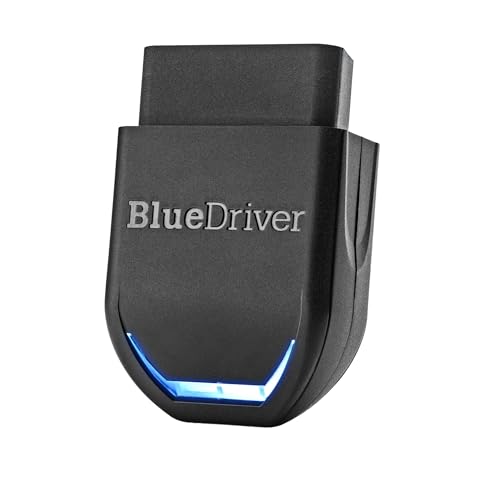
This product is a compact Bluetooth device that plugs into a vehicle's diagnostic port and uses the BlueDriver app on an iPhone, iPad, or Android device. It is intended to read and clear diagnostic trouble codes, display live data and freeze-frame information, and show emissions readiness. The product is powered by the vehicle and has no separate rechargeable battery or charger. BlueDriver's own compatibility tool identifies support by market, year, make, model, engine, system, and service feature, rather than treating enhanced functions as universal. Its app listing documents generic code reading, Mode 6 results, readiness status, and selected enhanced coverage for named makes. No product-specific accredited laboratory report was located to independently verify diagnostic accuracy on identified vehicles and firmware versions.
This product suits a hands-on owner of a supported 1996 or newer vehicle who wants a phone-based way to read generic engine and emissions codes, inspect readiness before an inspection, and save live-data or freeze-frame information. It is more appropriate when the buyer first uses the maker's vehicle checker to confirm the exact engine and enhanced systems needed. It also fits users willing to keep the app and sensor firmware current and remove the device when scanning is finished.
It is not appropriate for anyone who needs independently demonstrated scan accuracy for compliance, professional diagnosis, or a safety-critical repair decision. It also does not suit users who expect every ABS, airbag, TPMS, transmission, reset, or active-service function to work on every 1996 or newer vehicle. Because published research identified a wireless access concern on tested LSB2 firmware, it should not be treated as a device to leave continuously connected in a vehicle, especially where unauthorized vehicle-network access is a concern.
The main safety issue is digital rather than chemical. CERT previously documented unauthenticated Bluetooth access in this product line, and the vendor issued a firmware mitigation. More importantly, a 2025 academic study found that tested LSB2 units running firmware 2.59 and 2.60 could still accept connections after the intended timeout and could send arbitrary CAN frames. Keep firmware current, pair only when needed, and unplug the device after scanning. The app's Google Play disclosure says optional email address and user IDs, app activity, crash logs, and device identifiers may be collected, while declaring no third-party data sharing and encryption in transit. No product-specific CPSC or NHTSA recall record was located during this review. The one-year warranty may extend use, but no repair-parts, battery-service, or US electronics-recycling program for this product was found.
This is a compact Bluetooth scan tool that plugs into a vehicle's diagnostic port and uses the BlueDriver app on an iPhone, iPad, or Android device. It is intended to read and clear generic engine codes, show live data, freeze-frame information, Mode 6 results, and emissions-readiness status. The maker also states that enhanced code access is available for selected systems and named vehicle makes, with some model-year limits. Its companion iOS app has a public, recent version history that includes coverage updates and performance releases. BlueDriver documents that clearing engine codes resets emissions self-tests, and its support material explains how to inspect readiness status. The product is a read-and-clear diagnostic tool, not a documented actuator-control or vehicle-coding tool. No product-specific ISO/IEC 17025 laboratory report was located to independently verify diagnostic accuracy across identified vehicles and firmware versions.
This product suits a North American owner of a 1996 or newer OBD-equipped car, SUV, or light truck who wants to investigate a check-engine light, inspect readiness before an emissions test, or capture freeze-frame and live-data information using a phone. It is also relevant for a used-car inspection when the buyer checks whether engine codes were recently cleared. Buyers should use BlueDriver's compatibility information first if enhanced ABS, airbag, TPMS, or transmission code access is important.
It is not suited to anyone who needs bidirectional commands, actuator tests, module coding, calibrations, or manufacturer-level service procedures. It is also not a substitute for professional diagnosis of brake, airbag, steering, throttle, battery-management, or transmission faults. Owners of vehicles outside North America, older vehicles, diesels, hybrids, or makes not clearly covered for enhanced diagnostics should confirm exact support before relying on it. Users uncomfortable with Bluetooth-connected vehicle hardware should install available sensor firmware updates and remove the tool when it is not needed.
The product has no stated internal rechargeable battery or mains charger, so routine use does not add battery-charging or battery-disposal concerns. It draws power from the diagnostic port. A traceable FCC equipment authorization has been reported for the LSB2 Bluetooth transmitter, although no public UL or ETL electrical-safety listing for this exact product was located. No product-specific CPSC or NHTSA recall was found in the sources reviewed. A significant security history matters. CERT published a 2016 vulnerability affecting the LSB2 that allowed Bluetooth access without a PIN and could expose the vehicle network. The published mitigation was a firmware update that restricts discoverability after plug-in. The Android store disclosure says data is encrypted in transit, allows deletion requests, and declares no third-party data sharing, while the product can also be used as a guest. For disposal, treat it as electronic waste. The maker does not publish a product-specific US recycling or repair-parts program.
This is a wired, handheld Android diagnostic product with a touch screen, internal lithium battery, diagnostic cable, Wi-Fi setup, VIN decoding, live data, code reading and code clearing. It plugs into the vehicle diagnostic connector and is intended for 12 V passenger vehicles with a standard OBD-II socket. The manufacturer independently describes the current 123X V3 line as a DIY-oriented tool for basic diagnostics of four core systems, engine, transmission, ABS, and SRS, plus generic OBD functions and seven special functions. That is a narrower, more concrete scope than broad marketplace wording about all-system access. An FCC filing verifies a 2.4 GHz radio authorization for a CRP123X model, but no product-specific accredited laboratory report was found to validate diagnostic accuracy across identified vehicles, software versions, CAN-FD, DoIP, or every advertised reset.
It suits a hands-on owner of a 12 V passenger vehicle who wants a wired screen-based tool for generic OBD fault codes, emissions readiness, live data, and basic checks of the four manufacturer-stated core systems. It is most appropriate when the buyer can confirm the exact vehicle, model year, engine, and needed service function with LAUNCH before use. It also fits users willing to read OEM repair information rather than treating a trouble code or reset as a completed diagnosis.
It is not suited to a technician or owner who needs proven coverage for every module, active tests, coding, programming, security-gateway work, or dependable CAN-FD and DoIP access on a particular vehicle. It is also unsuitable as the only source of direction for ABS, airbag, steering, throttle, battery-management, transmission, or diesel particulate filter service. Those jobs can require OEM-specified conditions, calibration, relearn steps, and a confirmed vehicle-specific procedure.
The product has a built-in lithium battery and a detachable diagnostic cable. A CRP123X radio filing is traceable through the FCC, which supports the legitimacy of a wireless radio authorization for that model family. The manufacturer also provides a U.S. support address, telephone number, and email contact. Searches of public CPSC and NHTSA recall resources did not surface a product-specific recall or warning for this diagnostic product. The available documentation does not establish a UL or ETL listing for the rechargeable battery, charger, or external power supply. It also does not document battery replacement, repair parts, recycled-content use, or a product-specific U.S. take-back path. The cable can be separated from the unit, which may help if the lead fails, but long-term repairability remains unproven. Clearing emissions codes should not be treated as a repair, because EPA guidance explains that it resets readiness monitors and can leave the vehicle unready for inspection.
This is a handheld, wired OBD diagnostic tablet for passenger vehicles. It has a 5-inch touchscreen, Android 8.1, a rechargeable roughly 6,000 mAh battery, a vehicle diagnostic cable, Type-C charging cable, carrying bag, and Wi-Fi capability. It connects at the vehicle diagnostic port and is intended to read generic engine-emissions information plus selected enhanced functions for engine, transmission, ABS, and airbag systems. The published V3 manual states that it can show codes, live data, freeze-frame information, I/M readiness, monitor tests, EVAP and oxygen-sensor tests, and seven reset or service functions. Those enhanced functions vary by vehicle make, model, and year. A closely matching CRP123X V3 platform has a traceable FCC equipment authorization for its Wi-Fi radio. No product-specific accredited laboratory report was found that validates diagnostic accuracy on named vehicles and firmware versions.
It suits a hands-on owner or independent technician who wants a wired touchscreen tool for checking a 1996 or newer light-duty vehicle's generic emissions status, stored codes, freeze-frame data, and readiness monitors. It is also suited to users who will first confirm their exact make, model, model year, engine, and needed reset function with Launch support or the tool's current coverage screen. The supplied case, cable, onboard screen, and stated rechargeable battery make it practical for occasional garage or mobile use.
It is not for anyone who needs documented accuracy verification across a fleet, legally defensible inspection work, or guaranteed coverage for a particular vehicle before purchase. It is also not appropriate for untrained users to treat a trouble code as proof that a specific part has failed. Brake bleeding, electronic parking-brake service, steering calibration, battery registration, throttle relearn, and DPF regeneration can require vehicle-specific preconditions and repair procedures. Use OEM information or qualified service for safety-related faults and active procedures.
The main safety strength is traceability of the closely related V3 wireless platform through an FCC authorization record, plus a published US support contact and privacy policy. The policy describes collection of account, order, support, and device-related website information, but it does not clearly explain scanner-specific collection of vehicle identifiers, diagnostic records, or update security. No matching public UL or ETL listing was found for the product's rechargeable battery or charging setup. The product can display readiness and freeze-frame information that supports emissions diagnosis. Clearing codes should not be confused with fixing a fault. EPA inspection guidance says clearing codes or readiness information should be reserved for repair because the codes and freeze-frame data can be important to proper diagnosis. The manufacturer states that it provides lifetime software updates, but no public dated update history, battery-replacement program, repair-parts catalog, or US electronics-recycling route was found.
This product is a corded vehicle diagnostic tablet with a 4.3-inch display, a detachable 6-foot 16-pin diagnostic-port cable, 4 GB of memory, Bluetooth and Wi-Fi app connectivity, and optional three AA batteries for use away from the vehicle. It is used with the ignition on to read generic emissions data and, where the selected vehicle supports them, scan vehicle modules and run service functions. The manufacturer’s manual documents generic OBD functions including fault-code retrieval, freeze-frame data, live data, monitor tests and readiness status. It also documents manufacturer-dependent scans of engine, transmission, ABS and airbag systems, plus workshop procedures such as oil, battery and electronic parking-brake resets. The product has a vehicle compatibility selector, which is important because app functions and service coverage vary by vehicle year, make, model and manufacturer support. Public materials reviewed did not provide a model-specific accredited diagnostic-accuracy report.
This product suits a US or Canadian home mechanic who wants a dedicated, wired scanner for a supported OBD2 vehicle and is prepared to verify each enhanced function before relying on it. It is especially relevant for documenting generic engine faults, freeze-frame information, live data and readiness status before arranging repair. It also fits users who can follow vehicle-specific service instructions and who value a physical screen, a detachable cable, a carrying case and access to phone or email support.
It is not for someone who needs independently proven accuracy across a defined fleet, or a guarantee that every ABS, airbag, transmission, battery, brake-bleeding or reset function will work on a particular vehicle. Do not use it as a substitute for an OEM procedure when working on braking, airbag, steering, throttle, high-voltage hybrid, transmission or security-related faults. Privacy-sensitive users who do not want diagnostic records, vehicle identifiers or location handled through an app should avoid optional app pairing or review its privacy controls first.
The manual includes meaningful workshop safety instructions. It calls for ventilation around running engines because of carbon monoxide, eye protection, control of ignition and transmission position, caution around hot and moving parts, and precautions around fuel and battery vapors. It also requires a confirmation before clearing codes and explains that clearing them removes freeze-frame information and resets emissions readiness monitors. The optional mobile app has a published privacy policy, but the policy states that it may collect vehicle identifiers, diagnostic information and geolocation. It also describes sharing certain data for repair estimates, nearby providers, analytics and aggregated vehicle-information uses. The scanner uses replaceable AA batteries and has a detachable cable, which can reduce disposal from those components. No model-specific public electrical listing, radio authorization record, independent accuracy report, repair-parts program or recycling program was identified in the reviewed materials.


