Best Overall

Wicked Ridge Rampage XS Crossbow - 390 FPS
High-performance speed of 390 FPS.
Includes ACUdraw for easy cocking.
Comes with lighted 3X Pro-View Scope.
 Brianna York
High-performance speed of 390 FPS.
Includes ACUdraw for easy cocking.
Comes with lighted 3X Pro-View Scope.

Impressive 410 FPS speed for quicker shots.
Silent cocking mechanism for stealthy use.
Compact design for easier handling and transport.

Compact size for easier handling and transport.
ACUdraw Silent ensures quiet cocking.
Pro-View 400 Scope enhances down-range accuracy.

High speed performance at 410 FPS.
Convenient cocking and de-cocking system.
Accurate RangeMaster Pro Variable Speed Scope.
Redesigned stock enhances user comfort and stability.
Anti-dry fire safety feature prevents accidental firing.
High power output with 405 FPS for precision.

Lightweight design increases ease of handling.
ACUslide system allows safe and quiet cocking.
Pro-View 400 Scope enhances shooting accuracy.

High-speed shots with 410 FPS performance.
Includes illuminated scope for better targeting.
Comes with essential accessories for convenience.

High-speed performance with 400 FPS capability.
ACUdraw system simplifies cocking process.
Includes precision Pro-View 400 lighted scope.

Extremely powerful with 415 FPS speed.
Precision-grade trigger for accurate shooting.
High kinetic energy at 141 foot-pounds.

High-speed 405 FPS for quick, precise shots.
Includes essential accessories for ready-to-use setup.
Lightweight design enhances mobility and handling.
Start with the exact model’s manual. It should specify compatible bolt length, nock type, and minimum finished-bolt weight. The supplied products commonly require details such as 20- or 22-inch bolts, particular clip-on, half-moon, or Alpha-Nock formats, and minimum finished weights from 370 to 410 grains. A bolt retainer, nock sensor, or dry-fire inhibitor can reduce risk, but none removes the need to seat the bolt fully against the string and inspect it for cracks, damaged nocks, loose fletching, or other defects. A product’s instructions should also cover eye protection, hand placement, loading, unloading, storage, transport, inspection intervals, lubrication, and what to do after a dry fire.
Cocking and unloading deserve separate attention. Rope cockers, sleds, and cranks can reduce the effort needed to draw a 175- to 210-pound system, but they still require correct hook placement, controlled handle movement, and inspection of cords and straps. Many supplied products cannot be safely de-cocked with their cocking aid; the instructions instead require firing a practice bolt into a suitable target or safe ground where lawful. A true de-cocking system should provide an illustrated, model-specific procedure and controlled backwinding rather than relying on hand control of the string.
Treat speed, kinetic-energy, trigger-pull, range, and accuracy figures as conditional measurements. A headline such as 390, 400, 405, 410, or 420 fps may depend on a lighter bolt than the one included. A substantiated claim identifies bolt mass, configuration, distance, chronograph or accuracy method, and results. Independent field measurements can support a claim, but they are not the same as a model-specific laboratory report covering trigger, drop, abuse, anti-dry-fire, fatigue, cocking-cycle, or component-containment testing.
For certification and accountability, do not rely on an uncheckable tested badge. The supplied reviews found that ANSI/NACF 001-2018 was withdrawn in February 2021, so it is not a current recognized certification route. Stronger evidence would identify the exact model and sample, test method, pass criteria, laboratory, and production or serial traceability. Buyers should be able to check the manufacturer’s registration and warranty system, recall notices in the CPSC Recalls database and SaferProducts.gov, and the laboratory’s accreditation through A2LA or ANAB with an applicable ISO/IEC 17025 scope.
Across the supplied products, recurring warnings are significant: these crossbows are not for children, unsupervised beginners, casual backyard use, or homes without secure restricted storage and a controlled firing lane. Users need a safe backstop, eye protection, clear hand and finger placement, compatible bolts, pre-use inspections, and a lawful, suitable way to unload. No supplied product had model-specific independent laboratory safety evidence for every major mechanism, and no supplied product offered a fully documented environmental end-of-life program. One product also carried a Proposition 65 lead warning, although the available information did not identify the component or exposure route.
Crossbow safety is shaped by stored energy, projectile control, maintenance, and the quality of the evidence behind protective claims. The scores below compare the supplied products on those specific questions; they do not replace the exact-model manual, recall check, or safe handling training.
This measures protection against projectile, eye, hand, laceration, and impact injuries. For crossbows, meaningful controls include finger guards, pass-through foregrips, enclosed trigger areas, clear firing-path warnings, and instructions keeping bystanders behind the shooter. The supplied products scored 72–79: higher-scoring designs combined documented hand-placement guidance and protective hardware, while lower scores reflected less complete evidence or greater dependence on user technique.
This measures whether the trigger, manual safety, and sear resist firing without a deliberate pull. That matters because a loaded crossbow can release enough energy to cause severe injury even during handling, transport, or loading. Supplied scores ranged from 69 to 75. The higher scores had documented safety engagement and trigger-related instructions, but no product had a model-specific independent report covering trigger, drop, and abuse testing.
This measures whether the product prevents firing without a correctly seated, compatible bolt and clearly states length, nock type, and minimum finished weight. Wrong or underweight bolts can damage strings, limbs, and cables and may send fragments toward the user. Scores ranged from 73 to 80. Higher-scoring products supplied concrete bolt and nock limits plus retention or inhibitor features; lower scores relied more heavily on correct loading by the user.
This measures control of rope cockers, sleds, cranks, hooks, handles, and stored energy during loading and unloading. It is especially important because many products use 175- to 210-pound draw systems and several supplied models cannot be safely uncocked with their ordinary crank or rope device. Scores ranged from 62 to 78. The strongest result belonged to a product with a documented controlled de-cocking procedure; ordinary effort reduction alone was not enough.
This measures whether limbs, cams, cables, strings, rails, stocks, and fasteners withstand use without fracture, derailment, or flying fragments, and whether inspection and replacement support are available. Supplied scores ranged from 70 to 76. Higher scores reflected clearer maintenance intervals, replaceable wear parts, and service support. No supplied product had a model-specific independent fatigue, proof-load, dry-fire-containment, or component-failure report.
This measures whether instructions clearly address assembly, inspection, compatible bolts, loading, unloading, dry-fire response, eye protection, storage, transport, and keeping people out of the firing path. Scores ranged from 70 to 87. The higher-scoring manuals gave concrete bolt limits, hand-placement rules, inspection steps, and unloading procedures. Lower scores were associated with incomplete model-specific documentation or greater ambiguity about package contents and safe unloading.
This measures whether trigger, safety, anti-dry-fire, bolt-retention, finger-protection, and cocking claims are supported by reproducible model-specific testing that identifies the sample, method, pass criteria, results, and laboratory. Scores were 68–72, a narrow range because no supplied product had the requested accredited laboratory report. Manufacturer manuals and field reviews provided useful evidence, but they did not establish full trigger, drop, abuse, fatigue, or containment performance.
This measures whether the exact product and production batch can be connected to independent evidence, manufacturer support, and a usable serial-number system. Scores ranged from 70 to 77. Higher-scoring products had serial registration, warranty or repair pathways, and some independent performance evidence. A strong traceability system still does not prove that a safety mechanism passed independent testing, and buyers should verify the seller, exact listing, serial records, and any recall status.
This measures whether advertised performance states bolt mass, configuration, distance, and test method and matches reproducible results. Scores ranged from 54 to 82. The strongest claims identified the test-bolt condition and had independent chronograph or accuracy support. Lower scores involved conflicting speed figures, missing bolt mass or test setup, or no independent result. A lighter test bolt can make a headline speed look better than the supplied configuration.
This measures whether affected units are identified precisely, hazards are communicated, remedies are effective, and safety notices remain accessible. Scores ranged from 71 to 76. Higher-scoring products had serial-number registration and service or warranty pathways, while lower scores provided less complete accountability evidence. Older recalls involving other models are not evidence that the reviewed product is recalled, but they show why registration and checking CPSC records matter.
This measures durability, repairability, replaceable wear parts, material disclosure, and steps to reduce lost bolts and discarded composite, plastic, battery, or lead-containing components. Scores ranged from 53 to 73. Higher-scoring products offered replacement strings, cables, bolts, nocks, or service parts, helping extend product life. Across the set, material disclosure, lost-bolt recovery, recycling, and end-of-life guidance remained limited; one product also carried an unspecified Proposition 65 lead warning.
This is a forward-draw hunting crossbow package with an integrated ACUdraw crank, a lighted 3X scope, quiver, and bolts. Wicked Ridge states that the 5.8-pound crossbow shoots up to 390 feet per second. That headline is qualified by a 370-grain bolt specification, which is important because bolt mass materially affects speed and stored-energy loading. Its documented safety design includes an automatically engaging trigger safety, a Dry-Fire-Inhibitor, bolt retention, a pass-through foregrip, and safety wings intended to keep hands below the flight deck. The manufacturer also specifies compatible nock systems and a 370-grain minimum finished arrow weight. An independent magazine test of the related Tactical Stock Rampage XS measured 345.7 feet per second with a 401.2-grain manufacturer bolt, plus a 4.12-pound average trigger pull. That test was not of this ACUdraw package and was not a formal safety certification test.
This product suits an adult hunter who can establish a controlled target area and follow a detailed crossbow routine before every use. It is especially relevant for someone who wants a crank-assisted cocking method instead of drawing a 175-pound bowstring by hand, while accepting that safe uncocking still requires a deliberate shot into an appropriate target or backstop. It also fits users willing to use the specified 20-inch compatible bolts, inspect strings, cables, nocks, and crank components, and register the product for factory support.
It is not appropriate for unsupervised minors, households where children or uninformed visitors may access it, or anyone without a secure place to shoot and recover bolts. It is also a poor fit for a user who needs a hand-operated crank to safely decock after a hunt, since the manual specifically says not to uncock with the ACUdraw. Avoid it if you plan to use unverified bolts, flat or moon nocks, underweight arrows, damaged carbon shafts, or modified safety parts.
The main health issue is stored energy. The manual requires a safe firing direction, target awareness, eye protection, inspections before each session, and removal from service when strings, cables, limbs, bolts, or hardware appear damaged. It warns that damaged carbon bolts can shatter, that underweight arrows can create a dry-fire effect and limb failure, and that the crank magnet can interfere with pacemakers or other electronic implants. A CPSC recall announced on May 18, 2015 covered older named TenPoint and Wicked Ridge models made from 2011 through 2014, not the Rampage XS. The recall used model and serial-number ranges and offered repair for an unexpected-firing hazard, showing an established corrective-action process. For field impact, the product uses replaceable bolts and serviceable strings, cables, and cocking components, but no product-specific recycling or disposal program was found for carbon shafts, composite limbs, polymer parts, or lighted nock batteries.
The Wicked Ridge RDX 410 is a reverse-draw hunting crossbow package with an integrated ACUdraw Silent crank, illuminated Pro-View 400 scope, quiver, and three Match 400 carbon arrows. Manufacturer specifications list a 29-inch length without the stirrup, 15-inch uncocked and 9-inch cocked width, 200-pound draw weight, and 7.5-pound bare weight. The maker states that the crank reduces operating effort to 5 pounds and that the package reaches 410 fps with a 370-grain arrow. Its supplied 410-grain arrows are listed at 400 fps and 146 foot-pounds. An independent magazine test averaged 402 fps over three bolts, which is close to the stated headline speed but is not a laboratory safety test. The product documentation identifies a dry-fire inhibitor, manual safety, finger-protection wings, and specified Alpha-Nock arrow compatibility.
This product suits an experienced adult hunter or range user who wants a compact reverse-draw crossbow and is willing to follow a detailed loading and maintenance routine. It is especially relevant for users who benefit from the maker-stated 5-pound crank effort instead of hand cocking a 200-pound draw-weight bow. The buyer should have a controlled target setup, use the specified Alpha-Nock arrows, wear eye protection, inspect strings and crank components, and have a plan to safely discharge a loaded bow.
It is not suited to unsupervised beginners, children, casual households, or anyone without a secure backstop and a disciplined loading routine. The product stores substantial energy and the instructions warn that frayed crank straps, over-cranking, an improperly stored claw, and incorrect cocking steps can cause serious injury. It is also a poor fit for users who need a crank-operated decocking method, since the included ACUdraw Silent must not be used to decock the bow. Do not use unapproved arrows or substitute nock styles.
The main health issue is mechanical injury, not chemical exposure. The maker's instructions require safety glasses and identify hazards from limbs, cables, strings, crank cords, flying parts, dry-fire events, and fingers entering the flight deck. The product has a documented dry-fire inhibitor, manual safety engagement during cocking, specified Alpha-Nock arrow compatibility, and prominent cocking instructions. However, no independent accredited laboratory report was located that validates these mechanisms under trigger, drop, endurance, or misuse testing. Materials are only partly disclosed. Trade reporting identifies a cast aluminum riser and glass-filled polypropylene stock, while the package includes carbon arrows with aluminum inserts and replaceable nocks. The maker publishes lubrication and inspection guidance, provides replacement support, and offers a limited lifetime operational warranty, though strings and cables are excluded. No product-specific end-of-life or recycling instructions were found for worn composite arrows, strings, electronics, or plastic components. A 2015 CPSC recall involved older Wicked Ridge models manufactured from 2011 through 2014, not this RDX 410 model.
The Titan 400 is a forward-draw hunting crossbow package. It includes a Pro-View 400 scope, a quiver, three Pro Elite 400 carbon arrows, and an integrated ACUdraw Silent crank-cocking device. TenPoint lists the product at 33 inches long, 6 pounds, 215-pound draw weight, and 13 inches wide uncocked, narrowing to 9.75 inches when cocked. Its advertised 400 fps figure is qualified by a 410-grain Pro Elite 400 arrow, with stated kinetic energy of 146 foot-pounds. The maker specifies that supplied arrows are 20 inches, 410 grains plus or minus 5 grains, and use Alpha-Nock HP nocks. The owner documentation provides unusually detailed handling, trigger, hand-placement, loading, maintenance, and storage warnings, but no model-specific independent safety or durability test report was located.
This product suits an experienced adult hunter or supervised adult-range user who wants a compact, forward-draw crossbow package and can follow a detailed operating routine. It is particularly relevant where lower crank effort is useful, because TenPoint states that the integrated cocking device reduces operating force to 5 pounds. The user should have a safe range or lawful hunting area, suitable arrow-discharge space for uncocking, eye protection, and willingness to inspect strings, cables, nocks, and the cocking strap before use.
It is not suited to unsupervised minors, casual users unwilling to study the manual, or households where a cocked projectile launcher cannot be securely controlled and stored. It also does not fit users who need to de-cock mechanically after a hunt, because this model must be discharged with a suitable arrow rather than safely de-cocked with its crank. Anyone unable to maintain strict finger clearance, manage a high-energy 215-pound draw system, inspect wear parts, or provide a clear downrange area should choose a different use arrangement.
The main health issue is stored-energy and projectile risk, not chemical exposure. The documentation specifically calls for safety glasses during assembly, cocking, loading, servicing, and shooting because strings, limbs, cables, and cocking components can fail. It also gives specific trigger-safety and hand-position rules, requires compatible Alpha-Nock-family arrows, and warns against dry-firing. The crank device lowers cocking effort according to the manufacturer, but it is not a de-cocking system and has no anti-over-cranking slip clutch. The package uses carbon arrows with aluminum inserts and polymer nock components. These are durable field consumables, but damaged carbon arrows can splinter and should be removed from use. The manual recommends recovering the discharge or practice arrow when uncocking, which also helps limit field loss. TenPoint publishes replacement string and cable options and offers factory warranty service after product registration. No current recall naming this product was located, although an older TenPoint recall involved different models and a safety-related firing hazard.
This is a reverse-draw hunting crossbow package with a crank-operated ACUdraw De-Cock system, a variable-speed RangeMaster Pro scope, three Match 400 carbon arrows, and a three-arrow quiver. It is intended to cock, load, aim, fire, and then unload without firing a bolt. The manufacturer lists a 200-pound draw weight, 29-inch length without the stirrup, and 15-inch uncocked or 9-inch cocked width. The advertised 410 fps is qualified in the manufacturer catalog as using a 370-grain Pro Lite arrow. With the included 410-grain Match 400 arrow, the same catalog lists 400 fps and 146 foot-pounds of kinetic energy. The current catalog lists 8.25 pounds with the ACUdraw De-Cock fitted, while an earlier specification lists 7.5 pounds without accessories. Manufacturer documentation gives detailed cocking, de-cocking, inspection, and arrow-handling instructions, but no model-specific independent safety-laboratory report was located.
This product suits an experienced adult hunter who needs a compact crossbow for blinds, stands, or dense cover and specifically wants to return the string to rest without taking a discharge shot. It is most appropriate for someone able to follow a multistep crank procedure, inspect strings, cables, nocks, and bolts before use, and keep a controlled firing area. The included 400-grain arrows and scope make it a more complete starting package, but correct arrow and nock compatibility still needs to be maintained after replacements.
It is not appropriate for unsupervised minors, casual target users without formal crossbow instruction, or households that cannot control access, transport, and a safe firing direction. It is also a poor fit for anyone who expects independently certified trigger, anti-dry-fire, structural, or crank-failure testing, because no model-specific report was located. Users with limited hand control, difficulty following the crank sequence, or reluctance to perform regular string and cable inspections should use equipment only after qualified fitting, instruction, and supervision.
The main health consideration is stored energy. The manufacturer documents a D1 trigger with a dry-fire inhibitor, a nylon arrow-retention brush, fore-grip safety wings, and an ACUdraw De-Cock procedure that begins by removing the arrow and requires the crank claw to engage both sides of the string. Those are useful design controls, but they are manufacturer-documented features rather than independently validated safety-test results. The manufacturer provides maintenance guidance for lubrication, string and cable wear, nock alignment, and inspection after a dry-fire inhibitor event. Its registration system records a serial number and requires the owner to attest to reading safety instructions. A 2015 CPSC recall involved older TenPoint and Wicked Ridge models made from 2011 through 2014, not this product, and identified affected units by model and serial range. Material disclosure and disposal guidance for carbon bolts, synthetic parts, and worn strings remain limited, so damaged bolts should be removed from field use and disposed of according to local waste rules.
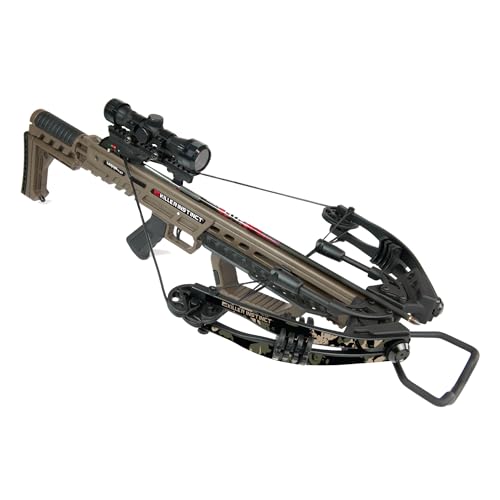
This is a compound hunting crossbow package with a 4x32 scope, two 20-inch bolts, and a rope cocking device. Independent retailer listings corroborate a 210-pound draw weight, 33.5-inch length, 7.5-pound listed weight, and an advertised speed of up to 405 fps. The high draw weight means it is a stored-energy device that requires deliberate loading, handling, and a controlled shooting area. The maker’s current instruction manual for this configuration documents an auto-engaging manual safety, an anti-dry-fire release intended to prevent moving the safety to Fire until a bolt is properly loaded, and an arrow retainer. It also specifies finished bolts of at least 20 inches and 370 grains, using half-moon or KI V-nocks. No model-specific independent laboratory report was located for the trigger, anti-dry-fire system, cocking aid, structural durability, or advertised speed.
This product suits an experienced, trained adult crossbow user who has a controlled range or hunting setup with a safe backstop, can follow inspection and bolt-compatibility rules, and is comfortable using a rope cocker for a 210-pound draw system. It is also suited to someone who values a complete basic package and will register the product, retain the receipt and serial number, and follow the maker’s service schedule. The supplied scope and bolts support initial setup, not exemption from sight-in and safety practice.
It is not suited to untrained users, children, households where controlled storage cannot be maintained, or anyone unable to safely manage a high-force cocking process. It is also unsuitable where there is no approved range, reliable backstop, or room to discharge a loaded crossbow safely, because the instructions do not permit hand, rope, or crank decocking. Buyers seeking independently documented trigger, drop, anti-dry-fire, fatigue, or cocking-device testing should choose a product with those model-specific records available before use.
The principal health issue is physical injury from a fast, stored-energy projectile system. The maker’s manual is strong on practical hazard communication. It calls for safety glasses, clear firing paths, below-rail hand placement, use of a rope cocker or compatible crank, and inspection of every bolt for cracks, looseness, or other damage. These are manufacturer instructions, not independent validation of the mechanisms. The product is sold with a California Proposition 65 cancer and reproductive-harm warning through multiple specialist retailers. The available listing does not identify the chemical or component, so exposure cannot be characterized from the public record reviewed. Its lifetime warranty covers many non-wear parts, while limbs have five-year coverage and strings, cables, bolts, and accessories are treated as wear items. The manual requires damaged bolts to be discarded, but it does not provide material-specific disposal or recovery guidance. A 2017 CPSC recall involved older Killer Instinct-branded TriggerTech components, not this product, and the current model was not identified as affected.
This is a forward-draw hunting crossbow package with a 215-pound draw weight, integrated crank cocking and de-cocking system, optic, quiver, and three carbon arrows. TenPoint lists it at 6.9 pounds, 32.5 inches long, 9.75 inches wide when cocked, and 390 feet per second using a 410-grain Pro Elite 400 arrow. Those are manufacturer specifications, not laboratory certifications. Independent field testing supports the speed claim closely. Outdoor Life recorded 388.1 feet per second with a 407-grain arrow and averaged 1.653-inch groups at 50 yards across six three-shot groups. TenPoint's documentation also provides model-family instructions for hand placement, arrow seating, safe transport, inspection, cocking, unloading, and dry-fire response. However, no model-specific accredited laboratory report was located for the trigger, anti-dry-fire device, or crank failure testing.
This product suits an experienced adult hunter or target shooter who wants a compact, relatively light crossbow with a built-in crank system rather than manual cocking. It is especially relevant where controlled unloading matters, because the ACUslide system is designed to de-cock without firing an arrow. The buyer should be prepared to use the specified arrow and nock system, inspect strings and cables before shooting, read the full instructions, and practice the loading and de-cocking sequence at a supervised range before field use.
It is not suited to unsupervised novices, children, households where secure locked storage cannot be maintained, or anyone unwilling to follow a deliberate loading and unloading procedure. It should not be used by people with impaired grip, judgment, vision, or medication and alcohol effects that could compromise weapon handling. It is also a poor fit for buyers seeking independently certified trigger, drop, abuse, or crank-cycle test results, because no model-specific accredited laboratory evidence was located. Never treat its anti-dry-fire system as a substitute for confirming proper arrow seating.
This is a high-energy projectile device, not a casual recreational product. Its manufacturer manual gives unusually specific warnings about finger placement, keeping the firing path clear, wearing eye protection, checking the target and background, avoiding dry fires, and inspecting strings, cables, and arrows for damage. The manufacturer also specifies compatible Pro Elite 400 arrows with Alpha-Nock HP nocks for this ACUslide configuration. Those controls reduce risk only when the procedure is followed. A 2015 CPSC recall involved older TenPoint and Wicked Ridge models, not this product, after reports of arrows releasing under a particular re-engaged-safety condition. The recall used named models and serial-number ranges with a repair remedy, which shows a documented corrective-action process. For lifecycle concerns, service support and replaceable strings, cables, nocks, arrows, and crank components support repair. Material disclosure and end-of-life guidance for carbon arrows, composite parts, and damaged strings remain limited, and no recycled-content or take-back program was located.
This is a compound hunting crossbow package built around a 190-pound draw-weight platform. Barnett lists the core Whitetail 410 at 7.6 pounds, 35.25 inches long, 9.19 inches axle to axle when cocked, with a 15.5-inch power stroke. The manufacturer states that it ships with an illuminated 4x32 scope, two 22-inch Hyperflite bolts, a side-mount quiver, rope cocking sled, and lubrication wax. Barnett states a 410 FPS maximum using a 380-grain bolt, plus a three-pound TriggerTech release, anti-dry-fire system, nock sensor, pass-through foregrip, finger reminders, and bristle bolt retainer. Those are manufacturer claims, not independently reproduced safety or performance results. Barnett publishes a broad owner manual and safety guidance, but an exact-model manual and independent trigger, drop, fatigue, or cocking-device test report were not located.
This product suits an adult hunter or target shooter who has completed hands-on crossbow instruction, has a safe range or approved backstop, and is prepared to inspect bolts, nocks, string, cables, fasteners, and the cocking rope before use. It is most appropriate for someone specifically comfortable maintaining a high-energy, 190-pound-draw crossbow and sourcing the required 22-inch Hyperflite replacement bolts. The supplied scope, quiver, cocking sled, and basic bolts support initial setup, but do not replace supervised safety training.
It is not appropriate for children, untrained users, or households where safe storage and a controlled shooting area cannot be maintained. It is also a poor fit for anyone unable to use a rope cocking device with stable footing, close-toed footwear, and controlled hand placement, including people whose hand, back, heart, or balance limitations could interfere with safe operation. Users who need a product that can be manually decocked should look elsewhere, because Barnett instructs users to unload by shooting into a safe target, not by hand or rope decocking.
The main health issue is stored energy. Barnett's instructions warn that fingers or thumbs near the flight track, string, or cables can be seriously injured or amputated. The manufacturer directs users to wear safety glasses, keep bystanders well behind the shooter, inspect strings, cables, limbs, nocks, bolts, and the cocking rope before every use, and stop using worn or damaged parts. The stated anti-dry-fire and nock-sensor features are useful design claims, but independent model-specific testing was not located. The product uses an aluminum flight track, while the bolt system relies on specialized small-diameter carbon bolts and replaceable nocks, vanes, points, strings, cables, and bristle retainers. Barnett sells replacement bolts and identifies inspection and replacement needs, which supports maintenance rather than disposal of the whole product. No meaningful product-specific recycled-content, end-of-life, or lost-bolt recovery program was found. A CPSC recall for older Barnett models involved a nock-sensor malfunction, not this product.
The Commander 400 is a forward-draw hunting crossbow package with a built-in ACUdraw crank, illuminated Pro-View 400 scope, quiver, and three Match 400 carbon arrows. Seller and manufacturer materials specify a 190-pound draw weight, 12.5-inch power stroke, 11-inch cocked width, and a 400 fps headline speed when using the supplied 410-grain arrow configuration. An independent 2026 field test measured 386 fps with the supplied 20-inch, 410-grain arrows and recorded a 3.68-pound trigger pull. The included arrows have a defined Alpha-Nock HP system, while TenPoint documentation describes a dry-fire inhibitor and automatic engagement of the manual safety during correct cocking. No model-specific third-party drop, sear, anti-dry-fire, or crank load-cycle laboratory report was located.
This product suits an adult hunter or target shooter who wants a complete forward-draw setup and is prepared to follow a deliberate loading routine. It is particularly relevant for users who benefit from mechanical assistance when cocking a 190-pound draw weight, but who can inspect the cord, remove and stow the claw after cocking, and use a proper backstop for every discharge. It also suits owners willing to register the product promptly and maintain strings, cables, rail lubrication, and nock alignment.
It is not suited to inexperienced or unsupervised users, households where children or untrained visitors may access a cocked crossbow, or anyone unable to maintain strict downrange control. It is also a poor fit for users who expect to safely uncock with the crank. The manufacturer specifically warns against that procedure. Buyers who cannot inspect cords and arrows before use, cannot use a suitable target to discharge after a hunt, or need independently published safety-abuse testing should choose a different arrangement.
The main health issue is stored energy. The manufacturer documents a dry-fire inhibitor, automatic safety engagement during correct cocking, and specific precautions for the crank. Those instructions matter because the claw can become a dangerous projectile if left in the trigger box, and a worn or frayed draw cord must be replaced rather than used. A 2015 CPSC recall involved older TenPoint and Wicked Ridge models made from 2011 through 2014, not this Commander 400 model. The recall demonstrates that serial-number identification and corrective action systems exist, but it does not establish safety performance for this newer product. The supplied Match 400 arrows are carbon shafts with aluminum inserts and replaceable nock components. TenPoint publishes maintenance guidance, replacement strings and cables, service channels, and a limited lifetime operational warranty, though strings and cables are excluded from that lifetime coverage. No product-specific recycled-content, take-back, lost-arrow recovery, or end-of-life disposal program was located. Carbon arrows, damaged nocks, worn cords, and any scope batteries should be kept out of the field and handled through appropriate local disposal routes.
The Killer Instinct Burner 415 is a compound hunting crossbow package with a 220-pound draw weight, a rope cocking aid, three 20-inch bolts, a quiver, rail lubricant, string suppressors, and a 4 x 32 scope. The manufacturer lists a Micro-Lite aluminum barrel, a six-position stock, an adjustable foregrip, 6.7-pound weight, and a headline speed of 415 feet per second. Its manual gives model-specific operating limits that matter more than the speed headline. It requires finished bolts at least 20 inches long and 370 grains total, with half-moon nocks, and describes an automatic safety plus an anti-dry-fire mechanism. Those are manufacturer-documented safeguards, not independently published test results.
This product suits an experienced hunter or target shooter who has completed safety training, can maintain a compound crossbow, and wants an adjustable hunting setup with the basic accessories included. It is particularly relevant for users who will follow the specified 20-inch, 370-grain minimum bolt requirement, use the supplied rope cocker every time, inspect strings and cables regularly, and have a safe target area for both practice and unloading. The adjustable stock and foregrip can help accommodate varied body sizes.
It is not suitable for children, untrained first-time users without qualified instruction, or households that cannot secure a high-energy projectile device away from unauthorized access. It also does not fit users who need a mechanically controlled decocking process, because the documented unloading method is a deliberate shot into a safe target or suitable ground. Anyone unable to follow the maintenance schedule, confirm compatible bolts and nocks, or maintain strict finger clearance from the string and cables should choose a different setup or obtain supervised training.
The health picture is dominated by stored energy and projectile risk. The manual gives unusually specific warnings about eye protection, safe direction, backstops, body placement, loaded transport, bolt inspection, and keeping fingers and thumbs below the flight rail and cable path. It also documents an automatic safety and anti-dry-fire mechanism. However, these mechanisms are described by the manufacturer, and no public independent safety test report for this product was located. A 2017 CPSC recall covered certain Killer Instinct-compatible TriggerTech carbide trigger units identified by serial number and date code. That notice does not identify this Burner 415 product, but it illustrates why serial records matter. For lifecycle impact, the aluminum barrel is disclosed and strings, cables, and other wear parts are replaceable through authorized service. The manual calls for regular lubrication, inspection after every shot, and replacement of worn strings and cables, but provides limited material-disposal or lost-bolt recovery guidance.
The BOSS 405 bundle is a compound hunting and target crossbow sold with a detachable Dead Silent Crank, broadheads, and other shooting accessories. The manufacturer’s current product information describes a 405 fps model with a 220-pound draw weight, a Micro-Lite aluminum barrel, adjustable buttstock and foregrip, and a stated 3.5-pound trigger. The bundle listing should be checked against the package contents on arrival because the core manual describes the standard rope-cocker package. Its official manual documents an auto-engaging manual safety, an anti-dry-fire mechanism, an arrow retainer, finger and thumb guards, and clear bolt requirements. It requires finished 20-inch or longer bolts weighing at least 370 grains with half-moon nocks. I found no model-specific independent laboratory report for its trigger, anti-dry-fire device, crank system, speed, or structural durability.
This product suits an experienced adult hunter or target shooter who has completed a hunter safety course or can receive hands-on instruction from a qualified professional. It is for someone able to maintain strings, cables, bolts, fasteners, and rail lubrication on schedule, and who has access to a safe target range with a proper backstop. The included crank is relevant for users who need a more controlled, lower-effort method of cocking a high-draw-weight crossbow, provided they learn its exact procedure.
It is not for unsupervised minors, inexperienced first-time users without qualified instruction, or households that cannot secure it uncocked and inaccessible to children. It also does not fit users who need to decock mechanically without firing a bolt, because the manual directs unloading by shooting into a suitable target or safe ground. Avoid it if a safe shooting lane, backstop, bolt-recovery plan, eye protection, and regular inspection routine are unavailable. Do not use damaged bolts, worn strings, frayed cables, or incompatible nocks.
The principal health issue is acute injury risk from a high-speed bolt, moving string and cables, broadheads, and stored draw energy. The manual gives unusually explicit controls, including safety glasses, a safe firing direction, no loaded carrying, a protected hand position, an anti-dry-fire mechanism, and inspection before every shot. These are manufacturer instructions, not independent performance-test results. The manual also requires a qualified technician for strings, cables, limbs, cams, and related repairs. For longevity and field loss, the manufacturer specifies frequent inspection, rail lubrication every 5 to 10 shots, immediate replacement of worn string or cables, and disposal of damaged bolts rather than continued use. Registration records the model and serial number for warranty service and periodic inspection. Material disclosure is limited. The manufacturer identifies an aluminum barrel, but does not provide a full material or end-of-life disclosure for limbs, bolts, cables, broadheads, lubricants, or other consumables.



