Best Overall
24% off

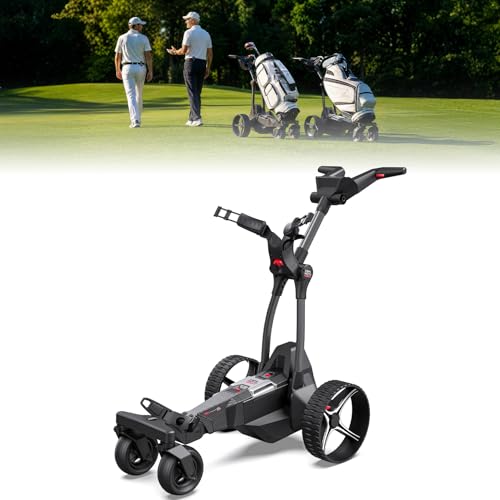
NAVEE Birdie 3X Electric Golf Cart
"Follow Me" feature for hands-free convenience.
Long-lasting battery supports 36-hole play.
Compact design with all-terrain wheels.
 Brianna York
"Follow Me" feature for hands-free convenience.
Long-lasting battery supports 36-hole play.
Compact design with all-terrain wheels.

Convenient remote control for easy maneuvering.
Compact folding design for effortless storage.
Includes essential accessories for enhanced functionality.

Offers multiple control options, including remote.
Cruise control for consistent, effortless movement.
Convenient app integration enhances user experience.

Auto follow and remote control features.
Long-range battery for extended use.
Compact and foldable for easy storage.
Effortless follow mode enhances golfing experience.
Long-lasting 36-hole battery for extended play.
Compact folding design for easy transport.

Power assist mode makes uphill navigation easier.
Remote control feature simplifies cart management.
Compact folding design enhances portability and storage.

Remote control for easy navigation.
Accessories included for convenience.
36-hole battery for extended use.

Remote control offers convenient operation.
Compact folding size for easy storage.
Lightweight design suitable for all terrains.

Effortless remote control for easy maneuvering.
Handles all terrains with automatic downhill control.
Long-lasting battery ensures extended playtime.
Effortless remote control navigation.
Compact design for easy storage.
Durable and reliable in varied terrains.
Start with the operating limits. Look for a stated maximum bag load, trolley weight, slope limit, speed range, charging temperature, and instructions for parking, wet grass, divots, bunkers, and uneven ground. A headline such as “all terrain,” “40 degrees,” “36 holes,” or “45 holes” is incomplete without bag weight, grade, surface, temperature, wind, speed, and battery condition. In the supplied reviews, several range and hill claims were manufacturer estimates rather than independent tests; one product’s own materials even differed between an 18-hole and 36-hole range claim. A repeatable third-party test should disclose the exact model, loaded weight, course grade, surface, weather, speed, and battery condition.
Remote operation adds another safety question. A stop button, stop-on-release control, signal-loss shutdown, anti-tip wheel, gyroscope, rear stability wheel, or electronic parking brake can be useful, but these features do not by themselves prove safe stopping distance or tip resistance. Prefer a manual that explains how the product parks on slopes and what happens when power, radio contact, or battery charge is lost. No supplied product had independently disclosed loaded braking, slope-stability, or tip-resistance testing.
Battery and charger identity matter more than a general “safe battery” statement. The exact removable battery, battery-management system, connector, and supplied charger should match the product and be traceable. For electrical safety, check the exact model and component labels against UL Product iQ, Intertek’s ETL directory, or the CSA listing database. A current listing from an OSHA-recognized testing laboratory is materially stronger evidence than CE, RoHS, FCC, or an untraceable certificate. Also look for the battery’s UN 38.3 transport test summary and, for radio-equipped products, an FCC equipment-authorization record.
Weather claims need similar care. An IP rating applies only to the product or enclosure tested and does not automatically cover the complete trolley, handset, charging port, or charger. IPX5, where specifically documented, concerns water jets; it does not make a trolley safe to submerge or safe to charge outdoors. Across the supplied reviews, manufacturers commonly warned against hosing, pressure washing, standing water, wet connectors, or charging a wet or damaged battery.
Finally, check the ownership route. A removable battery, replacement pack, wheels, remote, charger, straps, and documented service support can keep a trolley in use longer. End-of-life instructions should direct lithium batteries away from household trash and curbside recycling toward an appropriate battery recycler or household hazardous-waste route. No category-wide contraindication was found beyond the recurring need to supervise remote movement, respect load and slope limits, keep charging dry and attended, and avoid relying on unverified range, rain, braking, or “all-terrain” claims.
An electric trolley changes the physical task of golf and adds a rechargeable electrical system. The evidence below separates reduced club-transport effort from unsupported fitness claims, and separates a replaceable battery from a documented U.S. recycling route.
This measures whether the exact battery, protection system, connector, and supplied charger are matched and credibly protected against overheating, shock, burns, and fire. It matters because the battery is removable, rechargeable lithium equipment used around homes and vehicles. Higher-scoring products documented matched components and protections; lower-scoring ones lacked model-specific UL, ETL, or CSA evidence or clear component traceability.
This measures how a loaded trolley starts, stops, parks, tracks, and resists rolling or tipping on slopes and uneven turf. It matters because remote movement can continue near people, water, drop-offs, or other players. Higher scores reflected documented stop controls, signal-loss cutoffs, anti-tip or stability wheels, and parking guidance. No supplied product had independent loaded stopping-distance or slope-stability testing.
This measures whether the complete trolley and its electrical parts remain safe around wet grass, rain, mud, and debris, with clear limits for use and charging. A specific IP rating is more useful than an undefined water-resistant claim, but it may not cover the charger or handset. Higher scores came from specific ratings such as IPX5 or IP66 battery claims; lower scores reflected no rating or warnings against rain, hosing, or immersion.
This measures whether fatigue claims match human evidence and whether the trolley avoids replacing one strain with another, such as lifting a heavy folded unit or exceeding a bag limit. A study of 16 golfers found electric-trolley use had the lowest perceived exertion and heart rate while walking remained active. Higher-scoring products made modest claims and supplied weight or load guidance; lower scores lacked handling limits.
This measures whether claims about range, terrain, waterproofing, follow mode, folding size, weight, and health are specific and consistent for the exact product. It matters because “all terrain,” “36 holes,” and “waterproof” can hide important conditions. Higher scores came from stated limits and conditional claims; lower scores reflected conflicting specifications, unqualified marketing language, or claims unsupported by a manual or test.
This measures whether hole count, distance, remote range, motor capability, and hill performance were tested under disclosed real-use conditions. Higher evidence requires repeatable testing for the exact model, ideally from an ISO/IEC 17025-accredited laboratory or a detailed independent field report. Among the supplied products, most range and slope figures remained manufacturer claims; the limited independent reports disclosed only partial conditions.
This measures whether the trolley, battery, and charger have a current, model-specific listing from an OSHA-recognized testing laboratory. UL, ETL, or CSA records that match the product and component model numbers are stronger evidence than self-issued CE, RoHS, FCC, or untraceable certificates. Scores clustered around the low 70s because no supplied electric product had a verified complete-system listing in the reviewed records.
This measures whether the product provides model, battery, charger, radio, FCC, transport-test, serial-registration, and recall-contact identifiers. It matters because owners need a way to verify legal battery transport, radio authorization, and safety notices. Higher scores came from identifiable FCC authorizations, serial registration, or clearer model documentation. Lower scores lacked battery or charger identifiers, UN 38.3 summaries, radio records, or owner-contact routes.
This measures whether the battery is replaceable and has a realistic U.S. recycling or take-back route, with traceable chemistry and clear no-trash instructions. It matters because powered trolleys create a lithium-battery end-of-life obligation. Higher scores reflected removable batteries and explicit recycling directions; the strongest supplied result was the manual cart, which avoided a battery entirely. Most electric products lacked a named U.S. take-back partner or chemistry disclosure.
This measures whether batteries, wheels, remotes, chargers, and wear parts can be replaced safely, supported by parts lists, repair instructions, warranty terms, or service centers. It matters because a minor failure need not end the trolley’s useful life. Higher-scoring products documented replacement batteries, spare parts, maintenance, DIY videos, or service routes. Lower scores had short or unclear warranties and no parts or repair documentation.
The NAVEE Birdie 3X is a 37.7-pound, folding electric golf push cart for carrying a golf bag rather than a rider. Its documented load limit is 66.1 pounds, with two 120 W wheel motors, a removable 220.32 Wh lithium-ion battery, remote control, phone app functions, and UWB follow mode. NAVEE states a maximum speed of 5.6 mph, a maximum climbing angle of about 25 percent, and up to 36 holes per charge. Its safety documentation is more specific than its marketing. The US manual identifies the battery and supplied charger models, lists battery-management protections, specifies an IPX5 cart rating, and documents a remote stop control plus anti-tip wheel. However, no model-specific UL, ETL, or CSA electrical-safety listing was found, and no independent range, hill, stopping, or tip-resistance test was located.
This product fits a golfer who wants to keep walking a full course while offloading a bag of up to 66.1 pounds, and who can safely lift, fold, transport, and store a 37.7-pound cart. It is most suited to owners who play in ordinary dry-to-damp course conditions, will use the supplied charger indoors on a hard non-carpeted surface, and value remote or follow operation. It also suits owners willing to follow maintenance instructions and use NAVEE's authorized support route if a battery, remote, or wheel needs service.
It is not suited to anyone who needs independently certified electrical safety, independently measured hill performance, or a verified 36-hole result under a particular bag weight and course profile. Avoid it for regular heavy-rain use, washing with a hose, water hazards, or any situation where the charger could get wet. It is also unsuitable for users who cannot safely handle a 37.7-pound folded machine, for children, or for riders. Do not rely on it as walking support uphill, because the manual specifically warns against that use.
The health case is practical rather than therapeutic. Research in 16 skilled golfers using an electric trolley found the lowest perceived exertion and heart rate among the tested bag-transport methods, while activity energy expenditure remained broadly similar. That supports using an electric trolley to reduce the burden of carrying clubs while continuing to walk, but it does not establish a medical benefit for this exact product or for people with mobility limitations. The battery is removable and the manual provides removal steps, identifies it as lithium-ion, and directs owners to a professional recycler or designated after-sales team. That is useful end-of-life guidance, although NAVEE does not identify a US take-back partner or collection network. The manual also carries a California Proposition 65 cancer and reproductive-harm warning without identifying the relevant chemical in the reviewed materials. No US recall or regulator action specific to this product was found in the reviewed sources.
This is a remote-controlled, folding electric golf caddy for carrying a golf bag while the player walks. Alphard states that it weighs 37 pounds without its removable 3-pound battery, folds to 25 by 20 by 17.7 inches, uses dual 180 W hub motors, and includes a 37 V, 236.8 Wh battery with a 42 V, 1.5 A charger. The manufacturer documents automatic parking braking, downhill speed control, a gyroscope, anti-tip bars, remote sleep-stop behavior, and freewheel mode. Those are useful control provisions, but no independent loaded-slope or stopping-distance test was located. The remote radio has a documented FCC Part 15 test report, while no model-specific UL, ETL, or CSA electrical-safety listing was located for the caddy, battery, or charger. Alphard offers a two-year warranty and publishes a parts diagram with several replaceable assemblies.
This product suits a golfer who wants to walk the course while removing most of the work of carrying or pushing a bag. It is most appropriate for someone able to safely load a roughly 40-pound folded unit, willing to follow battery charging and dry-storage instructions, and playing ordinary course conditions rather than relying on extreme-slope use. It also fits owners who value repair access, since Alphard identifies several replacement assemblies and sells a separate battery. The stated 18-hole warranty condition is especially relevant for typical 18-hole rounds with a bag at or below 33 pounds.
It is not suited to anyone who cannot safely lift and place a roughly 40-pound folded caddy into a vehicle, or who needs a trolley designed for unattended operation around water, mud, or heavy rain. Households with children should store the remote securely because the instructions warn that radio signals can pass through walls. It is also a poor fit for users who require independently certified electrical safety, verified ingress protection, or independently measured hill and range performance. Do not use a damaged, leaking, unusually behaving, or water-submerged battery.
Walking golf remains the central health benefit. In a study of 16 skilled golfers, electric-trolley rounds produced lower perceived exertion and lower heart-rate measures than bag carrying or manual trolley use, while activity energy expenditure remained broadly similar across transport methods. That supports modest fatigue-reduction claims, not a specific promise of back protection or a longer golfing career. This caddy itself still weighs about 40 pounds with its battery, so vehicle lifting remains a real handling demand. The removable battery and published spare-parts diagrams support longer service life. Alphard provides a two-year warranty for newer batteries, carts, remotes, and chargers, and describes modular at-home part replacement. However, no manufacturer battery take-back program or battery chemistry disclosure was found. At end of life, lithium-ion batteries should not go in trash or curbside recycling. EPA guidance calls for separate battery recycling or household hazardous-waste collection, with terminals protected and damaged packs handled through the manufacturer or a qualified collection route.
This is a battery-powered, foldable golf trolley for carrying a golf bag while the player walks. The available product manual identifies it as the G5 and describes remote, app, follow, cruise, and manual-push modes. It also states a folded size of 28.7 x 24.8 x 14.1 inches, a removable battery with USB output, and rear anti-tip wheels. These are manufacturer-stated details, not independently tested performance results. The documentation claims up to 28 miles of battery range and stability on slopes up to 30 degrees, but it does not disclose bag load, turf, weather, speed, battery condition, braking performance, or test method. A third-party product listing also makes IPX5 and UL 2271 claims, but no matching public certification listing, battery model, charger model, or certification file was located. Warranty information is inconsistent across available materials, with the manual stating six months for general components and another retail listing stating one year.
This product suits a golfer who wants to walk the course without carrying clubs, has dry storage, and is prepared to inspect the trolley before every round. It is most appropriate for users who can lift and load a roughly 50-pound packaged unit or can obtain help, and who will practice remote and follow functions on open, level turf before relying on them during play. Manual-push operation is useful for a buyer who wants a non-powered fallback when the battery or remote is unavailable.
It is not suited to buyers who need independently certified battery and charger safety, a clearly documented weather rating, or verified hill and braking performance. Avoid relying on it for steep, wet, muddy, crowded, or roadside areas where a remote-controlled trolley could create a runaway or tip-over hazard. It is also a poor fit for households that need readily purchasable replacement batteries, remotes, chargers, and wheels, since a parts catalog and repair instructions were not located. Children should not operate or charge it.
Walking golf can still provide meaningful activity when clubs are transported by an electric trolley. In a study of 16 competitive golfers, electric-trolley rounds had the lowest perceived exertion and lower mean heart rate than carrying or using a manual trolley, while activity expenditure remained broadly comparable. That is category-level evidence, not proof of a health effect from this specific trolley. The G5 documentation describes a removable battery, but it does not identify its chemistry, capacity in watt-hours, model number, recycling route, or take-back program. U.S. EPA guidance says lithium-ion batteries should not go in household trash or curbside recycling because damaged or discarded packs can start fires. No product-specific U.S. recall, SaferProducts report, or regulatory warning was located in the searched public sources. Electrical certification and ingress claims could not be verified in public listing databases for the exact product, battery, or charger.
This is a foldable, remote-controlled electric golf trolley intended to carry a golf bag while the player walks the course. The product description says it has cruise and auto-follow modes, a handheld remote, charger, phone holder, umbrella stand, deep-tread wheels, and a claimed 50-pound total bag-and-accessories capacity. Those are manufacturer-stated specifications reproduced by an independent retail listing, not independently tested results. The same description claims a 42-pound 6061 aluminum frame, IPX5 rain-splash resistance, and anti-tip stability. No model-specific manual, battery chemistry, charger model, rated slope limit, stopping-distance test, electrical-safety listing, or independent range and hill test was located. Warranty information is also inconsistent, with one listing stating one year while the catalog record states two years.
This suits a golfer who wants to keep walking rather than ride in a course cart, but wants less perceived effort from carrying or manually pushing clubs. It is most relevant for fair-weather rounds on familiar courses, where the user can supervise the trolley closely and avoid assuming it can safely manage steep slopes, loose ground, bunker edges, or standing water. The buyer should be comfortable confirming the actual warranty, charging instructions, battery identification, and support contact directly with the seller before use.
It is not well suited to golfers who routinely play steep, muddy, highly uneven, or heavily sloped courses, because there is no verified slope limit, emergency-stop performance, or loaded braking evidence. It is also a poor fit for anyone who needs independently certified battery and charger safety, clear radio authorization, a documented battery recycling route, or assured replacement-part access. Households where a battery must be charged unattended, in a garage near combustibles, or in damp spaces should seek clearer electrical documentation.
Walking golf can still provide meaningful physical activity with an electric trolley. In a published study of 16 skilled golfers using another electric trolley, activity energy expenditure changed only modestly versus carrying or using a manual trolley, while perceived exertion and heart rate were lower with the electric trolley. That supports a modest fatigue-reduction expectation, not a product-specific health claim. The environmental and safety documentation is thin. No battery chemistry, removable-battery details, identified U.S. take-back program, recycler, battery test summary, or parts catalog was located. No product-specific recall or regulator warning was found in the searched U.S. sources, but that is not evidence of electrical certification or long-term repair support. The unresolved one-year versus two-year warranty information also weakens confidence in post-purchase service expectations.
This is a foldable, battery-powered walking golf caddy designed to carry a golf bag while the golfer walks. It can be directed by remote, pushed in a power-assist mode, or set to follow a paired remote through UWB tracking. The manufacturer states that it uses two 240 W motors, a removable 220 Wh lithium battery with battery-management protection, and folds to 26.8 by 22.2 by 15.1 inches. The defining limitation is also clearly disclosed by the manufacturer, follow mode has no obstacle avoidance. It should not be used near water, greens, sand traps, narrow paths, ice, snow, or slopes over 25 percent, about 14 degrees. IPX5 is a specific water-resistance claim, not an immersion rating. No model-specific independent electrical-safety listing, battery test summary, charger certification, or independent range and hill test was located.
This product suits an adult golfer who wants to continue walking a course while transferring the bag-carrying workload to an electric caddy. It is most appropriate on familiar courses with open fairways, moderate grades, and enough lateral clearance to supervise its route. The power-assist option may be useful where the golfer prefers close manual control rather than full follow mode. Buyers should be comfortable folding, loading, charging, and maintaining a roughly 36.6-pound manufacturer-stated unit.
It is not suited to golfers who expect a robotic caddy to safely navigate around people, water, bunkers, greens, or tight cart paths, because the manufacturer says follow mode has no obstacle avoidance. It is also unsuitable for icy or snowy conditions, grades above 25 percent, immersion or pressure-washing exposure, and unsupervised use. People unable to safely lift and load a 36.6-pound caddy should seek a lighter handling arrangement. Buyers requiring independently certified battery and charger safety documentation should choose a product with traceable listings.
Walking with an electric trolley can preserve the walking component of golf while reducing exertion from transporting clubs. In a study of 16 competitive golfers using an electric trolley, perceived exertion and maximum heart rate were lower than when carrying a bag or using a manual trolley, while activity energy expenditure remained substantial. That evidence supports a modest fatigue-reduction expectation, not a medical claim for this particular product. The manufacturer states that this caddy has a removable lithium battery with battery-management protection, but does not identify its chemistry, recycling partner, take-back route, or a public safety certification for the battery or charger. At end of life, lithium batteries should not go in trash or curbside recycling. They need a battery recycler or household hazardous-waste route, with terminals protected as directed by the receiving program. No product-specific CPSC recall or safety warning was located in the searches performed.
This is a three-wheel, remote-controlled electric golf trolley for carrying a golf bag while the player walks. Kemimoto lists dual 240 W motors, a removable 220 Wh lithium battery, power-assist control, a USB-C port, drink and umbrella holders, and a folded size of 26.8 by 22.2 by 15.1 inches. The manufacturer lists the trolley at 36.6 lb with its battery. Kemimoto states that the remote reaches up to 492 ft, the battery lasts up to 36 holes, and the trolley can climb grades up to 25 percent. It also states that IPX5 protection covers rain, dew, splashes, and low-pressure water jets, but not immersion or high-pressure spraying. These are manufacturer claims, not independently confirmed performance results. The support material documents removable-battery charging, overcurrent fault messaging, a remote stop control, and anti-tip wheels, but does not provide a third-party safety listing or a disclosed loaded braking and slope test.
This product fits a golfer who wants to keep walking rather than carry a bag, has room to transport a 36.6 lb folded trolley, and can charge and store a removable lithium battery indoors. It is most suitable for ordinary course conditions where the owner can stay close enough to supervise the remote-controlled trolley. Its stated power-assist mode and remote stop may be useful for players seeking less arm, shoulder, and back load from bag transport. The health evidence supports reduced perceived effort from electric trolley use, not a claim of increased exercise.
It is not suited to buyers who require independently certified battery and charger safety, verified range on hilly courses, or documented braking performance before using a remote-powered trolley. Avoid relying on it around water hazards, steep or unstable ground, crowded paths, or situations where a runaway trolley could create harm. It is also a poor fit for anyone unable to lift, fold, secure, and safely charge a 36.6 lb device. Households without a safe dry charging area and a plan for lithium-battery recycling should not treat it as maintenance-free.
Electric trolley use can lower perceived exertion and maximum heart rate compared with carrying or manually pushing a bag, while still retaining the walking component of golf. That evidence comes from a small study using a different electric trolley, so it supports the transport concept rather than proving the same outcome for this product. Kemimoto identifies a 36.6 lb trolley weight, but does not publish a bag-load limit, lift guidance, or independent ergonomic assessment. The removable battery is a practical service feature, and Kemimoto instructs owners to charge it with the supplied charger and store it after charging for longer non-use. However, the reviewed product and support materials do not identify a U.S. take-back or recycling partner. Lithium-ion batteries should not enter household trash or curbside recycling. EPA recommends isolating terminals and using a dedicated battery recycler or household hazardous-waste collection point. No model-specific independent electrical certification or public battery transport test summary was located in the reviewed materials.
This is a remote-controlled, walk-behind electric golf trolley for carrying a golf bag through a round. MGI specifies a removable 24 V lithium battery described as providing up to 36 holes depending on conditions, twin 230 W motors, two independently swiveling front wheels, all-terrain rear tread, and a fold-out fifth rear wheel. The manufacturer lists a 37 lb weight with the battery and folded dimensions of 28 x 19 x 17 inches. The manual documents a 100 to 200 m stated remote range, a five-second remote-contact-loss safety stop, downhill speed control, and a battery connection designed not to move the trolley until its speed control is switched on. These are manufacturer-stated safeguards, not independently disclosed slope, stopping-distance, load, or terrain tests. The battery and charger are product-specific, but no public model-specific UL, ETL, or CSA electrical-safety listing was located.
This suits a golfer who wants to walk the course while offloading the repeated effort of carrying or manually pushing a club bag. It is most appropriate for regular players who can safely lift about 37 lb into a vehicle, can inspect wheels, straps, and battery contacts, and play on managed courses rather than through standing water. It also fits someone prepared to use the remote conservatively, remain nearby, deploy the fifth wheel, and follow the charging and storage instructions closely.
It is not appropriate for anyone who needs verified electrical certification, independently tested hill limits, or a documented weatherproof rating before using a battery-powered trolley outdoors. Avoid it for courses with deep puddles, frequent heavy rain, very steep or uncontrolled terrain, or situations where the user may lose sight of the trolley. It is also a poor fit for people unable to manage a roughly 37 lb lift, or for households that cannot charge a lithium battery indoors on a hard, clear, nonflammable surface.
Walking golf remains the main source of activity. In a study of 16 skilled golfers using an electric trolley from another manufacturer, activity energy expenditure was broadly similar across club-carrying, manual-trolley, and electric-trolley rounds, while perceived exertion and maximum heart rate were lowest with the electric trolley. That supports a modest fatigue-reduction benefit, not a product-specific health claim. The removable lithium battery can extend service life because it can be separately charged and replaced. MGI gives storage, inspection, and water-damage warnings, including not charging damaged batteries or using a battery after immersion. Its manual says not to put the battery in general waste, but it does not identify a U.S. take-back or recycler. EPA guidance is to keep lithium batteries out of trash and curbside recycling, protect terminals, and use a specialist recycler or household hazardous-waste route. No model-specific independent electrical-safety certification was located in public listing sources.
This is a three-wheel, remote-operated electric golf push cart for moving a golf bag while the player walks. The catalog record lists a 27.9-pound aluminum cart and a supplied battery, charger, remote, cooler bag, umbrella holder, and cup holder. KVV’s own product page describes nine remote speed settings, a height-adjustable handle, a 360-degree front wheel, dual training wheels, and manual operation when battery power is low. KVV states that it folds to 17.5 by 18.7 by 22 inches and that its lithium battery covers 18 holes or more. Its replacement-parts listing independently confirms that this cart uses a removable 24V 10Ah lithium-ion battery, and the company lists a dedicated replacement remote. Those are useful traceability details, but no published load limit, maximum grade, stopping-distance test, ingress rating, battery test summary, or model-specific electrical-safety certification was located.
This product suits a golfer who wants to keep walking the course while reducing the repeated effort of carrying or pushing a loaded bag. It is most suitable for someone with dry indoor storage, enough vehicle space for a folded 17.5 by 18.7 by 22 inch cart, and the ability to lift and position a roughly 28-pound unit. The listed replacement battery and remote make it better suited to an owner who values the possibility of replacing those specific components rather than treating a remote or battery fault as an automatic end of life.
It is not well suited to buyers who need documented electrical certification, rain protection, or proven safety margins on steep, wet, loose, or highly uneven ground. People with limited ability to lift about 28 pounds should not assume that folding dimensions remove the loading and unloading demand. It also does not fit users who need a published maximum bag weight, a stated slope limit, validated stopping performance, or independently measured battery range before relying on remote operation around slopes, water hazards, roads, or other people.
Walking golf remains physically active with an electric trolley. In a study of 16 competitive golfers, the electric-trolley condition had the lowest perceived exertion and lower heart-rate measures, while energy expenditure differences among carrying, manual trolley, and electric trolley conditions were small. That evidence supports reduced club-transport strain, not a claim that this particular cart improves fitness or eliminates lifting demands. KVV identifies a removable 24V 10Ah lithium-ion replacement battery and lists a replacement remote, which is a meaningful serviceability advantage. However, no manufacturer take-back route, battery chemistry detail, or battery transport test summary was found. U.S. EPA guidance says lithium-ion batteries should not go in household trash or curbside recycling. Owners should isolate terminals or bag the removed battery and use a specialized battery recycler or household hazardous-waste program. No product-specific U.S. recall or regulator warning was located in the reviewed sources.
This is a battery-powered golf-bag trolley with remote steering and a manual control dial. It uses a removable 28V lithium battery, twin 230W downhill-control motors, a rechargeable handset, nine speed settings, a folding frame, and an anti-tip wheel. It is intended to move a golf bag and clubs around a course, not people or other loads. The manufacturer documents a remote stop button, motor cutoffs after 120 seconds without a remote command or after loss of remote range, plus controlled downhill speed. An independent hands-on review also found the cart stable across sidehills and slopes, but it did not disclose a repeatable slope, bag-load, or stopping-distance protocol. The manufacturer states weatherproof construction and an IP66-rated battery, while the manual still tells owners to minimize heavy-rain exposure and avoid deep water.
This product suits a regular walking golfer who wants to keep carrying and pushing effort low, has room to transport a roughly 30-pound powered trolley, and is willing to stay engaged with a remote rather than use an autonomous follow function. It is most appropriate for ordinary grass-course use where the operator can keep the trolley in sight, fit the anti-tip wheel, charge the matched battery indoors on a dry surface, and switch to manual control around bridges, water, parking areas, or other confined spaces.
It is not for golfers who need a lightweight cart to lift repeatedly into a small vehicle, cannot safely manage a loaded trolley on uneven ground, or expect unattended operation. Avoid remote mode near water, bridges, crowded paths, and confined spaces, as the manual specifically advises manual control there. It is also unsuitable for people who need a product with independently verifiable electrical certification, a published maximum slope rating, or a documented United States battery take-back route. Do not use it to carry people or non-golf loads.
The main health advantage is reduced transport effort, not a replacement for walking. A study of 16 competitive golfers using another electric trolley found lower perceived exertion and lower maximum heart rate than when carrying a bag or using a manual trolley. That supports a modest expectation of reduced load strain, but it does not establish a clinical benefit for this specific product. The trolley should not be used as support when walking uphill, and its mass still creates a lifting and vehicle-loading demand. The removable lithium battery has a battery-management system and the manual gives specific fire-risk precautions, including matched charging equipment, dry non-carpeted charging, damage checks, and no prolonged unsupervised charging. No model-specific third-party electrical safety certification was found. For end of life, Motocaddy says exhausted or damaged batteries should go to a local recycling point or through customer support. U.S. EPA guidance says lithium-ion batteries must not enter household trash or curbside recycling, and terminals should be protected for transport.
This is a folding, battery-powered golf trolley with a directional remote, twin front swivel wheels, all-terrain rear tread, a fifth stability wheel, and a 24 V lithium battery. It carries a golf bag rather than the player’s clubs, with speed and steering controlled from the handle or remote. MGI lists a 44.09 lb carry limit for its Zip Series caddies. The manufacturer states that the supplied 36-hole battery can cover up to 36 holes, dependent on conditions. Its current manual documents a five-second automatic stop if the remote loses contact, plus a gyroscopic tracking system that adjusts individual wheels while under remote control. These are documented design provisions, not independently disclosed loaded slope or stopping-distance tests.
This product suits a regular walking golfer who uses a cart bag, has room to transport a folded powered trolley, and plays courses with rolling terrain rather than deep water hazards or very boggy ground. It is most relevant for someone who wants to keep walking while reducing the effort of moving clubs, and who is prepared to recharge, inspect, clean, and maintain a lithium-powered machine. The remote safety stop and stability hardware are useful only when the operator remains close enough to supervise the trolley continuously.
It is not suited to anyone unable to lift and load a roughly 36 lb trolley safely, especially where trunk height, stairs, or uneven parking surfaces add strain. It is also unsuitable for use through standing water, for households that cannot provide dry indoor charging on a hard nonflammable surface, or for golfers expecting a waterproof device. Buyers who need independently certified electrical components, a published maximum slope, or independently measured range and braking data will not find that evidence in the available documentation.
Walking golf still provides meaningful activity when an electric trolley carries the clubs. In a small independent study of 16 skilled golfers, the electric-trolley condition produced the lowest perceived exertion and heart rate, while activity energy expenditure remained broadly similar across club-transport methods. That study used another electric trolley model, so it supports the general mechanism rather than proving this product’s health effect. MGI specifies a removable lithium battery, advises dry storage on a hard nonflammable surface at 40 to 50 percent charge for long storage, and warns against using a dropped, damaged, or water-immersed battery. Its manual says not to dispose of the battery in general waste and to seek local recycling guidance. MGI also documents spare parts and service support, which can extend use, but it does not identify a U.S. consumer battery take-back program or publish a third-party safety certification for this battery and charger.



