Best Overall
10% Coupon
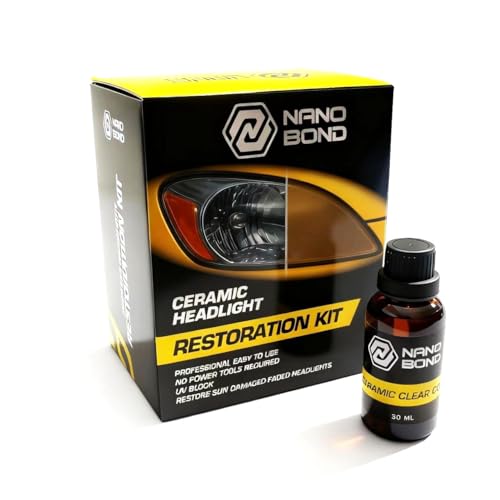
Nano Bond Headlight Restoration Kit
Easy application with no power tools needed.
Effectively removes oxidation from foggy lenses.
Self-leveling clear coat for smooth finish.
 Daniel Kenitz
Easy application with no power tools needed.
Effectively removes oxidation from foggy lenses.
Self-leveling clear coat for smooth finish.

Restores clarity with minimal effort.
Includes ceramic coating for lasting protection.
User-friendly with comprehensive DIY kit components.

Quick and easy application with ceramic wipes.
Restores headlights to like-new clarity efficiently.
Long-lasting protection against UV and oxidation.

Easy application with no tools required.
Enhances headlight clarity and brightness.
Convenient 40-wipe box for multiple uses.

Quick restoration for foggy and yellowed headlights.
Includes ample liquid for multiple uses.
Easy-to-use kit with no extra tools needed.

Wide range of grits for versatile use.
Easy hook and loop attachment system.
Includes shanks for drill compatibility.

Effective on yellowing and oxidation issues.
Includes ample 200ML repair liquid.
Simple application process with clear instructions.

Long-lasting protection for over 18 months.
Easy application with no tools required.
Effectively removes yellowing and cloudiness.

Effective on yellowed and hazy headlamps.
Restores clarity with simple application.
Long-lasting protection against future damage.

Includes atomizing cup for easy application.
Effective on yellowing and oxidation issues.
Comprehensive kit for complete headlight restoration.
Whether a product works depends less on a before-and-after photograph than on process control and evidence. A useful kit should specify the preparation sequence, abrasive progression, masking, cleaning, coating or sealant application, cure time, and limits of use. A broad grit range is not automatically better: coarse abrasives can remove material quickly and damage paint, trim, or the lens when pressure, speed, or technique is uncontrolled. A kit that contains only abrasives is not a complete restoration system, because sanding can remove degraded surface protection without replacing it.
The final coating matters for durability. Claims such as “UV protection,” “permanent,” “18-plus months,” “four times longer,” or “lifetime of the vehicle” should be treated as marketing claims unless they are supported for the exact finished system by transparent weathering and optical evidence. The strongest documentation would identify an ASTM G154 accelerated-UV test, ASTM D1003 haze and luminous-transmittance measurements before and after weathering, or SAE J576-relevant testing on plastic optical parts. A report from an ISO/IEC 17025-accredited laboratory should identify the exact product, samples, method, dates, and pass criteria.
Improved appearance is not the same as improved road lighting. Before-and-after photographs can hide residual haze, scattering, distortion, or uneven coating. Look for measured haze, luminous transmittance, and headlamp photometry using ASTM D1003, NHTSA FMVSS No. 108, NHTSA Laboratory Test Procedure TP-108, or a clearly identified independent road or laboratory test. Independent testing supplied here found a somewhat brighter, more concentrated beam for one complete restoration system, but most products lacked product-specific optical measurements.
Chemical and tool documentation also separates a substantiated product from an unsupported claim. For every liquid, wipe, coating, or refill, look for a current manufacturer or importer Safety Data Sheet covering hazards, PPE, ventilation, first aid, storage, spills, and disposal. For powered or heated equipment, look for a verifiable UL Solutions Product iQ or Intertek ETL listing, along with usable operating warnings. Manufacturer identity, a U.S. contact route, chemical information, and batch or lot traceability make safety support and recall remedies more practical. EPA Safer Choice certification is relevant to lower-impact chemistry, but no supplied product had that certification.
Across the supplied products, recurring cautions are substantial: no restoration method repairs structural cracks, internal haze, water intrusion, delamination, failed seals, damaged reflectors, or distorted lamps. Heated-vapor products commonly lacked ingredient disclosure, SDS information, ventilation and PPE instructions, and UL or ETL certification; heating an unidentified liquid creates burn, inhalation, fire, and electrical-safety concerns. Abrasive products create dust, flying debris, removed plastic, and used-disc waste. Several coatings were classified as flammable, corrosive, sensitizing, reproductive-toxic, or harmful to aquatic life. Keep chemicals and heated tools away from children and ignition sources, work with ventilation and eye and skin protection, and keep residue, rinse water, and chemical waste out of drains and soil.
The topics below explain what the review scores measure in this category. Higher scores reflect stronger supplied documentation, clearer controls, or better-supported claims; they do not mean that a product is risk-free or that an unmeasured benefit has been proven.
This measures hazards from restoration liquids, wipes, coatings, and vapors, plus the practicality of gloves, eye protection, ventilation, first aid, fire controls, and storage. It matters because several products use solvent-like coatings or heated vapor. Among the supplied products, higher scores generally correspond to a current SDS and named supplier; lower scores reflect unidentified chemistry or missing exposure instructions.
This covers burns, electric shock, flying abrasive debris, overspray, and accidental damage from sanding, drilling, or heated-vapor tools. Hand-applied kits scored better when they avoided powered equipment, while heated systems faced unresolved certification and burn concerns. A high score requires credible warnings, controllable instructions, and verifiable UL or ETL documentation where powered or heated equipment is included.
This measures whether a product demonstrates reduced haze, improved lens transmission, or better headlamp output without optical defects. It matters because a clearer-looking lens may still scatter light or leave beam performance unchanged. Most supplied products had no product-specific measurements; the stronger scores reflected a defined restoration process or independent road evidence, not simply seller photographs.
This measures compatibility with exterior polycarbonate and protection against crazing, delamination, distortion, excessive removal, paint damage, and seal damage. It also considers whether the instructions exclude cracked or internally damaged lamps. Higher-scoring products stated material limits and masking or process controls; lower-scoring products made broad repair claims without clearly defining what they cannot fix.
This measures resistance to renewed yellowing, haze, peeling, cracking, and loss of clarity after weathering. It is weighted heavily because sanding alone does not replace durable lens protection. Among the supplied products, scores were higher when a final UV-oriented coating or disclosed stabilizers were present, but no product had the requested exact-system ASTM G154, ASTM D1003, SAE J576, or accredited-lab durability evidence.
This measures whether the product supplies the preparation, grit progression, masking, cleaning, coating, cure, and maintenance steps needed for its claimed damage range. Higher-scoring products specified a sequence and included key components, such as progressive abrasives and a final coating. Lower scores belonged to abrasive-only or refill products that required substantial user judgment or omitted essential restoration stages.
This measures whether the manufacturer or importer, chemical identity, SDS, lot information, and U.S. contact route are traceable. It matters when a coating causes an exposure problem or a recall is needed. Higher scores came from established suppliers with product-specific SDS and emergency contacts; lower scores reflected generic liquids, missing formulations, absent SDS documents, or limited batch-level information.
This measures whether claims about restoration, ceramic protection, UV blocking, permanence, scratch repair, safety, and duration fit the available evidence. High-scoring products clearly limited use to exterior surface damage and avoided treating cracks or internal haze as repaired. Lower-scoring products made broad claims unsupported by optical, compatibility, durability, or chemical documentation.
This measures whether meaningful claims were confirmed by a named independent body or ISO/IEC 17025-accredited laboratory for the exact product. It distinguishes measured results from manufacturer badges, marketplace claims, and photographs. Scores were generally strongest where independent category or road testing existed, but even the better-scoring products lacked complete public reports covering optics, adhesion, and weathering together.
This measures volatile solvents, aquatic or persistent hazards, disposable wipes and abrasives, packaging, and disposal transparency. It matters because restoration creates sanding residue and may release coating chemicals outdoors or into drains. Higher scores came from products without supplied liquid chemistry or with clearer handling information; lower scores reflected aquatic toxicity, unknown formulations, or absent disposal guidance. No supplied product had EPA Safer Choice certification.
This is a hand-applied headlight restoration kit with a 30 ml ceramic clear-coat bottle, sanding discs, and cleaning and coating steps. Nano Bond's published directions call for cleaning the lens, sanding progressively from 1,000 to 3,000 grit, then applying the clear coat. A retailer listing sold by Nano Bond states the supplied system can treat two vehicles. The product is intended for exterior oxidation on plastic headlamp lenses, not for internal clouding or structural damage. The brand describes its broader ceramic-coating range as silicon-dioxide based, but it does not publish the exact formula, an SDS, cure conditions, or hazard controls for this specific kit. The restoration, self-leveling, and permanent UV-protection claims are manufacturer-stated. No public independent test report was located showing haze, light transmission, photometry, adhesion, or weathering results for this finished system.
This product suits a hands-on vehicle owner dealing with mild to moderate exterior yellowing or oxidation on an otherwise intact plastic headlamp lens. The buyer should be comfortable masking adjacent paint, sanding evenly by hand, and working patiently through the stated 1,000 to 3,000 grit sequence. It is most appropriate when the goal is cosmetic clarity restoration and the user can accept that the claimed UV durability has not been independently documented. Good lighting, clean workspace conditions, gloves, and eye protection are sensible precautions.
It is not suited to lamps with cracks, water intrusion, failed seals, internal fogging, internal coating staining, loose lens material, or electrical faults. Exterior sanding and coating cannot correct those conditions, and some manufacturer service guidance treats persistent internal staining or assembly damage as a lamp service or replacement issue. It also does not suit buyers who need published SDS information, verified compatibility with a particular vehicle lens, quantified headlamp-output improvement, or independently demonstrated multi-year weathering performance before applying a coating to a safety-critical optical surface.
The key health issue is uncertainty, not a confirmed hazardous ingredient. Nano Bond describes its ceramic coatings generally as containing silicon dioxide, but it does not identify the headlight kit's full formula or provide a publicly accessible SDS for the liquid coating. That leaves the practical controls for splashes, skin contact, vapors, flammability, first aid, storage, and disposal unspecified. Hand application avoids electrical and heat-tool hazards, but sanding can create plastic and coating dust, so eye protection, gloves, ventilation, and careful masking are prudent. No product-specific third-party environmental certification, Safer Choice listing, disposal instruction, or environmental test data was located. Disposable sanding media and any uncured liquid residue create avoidable waste, while the lack of formula disclosure prevents a meaningful assessment of solvent emissions, fluorinated chemistry, aquatic toxicity, or persistence. No CPSC recall or public incident record for this product was located in the searched U.S. consumer-safety sources.
This is a hand-applied headlight restoration kit with an abrasive polish, a spray ceramic coating, a foam hand pad, a microsuede applicator, and a microfiber towel. It is intended for exterior yellowing, haze, and oxidation on plastic headlamp lenses. Chemical Guys states that the process is a three-step job that can be completed by hand in under an hour. The kit does not include masking tape or a wash product, although the manufacturer advises cleaning first and taping adjacent paint and trim. The restoration mechanism is credible in principle, since the polish is an abrasive formula. Its older safety sheet identifies aluminum oxide at up to 20 percent. The protective component is HydroCharge+, an SiO2 spray coating. Chemical Guys claims UV protection and up to 12 months on painted surfaces, but no public, independent weathering, haze, transmittance, or headlamp-output report was found for this finished lens system.
This product suits a vehicle owner dealing with mild to moderate exterior haze or yellowing on intact plastic headlights, who wants a hand-applied process rather than drilling or wet sanding. It is most appropriate for someone able to work outside or with strong ventilation, protect nearby paint with separately purchased tape, wear chemical-resistant gloves and eye protection, and keep the vehicle dry during the stated initial cure period. It is also better suited to a buyer willing to repeat protection maintenance rather than expect a permanent repair.
It is not suited to cracked lenses, failed seals, moisture or haze inside the lamp housing, loose factory coating, or severe damage needing controlled sanding, replacement, or professional diagnosis. People who cannot avoid skin, eye, or vapor exposure should not handle the coating, especially indoors, around ignition sources, or near children and pets. It is also a poor fit for buyers requiring independently tested proof of restored light output or lens-specific long-term UV durability, because that evidence was not publicly available.
The principal health concern is the HydroCharge+ coating. Chemical Guys currently posts a California Proposition 65 warning naming formaldehyde. The available safety sheet for that coating identifies petroleum distillates and Stoddard solvent, classifies the mixture for serious eye damage, combustible-liquid, aspiration, and suspected-carcinogen hazards, and calls for gloves, eye or face protection, no spray inhalation, and outdoor or well-ventilated use. The headlight polish safety sheet also identifies eye, skin, inhalation, and combustible-liquid precautions. Ecologically, this is not a low-impact water-only kit. The coating safety sheet says to avoid environmental release, retain contaminated wash water, and dispose of unused material through an approved waste facility. It classifies discarded supplied material as ignitable hazardous waste. The kit also uses disposable or eventually discarded microfiber and microsuede materials. No EPA Safer Choice certification or public lower-impact formulation evidence was found.
This product is a 20-count refill pack of pre-moistened Ceramic Clear Coat Wipes for the final coating stage of headlight restoration. It is intended for professional detailers, vehicle lots, or experienced users who already have a lens-preparation process. The manufacturer says one wipe is used per headlight, giving the pack enough coating for up to 10 vehicles. It does not include oxidation remover, abrasives, masking materials, gloves, or sanding equipment. The liquid on each wipe is not a low-risk cosmetic protectant. The supplier's current Safety Data Sheet classifies it as a highly flammable liquid, harmful if swallowed, corrosive to skin, capable of causing serious eye damage, and a skin sensitizer. The manufacturer provides a named U.S. supplier, emergency contact, and a detailed SDS. It claims an inorganic ceramic coating protects prepared lenses from surface oxidation, but no publicly located independent weathering, haze, transmission, or headlamp-output testing confirmed the durability or optical claims for this exact product.
This pack suits professional detailers, dealership reconditioning teams, and experienced vehicle owners who already have a controlled process for cleaning, sanding, drying, and masking exterior polycarbonate headlamp lenses. Its 20 individually packaged final-coat wipes are sized for repeat jobs rather than a single household repair. Users need a ventilated work area away from flames and sparks, chemical-resistant gloves, eye protection, dry towels, and the ability to keep coating off paint and trim. It is most appropriate for intact lenses with exterior surface oxidation after preparation is complete.
It is not suited to a first-time user seeking an all-in-one repair kit, because it supplies no oxidation remover, abrasives, sanding pad, gloves, or masking materials. It is also unsuitable for cracked, leaking, internally hazed, deeply pitted, delaminated, or structurally damaged lamps, since a surface coating cannot correct those conditions. Avoid casual indoor use, work near pilot lights or other ignition sources, and use by children. People without splash eye protection, suitable gloves, ventilation, or a reliable way to keep the lens completely dry should not handle this coating.
The strongest accountability feature is the supplier documentation. NIC Industries identifies itself in the Safety Data Sheet, gives a U.S. address, emergency phone number, and product-specific handling, first-aid, storage, transport, and disposal instructions. The formulation remains only partly traceable because all listed ingredients and concentration ranges are protected as trade secrets. This is a hazardous flammable coating, not a benign cleaning wipe. The SDS calls for gloves and eye or face protection, general ventilation, and respiratory protection if ventilation is inadequate. Keep it away from heat, sparks, flames, and drains. The SDS also classifies the mixture as very toxic to aquatic life with long-lasting effects, directs users to prevent release to surface water and groundwater, and says contaminated packaging should be handled like the substance. No EPA Safer Choice certification or public third-party environmental certification was located for this product.
This product is a liquid-impregnated wipe system that leaves a clear protective coating on exterior plastic vehicle lenses, including headlights, taillights and fog lights. It is intended for lightly yellowed lenses or as the final protection step after restoration. 3M says the supplied P3000 abrasive disc is used wet by hand to lightly prepare the surface, then the coating is wiped on immediately afterward. The chemistry is not a simple cleaning wipe. 3M's safety data sheet identifies a water-based mixture containing polyurethane and acrylate polymers, 3 to 7 percent diethylene glycol monoethyl ether, and UV stabilizers. The same sheet classifies it as a skin sensitizer and suspected reproductive toxicant, with glove and ventilation precautions. 3M claims up to four times longer clarity than restoration methods without these wipes, but no public independent weathering or optical test report was located. The official page also presents the package count inconsistently, so confirm the received quantity.
This product suits a careful vehicle owner or detailing worker treating an intact, exterior plastic lens with light yellowing, or sealing a lens that has already been properly restored. The user should be able to work outdoors or in strong ventilation, wear suitable gloves, keep the coating off skin and nearby surfaces, and follow the package directions. It is most appropriate when a wipe-on protective top layer is needed rather than a full correction process for severe lens damage.
It is not suitable for someone who is pregnant, trying to conceive, highly sensitive to skin allergens, unable to use protective gloves, or unable to work with ventilation and restricted access for children. It also is not the right standalone product for cracked lenses, moisture or haze inside the lamp, failed seals, severe pitting, or a headlight with an underlying electrical or structural fault. Those conditions need inspection, repair, or replacement rather than a surface wipe coating.
The most important health finding is 3M's own safety classification. The coating is classified as a skin sensitizer and suspected reproductive toxicant. Its safety sheet directs users to avoid skin contact and vapors, wear gloves, use ventilation, wash after handling, and obtain medical advice if exposure is a concern. It lists diethylene glycol monoethyl ether, polymer blends, benzyl benzoate, and several UV stabilizers. The flash point is above 200 degrees Fahrenheit, so the sheet does not identify it as highly flammable in normal use. For environmental handling, the safety sheet says to avoid release to the environment and prevent larger spills from reaching drains or waterways. It does not provide public ecotoxicity or fate data, and it directs disposal through applicable regulations and, for waste product, a permitted industrial waste facility. The single-use wipe format also creates contaminated wipe and packaging waste. No EPA Safer Choice certification or public independent environmental assessment was located for this product.
This is a headlight-refinishing kit with a heated metal atomizing cup, 200 ml bottle of restoration liquid, sanding papers, masking materials, a funnel, and vehicle and mains power accessories. The stated process is to sand the outside lens, heat a portion of liquid in the cup, then pass its vapor over the lens to create a clear surface finish. The available instructions specifically warn that the cup becomes hot and that use should be in a ventilated area, with direct vapor inhalation avoided. Independent retail records confirm six sanding grades and the 200 ml liquid format. The liquid's chemical identity, hazard classification, ingredients, and disposal instructions were not publicly available in a product-specific safety data sheet. Claims of UV protection, scratch resistance, repaired cracks, and improved driving visibility are manufacturer-stated, not supported by publicly located laboratory measurements for this product.
This product fits an experienced home vehicle maintainer working on an externally oxidized, yellowed polycarbonate lens that is still structurally intact. The user should be comfortable wet sanding in stages, masking paint and trim, handling a hot powered cup, and working outdoors or in strong cross-ventilation. Its 200 ml liquid supply and included preparation materials suit someone planning to treat more than one lens or vehicle. The user should treat the finish and UV-protection claims as unverified rather than as a measured long-term repair.
It is not suitable for people who cannot use solvent-like vapor products outdoors or in strong ventilation, including households where children, pets, or chemically sensitive people may be nearby during use. It is also unsuitable for cracked lenses, loose or delaminating lens coatings, water ingress, or internal clouding, because surface vapor treatment cannot establish the structural condition or optical performance of the lamp. Buyers needing a named chemical formula, detailed emergency instructions, verified electrical certification, or measured durability data should use a product with those records publicly available.
The central health issue is information access. This product heats an unidentified liquid into vapor, yet no product-specific safety data sheet was located to identify ingredients, hazard pictograms, flash point, ventilation standard, gloves, eye protection, first aid, storage, or spill handling. OSHA's hazard-communication framework shows why those details matter for hazardous chemical products. The instructions do at least warn users about hot metal surfaces, poor ventilation, and inhalation. Its environmental profile is also unverified. There is no located formula, volatile-organic-compound content, aquatic-toxicity information, recycled-content claim, or disposal guidance for unused liquid and contaminated sanding debris. Do not pour leftover chemical or rinse water onto soil, into storm drains, or down household drains. EPA guidance identifies solvents and other reactive, toxic, or ignitable leftovers as potential household hazardous waste and recommends using local collection options where applicable.
This is a 193-piece, 3-inch hook-and-loop abrasive assortment marketed for headlight restoration and other sanding or polishing tasks. The marketplace listing identifies silicon carbide discs and a 12-step grit range from 80 through 10,000. It is intended for wet or dry use and is marketed for use with a drill, electric tool, or pneumatic tool, although no powered tool is included. Its defining limitation is that it is an abrasive set, not a documented finished headlight-restoration system. The included-items field lists only 193 sanding discs, while other listing copy describes a foam backing pad, polishing pads, and wool. No lens-transmission, haze, weathering, coating-adhesion, or finished-light-output results were located for this product. It supplies no liquid sealant or stated UV-protective final coat.
This product fits a hands-on user who already owns a compatible 3-inch hook-and-loop backing pad and a controllable drill, rotary tool, or pneumatic tool. It is most suited to lightly or moderately oxidized exterior polycarbonate lenses where the user is prepared to mask nearby paint, work gradually through several grits, clean carefully, and provide a separate UV-protective finish afterward. It can also suit small non-automotive wet or dry sanding jobs that need a broad grit selection. Eye protection and dust control remain important.
It is not suited to a first-time headlight-restoration user seeking a fully documented, self-contained process with confirmed accessories, measured optical results, and long-term UV protection. Avoid using it as a remedy for cracked, leaking, internally hazed, distorted, or structurally damaged lamps, since abrasion cannot repair those conditions. It is also a poor fit for users without a suitable backing pad, tool-speed control, eye protection, cleanup plan, or a separate lens-compatible protectant. Do not dry sand in occupied indoor spaces where dust control is inadequate.
The product appears to be a solid-abrasive assortment rather than a liquid restoration chemistry. The included-items field lists sanding discs only, which avoids the liquid-sealant exposure pathway seen in some headlight-restoration products. However, silicon carbide is not exposure-free when abraded. NIOSH identifies inhalation and eye, skin, and upper-respiratory irritation as potential exposure routes and effects for silicon-carbide dust. Wet work, eye protection, skin washing, and avoiding unnecessary dry dust are sensible controls. No EPA Safer Choice certification, SDS, environmental fate information, disposal guidance, or reduced-waste claim was located for this product. The many disposable discs create abrasive and backing waste, and rinsing sanding residue outdoors can move particles into drains or soil. No product-specific recall or regulatory action was located in the sources searched, but the absence of an SDS and lot-level traceability limits follow-up if a material or performance concern arises.
This is a headlight-lens restoration kit built around 200 mL of repair liquid, an atomizing cup, sanding supplies, masking tape, a funnel, power cords, instructions, and a case. The stated process is to sand away weathered exterior material, then heat the liquid in the cup so vapor deposits a clear coating on the lens. The product listing states that the fluid can treat roughly 16 to 20 headlights and that the kit includes both a 110 V cord and a vehicle power cord. Those are manufacturer-stated capacity and contents claims, not independently confirmed performance data. No product-specific Safety Data Sheet, disclosed ingredient list, measured light-output result, accelerated weathering report, or named independent laboratory report was located. The coating may improve the appearance of surface oxidation, but the broad claims about repairing cracks, restoring new-light condition, and lasting for years are not supported by public test evidence located for this product.
This product suits a hands-on vehicle owner working on several inexpensive, externally oxidized polycarbonate lenses, who can set aside time for careful masking, sanding, cleaning, and controlled vapor application. It is most relevant where the problem is surface yellowing or haze rather than broken hardware or water inside the lamp. The stated 200 mL capacity may also suit a household with multiple older vehicles or a small repeat-use project. The user should be prepared to obtain appropriate protective equipment and safe ventilation guidance independently because the public product information does not provide formulation-specific exposure details.
It is not suited to people who need documented chemical hazards, independently verified optical improvement, or a proven sunlight durability period. Avoid treating this as a remedy for a cracked lens, internal fogging, failed seals, loose reflectors, damaged mounting tabs, or a lamp with poor beam aim. Those conditions can affect road safety and may need professional diagnosis or replacement. It is also a poor fit for indoor workspaces, poorly ventilated garages, homes with children who could access the liquid, or users unwilling to manage a heated chemical-vapor process and abrasive debris.
The key health issue is uncertainty, not a confirmed product-specific toxicological finding. The stated method heats repair fluid into vapor, but no product-specific Safety Data Sheet or public ingredient list was located. OSHA's SDS framework calls for hazard identification, composition information, first aid, handling, storage, exposure controls, personal protection, and physical hazard information. Without that documentation, users cannot verify appropriate gloves, eye protection, ventilation, ignition control, or spill response for this liquid. No product-specific EPA Safer Choice certification, independent chemical assessment, or environmental disposal guidance was located. The kit uses disposable sanding materials and leaves abrasive residue plus unused coating liquid. Avoid washing either into a driveway drain, soil, or stormwater. Keep leftover liquid in its original container, prevent access by children, and use local household hazardous-waste guidance if the eventual SDS or label identifies solvent or hazardous constituents. No product-specific recall or regulator warning was located in the checked public searches.
This is a hand-applied restoration kit for yellowed, cloudy exterior plastic headlamp lenses. It includes 1000-grit and 3000-grit sanding media, an easy-grip pad, two pre-saturated sealant wipes, and one disposable glove. The stated method is to wet-sand the lens, then apply the clear sealant. No drill or other powered tool is included or required. Meguiar's states that its ceramic-containing sealant provides UV protection and more than 18 months of resistance to renewed oxidation. That duration claim is manufacturer-stated, not supported by a publicly located weathering report for this finished kit. Its current safety documentation is unusually specific for a small DIY kit, but it also identifies a flammable, skin- and eye-irritating sealant with a reproductive-hazard warning.
This product suits an adult DIY user treating intact, externally oxidized polycarbonate headlamp lenses who can work outdoors or in strong ventilation. It is most appropriate when the haze is on the lens surface and the user can wet-sand patiently, protect adjacent paint with separately obtained automotive masking tape, and use chemical splash eye protection and suitable gloves. The compact hand process fits someone who does not own a drill or polisher, but can follow surface-preparation and cure instructions closely.
It is not for households where children could access the sealant wipes, or for anyone who cannot provide ventilation, keep ignition sources away, and use eye and skin protection. It is also unsuitable for cracked, leaking, delaminated, internally hazed, or physically damaged lamps, because sanding and coating cannot correct defects inside the assembly or restore a damaged lamp's original optical condition. Buyers seeking independently measured beam-output, haze, adhesion, or multi-year weathering results will need documented testing that was not publicly located for this product.
The safety documentation identifies the sealant as highly flammable and capable of causing skin and serious eye irritation. It also carries a warning that it may damage fertility or an unborn child. The disclosed ingredients include alkoxyfunctional polysiloxane, trimethoxyoctyl silane, disiloxane, dimethicone, a titanium catalyst, UV-absorber components, and small listed amounts of toluene and methanol. Use it away from flames and sparks, with ventilation, gloves, and splash eye protection. The manufacturer provides a U.S. contact and 24-hour emergency line, plus a current safety document covering the kit components. The SDS directs disposal through applicable hazardous-waste rules or permitted disposal facilities. It does not establish that the formulation is lower impact, and some disclosed silicone materials have limited biodegradation information. A 2023 CPSC recall involved a different Meguiar's amber-bottle headlight sealant product, not this wipe-based kit.
This is a 1,600 g dark-blue headlamp restoration liquid intended for yellowed, hazy, oxidized, or scratched exterior lenses. The published workflow calls for masking around the lamp, wet sanding through progressively finer paper, then heating the liquid in an ordinary cup until vapor appears and applying that vapor. The listing says the surface should not be touched by hard objects for five hours after treatment. Its only disclosed material description is "synthetic resin," and the listing states a three-minute drying time. Those are manufacturer-stated details, not a technical data sheet. No product-specific safety data sheet, complete ingredient list, independent optical test, weathering report, or publicly checkable certification was located. The product therefore has a defined DIY process, but its chemistry, optical outcome, and long-term coating performance remain unverified.
This product is most suited to an experienced DIY vehicle owner or detailer working on exterior plastic lenses with surface oxidation, yellowing, or light cosmetic scratching. They should already have a suitable wet-sanding setup, masking supplies, protective eyewear, gloves, a controlled heating method, and a well-ventilated workspace. The large stated liquid quantity makes more sense for someone expecting to treat several lamps or vehicles, rather than a person who only needs a small one-time repair. It is most appropriate where the user accepts that results and durability are not independently documented.
It is not suited to people who need fully documented chemical hazards, a named U.S. safety contact, or a safety data sheet before handling a heated liquid. It also does not suit beginners without experience wet sanding optical plastic or controlling hot vapor near paint, trim, and electrical components. Do not treat a cracked lens, internally hazed lamp, water-filled assembly, damaged seal, or distorted reflector as a cosmetic restoration project. Those conditions can affect the lamp assembly itself and are not addressed by the available instructions.
The most important health finding is uncertainty. The product description calls the liquid synthetic resin and directs users to heat it until vapor appears, but no product-specific safety data sheet, chemical identity, exposure limits, fire classification, or disposal instructions were located. The listing does advise protective measures, original-container storage, eye flushing after contact, and keeping the product away from children. It also says it is not for pregnant women, but does not explain the exposure concern or identify the relevant chemical. No UL or ETL-listed heated equipment is identified, and the instructions appear to rely on an ordinary heated cup. No EPA Safer Choice certification, lower-impact formulation evidence, or environmental fate data were located. No product-specific U.S. recall, regulator warning, or independently verified test report was found in the checked public sources. Solvent or resin residue, used abrasive paper, masking materials, and cleanup waste should not be treated as ordinary outdoor litter when the formulation is unknown.
This is an 800 g headlight-restoration kit intended for exterior lenses affected by yellowing, haze, oxidation, and light scratches. Its listed method is sand, clean, and seal. The product page says it includes six abrasive sheets in assorted grits, masking tape, a polishing pad, a stainless steel atomizer cup, and two power cables. The defining feature is a heated atomizer-cup process rather than a wipe-on-only treatment. Autrovia states that the cup heats evenly and that the process can restore clarity in minutes, but these are manufacturer claims. No public safety data sheet, chemical ingredient disclosure, electrical certification, optical-transmission result, or weathering report for this product was located in the verification work.
This product suits a hands-on vehicle owner working on a pair of intact, externally weathered polycarbonate headlights with yellowing, dullness, haze, or light surface scratching. It is most relevant for someone comfortable with careful sanding, masking nearby paint, following a multi-step process, and managing a heated application cup. The listed supplies support a basic restoration workflow, although the buyer should be prepared to use protective equipment and ventilation because the liquid chemistry has not been publicly identified.
It is not suited to buyers who need documented chemical hazards, an accessible safety data sheet, independently certified electrical equipment, or measured proof of restored headlamp performance. It is also unsuitable for cracked lenses, internal haze, loose coatings, damaged lamp seals, or distortion, which a surface-restoration process cannot reliably correct. Households without a well-ventilated work area, eye protection, chemical-resistant gloves, and a controlled place to use a heated cup should avoid attempting this type of process.
The main health issue is incomplete chemical transparency. The product page identifies a heated atomizer cup and a restoration liquid or coating process, yet no public safety data sheet or ingredient list was found for the product. That leaves exposure controls, first aid, flammability, storage, and disposal requirements unverified. The page also does not show a UL or ETL listing for the powered, heated equipment, so users should not infer third-party electrical certification. No product-specific recall or regulatory action was located in the searched U.S. consumer-product sources. That is not proof of safety. No EPA Safer Choice certification, lower-impact formulation evidence, volatile-organic-compound disclosure, or disposal guidance was located. Sanding creates plastic and abrasive residue, while an unidentified coating may require household hazardous-waste handling depending on its chemistry. Prevent residue and liquid from entering soil or drains.


