Best Overall
30% off

WOLFBOX 4000A Jump Starter and Air Compressor
Powerful jump-start for large engines.
Integrated air compressor for tire inflation.
Fast charging and large battery capacity.
 Daniel Kenitz
Powerful jump-start for large engines.
Integrated air compressor for tire inflation.
Fast charging and large battery capacity.
Combines jump starter and air compressor functionalities.
Compact design makes it easy to store.
Fast charging capability for quick power-ups.
Convenient dual-function jump starter and air compressor.
Compact design with cordless auto-shutoff inflator.
Reliable performance for both gas and diesel engines.

Powerful 4000A jump start capability.
Integrated 160PSI tire inflator.
Compact design with 45W power bank.

Compact design with multiple functions.
Built-in 150PSI tire inflator.
Stylish rose gold color option.

Powerful jump starter for large gas and diesel engines.
Convenient built-in tire inflator with auto-shutoff.
Compact and portable design for easy storage.

Powerful enough for larger gas and diesel engines.
Built-in flashlight with three useful modes.
Comes with durable, reliable jumper cables.

Powerful enough for all gas and 10.0L diesel engines.
Includes air compressor for added convenience.
Equipped with a reliable 3-mode flashlight.

Fast tire inflation, just 2 minutes to 40 PSI.
Powerful jump starter for large engines up to 8.0L.
Compact design with integrated air compressor feature.

Powerful jump starter for all gas engines.
Integrated 150PSI tire inflator adds convenience.
Compact design ideal for emergency car kits.
For jump starting, check the vehicle maker’s instructions first. Compatibility is not established by a broad “all vehicles” claim. The supplied products are generally intended for 12-volt systems, and some specifically exclude 24-volt equipment, aircraft, certain boats, lithium 12-volt batteries, or vehicles with special jump points. Engine-size limits also need caution: several products give gas and diesel limits that conflict across the listing, manual, and manufacturer page. A peak-current number is not a standardized measure of starting ability. More useful evidence reports the vehicle, battery condition, temperature, number of attempts, and the pack’s charge state. Independent testing that records successful starts under those conditions is stronger than an unqualified 2,000-, 4,000-, 5,000-, 6,000-, or 7,000-amp headline.
For inflation, look for a pressure display, target-pressure setting, automatic shutoff, hose and connector guidance, and a stated compressor duty cycle and cool-down period. Automatic shutoff can reduce overinflation risk, but it does not prove gauge accuracy. An accredited calibration report or independent measured test for the exact product is more meaningful than a 150-, 160-, or 180-PSI maximum. Inflation speed should be reported with starting pressure, target pressure, tire or vehicle, and pack condition. A compact compressor may top up one tire quickly but still be unsuitable for repeated airing-up; one tested model reached only halfway through a third tire.
Lithium-battery claims also need verification at the product level. A claimed battery-management system is not the same as evidence that the complete pack and supplied charger control overcharge, short circuit, overheating, and thermal runaway. For whole-product safety, look for an exact model match in UL Product iQ, Intertek’s ETL directory, or CSA’s product listing for ANSI/CAN/UL 2743, with the model, rating label, and certification control number matching the retail product. A marketplace “UL” field or a general manufacturer statement is not enough. A public UN 38.3 test summary supports transport-test documentation, but it is not a substitute for whole-product certification.
Also assess the practical safeguards: reverse-polarity alerts, spark and short-circuit protection, overcurrent handling, temperature cutoffs, limits on repeated starts, and warnings about damaged cables, fuel vapors, frozen or leaking batteries, and manual override or boost modes. Some boost modes bypass normal protections and require especially careful polarity confirmation. Store the device within its stated temperature limits, recharge it on the recommended schedule—often every two or three months—and do not assume a sealed battery can be repaired or replaced.
Across the supplied reviews, the recurring caveats are clear: no product had a publicly matched whole-product UL, ETL, or CSA listing, and independent evidence for gauge accuracy, compressor heat limits, or repeated inflation was often absent. Several products had conflicting current, capacity, pressure, or engine-size claims. These devices are generally not suitable for 24-volt systems, vehicles with restricted or lithium 12-volt jump procedures, frequent commercial use, unattended inflation, or damaged, swollen, leaking, frozen, or overheated batteries. A jump pack is not a substitute for repairing a failed battery or tire.
## Health and Ecology These topics assess the risks and responsibilities that matter when a high-energy lithium device is stored in a vehicle and used around batteries, cables, tires, heat, and traffic. The scores distinguish products with clearer controls and stronger evidence from those relying mainly on broad claims.
This measures whether instructions, warnings, and vehicle-use limits reduce risks from burns, shock, fire, tire injury, and roadside harm. For this category, high scores reflect clear 12-volt restrictions, damaged-cable warnings, battery exclusions, and usable start and heat limits. Supplied scores ranged from 68 to 78; lower-scoring products more often had broad compatibility claims or less complete operating guidance.
This measures protection against overcharge, short circuit, overheating, abusive charging, and thermal runaway for the complete battery pack and charger. It matters because these products contain sealed lithium-ion or lithium-polymer packs that may remain in hot vehicles. Scores ranged from 68 to 73. Higher-scoring products documented temperature limits and charging controls, but no supplied product had fully matched public pack-and-charger safety evidence.
This measures whether clamps and electronics help prevent reverse polarity, sparking, overcurrent, overheating, and unsafe boost use. It matters because a connection mistake can harm the user or a vehicle’s electrical system. Scores ranged from 63 to 79. Higher-scoring products documented polarity indicators, short-circuit or overcurrent responses, and controlled start procedures; lower scores reflected less complete or less verifiable protection information.
This measures pressure-display usefulness, gauge accuracy, target-pressure shutoff, hose integrity, and compressor heat limits. It matters because a compact inflator can overheat or overinflate a tire if its controls are inaccurate or its duty cycle is unclear. Among products with compressors, scores ranged from 58 to 78. Higher scores had documented auto-stop and cooling controls; no supplied product had strong independent gauge evidence.
This measures whether the exact retail product—not just a component or seller claim—can be matched to an OSHA-recognized laboratory listing for ANSI/CAN/UL 2743. It is a major separator in this category. Scores ranged from 68 to 70, but the reviews found no publicly matched UL, ETL, or CSA whole-product listing for any supplied product. A catalog certification field alone did not establish verification.
This measures independently reproducible starting and inflation results with the vehicle, battery state, temperature, pack charge, pressure, and test method reported. It matters more than an unqualified peak-amp or PSI figure. Scores ranged from 50 to 88. Higher-scoring products had independent vehicle-start and/or tire-fill tests; lower scores relied mainly on manufacturer claims or had no exact-product testing.
This measures whether capacity, current, engine limits, PSI, airflow, runtime, temperature, cycle-life, and protection claims are defined and consistent. Scores ranged from 48 to 82. Higher-scoring products had clearer manuals and internally consistent figures. Lower-scoring products listed conflicting peak current, battery capacity, pressure, or engine-size claims, making it difficult to know what the device can actually do.
This measures whether the brand, model, warranty, support contacts, and corrective-action process are traceable if a defect appears. Scores ranged from 70 to 78. Higher-scoring products had identifiable support channels, registration routes, and clearer warranties. A lack of a located recall is not proof that a product is safe, but model traceability and meaningful support improve the buyer’s chance of obtaining help or a remedy.
This measures whether the product has a real U.S. take-back or recycling route and instructions for damaged batteries. It matters because lithium-ion devices should not go in household trash or curbside recycling, and damaged packs need specialized handling. Scores ranged from 68 to 72. Higher-scoring products offered clearer disposal guidance, but the reviews generally found no brand-operated U.S. take-back program.
This measures whether the unit is likely to remain safe and useful through storage, temperature changes, charging cycles, vibration, and normal compressor use, including care guidance, warranty support, and replaceable accessories. Scores ranged from 69 to 78. Higher-scoring products had more concrete maintenance guidance, longer or clearer support arrangements, or tested enclosure quality; repeated-cycle and repairability evidence was limited.
This is a 5.3-pound lithium-ion roadside power pack that combines a 12 V jump starter, preset tire inflator, USB power bank, DC output, and LED light. Its stated battery capacity is 88.8 Wh, or 24,000 mAh, with a 4,000 A peak-current claim. It includes smart clamps, an air hose and nozzles, a USB-C cable, and a carrying case. A wall charger is not included. The manufacturer documents reverse-polarity indication, a manual BOOST path for very low vehicle batteries, battery temperature cutoffs, and compressor overheat protection. An editorial field test reported that it started a mid-size SUV at 0°F and topped an SUV tire from 25 to 35 PSI in about a minute. Those are useful real-use observations, but they are not a laboratory certification or a repeatable full-capacity test. The claimed 10 L gas and diesel coverage remains manufacturer-stated.
It suits a driver who wants one stored emergency tool for a conventional 12 V vehicle, occasional tire top-ups, phone charging, and nighttime visibility. It is especially relevant for a person who can maintain it, check its charge every few months, read their vehicle manual, and confirm the correct tire pressure from the vehicle placard. The documented 88.8 Wh capacity and independent cold-weather start observation make it a practical format for roadside preparedness, not for routine workshop compressor duty.
It is not for vehicles whose owner manual restricts external jump starting, including vehicles with special 12 V lithium battery procedures, high-voltage hybrid or EV systems requiring manufacturer-specific steps, or damaged electrical systems. It is also not for anyone who needs an independently certified whole product, accredited pressure-gauge accuracy, or published battery-abuse test evidence. Avoid treating the BOOST function as a substitute for diagnosing a failed battery. It is not designed to replace a vehicle battery or to inflate many large tires continuously.
The manual contains meaningful operational limits. It restricts use to 12 V vehicle batteries, tells users to correct reversed clamps before starting, limits repeated starts, requires clamp removal within 30 seconds after a start, and warns against water immersion, explosive atmospheres, damaged cables, disassembly, and charging immediately after jump starting. It also describes battery temperature cutoffs and a compressor high-temperature stop condition. These are manufacturer-documented protections, not independently certified evidence. The manufacturer page states UL and FCC certification, but an independently matchable listing for this exact retail product was not located in the public certification sources checked. No exact-product CPSC recall was found in the searched recall resources. For disposal, the manual only directs users to follow local rules for lithium batteries. It does not provide a U.S. brand take-back path or damaged-battery collection instructions, so owners should use local household hazardous-waste or approved battery-recycling channels.
This is a compact lithium battery jump starter with an integrated tire inflator, USB power output, LED light, smart clamps, and storage bag. Its manual lists a 37 Wh, 10,000 mAh battery, 300 A start current, 2,000 A peak current, 150 PSI maximum inflation claim, 820 g weight, and operation from -4 F to 140 F. It is intended only for 12 V vehicle starting. The manufacturer states compatibility with gasoline engines up to 5.0 L and diesel engines up to 3.0 L, plus pressure presets and automatic compressor shutoff. The supplied manual gives concrete protections and operating limits, including polarity warnings, indicator-guided clamp connection, a 25 percent minimum pack level, no more than three starting attempts, and two minutes between attempts. No independently published test of this exact product's jump output, gauge accuracy, airflow, or cold-weather performance was found.
This product suits a driver of a compatible 12 V passenger car, motorcycle, scooter, or small gasoline vehicle who wants a compact emergency pack for occasional low-tire top-ups and a dead starter battery. The buyer should be prepared to follow the vehicle manual, check the product charge every three months, use the stated clamp sequence, and verify tire pressure against the vehicle placard. It is most appropriate where the stated 5.0 L gasoline or 3.0 L diesel limits leave a clear margin.
It is not suited to owners who need independently demonstrated cold-weather starting performance, calibrated pressure readings, or certified whole-product electrical safety evidence. It should not be used on anything other than a 12 V starting system, on visibly damaged batteries, with damaged clamps or cables, near flammable vapors, or as a substitute for a vehicle battery. Drivers of larger engines, heavy-duty applications, vehicles with special lithium 12 V systems, or vehicles whose manuals prohibit conventional jump starting should follow vehicle-specific instructions instead.
The available manual provides meaningful user-level safeguards. It limits use to 12 V vehicles, instructs users not to reverse clamps or use damaged cables, limits repeated starting attempts, and warns against water, explosive environments, modification, and disassembly. Its boost procedure can intentionally bypass normal low-voltage detection, so it requires careful polarity confirmation and prompt starting. The manufacturer claims UL, FCC, CE, and California Proposition 65 testing or compliance, but no publicly matchable U.S. listing or certificate for this exact product was found. The battery is an enclosed lithium pack, so it should never enter household trash or curbside recycling. EPA guidance calls for lithium battery devices to go to a dedicated electronics recycler or household hazardous-waste collection point, with terminals isolated where applicable. No product-specific U.S. recycling or take-back route was found. The manual advises recharging every three months and estimates three to five years under normal use, but no independent cycle-life testing or replacement-battery plan was found.
This is a 2.4-pound lithium jump starter, tire inflator, USB power bank, and emergency light for 12 V vehicles. Its manual identifies a 37 Wh pack made from four series-connected 3.7 V lithium cells, USB-C charging at 5 V and 2 A, a 3 to 150 PSI compressor range, and a stated plus or minus 1 PSI compressor accuracy. It includes smart clamps, an air hose, adapters, and a storage bag. The manual provides concrete operating limits, including a 10-minute cool-down after 10 minutes of continuous use, a warning that the hose heats up, and automatic inflation shutoff at the preset pressure. An editorial hands-on test reported inflating a 225/65R17 SUV tire from 15 to 35 PSI in 5 minutes 42 seconds and starting a discharged 5.3 L gasoline truck. However, published engine and peak-current claims conflict across the product materials, so its maximum-vehicle claim is not reliably defined.
This product suits a driver of an ordinary 12 V passenger car, motorcycle, or light vehicle who wants one compact emergency tool for occasional low-tire top-ups and a depleted conventional starter battery. It is most appropriate for someone willing to keep it charged above 75 percent before relying on it, follow the clamp indicator instructions, confirm the vehicle manual permits jump starting, and treat the compressor as a short-duty roadside tool. The 37 Wh capacity and compact format favor preparedness rather than repeated heavy service.
It is not for 24 V vehicles, aircraft, boats or other non-12 V equipment, which the manual expressly excludes. It also is not a good fit for buyers who need a clearly verified maximum engine size, independently certified whole-product battery safety, or repeated long compressor sessions. Owners of hybrids, EVs, or vehicles with lithium 12 V batteries should follow the vehicle maker's specific jump-start instructions before using any external booster. Households needing a defined mail-back battery recycling path should seek that documented support elsewhere.
The safety documentation is stronger on use instructions than on external certification. The manual warns against use while charging, damaged clamps, metal jewelry, non-12 V equipment, overinflation, and hot hoses. It also describes battery-cell and compressor over-temperature errors, with shutdown or cooling instructions. These are manufacturer statements, not independently verified protection performance. I could not match this exact product to a public UL, ETL, or CSA whole-product listing, or locate its UN 38.3 battery test summary. AstroAI offers a two-year limited warranty and support contact. A June 18, 2025 CPSC recall involved AstroAI 4-liter and 6-can minifridges with a short-circuit fire and burn hazard, not this jump starter. For disposal, this product's manual only advises local recycling of recyclable parts. It does not provide a U.S. take-back program, a Call2Recycle path, or specific instructions for a swollen, damaged, or overheating battery.
This is a 3.2-pound lithium-polymer roadside power pack that combines a 12 V jump starter, cordless tire inflator, USB power bank, and LED light. The manual specifies 74 Wh capacity, 800 A starting current, 4,000 A peak current, 160 PSI maximum pressure, 45 W USB-C output, and a 6-hour charge time with a 9 V, 2 A charger. The wall charger is not included. GOOLOO states that it is for 12 V vehicles, all gasoline engines, and diesel engines up to 10.0 L. Its manual documents reverse-polarity indication, a manual BOOST path for very low batteries, automatic inflation shutoff, and limits on consecutive starts. Independent editorial testing is more useful than the peak-amp claim, it started a BMW with a fully flat battery on the first attempt and inflated an Audi tire from 18 to 35 PSI in 2 minutes 50 seconds with auto-stop.
This product suits a driver of a conventional 12 V car, SUV, pickup, or light diesel vehicle who wants a compact emergency tool for occasional low-tire top-ups and a depleted starter battery. It is most appropriate for someone willing to read the manual, keep the pack above two battery bars before attempting a start, recharge it every three months, and verify final tire pressure with a separate gauge. Its tested inflation and jump-start results support this occasional roadside role.
It is not for vehicles that use a nonstandard voltage system, or for anyone who has not checked their vehicle manual for jump-start restrictions. It should not be treated as a substitute for diagnosing a failed battery, charging a vehicle battery, or supporting repeated workshop starts. Buyers who need independently certified whole-product electrical safety, a documented battery transport test summary, gauge calibration evidence, or a published recycling take-back route need documentation this product does not publicly provide. Do not store it in a heat-soaked vehicle.
The safety documentation is meaningfully more specific than a generic feature list. It limits use to 12 V systems, tells users to stop if the pack is swollen, hot, leaking, or damaged, prohibits jump-starting while the pack is charging, and warns that a loose clamp-cable plug can melt. It also directs users to allow two minutes between sets of three start attempts. These are relevant protections, though they are manufacturer instructions rather than independently certified evidence. The lithium-polymer pack requires care. The manual states an operating range of minus 4 F to 131 F, warns that storage above 140 F can cause swelling or internal damage, and recommends recharging every three months. No exact-product public recall was located in the U.S. searches reviewed. However, no public UL, ETL, or CSA whole-product listing, battery test summary, or U.S. brand take-back program was located. At end of life, lithium-ion products should go to an appropriate battery or household hazardous-waste collection route, not household trash or curbside recycling.
This is a 1.8-pound lithium-ion roadside power pack that combines a 12 V jump starter, tire inflator, USB-A power bank, and LED light. Manufacturer documentation lists 37 Wh or 10,000 mAh capacity, 300 A starting current, 2,000 A peak current, a 150 PSI compressor, and support for gasoline engines up to 5 L. It is intended for a charged, compatible 12 V vehicle battery, not as a replacement vehicle battery. The strongest safety evidence is the detailed operating manual. It specifies reverse-polarity indication at the clamps, a 30-second BOOST procedure for a severely depleted vehicle battery, temperature limits, and limits on repeated starts. The manual also documents pressure presets and inflator fault alerts. However, no exact-model UL 2743, ETL, or CSA whole-product listing, battery transport test summary, gauge calibration report, or independent measured jump and inflation test was located. Capacity information is also inconsistent across sales metadata, so the manual's 37 Wh figure is the clearest available specification.
This fits a driver of a compatible 12 V passenger vehicle, motorcycle, scooter, or lawn equipment who wants one compact emergency device for occasional low-battery starts and small tire pressure corrections. It is most appropriate for someone willing to read and retain the manual, inspect clamps before use, keep the pack charged at least every three months, and follow their vehicle maker's jump-start instructions. Its stated 37 Wh capacity and 5 L gasoline-engine limit make it a light-duty roadside tool rather than a substitute for maintenance.
It is not suited to drivers who need independently certified whole-product lithium battery safety, independently measured starting output, or a documented gauge-calibration tolerance. It is also unsuitable for vehicles outside its stated 12 V use, engines beyond the stated gasoline limit, or vehicles whose manufacturer prohibits conventional jump starting, including some vehicles with specialized lithium 12 V systems. Do not treat it as a shop compressor, a replacement vehicle battery, or a device for repeated extended inflation. Households unable to store lithium batteries within the specified temperature limits should avoid leaving it in a vehicle year-round.
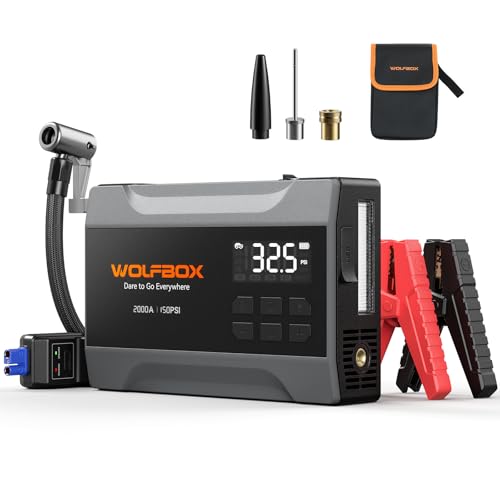
The manual contains useful safety controls rather than only broad protection claims. It limits use to 12 V vehicle batteries, instructs users to remove clamps after starting, warns against damaged cables, water exposure, sparks, flames, and explosive atmospheres, and specifies no more than three consecutive starts. It also states that charging is blocked below 0 C and above 55 C, with charging permitted from 0 C to 45 C. These are manufacturer-stated controls, not third-party certification evidence. No active U.S. recall, regulator warning, or exact-model safety certification was located in the checked public sources. Absence of a located recall is not proof of safety. The manual says to dispose of lithium battery products according to local regulations and gives leak-handling advice, but WOLFBOX did not provide a product-specific U.S. take-back route in the materials found. The internal battery is not described as user-replaceable. Charging every three months is recommended for storage, which can help preserve usefulness and reduce premature disposal.
The GOOLOO A3 is a handheld 12 V emergency power pack that combines a lithium-polymer jump starter, cordless tire inflator, USB power bank, flashlight, and SOS light. Its manual specifies 44.4 Wh capacity, 400 A starting current, 3000 A peak current, 5 V/2 A USB-C input, and 5 V/2.4 A USB-A output. It is intended for 12 V vehicles only, with manufacturer-stated limits of 9.0 L gasoline and 6.5 L diesel engines. The manual documents smart-clamp status lights, reverse-connection warning, a BOOST procedure for very low batteries, preset inflation modes, and automatic pressure shutoff. These are manufacturer-documented controls, not independently certified safety results. Independent editorial use found it workable, but WIRED reported only about three attempts to start a V-6 engine, which is much more decision-useful than the unspecified manufacturer claim of 50 or more starts per charge.
This product suits a driver of a conventional 12 V gasoline or light-duty diesel vehicle who wants a compact roadside kit for occasional battery trouble and tire pressure top-ups. It is most appropriate for someone prepared to keep it charged every three months, follow the clamp indicators, and confirm the vehicle manual permits jump starting. The integrated pump is practical for restoring a low tire to its specified pressure, rather than supporting repeated high-volume inflation. The included bag, hose, and nozzle set also make it suitable for routine car, bicycle, and sports-ball inflation.
It is not for owners who require independently certified whole-product lithium battery safety evidence, a documented battery transport test summary, or calibrated tire-pressure accuracy. It also does not suit people who want to leave an emergency pack unmaintained in a hot parked vehicle. Avoid using it on non-12 V equipment, boats, aircraft, damaged or frozen vehicle batteries, or when clamps, cables, or the pack show swelling, leakage, overheating, or damage. Drivers of vehicles with manufacturer-specific jump-start restrictions should follow their vehicle manual instead.
The product uses a sealed lithium-polymer battery, so heat, physical damage, incorrect charging, and improper disposal are meaningful safety issues. Its manual gives useful limits: charge only from 14 to 113 F ambient temperature, do not store above 140 F, recharge every three months, let the pack cool for 30 minutes after a jump start, and stop use if it swells, leaks, overheats, or has damaged cables. It also describes reverse-connection, short-circuit, overcurrent, overcharge, and overheat protections, but these remain manufacturer statements. No CPSC recall matching this product was located in the checked recall resources. However, no independently matchable UL, ETL, or CSA listing for the complete product was located either. At end of life, the manual only says to follow local rules. EPA guidance is more specific: lithium-ion devices should not enter household trash or curbside recycling, and damaged units need specialized battery or household hazardous-waste handling.
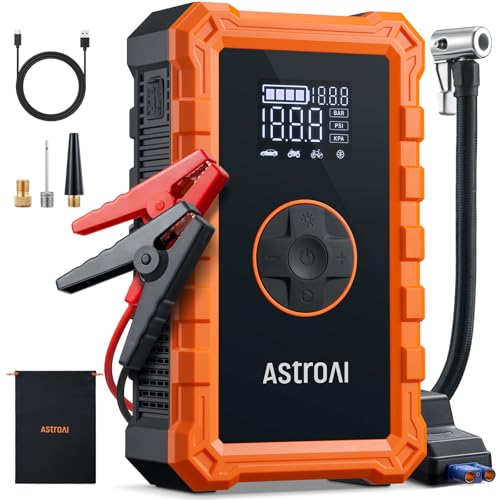
This is a compact 12 V lithium-ion jump starter for starting a vehicle with a depleted conventional 12 V battery. AstroAI’s manual specifies a 37 Wh pack, made from four 3.7 V lithium cells in series, 5 V 3 A charging input, 5 V 2.4 A USB output, flashlight, smart clamps, storage bag, and a two-year limited warranty. The manufacturer states 1,500 peak amps and use with engines up to 6.0 L gasoline or 3.0 L diesel. This particular S8 is not the S8 Air model. AstroAI identifies it as having no air compressor or tire inflator, so it cannot provide tire-pressure checking or emergency inflation. Independent editorial testing documented successful starts over months of use, including a Honda Element, an RV, and several other vehicles. That is useful real-world evidence, although it is not a controlled laboratory current or cold-weather test.
This product suits a driver of a conventional 12 V passenger vehicle who wants a small stored emergency tool for an occasional low-battery start, rather than a shop or fleet unit. It is especially relevant when trunk or glove-box space is limited and a flashlight plus basic USB phone charging could be useful during a roadside delay. The user should be willing to follow the manual, keep the pack above 75 percent before an anticipated jump, recharge it every three months, and confirm vehicle-specific jump-start instructions first.
It is not for anyone specifically seeking a jump starter with an air compressor, tire gauge, or automatic tire shutoff, because this S8 has none of those functions. It is also a poor fit for commercial, fleet, repeated-duty, or demanding cold-weather service where controlled current, repeated-cycle, and low-temperature evidence is needed. Owners of vehicles with manufacturer restrictions on external jump starting, including some vehicles with lithium 12 V systems, should follow their vehicle manual and use the vehicle maker’s approved procedure instead.
The manual contains useful electrical and roadside precautions. It calls for fully inserting the clamp plug, removing metal jewelry, keeping the pack above 75 percent for best jump performance, waiting 30 seconds between jump attempts, and removing the clamps within 30 seconds after starting. It also describes reverse-polarity indication and overheating protection. These are manufacturer instructions, not independently certified evidence of the complete pack and charger. No publicly matchable whole-product UL, ETL, or CSA listing was located during this review. AstroAI had a separate CPSC recall in June 2025 for certain minifridges after reports of smoking, melting, burning, and fires. That recall does not identify this jump starter, but it shows the brand has operated a U.S. recall and replacement process. At end of life, the lithium-ion product should not enter household trash or curbside recycling. EPA advises separate battery recycling or household hazardous-waste collection, with terminals isolated where applicable.
This is a compact 12 V lithium-ion roadside power pack with jumper clamps, a tire inflator, USB charging output, and a three-mode flashlight. The retail listing states 8,000 mAh capacity, 7,000 A peak output, and suitability for all gasoline engines or diesel engines up to 12.0 L. It includes a case, air hose, nozzle adapters, USB-C cable, and smart clamps. The safety instructions associated with this product tell users not to jump a frozen battery, to use eye protection, to observe polarity, and to limit compressor operation to 10 minutes before cooling. Those are useful manufacturer-stated controls. However, the documentation conflicts materially on key performance claims. The product manual states 6,000 A and up to 10.0 L diesel, while other manufacturer-linked GL963 material lists far lower current and different engine limits. No independent test report for this retail product was located.
This product suits a driver who wants a small emergency kit for occasional use on a conventional 12 V vehicle, especially for topping up a tire or attempting a jump after checking the vehicle owner's instructions. It is most appropriate for someone willing to maintain its charge every few months, read the clamp and compressor instructions before use, and treat the stated engine-size and peak-current figures cautiously. The included hose, adapters, case, light, and USB output make it practical as a stored roadside accessory rather than a professionally specified service tool.
It is not suited to buyers who need independently verified starting capacity for large diesel engines, repeated commercial roadside work, cold-weather recovery, or time-critical fleet use. It is also a poor fit where a whole-product UL, ETL, or CSA safety listing is required. Owners of vehicles with manufacturer-specific jump points, sensitive electrical systems, or lithium 12 V auxiliary batteries should follow their vehicle manual and use a product whose compatibility is clearly documented. Do not rely on the advertised peak-current figure to establish compatibility.
The product uses a lithium-ion battery, and its instructions include meaningful basic controls for clamp polarity, frozen batteries, eye protection, compressor heat, and periodic recharge. The manufacturer-linked material also claims protections against reverse polarity, short circuit, over-current, and over-voltage. Those claims were not confirmed by a matching listing from an OSHA-recognized testing laboratory, and no product-specific UN 38.3 test summary was located. No matching CPSC recall or NHTSA recall was found in the searched public sources. Its battery should not enter household trash or curbside recycling. EPA advises taking lithium-ion devices to a dedicated battery recycler or household hazardous-waste collection point, and isolating exposed terminals or connections before transport. No manufacturer-operated U.S. recycling or take-back route was identified. The product's stated two-year warranty and storage guidance may help prevent early replacement, but replacement-parts availability and long-term compressor durability were not independently documented.
The NOCO Boost Air AX65 is a rechargeable roadside unit that combines a 12-volt jump starter, tire inflator, USB-C power bank, and work light. NOCO lists a 31.8 Wh lithium-ion battery, a 2,000-amp peak jump rating, 67 SLPM airflow at zero pressure, a 100 psi maximum, and a 6.95-pound body. It is specified only for 12-volt lead-acid vehicle batteries, including wet, gel, EFB, MF, and AGM types, not lithium vehicle batteries. Its safety controls are manufacturer-documented rather than independently certified in a public whole-product listing located for this review. The manual describes reverse-polarity, short-circuit, temperature, and high-voltage error detection, plus automatic compressor shutoff at the selected pressure. Independent MotorTrend testing recorded 371 amps on its load tester, five simulated jump starts before a heat and low-battery warning, and very fast tire inflation. Its usable energy reserve is modest for a combined tool.
This product suits a driver of a gasoline or diesel vehicle with a conventional 12-volt lead-acid starter battery who wants one stored emergency tool for occasional low tires and a flat battery. It is especially relevant where quick top-ups matter more than repeated full-tire fills. The independently tested inflation speed is strong, and the documented connection warnings and automatic modes give an attentive owner useful guardrails. It also fits buyers who will periodically recharge and inspect the unit rather than leave it unmaintained for years.
It is not appropriate for vehicles whose 12-volt system uses a lithium starter battery, for 6-volt or 24-volt systems, or for anyone unsure of their battery chemistry. It is also a poor fit for users who may resort to Manual Override without understanding clamp polarity, because that mode disables key connection protections. Drivers needing to inflate several large tires from empty, service tires continuously, or keep equipment in extreme heat should use equipment with greater energy reserve and a more suitable compressor duty cycle.
The manual gives unusually specific operating limits. It calls for dry, ventilated use, eye protection around batteries, cooling before handling a hot unit, and separation from fuel, sparks, and combustible materials. It also says the product is for 12-volt lead-acid batteries only. Manual Override is a meaningful exception because spark-proof and reverse-polarity protections are disabled. The manual also carries a California Proposition 65 warning concerning lead and exhaust fumes associated with battery work. The internal 31.8 Wh lithium-ion battery is not designed for owner replacement. NOCO directs users not to put it in household trash, to use a local battery recycling center, and to stop using and contact NOCO if it becomes hot, odorous, deformed, cut, or otherwise abnormal. The manufacturer supplies storage and charging temperature limits, a compressor duty cycle, and a one-year warranty. However, no public whole-product safety certification record or manufacturer-published transport test summary was located for this review.
This is a rechargeable lithium-polymer roadside unit that combines a 12 V jump starter, a hose-connected tire inflator, USB power bank ports, and an emergency light. The product listing states 21,800 mAh capacity, 6,000 A peak output, support for gasoline engines and diesel engines up to 10.0 L, and a 150 PSI compressor. Those are manufacturer-stated figures, not independently measured results. Its documentation gives useful operating safeguards. It directs users to begin with at least 80% charge, confirm clamp polarity, remove the clamps after starting, preset tire pressure before inflation, and stop compressor use after 10 continuous minutes for a 10-minute cool-down. The manual also describes reverse-polarity alerts and temperature protections. However, no exact-product safety listing, battery transport test summary, gauge calibration, or independent jump and inflation testing was located. Some published specifications also conflict, including light output and product weight.
This product fits a driver who wants a compact emergency kit for occasional tire top-ups, phone charging, and a possible 12 V jump start, and who is willing to follow the manual closely. It is most appropriate for users who can check the vehicle owner's manual first, keep the unit charged every few months, set tire pressure from the vehicle placard, and let the compressor cool after extended use. Its stated functions are practical for roadside preparedness, but its performance figures remain manufacturer-stated.
It is not suited to anyone who requires independently verified cold-weather starting, measured compressor speed, or calibrated tire-pressure accuracy. Avoid relying on it as the sole starting plan for vehicles whose owner manuals restrict conventional jump starting, especially vehicles with lithium 12 V systems or unusual battery locations. It also does not suit users who need a documented certified safety listing, a supplied charging adapter, replaceable battery service, or a manufacturer-operated recycling route. Do not use it around fuel vapors, water, damaged cables, or a swollen or damaged battery pack.
The product uses a rechargeable lithium-polymer battery, so heat, impact, charging abuse, and damaged cells are credible fire concerns. The available manual describes high and low temperature protections, reverse-polarity alerts, short-circuit warnings, compressor over-temperature shutdown, and a cool-down interval. These are manufacturer-stated safeguards. No exact-product listing in the public UL, ETL, or CSA directories was located, and no public UN 38.3 test summary was found. That leaves independent confirmation of the complete pack, electronics, clamps, and charging arrangement unavailable. The documentation identifies Shenzhen Kalaifu Technology Co., Ltd. as manufacturer and provides an Acmount support email, while the marketplace page describes exchange and support coverage. A product-specific recycling or damaged-pack handling program was not located. EPA guidance says lithium-ion devices should not enter household trash or curbside recycling. At end of life, use a battery or electronics recycler, or local household hazardous-waste program, and contact support for handling directions if the pack is damaged.


