Best Overall
20% off

LAUNCH X431 PRO3 V+ Elite Scan Tool
Comprehensive vehicle compatibility, including HD trucks.
User-friendly interface with a 10.1-inch display.
Extensive service functions with 60+ options.
 Daniel Kenitz
Comprehensive vehicle compatibility, including HD trucks.
User-friendly interface with a 10.1-inch display.
Extensive service functions with 60+ options.

Wireless function allows easy, cable-free diagnostics.
Offers ECU coding for advanced vehicle customization.
Provides 35+ services for comprehensive vehicle maintenance.

Advanced ECU online coding capabilities.
Comprehensive topology mapping feature included.
Two years of free software updates.

Comprehensive diagnostic capabilities for full system coverage.
Advanced ECU coding and bidirectional control functions.
Includes 2-year free updates for latest features.

Free lifetime WiFi updates.
Supports advanced diagnostics and resets.
Multi-system scanner with auto VIN detection.
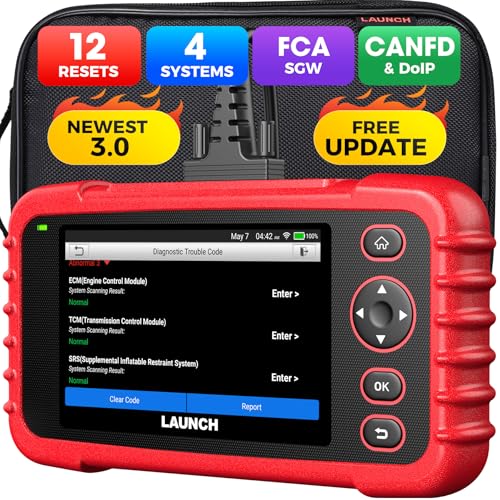
Offers 12 reset services for comprehensive diagnostics.
Lifetime free updates ensure up-to-date functionality.
Auto VIN feature simplifies vehicle identification.

Comprehensive diagnostics with bidirectional capabilities.
Free updates for two years included.
Supports advanced vehicle protocols like CANFD and DoIP.

Supports full system diagnostics for all vehicles.
Features wireless connectivity for convenient usage.
Offers eight essential reset functions for maintenance.

Supports 38+ resets and ECU coding.
Includes advanced CANFD and DoIP protocols.
Offers two years of free updates.

Free updates keep the tool current.
US-based support for quick assistance.
Bidirectional control for comprehensive diagnostics.
A buyer should first separate ordinary diagnosis from consequential functions. Reading a code and viewing live data are different from commanding an actuator, bleeding an electronic brake system, changing adaptations, accessing a secure gateway, or programming an ECU. The latter can alter vehicle behavior or leave a vehicle unusable if interrupted. J2534 pass-through claims should be checked against the SAE J2534-1 interface standard and the requirements for OEM software, authorization, drivers, stable internet, and stable vehicle voltage. CAN, CAN FD, DoIP, and other protocol claims are not proof that every vehicle function works.
The most useful coverage evidence is a manufacturer vehicle-and-function lookup or downloadable coverage table that identifies make, model, year, module, and procedure. “All-system,” “universal,” “200-plus brands,” and service-count figures can mislead because functions vary by vehicle configuration, installed software, market, gateway status, and sometimes an extra adapter or subscription. The supplied reviews also found inconsistent counts such as 31 versus 32 or 35-plus functions, and heavy-duty coverage that actually required a separate module. Treat broad counts as starting points, not guarantees.
Diagnostic accuracy is another separate question. None of the supplied products had a model-specific independent report proving reading, clearing, live-data, active-test, coding, or programming performance across a documented vehicle matrix. The strongest evidence would be a traceable ISO/IEC 17025-accredited laboratory report, with the laboratory’s ANAB or A2LA accreditation record, tested against relevant SAE J1979, SAE J2534-1, or ISO 15765 procedures. Seller assertions, customer ratings, FCC records, and feature lists cannot substitute for that testing.
For wireless tools, check the exact model and radio hardware in the FCC Equipment Authorization System. FCC authorization supports radio compliance; it does not certify the charger, battery, electrical insulation, cybersecurity, or diagnostic results. For charging and electrical safety, look for model-specific UL Product iQ or Intertek ETL records, or another traceable OSHA-recognized testing-laboratory record. No supplied product had a located UL or ETL listing for its charger or tablet.
Software terms deserve equal attention. Confirm the included update period, renewal price, expiry effects, Android or firmware support, security-fix policy, and whether core functions remain usable afterward. Gateway access is not a bypass: AutoAuth or other OEM authorization may require account registration, tool enrollment, subscriptions, and vehicle-specific eligibility. Finally, review privacy terms because online tools may transmit VINs, vehicle histories, diagnostic reports, feedback logs, and account data.
Across the supplied products, the recurring safety caveat is clear: these tools are not suitable for use while driving or for consequential brake, airbag, steering, throttle, DPF, immobilizer, coding, or programming work without vehicle-specific OEM procedures, a secured and ventilated work area, and stable battery support where required. A trouble code is not a parts-replacement instruction, and no product should be treated as independently validated merely because it advertises bidirectional testing or broad coverage.
The topics below describe what the reviews examined for this product type. Scores are comparative signals from the supplied assessments, not certifications or guarantees; a higher score means the reviewed evidence was stronger and the limitations were more clearly addressed.
This measures warnings and controls for active tests, resets, coding, and pass-through programming. It matters because a scanner can command vehicle components or interrupt vehicle functions. Higher-scoring examples, reaching 79, provided concrete guidance on securing the vehicle, ventilation, ignition state, battery condition, and avoiding driving; lower scores reflected less detailed limits and abort guidance.
This measures evidence about the tablet, vehicle cable, battery, and power adapter, including overheating and charging guidance. It matters because every reviewed tool uses rechargeable electronics or supplied power equipment. Higher scores, up to 78, reflected clearer charging precautions and documented inputs; lower scores reflected missing model-specific UL or ETL evidence and unclear adapter certification.
This measures authenticated access, wireless and online safeguards, software support, and handling of VINs, diagnostic reports, and account information. It matters because connected scanners can transmit vehicle data or access protected vehicle functions. Higher scores reached 75 where authenticated gateway workflows and some wireless evidence existed; lower scores reflected unclear privacy, retention, vulnerability, or security-update policies.
This measures whether the product, charger, wireless hardware, brand, or seller has unresolved U.S. recalls, warnings, enforcement actions, or missing radio authorization. It matters because a clean search is useful screening evidence before purchase. Supplied scores ranged from 70 to 78; higher results reflected more traceable radio or public-record evidence, but none should be read as proof that future issues cannot occur.
This measures independent proof that the scanner correctly reads, reports, clears, and performs claimed functions across relevant vehicles and protocols. It is especially important when a buyer may rely on an active test or repair decision. Every supplied product scored 70 because no model-specific accredited accuracy report or documented independent vehicle test matrix was located.
This measures whether makes, years, modules, resets, active tests, coding, heavy-duty support, and protocol limits are stated precisely. It matters because coverage changes by vehicle and function. Scores ranged from 52 to 77. Higher-scoring products offered an in-tool or online coverage lookup; lower scores were associated with broad claims, inconsistent feature counts, or heavy-duty capability requiring an unadvertised add-on.
This measures proof of current OEM or AutoAuth authorization and disclosure of account, subscription, software, and voltage requirements. It matters because secure gateways and programming can affect vehicle operation and cannot safely be assumed from a title. Scores ranged from 45 to 83; higher scores had clearer AutoAuth or OEM-access evidence, while lower scores lacked exact-product authorization or defined programming boundaries.
This measures included updates, renewal pricing, expiry effects, supported operating-system versions, security fixes, and continued core-tool usability. It matters because an inexpensive update promise can conceal future costs or an early end of useful support. Scores ranged from 58 to 78. Higher-scoring products disclosed update duration or continued use more clearly; renewal prices and security-support end dates were often still missing.
This measures whether performance, coverage, certifications, updates, and feature counts are qualified and supported rather than presented as universal. It matters because the category frequently uses large brand and service numbers. Scores ranged from 52 to 73. Higher-scoring listings better matched available documentation; lower scores reflected conflicting warranty terms, inconsistent service counts, or unsupported “all cars” and percentage claims.
This measures traceable evidence for radio compliance, electrical testing, diagnostic performance, and claimed certifications. It matters because an FCC record can confirm wireless authorization but cannot prove diagnostic accuracy or charger safety. Scores ranged from 69 to 82. Higher-scoring products had model or family-level FCC evidence; no supplied product had the full combination of accredited diagnostic testing and model-specific charger certification.
This measures durability, repairability, battery service, spare parts, update longevity, take-back, recycling, and packaging information. It matters because these scanners contain tablets, lithium batteries, cables, and wireless interfaces that can become electronic waste. Scores ranged from 67 to 73. Higher-scoring products had clearer warranty, repair, or continued-use information, while no reviewed product had a verified product-specific take-back or recycling program.
This is a 10.1-inch Android diagnostic tablet supplied with a SmartLink C V2.0 vehicle communication interface, vehicle and USB cables, and regional power plugs. It is intended for professional fault-code work, live data, active tests, service resets, coding, and pass-through programming. The manufacturer confirms Android 10, SmartLink C V2.0, and support for CAN, CAN FD, DoIP, and J2534 communication standards. Its most consequential capability is not ordinary code reading but access to active tests and programming workflows that can change vehicle behavior or software. Launch Tech USA describes the SmartLink C as a J2534 reflashing interface for use with OEM software. That is a manufacturer statement, not an independent demonstration of diagnostic accuracy on a defined set of vehicles. The product listing states two years of updates, while the documented subscription rules say online functions stop after subscription expiry.
This product suits an experienced independent repair shop or technician who already uses OEM service information, understands the risks of bidirectional controls and module programming, and can verify support by VIN before starting work. It is most appropriate where a workshop has stable internet, a Windows computer for pass-through work, approved battery voltage support for programming, and a process for obtaining required OEM subscriptions or gateway authorization. The included two-year update period may fit a shop that plans recurring diagnostic use rather than occasional code checks.
It is not suited to a first-time vehicle owner seeking a simple, low-risk code reader. Active tests, coding, and reflashing can actuate components or leave a vehicle inoperable if applied to the wrong vehicle, with poor power supply, or without OEM procedures. It is also unsuitable for anyone who expects every advertised reset, topology view, truck function, online service, or secure-gateway function to work without checking VIN-specific coverage, paid OEM access, and current subscription status first.
The strongest external compliance evidence located is an FCC authorization record for the SmartLink C V2.0 wireless interface, including Bluetooth and Wi-Fi test documentation. This confirms radio authorization for that interface, not diagnostic accuracy, charging safety, or the safety of every supplied accessory. No model-specific UL or ETL listing was found for the tablet or power adapter during this review. Launch Tech USA also posts a California Proposition 65 warning that products on its website may expose users to lead. The warning is broad and does not identify this product's specific exposure route or amount. Launch Tech USA offers a 12-month limited warranty and repair process for its tools. Extended warranty coverage for qualifying professional tools depends on maintaining an active software subscription. Cables, adapters, and chargers are excluded from that extended coverage. No product-specific battery replacement instructions, take-back program, recycler partnership, or electronics recycling policy was located. Keeping the tablet updated and repairable is therefore important to reduce premature electronic waste.
This product is a handheld diagnostic tablet for 12 V passenger vehicles and light trucks. It uses a 7-inch Android 10 tablet and a separate DBSCar VII Bluetooth vehicle interface that plugs into the diagnostic port. The supplied manual describes reading and clearing fault codes, live data, system scans, active tests, service procedures, ECU coding functions, and saved diagnostic reports. The wireless interface has a traceable FCC equipment authorization for Bluetooth automotive-diagnostic hardware. The product manual also provides unusually detailed basic workshop safety directions, including ventilation, wheel blocking, eye protection, avoiding use while driving, and using the supplied charger. Secure access to applicable Stellantis gateway-equipped vehicles has an official AutoAuth support path for Launch tools, but it requires separate shop and account authorization. Public independent testing was not found for this product's diagnostic accuracy, coding outcomes, or claimed vehicle-by-vehicle function coverage.
This product suits an experienced home technician or independent repair worker servicing several 12 V light-duty vehicles, especially someone who can interpret factory repair procedures rather than treating fault codes as repair instructions. It is most relevant for users who need all-system scans, live data, actuator tests, report records, and occasional gateway-authorized work on supported Stellantis vehicles. The buyer should be prepared to confirm every desired reset, coding, active test, and protocol against the exact year, engine, module, and region before connecting it.
It is not suited to a novice who wants a tool that can safely prescribe repairs from a fault code, or to anyone planning to operate diagnostic functions while driving. It is also a poor fit for safety-critical programming without OEM procedures, stable vehicle voltage support, and a recovery plan. Heavy-duty 24 V vehicles, unsupported older connectors, and DoIP work needing the extra adapter require additional hardware or a different setup. Buyers who require U.S. channel warranty certainty should clarify seller and service coverage before registration.
The key health issue is vehicle and workshop safety rather than direct consumer exposure. The manual gives meaningful precautions for exhaust gases, battery acid, ignition voltage, hot and moving engine parts, fire risk, and distraction while driving. It also instructs users to use the supplied power adapter and warns against replacing the internal rechargeable battery with an incorrect type. The Bluetooth interface has a traceable U.S. FCC authorization, but that is radio authorization, not a third-party electrical-safety certification for the tablet or charger. No model-specific UL or ETL charger listing was located. No relevant U.S. product recall, safety notice, or enforcement action surfaced in the searched CPSC, NHTSA, FCC, and FTC records. Repairability is limited by the sealed battery design, although the manual and warranty materials describe dealer repair and availability of some replaceable accessories. No product-specific take-back or electronics-recycling program was located.
This product is a 10.1-inch Android diagnostic tablet and vehicle communication interface for professional automotive troubleshooting. It connects at the diagnostic port to read modules, display live data, clear trouble codes, run vehicle-specific active tests, and perform applicable service functions. The manufacturer documentation identifies Android 10, 4 GB RAM, 64 GB storage, Wi-Fi, Bluetooth, USB, and a SmartLink C interface rated for 9 to 36 V vehicle systems. Its defining capability is high-level access rather than simple code reading. Manufacturer documentation describes active tests, remote diagnostics, J2534-related functions, and software renewal after the included update period. Launch Tech USA and AutoAuth independently confirm an authenticated workflow for secure-gateway access. However, there is no located independent laboratory evidence showing this product's diagnostic accuracy across claimed vehicles, functions, or programming outcomes.
This product suits an experienced independent repair shop or mobile technician who works across several passenger-vehicle makes and needs more than generic emissions diagnostics. The buyer should already use OEM service information, understand battery support and module programming precautions, and be prepared to confirm every function against the exact vehicle before starting. It is particularly relevant where authenticated secure-gateway access is needed for permitted FCA and Stellantis diagnostic work, provided the shop can complete the AutoAuth account process and maintain a stable internet connection.
It is not suited to a casual vehicle owner who wants a simple fault-code reader, or to anyone who might use actuator commands, coding, resets, or programming as a substitute for repair procedures. It is also unsuitable for safety-critical programming when the buyer cannot verify the exact vehicle coverage, maintain correct vehicle voltage, or access OEM instructions. Shops that require documented independent accuracy testing, confirmed charger safety certification, fixed subscription pricing, or a published long-term Android security-support plan need stronger documentation before relying on this product.
The strongest verified safety evidence is operational rather than electrical. The manufacturer manual gives meaningful vehicle-workshop precautions and warns against diagnosing while driving. It also says trouble codes alone must not determine part replacement, and directs users to follow the vehicle service manual. FCC authorization records support compliance documentation for the wireless tablet hardware, but that is radio compliance, not proof of charger, battery, or diagnostic performance safety. Launch and AutoAuth document authenticated secure-gateway access for professional users. Remote diagnosis and active commands still need careful operator control because they can affect vehicle systems. Searches of the U.S. CPSC and NHTSA public recall resources did not identify a product-specific recall, but no model-specific UL or ETL charger listing was located. Public documentation also did not establish battery replacement, repair parts, take-back, or recycling options, which leaves the product's end-of-life plan unclear.
This product is a tablet-based automotive diagnostic system with a wireless vehicle communication interface, intended for professional fault finding, live-data viewing, code reading and clearing, active tests, resets, and some coding-related procedures. The catalog configuration states a 10.1-inch Android tablet, a DBScar VII interface, passenger-vehicle adapters, and heavy-duty capability. Those configuration and feature-count claims are manufacturer or seller stated, not independently performance tested. A product manual for the PRO3S+ platform documents Bluetooth and Wi-Fi vehicle communication, vehicle-specific active tests, live-data recording, remote diagnostic control, and subscription renewal through the device. The linked DBScar VII wireless interface has a U.S. FCC equipment record, including RF exposure testing. No ISO 17025 diagnostic-accuracy report, model-specific J2534 conformance evidence, or independent vehicle test matrix was located for this product.
This product suits an experienced independent technician or repair shop that needs a portable tablet interface for routine full-system scans, live data, guided active tests, and documented diagnostic reports across a changing mix of vehicles. It is most appropriate where the operator can check vehicle-specific compatibility before connecting, follows OEM repair information, maintains stable vehicle voltage, and understands that a fault code alone is not a repair diagnosis. It also fits shops prepared to manage account registration and future software subscriptions.
It is not well suited to a first-time vehicle owner who expects a universal, risk-free repair tool. Active tests, coding, immobilizer functions, resets, and DPF-related procedures can change vehicle behavior or leave systems incorrectly configured when used without OEM procedures and adequate voltage support. It is also unsuitable where wireless diagnostic data or remote access cannot be controlled, where a fully repairable tablet is required, or where buyers need independently proven coverage and accuracy before purchase.
The available manual contains meaningful operator safeguards. It instructs users to test in a safe, ventilated area, secure the vehicle, avoid operating the product while driving, protect against battery acid and moving parts, and use the supplied charger. It also says not to replace the internal lithium battery, and directs users to an authorized repair facility. The DBScar VII wireless vehicle interface has an FCC record, including a passed RF exposure evaluation. The product has a sealed rechargeable battery, which limits home repair. Launch Tech USA documents a 12-month limited warranty and repair process for its branded tools, but its policy excludes chargers, cables, and adapters from warranty coverage. No product-specific U.S. take-back program, battery-service procedure, or certified recycler partnership was found. Searches of public CPSC and NHTSA recall resources did not identify a product-specific recall or safety notice at the time of review.
This is a handheld, wired vehicle scan tool with a 5-inch touch screen and built-in lithium battery. It connects to a vehicle's diagnostic port, then is intended to read and clear diagnostic information, display live data, identify the vehicle automatically where supported, and create diagnostic reports. It is aimed at passenger-car DIY use rather than full workshop programming. LAUNCH's current product page for the CRP 123X V3 family states that it covers basic diagnostics for engine, transmission, ABS, and SRS systems, supports standard OBD functions, and includes seven special functions. Those are manufacturer statements, not independently validated accuracy results. The model's 2.4 GHz Wi-Fi transmitter is independently traceable to a U.S. FCC authorization. No model-specific accredited laboratory report was found for diagnostic accuracy, electrical safety, or reset-function performance.
This product fits an owner or independent technician who wants a self-contained wired scanner for basic fault-code investigation on a passenger vehicle, especially for engine, transmission, ABS, and SRS warning systems. It is most appropriate when the exact vehicle and intended function have been checked with LAUNCH before use, and when the user understands that a displayed code identifies a diagnostic starting point, not a confirmed repair. It also suits users who value a Wi-Fi update path and report sharing without relying on a phone app.
It is not for anyone who needs independently demonstrated diagnostic accuracy, documented calibration, or a tool validated for safety-critical repair decisions. It is also unsuitable as the sole tool for OEM programming, coding, immobilizer work, or secure-gateway jobs unless official OEM authorization, account requirements, compatible software, and stable battery-voltage support are confirmed first. Drivers should not use it to clear ABS, SRS, or emissions faults as a substitute for diagnosis and repair. It should not be operated while driving.
The product contains a built-in lithium battery and Wi-Fi radio. Its Wi-Fi implementation is traceable to a model-specific U.S. FCC authorization, which is meaningful for radio compliance. That authorization does not establish overall charger, cable, battery, or overheating safety. No UL or ETL electrical listing, model-specific electrical safety report, or public battery-service procedure was located in the reviewed materials. The reviewed CPSC and NHTSA public resources did not identify a product-specific recall or safety notice for this scanner. LAUNCH provides a privacy-policy link, online updates, and a product page that directs buyers to a vehicle-coverage tool. However, no published take-back program, repair-parts catalog, battery replacement instructions, or U.S. recycling pathway for this product was located. Continued software updates may extend useful life, but the duration and security-maintenance terms are not clearly documented.
This is a handheld, wired OBD-II diagnostic tablet for passenger vehicles. It has a 5-inch Android 8.1 touchscreen and connects at the vehicle diagnostic port, while Wi-Fi is used for downloads and updates. The supplied kit is stated to include the scanner, OBD-II cable, USB charging cable, storage bag, and manual. The product is marketed for reading and clearing faults in engine, transmission, ABS, and airbag systems, plus maintenance resets. Those functions and the advertised count of 12 resets are manufacturer-stated, not independently validated on a published vehicle test matrix. A model-specific FCC authorization record identifies the CRP129X V3 among the covered professional diagnostic-tool models. Launch Tech USA also continues to list CReader-series software downloads, although it does not publish a model-specific security support lifetime or release-note history for this unit.
This product fits a hands-on owner or small independent technician who needs a portable wired tool for preliminary checks of the engine, transmission, ABS, and airbag systems, and who will verify feature availability against their exact vehicle before connecting. It is most appropriate when a fault-code report and live diagnostic direction are part of a broader repair process using OEM service information. The user should be comfortable maintaining battery voltage, following vehicle-specific procedures, and treating reset functions as service steps rather than repairs in themselves.
It is not suited to users who need independently proven diagnostic accuracy, OEM-level programming, or assured coverage of every module and service function on a late-model vehicle. Do not rely on it alone for brake bleeding, airbag work, steering-angle calibration, diesel particulate filter regeneration, or any operation that can change vehicle behavior. It is also a poor fit where a documented UL or ETL charging certification, a product-specific data-handling policy, a published security-update commitment, or clear repair and battery-replacement instructions are required.
The principal verified safety-positive finding is a model-specific FCC authorization trail for the CRP129X V3 family. That supports U.S. authorization of its wireless transmitter, but it does not establish electrical safety of the internal battery, charging cable, or any separately sourced USB power adapter. No UL or ETL product listing was located for those charging components. No product-specific CPSC or NHTSA recall was located in the searches performed, which is not the same as proof that no future safety notice will arise. Launch Tech USA publishes a privacy policy and a CReader software-download page, but neither provides a product-specific VIN and diagnostic-data policy, supported Android security period, battery-service procedure, spare-parts plan, take-back program, or recycling pathway. The 5-year warranty stated in the product record may help durability if honored, but repairability and end-of-life handling remain insufficiently documented. Recycle the product and its lithium battery through an appropriate electronics recycler rather than household trash.
This is a 7-inch Android diagnostic tablet paired with a Bluetooth vehicle interface. It connects at the diagnostic port for system scans, fault-code work, live data, actuator tests, selected resets, and manufacturer-dependent coding functions. The manufacturer documentation identifies 4 GB memory, 64 GB storage, Wi-Fi, Bluetooth, and a vehicle-interface operating range of 9 to 18 volts. LAUNCH states that the wireless version supports actuator tests, ECU coding, CAN FD, expandable DoIP, and FCA AutoAuth. Those capabilities remain vehicle-, module-, subscription-, and accessory-dependent. The manual includes useful basic precautions, including checking vehicle identification before testing, maintaining 11 to 14 volts at the vehicle battery, and not operating the tool while driving. The Bluetooth interface has a traceable U.S. radio authorization record, but independent diagnostic-accuracy testing for this product was not located.
This product suits a technically capable home mechanic or independent repair user who works on several compatible passenger vehicles and needs more than generic emissions-code reading. It is most appropriate for stationary diagnostic work, such as identifying module faults, reviewing live data, performing supported maintenance resets, or running a carefully understood actuator test. The buyer should be prepared to verify vehicle-specific coverage before purchase, maintain stable vehicle voltage, register an account, and read the on-screen and service-manual instructions before attempting coding or security-gateway work.
It is not suited to anyone who needs independently proven diagnostic accuracy for safety-critical repairs, fleet decisions, or paid repair work with liability exposure. It is also unsuitable for a buyer who expects universal coverage, guaranteed coding, or secure-gateway access without an AutoAuth account, current software, possible add-on hardware, and exact vehicle confirmation. Avoid using it while driving or attempting unfamiliar active tests, programming, immobilizer, airbag, brake, or powertrain functions without OEM procedures and stable voltage support.
The main safety positive is that the manual does not treat diagnostics as risk-free. It tells users not to operate the tool while driving, to confirm the vehicle information before proceeding, and to work within a stated vehicle-battery range. The included Bluetooth vehicle interface has a traceable FCC record, supporting U.S. radio-compliance verification. No product-specific U.S. recall, regulator warning, or enforcement action was located in the checked public sources. Electrical safety evidence is less complete. The manual says to use the included power adapter, but no model-specific UL or ETL listing was located for the charging system. The device requires account registration and can send VIN lookups to a remote server, while the public privacy page links to a policy rather than presenting plain, product-specific data practices. For lifecycle concerns, the manual says replaceable and optional parts can be ordered through authorized suppliers, but no U.S. take-back, battery-replacement, repair-price, or recycler program was found.
This product is an Android-based automotive diagnostic tablet with an 8-inch screen, a separate vehicle communication interface, Bluetooth or wired connection to the vehicle, and a manufacturer-stated 10,000 mAh battery. It is intended for supported passenger vehicles, where it can read and clear fault codes, display live data, identify control modules, run active tests, and create scan reports. TOPDON's manual documents eight service functions, including oil, throttle, electronic parking brake, steering-angle, DPF, ABS bleed, battery-management, and airbag resets. It also documents vehicle-specific coverage lookup and warns that available functions vary by make, model, and year. The same official support material states two years of free software updates, while this product record says lifetime free upgrades. The manual instead describes a one-year limited warranty, so buyers should confirm current update and warranty terms before activation.
This product suits an experienced home mechanic or independent repairer who works on supported passenger vehicles and wants more than basic code reading. It is most appropriate for users who can consult the vehicle service manual, verify the tool's live coverage lookup before starting, and understand the consequences of clearing faults, commanding components, or performing brake, battery, airbag, and DPF-related procedures. The tablet format, saved reports, live-data graphs, and wired fallback connection fit stationary workshop diagnosis rather than casual roadside use.
It is not suited to drivers seeking a simple universal code reader, or to anyone who expects every advertised reset or active test to work across all vehicles. Do not use it as a substitute for OEM repair instructions when working on braking, steering, restraint, emissions, or high-voltage systems. Buyers who need independently proven diagnostic accuracy, documented J2534 programming support, confirmed secure-gateway authorization, or clear long-term update pricing need stronger model-specific documentation than was located here.
The manual contains meaningful operator and vehicle safety guidance. It tells users to read the vehicle service manual, work in a ventilated area, keep clear of hot or moving parts, avoid flames near fuel or battery vapors, and turn ignition off before connecting or disconnecting the vehicle interface. It also warns against looking at live data while driving. These are useful controls for a tool that can clear faults and command supported components. The tablet has a manufacturer-stated 10,000 mAh battery and supplied power adapter, but no model-specific UL or ETL electrical-safety listing was located. TOPDON documents firmware and system-update functions, but states only one year of limited warranty and two years of free software updates. No published repair-parts, battery-replacement, take-back, or U.S. recycling program specific to this product was located, which limits confidence about its end-of-life support.
This is an 8-inch Android 10 diagnostic tablet with a wired vehicle cable, 6000 mAh battery, Wi-Fi, and a supplied case, power adapter, USB cable, and switching adapters. It is intended to read and clear fault codes, view live data, run supported active tests, and perform vehicle-specific service routines and coding functions. The seller documentation states that it includes two years of software updates and offers more than 38 service functions, CAN FD, DoIP, bidirectional control, and online coding where supported. Its manual also says compatibility varies by vehicle, model year, module, and function, and directs users to check coverage before attempting all-system access or bidirectional control. FCA secure-gateway access is not simply built in, it requires an AutoAuth account, current software, and a stable network connection.
This product fits an experienced independent technician or technically capable multi-vehicle owner who needs more than generic code reading, especially live data, supported actuator tests, reset procedures, and guided checks. It is most appropriate when the buyer will verify the exact vehicle, model year, engine, module, and intended function before purchase and before use. FCA or other gateway-protected work also suits a buyer prepared to create and maintain the required authenticated access account and keep the tablet updated.
It is not suited to someone who wants a universal, risk-free DIY coding or programming device. Users without service information, a stable vehicle power source, and the ability to recover from a failed procedure should avoid ECU coding, adaptations, calibration, and active tests. It is also a poor fit for buyers who require independently validated diagnostic accuracy, a clearly published post-update subscription price, a confirmed safety-certified charger, or a public function list that guarantees every claimed operation on their exact vehicle.
The main safety issue is operational rather than chemical exposure. This tablet can run supported active tests, resets, adaptations, and coding, so a mistaken vehicle selection or an interrupted procedure can affect vehicle behavior or module configuration. The available manual tells users to confirm vehicle compatibility and maintain current software, but it does not provide a detailed public safety protocol for voltage support, programming interruption, or post-failure recovery. A Launch X-431 wireless diagnostic platform has an FCC authorization record with published radio test and RF exposure exhibits. That is useful evidence for the related wireless platform, but it does not verify the exact bundled charger or establish a UL or ETL listing for this product. No product-specific U.S. recall or regulator warning was located in the searched sources. No public take-back, battery-replacement, spare-parts, or recycler program specific to this unit was located, so its end-of-life pathway remains unclear.
This is a corded handheld automotive scan tool with a color screen, physical controls, Bluetooth connection to the optional RepairSolutions2 phone app, and power from the vehicle diagnostic port. It reads and clears supported diagnostic codes, displays live data, scans supported vehicle modules, and can run selected bidirectional active tests and maintenance functions. It is intended for North American OBD2 vehicles, with actual functions dependent on the precise year, make, model, and installed software version. The manufacturer documents detailed, vehicle-specific on-screen preparation steps, confirmations, and exit controls for tests that can command systems such as fans, fuel pumps, injectors, and transmission functions. Independent hands-on reviews confirmed practical fault reading and clearing on several vehicles, but they are not accredited protocol-conformance studies. Innova also explicitly states that this unit cannot reprogram vehicle computers and has limited functions on 2018 and newer FCA vehicles requiring AutoAuth access.
This product suits an experienced home mechanic or independent technician working mainly on U.S. or Canadian OBD2 vehicles who wants a compact wired tool for supported all-system scans, live data, fault clearing, and carefully executed active tests. It is most appropriate when the buyer will run Innova's coverage checker before purchase, follow factory repair information alongside the tool, and is comfortable treating a code or app recommendation as a starting point for diagnosis rather than proof of a failed part.
It is not suited to someone who needs ECU reflashing, key programming, or unrestricted secure-gateway functions on 2018 and newer FCA vehicles, because Innova documents that this handheld lacks AutoAuth access and cannot reprogram vehicle computers. It is also unsuitable for untrained users who may run actuator, fuel, fan, traction-control, or inverter-related tests without understanding the vehicle-specific procedure. Privacy-sensitive users may prefer a tool that does not upload VIN and diagnostic history to a cloud-linked repair database.
The main health finding is a manufacturer-posted California Proposition 65 warning that the product can expose users to DINP. California lists DINP as a chemical known to cause cancer, and EPA's 2025 risk evaluation found unreasonable risk to human health under some conditions of use. The available product materials do not identify the DINP-containing component or quantify exposure, so the warning should not be read as a measure of actual exposure during normal use. Follow the manual's engine-bay safety directions, including keeping ignition sources away from fuel and battery vapors and avoiding loose clothing or conductive jewelry. The scanner is vehicle-powered for use, avoiding a dedicated charging brick, and Innova currently lists firmware updates for newer versions. A one-year warranty is stated for authorized purchases. However, no product-specific take-back program, spare-parts catalog, repair manual, battery-service plan, or third-party electronics-recycling certification was identified. No product-specific CPSC or NHTSA recall notice was identified in the sources checked for this review.


