Best Overall
13% off
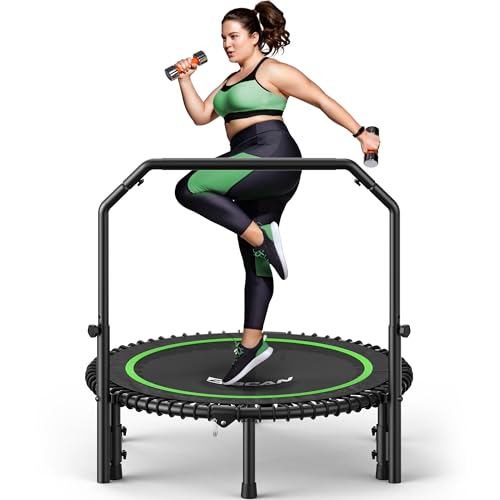
BCAN 450 LBS Foldable Mini Trampoline
Adjustable handle bar enhances stability and comfort.
Foldable design allows easy storage and portability.
Quiet bungees provide a noiseless workout experience.
 Brianna York
Adjustable handle bar enhances stability and comfort.
Foldable design allows easy storage and portability.
Quiet bungees provide a noiseless workout experience.

High weight capacity for diverse user needs.
Adjustable tension for customizable workouts.
Quiet operation ideal for indoor use.
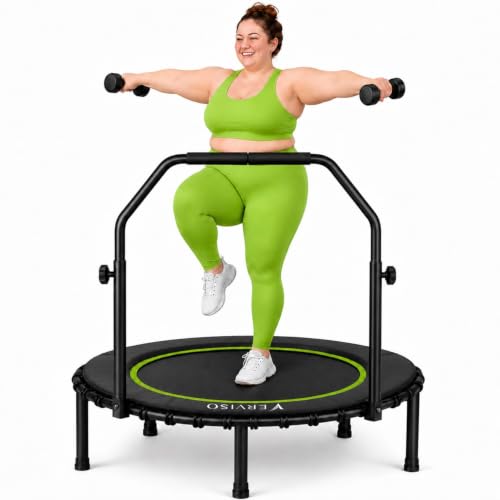
Durable bungee cords provide a smooth bounce.
Adjustable sizes to fit different spaces.
Sturdy construction supports adult use safely.
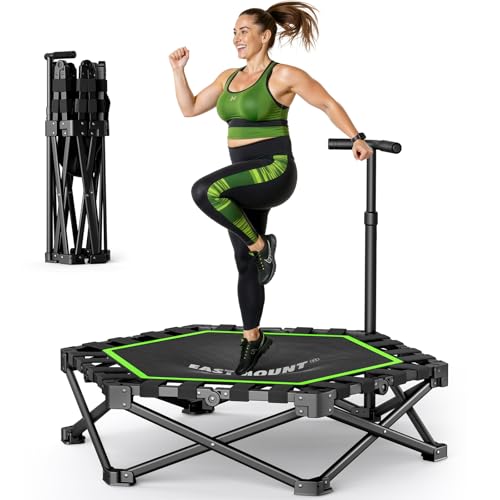
Sturdy design supporting up to 450 lbs.
Adjustable handle for personalized comfort.
No-assembly feature for quick setup.

Easy to store with foldable design.
Supports up to 450 lbs weight.
Silent bungee cords reduce noise.

Sturdy construction supports up to 550 lbs.
Adjustable bar enhances workout versatility.
Quiet bungee design minimizes noise during use.

High weight capacity ensures durability and safety.
Adjustable handle suits different user heights.
Quiet operation ideal for indoor workouts.

Supports up to 550 lbs, ensuring durability.
Adjustable handle enhances workout customization.
Quiet bungees provide a smooth bounce experience.
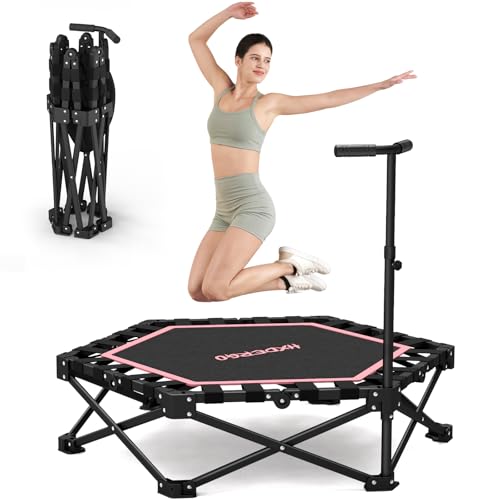
High weight capacity supports robust workouts.
Adjustable handle offers personalized comfort.
Foldable design ensures easy storage.

Adjustable handle for personalized comfort and stability.
Foldable design ensures easy storage and portability.
Suitable for both kids and adults' workouts.
Suspension varies between exposed metal springs and bungee or elastic cords. Bungees can avoid exposed coils, while covered or padded edges can reduce direct contact with suspension hardware. Neither feature, by itself, proves safe landing performance. Look for model-specific evidence showing static and repeated dynamic-load testing, fatigue cycles, mat and edge durability, stability, and handlebar retention. The strongest form of evidence in this review framework is an original report from an ISO/IEC 17025-accredited laboratory that identifies the exact model and configuration, test methods, loads, cycles, pass criteria, date, and signatory. The laboratory’s scope should be checkable through the A2LA or ANAB accreditation directories. An ASTM F381 reference is meaningful only when the applicable methods and results are documented; an unsupported “ASTM approved” statement is not certification.
Capacity figures commonly mislead. A static limit is not necessarily a safe limit for repeated bouncing, and several supplied listings give different static, dynamic, or recommended-user figures. Other products conflict across titles, specification tables, and manuals. Treat the lowest clearly stated dynamic or user limit as the practical ceiling until the seller resolves the discrepancy. Claims such as “low impact,” “quiet,” “90 percent impact absorption,” calorie or jogging equivalence, detoxification, lymphatic benefits, joint protection, rehabilitation, and cord life require product-specific evidence; general rebound-exercise research cannot validate a particular frame or marketing number.
A responsible product should also have durable model identification, on-product warnings, clear assembly, inspection, folding, storage, and maintenance instructions, and a traceable manufacturer or seller. Check the CPSC recall database and SaferProducts.gov rather than treating a lack of recalls as proof of safety. Folding designs deserve particular care because the supplied reviews repeatedly mention snap-back, pinch, or difficult-unfolding hazards, and prior recalls involving other folding rebounders show that this is a meaningful risk category.
For materials, named components are better than vague “non-toxic” language, but they are not chemical safety evidence. Seek finished-product or component testing from an ISO/IEC 17025-accredited laboratory for relevant substances, including lead and phthalates where applicable. For sustainability, favor products with replaceable mats, cords or bungees, feet, pads, and hardware, documented warranty support, and actual parts availability. Recycled-content claims should be traceable to a current certification and, where relevant, a transaction certificate—not just a logo or listing statement.
Across the supplied products, the recurring safety caveats are substantial: none had accessible exact-model independent testing for all major load, fatigue, stability, edge, folding, or handlebar questions; several had conflicting capacity or construction information; and no product had fully documented chemical testing. Users with poor or uncontrolled balance, recent surgery or fracture, acute joint injury, severe osteoporosis, dizziness, significant cardiovascular symptoms, or other conditions that make jumping unsafe should obtain individualized clinical guidance. Children, multiple simultaneous users, flips, high jumps, and reliance on a handlebar for fall protection are recurring poor fits.
The scores below compare the supplied products against the category’s health, ecology, and evidence questions. They do not turn a manufacturer claim into independent proof: a higher score indicates stronger reviewed support relative to the other products, while the reviews still identify important evidence gaps.
This measures whether rebound exercise benefits are described within the limits of human evidence and whether the product identifies unsuitable users. A high score is associated with adult, one-person use, sensible exercise guidance, and meaningful cautions; a low score reflects broad rehabilitation, detox, bone, or guaranteed joint claims without adequate exclusions. Supplied scores range from 67 to 79.
This concerns repeated loading of the exact frame, mat, springs or bungees, attachments, and stated user limit. A high score requires model-specific independent static and dynamic evidence at or above the claimed limit; a low score relies mainly on seller capacity figures or conflicting static and dynamic numbers. Supplied scores range from 52 to 73, and no product had a fully accessible qualifying report.
This measures whether padding or a protected edge stays attached and shields users from the frame, cords, springs, gaps, tears, and sharp or snagging areas. Higher-scoring products had features such as covered or padded suspension zones; lower scores reflected missing pads or no exact-model impact and retention testing. Supplied scores range from 68 to 76.
This measures resistance to slipping, tipping, leg movement, and handlebar loosening during ordinary use. A high score needs model-specific stability and handle-retention evidence plus clear instructions that define the bar as balance-only when appropriate. A low score leaves loading unclear or offers no handhold where one may be needed. Supplied scores range from 68 to 75; no handlebar was independently established as fall protection.
This measures assembly, unfolding, folding, locks, pinch points, snap-back, and storage instructions. Higher scores came from non-folding construction or clearer locking and setup guidance; lower scores reflected difficult unfolding, incomplete manuals, or no folding-cycle evidence. Supplied scores range from 62 to 80. Folding remains a category concern because other rebounders have had snap-back recalls.
This measures durable product identification, warnings, instructions, traceable sellers or manufacturers, and the ability to respond to defects. Higher scores included model-specific manuals, one-user rules, inspection guidance, and clearer manufacturer accountability; lower scores lacked manuals, parts diagrams, or durable warning evidence. Supplied scores range from 68 to 79. A clean recall search is not proof of safe performance.
This measures identification and independent testing of skin-contact, rubber, foam, fabric, coatings, and other materials for relevant hazards. A high score needs current, model-specific finished-product or component results rather than “non-toxic” language; a low score leaves chemicals and formulations untested. Supplied scores range from 62 to 72, and no product supplied complete accessible chemical evidence.
This measures whether capacity, quietness, impact, calorie, detox, lymphatic, bone, rehabilitation, and medical claims match evidence for the exact product. Higher scores avoid or qualify unsupported claims; lower scores repeat precise equivalences or large performance claims without testing. Supplied scores range from 52 to 74. Conflicting static, dynamic, and recommended limits are a recurring warning sign.
This measures accessible testing by a qualified independent laboratory on the exact current model and configuration. A high score requires an original report naming methods, loads, cycles, results, and an accredited laboratory whose scope can be checked; a low score relies on seller certificates, logos, or unsupported ASTM or CE references. Supplied scores range from 52 to 70, but no product had complete accessible verification across the major hazards.
This measures whether wear items can be replaced, whether warranty support may extend service life, and whether recycled or responsibly sourced claims are substantiated. Higher scores were associated with documented replacement mats and cords or parts support; lower scores had only a warranty or no parts catalog. Supplied scores range from 68 to 78. No supplied product had comprehensive environmental certification and verified parts availability.
This is a foldable, 40-inch adult fitness rebounder with a U-shaped adjustable handlebar, six support legs, a polypropylene mat, and 32 bungee cords. The product is intended for one-person, low-height indoor exercise and folds to an approximately 15 by 30 inch storage size. The 450-pound user limit, 1.8 mm alloy-steel frame description, four handlebar heights, and 32-bungee specification are manufacturer-stated, not independently load-tested figures. The available instructions include useful basics, including a level non-slip surface, adequate clearance, pre-use inspection, one user at a time, and removal from service if the mat, bungees, frame, or connections are damaged. Human research supports rebound exercise as a possible aerobic and balance-training activity, but the evidence base is relatively small and does not validate this specific product for rehabilitation or medical treatment. No accessible independent laboratory report, certification record, or public material-safety test was found for this configuration.
This product fits an adult who wants a compact home cardio or movement platform for gentle, controlled rebounding, has enough open overhead and side clearance, and can keep the unit on a flat non-slip floor. It is most suitable for someone prepared to inspect the bungees, mat, legs, and handlebar before use, use one person at a time, and treat the handlebar as a balance aid rather than a device for catching a fall. Beginners should start with small, low bounces and short sessions.
It is not suited to anyone seeking medically supervised rehabilitation, fall prevention equipment, or a verified high-capacity training platform. People with a recent injury, dizziness, chest symptoms, uncontrolled balance problems, pregnancy, or a condition affected by impact exercise should first seek advice from a qualified clinician. It is also a poor fit for unsupervised children, users who may attempt flips, shared multi-user sessions, or homes where there is insufficient clear space and no stable, level floor. Do not rely on the handlebar for full body-weight support.
The available human evidence supports rebound exercise as a form of physical activity that may help balance, mobility, and aerobic conditioning when performed as a structured program. That does not make this product a rehabilitation device. Its instructions appropriately advise starting gradually, keeping knees slightly bent, using one jumper, and stopping for concerning symptoms. The published safety guidance also calls for inspection of the mat, bungees, legs, and connections before use. The frame and mat materials are identified as alloy steel and polypropylene, with bungee suspension, but no accessible independent screening for restricted substances, coatings, foam, or skin-contact materials was found. No verified recycled-content, responsible-sourcing, or environmental certification was found. BCAN publishes warranty and customer-support information, and its instructions say to seek original replacement parts, but a readily available catalog for the exact wear parts was not located. No recall specific to this product was found in the reviewed CPSC material.
This is a 40-inch adult fitness rebounder with a steel, one-piece circular frame, bungee suspension, a height-adjustable T-handle, phone holder and grip socks. It is intended for one-person indoor cardio and balance-oriented movement rather than gymnastics or a medical device. The seller describes two bungee sets that can be mixed for six tension settings. The manufacturer states a 500-pound static limit and a 400-pound dynamic limit, which is more specific than the broad 500-pound capacity used in some retail listings. It also states that the bungees completed 100,000 jumps, but no accessible independent laboratory report was found for this exact configuration. The non-folding frame avoids the hinged-frame snap-back hazard that prompted a prior mini-trampoline recall from another brand, though users still need to inspect the mat, cords, legs and handlebar before use.
It suits an adult who wants a compact indoor cardio option, prefers a bungee rebound rather than exposed metal springs, and can begin with controlled, low-amplitude movement. The 40-inch format and manufacturer-stated 400-pound dynamic limit may be useful for a larger adult, provided that the user remains within that limit and uses the rebounder alone. It is also better suited to someone who values a non-folding frame and is willing to perform routine checks of the cords, mat, feet and handlebar connections before exercising.
It is not appropriate for children, for anyone planning flips, high jumps, shared use, or unsupervised use by a person with poor balance. The handlebar is presented as added balance support, not verified fall protection. People with a recent injury, unstable joint condition, severe osteoporosis, uncontrolled cardiovascular symptoms, neurological balance impairment, pregnancy-related exercise restrictions, or a condition such as lymphedema should obtain individualized advice from a qualified clinician before using a rebounder. It is also unsuitable for buyers who require independently published load, fatigue, chemical, or handlebar testing.
Rebounding can be a form of aerobic activity, and limited human research suggests possible balance and fitness benefits in some populations. The evidence base remains heterogeneous, with differing devices, doses and participant groups. It does not validate disease-treatment or rehabilitation claims for this particular product. Use one person at a time, avoid somersaults, clear the surrounding area, and stop use if a cord, mat, pad, leg or handlebar connection shows damage. The product is described as a steel-frame rebounder with polypropylene listed for the mat and natural-latex bungees. The package includes an extra bungee set, which may extend use, but no dedicated replacement-parts catalog or verified recycled-content claim was located. No recall for this exact product was found in the CPSC material reviewed. A one-year defect warranty and direct seller support are published, although separate brand messaging gives conflicting warranty length information.
This is a 40-inch adult indoor rebounder, a small round trampoline used for low-height bouncing, marching, balance drills, and aerobic exercise. The listed configuration uses a steel frame, polypropylene mat, bungee suspension, detachable legs, and an adjustable handlebar. The seller also lists a one-year warranty. Its most consequential specifications are manufacturer-stated, not independently confirmed. The seller describes more than 360 latex bungee cords, a 1.8 mm steel frame, and a 264-pound dynamic load, while marketing the product prominently as having 460-pound capacity. That 460-pound figure is described elsewhere in the same listing as a static load, so it should not be treated as the permitted jumping weight. No accessible model-specific lab report, certification record, manual, replacement-parts catalog, or public test results were found. Human research supports rebound exercise as a possible fitness activity, but not as proof of safety or treatment benefit for this product.
This product is most suited to an adult who wants a compact indoor platform for conservative rebound exercise, such as low bounces, marching, or short cardio sessions, and who has clear floor space around the frame. It is better aligned with a user at or below the manufacturer-stated 264-pound dynamic-load figure, rather than someone relying on the larger 460-pound headline. The adjustable handle can be useful as a light balance reference during familiar movements, but it should not be treated as a fall-arrest device or as weight-bearing exercise equipment.
It is not a suitable choice for anyone who needs a medically supervised rehabilitation device, a fall-prevention aid, or a handlebar that can safely bear substantial body weight. People with new or uncontrolled balance problems, acute joint injuries, severe osteoporosis, recent surgery, significant cardiovascular symptoms, or pelvic-floor concerns should seek clinician-specific guidance before rebound exercise. It is also unsuitable for users above the stated 264-pound dynamic load, households expecting unsupervised child use, or buyers who need documented independent proof of structural, chemical, and folding safety.
Rebound exercise can provide a practical aerobic and balance-training option when used conservatively. Controlled research in specific adult groups has reported improvements in fitness-related measures, while recent evidence reviews also note limited study numbers, varied programs, and unresolved equipment safety questions. Those findings do not establish rehabilitation, lymphatic, detoxification, joint-protection, or disease-treatment benefits for this product. The seller identifies steel, polypropylene, latex bungees, PVC or neoprene components, and claims low lead content and ASTM and Prop 65 compliance. However, no original lab report was publicly accessible to confirm the exact product, methods, or results. No product-specific recall or regulatory action was found in the reviewed public sources. A one-year warranty is listed, but no verified replacement-parts program, recycled-content evidence, or other substantiated material-footprint claim was found.
This is a 42-inch, hexagonal fitness rebounder intended for one person doing low-height indoor bouncing, marching, or cardio drills. The catalog describes a steel and polypropylene construction, adjustable handle, foldable frame, and 450-pound maximum recommendation. A separate EAST MOUNT marketplace listing identifies 24 elastic bungee cords, six legs, a nylon jumping surface, and a three-position handle. Those material descriptions are not fully consistent across listings. The manufacturer states that the unit is mostly preassembled, folds to 9.2 inches thick, and runs at 20 dB. It also distinguishes a 450-pound static load from a 360-pound dynamic bounce load, an important qualification missing from the simpler 450-pound capacity headline. No accessible independent laboratory report, certification record, detailed safety manual, or model-specific recall was located during verification.
This product is most suitable for a single adult who wants compact, low-height home cardio or balance practice and can remain within the manufacturer-stated 360-pound dynamic bounce limit. It fits a user with limited storage who values a foldable 42-inch platform and intends controlled bouncing, marching, or guided rebound workouts rather than acrobatics. The available evidence supports rebound exercise as one possible training format, particularly when practiced consistently for weeks, not as a treatment or rapid-results device.
It is not appropriate for flips, tricks, multiple users, unsupervised children, or anyone who needs a medically validated rehabilitation device. People with poor balance, recent surgery, acute joint injury, severe osteoporosis, uncontrolled cardiovascular symptoms, or neurological conditions affecting fall risk should seek clinician-specific guidance before using an unstable bouncing surface. It also does not suit users above the stated 360-pound dynamic limit. Buyers who need independently verified load, handlebar, chemical, or folding-safety testing should select a product with accessible reports.
Rebounding can provide an enjoyable way to perform aerobic and balance-oriented exercise. A 2026 meta-analysis found potential BMI and balance benefits in adults with overweight or obesity, with clearer results from programs longer than 12 weeks. That evidence concerns structured exercise programs, not this specific rebounder, and it does not validate the seller's 90 percent impact-reduction or 10-minutes-equals-30-minutes claims. Health-related marketing should be supported by competent and reliable scientific evidence. No EAST MOUNT-specific recall was located in the CPSC materials searched. However, folding mini-trampolines have previously been recalled by another company after frame-contact injuries, so controlled unfolding and storage matter. EAST MOUNT provides a one-year manufacturer warranty in the catalog, but no verified replacement mat, bungee, foot, pad, or hardware catalog was found. No recycled-content certification, environmental certification, chemical test report, or Proposition 65 listing was located.
This is a handle-free, foldable 40-inch adult rebounder for low-height bouncing, jogging in place and other indoor cardio movements. The product documentation calls for one user at a time, a level surface, 8 feet of overhead clearance, and pre-use checks of the bungees, legs and locking pins. It has six screw-in legs and a bungee-suspended polypropylene mat in an alloy-steel frame. Retail listings independently corroborate the 40-inch handle-free format and identify the same product configuration. The 450-pound capacity, 32-bungee count, quiet-operation claim and compact folded size are manufacturer-stated rather than supported by an accessible laboratory report. Capacity information is notably inconsistent, because one seller page for this product also lists a 330-pound recommended maximum user weight. Rebound exercise can provide aerobic activity and may help balance or body-composition outcomes in structured programs, but the human evidence is limited and does not validate this product's joint-protection or body-shaping marketing claims.
It suits an adult who wants a compact, handle-free platform for controlled, low-height indoor cardio and has enough unobstructed room to maintain the stated clearance. The user should be comfortable assembling the legs and bungees, checking pins and cords before every session, and folding the frame carefully. It is most appropriate for a person who does not rely on a rail for balance and who treats the published capacity as uncertain rather than planning use close to either advertised limit.
It is not suited to a person with frequent falls, significant balance impairment, severe osteoporosis, an unstable joint condition, or a new medical concern without clinician clearance. It is also not appropriate for anyone who needs a support rail, because this version has none. Avoid it for shared or simultaneous jumping, children without direct supervision, flip-style activity, uneven floors, low ceilings, or homes where safe clearance cannot be maintained. Higher-weight users should not assume the 450-pound claim resolves the conflicting 330-pound seller specification.
Mini-trampoline exercise is a legitimate form of physical activity, and small human studies and reviews suggest possible benefits for fitness, balance and body composition when it is part of a regular program. Those findings are not a rehabilitation prescription and do not establish that this particular product protects knees, backs or joints. The product instructions appropriately call for a physician consultation for pre-existing health conditions, but they do not replace individualized clinical advice. The frame and mat materials are disclosed as alloy steel and polypropylene. That is useful basic material information, but no accessible independent chemical testing was found for skin-contact plastics, elastic cords, coatings or floor feet. A one-year warranty and instructions to replace worn bungees support some maintenance, but no public parts catalog, recycled-content certification or other substantiated environmental claim was found. A search of CPSC recall results did not identify a BCAN-specific recall, though folding mini-trampolines have been recalled by other companies for snap-back frame injuries.
This is a 50-inch, hexagonal indoor rebounder with a bungee suspension system, a T-bar handhold, and a manufacturer-stated 550-pound capacity. The listing identifies polypropylene as the mat material, stainless steel as the frame material, and 48 bungee cords. Its stated 11.2-inch height makes it a low-to-the-floor format for single-user cardio, marching, balance drills, and controlled bouncing. The main evidence issue is safety substantiation. The seller says the product complies with ASTM F381 and was independently verified by HUAK, but ASTM F381 applies to consumer trampolines at least 20 inches high with a minimum 3,300-square-inch bed. This product is listed as 11.2 inches high and 50 inches across, so that standard is outside the product's stated format. No exact-product report, test configuration, or applicable accredited scope was accessible. Human research supports rebounding as exercise, but rehabilitation and joint-protection claims should be treated cautiously.
It may suit an adult who wants a low-to-the-floor home cardio platform for gentle, single-user rebounding, marching, and balance-oriented movement, and who can stay well below the stated capacity while inspecting the bungees, mat, frame joints, feet, and handhold before each session. The included handhold can be useful for light touch support during slow beginner drills. This is not evidence that the bar is engineered to arrest a fall or bear body weight.
It is not appropriate for anyone seeking verified high-capacity equipment, formal rehabilitation equipment, or a medically directed balance program. People with a recent fracture, unstable joint condition, significant osteoporosis, dizziness, uncontrolled cardiovascular symptoms, neurological balance impairment, or a history of falls should obtain clinician-specific advice before rebound exercise. It is also unsuitable for unsupervised children, multiple users, flips, or users who may pull, lean heavily on, or fall against the handlebar. The unclear 450-pound versus 550-pound specification is especially relevant for larger users.
Rebounding can provide an enjoyable aerobic exercise option, and small studies and reviews suggest possible benefits for fitness, balance, and body composition when it is part of a structured program. The evidence base remains limited and variable, particularly for rehabilitation, bone health, and claims that rebounding protects joints or ligaments. The product's handle should be treated as a balance aid, not fall protection. Standard trampoline precautions still apply, including one user at a time, no somersaults, regular inspection, and stopping use if the mat, bungees, frame, feet, or handhold are damaged. The seller identifies polypropylene and steel, but no finished-product chemical testing, recycled-content verification, or environmental certification was available. No exact-product recall was found in the searched CPSC recall materials. However, the brand has had a separate e-bike recall, which does not establish a defect in this rebounder. No accessible replacement-bungee, mat, foot, pad, or hardware catalog was found, so long-term repairability is unverified.
This is a 50-inch, hexagonal, foldable fitness rebounder for one-person indoor or garden exercise. It uses a polypropylene jumping mat, a steel frame, 48 elastic bungee cords, six rubber feet, and a foam-covered T-style handlebar. The manufacturer says the mat and bungees arrive largely assembled, while the legs and handlebar require installation. Its most defining limitation is evidence quality. The manufacturer states a 550-pound maximum load on its product page, while the marketplace record states 560 pounds, so the higher figure is not dependable. No accessible independent laboratory report was found for this product’s frame, bungees, edge system, handlebar, folding mechanism, noise, or load capacity. Human research supports structured mini-trampoline exercise for fitness and balance, but it does not validate this particular product’s safety or broad joint-impact claims.
It suits an adult who wants a large-format home rebounder for gentle, one-person cardio or balance practice, has adequate clear floor space, and can stay well below the stated capacity rather than treating it as a verified engineering limit. It is more appropriate for a user comfortable inspecting bungees, leg fittings, mat stitching, feet, and handlebar connections before each session. Beginners should start with low bounces and use the handlebar only as a light balance aid, not as fall protection.
It is not suited to anyone needing a medically supervised rehabilitation device, a verified high-capacity platform, or a handlebar that can arrest a fall. People with recent fractures, unstable balance, significant joint pain, neurological conditions, cardiovascular symptoms, pregnancy-related restrictions, or a history of falls should seek individualized clinical guidance before rebounding. It is also unsuitable for unsupervised children, more than one jumper, or users who cannot safely control a folding frame. The missing independent safety evidence matters most for these higher-risk uses.
Mini-trampoline exercise has some human evidence for improving balance and functional measures when used in structured programs. In a 2026 controlled study of older adults, 20-minute sessions three times weekly for six weeks improved single-leg balance. That evidence supports exercise use, not medical treatment, injury prevention, detoxification, or the manufacturer’s absolute joint-safety language. The manufacturer identifies polypropylene, steel, foam, rubber feet, and bungee suspension, and says replacement support is available for normal wear. However, no independent chemical test results, recycled-content certification, environmental certification, or public replacement-parts catalog was located. No recall for this exact product was found in the reviewed U.S. recall material. Folding bungee rebounders are a relevant caution category because a separate 2019 recall involved forceful frame contact during folding, so controlled folding and storage instructions are important.
This is a 48-inch, foldable adult fitness trampoline for individual indoor exercise. It uses a steel frame, a polypropylene jumping mat, 36 elastic bungees, six arched legs with rubber tips, and a height-adjustable U-handle. The manufacturer states a 550-pound user limit, a 12-inch edge cover over the bungees, and three handle heights from 42 to 51 inches. Those are manufacturer specifications, not independently verified performance results. The supplied manual gives meaningful use and setup directions. It calls for one user at a time, prohibits somersaults, requires pre-use inspection, and says to stop if faint or dizzy. Unfolding requires two people because the frame can snap back and pinch hands. No accessible independent laboratory report was located for this exact product’s load limit, edge protection, stability, handlebar retention, or folding-cycle performance.
It suits an adult who wants a compact, single-user cardio or balance-training platform at home and can follow a deliberate setup routine. The 48-inch format is most appropriate for controlled low-bounce routines, marching, and basic aerobic movements rather than acrobatic use. It is particularly relevant where storage space matters, because the manufacturer states it folds to 15 by 30 inches. Users should be comfortable inspecting bungees, frame joints, pins, and fasteners before exercise, and should have a second person available for unfolding or folding.
It is not appropriate for children, multiple simultaneous users, flips, jump-on or jump-off use, or anyone seeking commercial-gym equipment. People with a recent joint replacement, acute injury, severe osteoporosis, significant balance impairment, dizziness, pelvic-floor symptoms, or uncontrolled heart or blood-pressure conditions should seek individualized clinical advice before using it. It is also a poor fit for users who need independently documented proof of the stated 550-pound limit, handlebar support capacity, or safety-edge durability. The handlebar should not be treated as fall-arrest equipment because no independent support-load evidence was located.
Mini-trampoline exercise can produce moderate to vigorous aerobic intensity, and controlled studies suggest possible balance and functional benefits. Those findings apply to supervised exercise programs, not specifically to this product or to the manufacturer’s impact-reduction claim. The manual takes a more responsible position by directing users to consult a physician, use one person at a time, avoid somersaults, inspect the product before use, and stop for dizziness. The manufacturer describes a steel frame, polypropylene mat, UV-resistant bungees, and rubber feet. It also states one-year coverage for the mat and bungee cord, three-year coverage for the frame and handlebar, and lifetime coverage for other accessories. That may support repair over disposal, but a public parts catalog and verified recycled-content or chemical-test documentation were not located. No recall or California Proposition 65 warning specific to this product was located in the checked sources.
This is a 42-inch, hexagonal folding fitness rebounder for one-person indoor cardio and light bouncing workouts. It has a foam-covered adjustable handle, a steel frame, a nylon jumping mat, rubber feet, and 24 elastic bands rather than exposed metal springs. The published manual states a 460 lb maximum user weight, three handle heights, and a folded footprint of about 14 by 30 inches. Those are manufacturer-stated specifications, not independently validated load or durability results. Its manual provides useful basics, including one-user use, a flat non-slip floor, pre-use inspection, clearance, and a direction not to put full body weight on the handle. Searches did not locate a model-specific accredited laboratory report, public certification record, replacement-parts catalog, or recall for this product. The listing's claim that 10 minutes of jumping equals one hour of jogging is not supported by the human evidence located.
It suits an adult who wants a compact home cardio tool for controlled, low-height bouncing, has enough overhead and side clearance, and can use it on a flat non-slip floor. It is most appropriate for a person who treats the handle as a light balance aid, checks the bands, frame connections, feet, and handle before use, and stays within the manufacturer-stated 460 lb user limit. The fold-flat format may also suit a small apartment or shared workout area where the rebounder must be stored after use.
It is not a good fit for anyone needing a medically supervised rehabilitation device, reliable fall prevention support, or independently verified high-capacity equipment. People with recent injury, significant balance impairment, uncontrolled cardiovascular symptoms, severe osteoporosis, pelvic-floor symptoms, or other conditions affected by impact exercise should obtain clinician guidance before rebounding. It is also unsuitable for multi-user jumping, forceful tricks, or users who would lean heavily on the handle. Households seeking a clearly documented children’s trampoline should choose a product specifically supported by age-grade and safety documentation.
Mini-trampoline exercise can provide an enjoyable form of aerobic activity, and small human studies report improvements in fitness-related outcomes in selected groups. The evidence base remains limited, varies by program and participant, and does not validate the product's jogging-equivalence claim. This product's published instructions appropriately say to consult a physician before a new exercise program, use one person at a time, inspect it before use, and treat the handle as balance support only. The stated materials are a steel frame, nylon mat, elastic bands, foam handle covering, and rubber feet. No model-specific chemical testing, recycled-content verification, material declaration, or Proposition 65 warning was located. No replacement mat, bands, feet, hardware, or repair guide was found, so long-term repairability is unclear. No recall for this product was located, but folding mini-trampoline recalls in the wider category show why controlled folding and clear warning instructions matter.
This product is a foldable, springless mini trampoline for individual home exercise. The manufacturer specifies a 40-inch frame, a 33.8-inch polypropylene jumping mat held by elastic bands, a PVC edge cover, a powder-coated steel frame, and a padded handrail adjustable from 35 to 46 inches. Its current official maximum load is 200 pounds. The product is intended for simple rebounding rather than acrobatics, with one user at a time on a flat, clear floor. Its manufacturer instructions call for pre-use inspection and warn against somersaults. The most important documentation issue is capacity. The marketplace title states 330 pounds, but the manufacturer product page and product documentation state 200 pounds. There is no accessible independent laboratory report for this exact product's load, fatigue, stability, edge, or handlebar testing.
This product suits an adult under the manufacturer-stated 200-pound limit who wants a compact platform for low-skill, single-user cardio or balance-oriented rebounding at home. It is most appropriate for a person with sufficient standing balance who can follow the setup, inspection, clearance, and no-acrobatics instructions. The adjustable handrail may be useful as a light balance cue while building confidence, not as a structure to catch a fall or support body weight. A level, nonslip indoor floor and adequate overhead clearance are essential.
It is not suited to anyone above 200 pounds, despite the conflicting 330-pound marketplace wording. It is also unsuitable for flips, high-impact jumping, shared use, unsupervised children, or a household that cannot maintain clear overhead and surrounding space. People with recent injury, uncontrolled dizziness, poor balance, significant joint or bone concerns, pelvic-floor symptoms, or cardiovascular conditions should seek individualized clinical advice before rebound exercise. It is not a medical or rehabilitation device, and the handlebar should not be treated as fall protection.
Mini-trampoline exercise can provide an aerobic activity option, and published rehabilitation research suggests possible balance and fitness benefits in specific populations. The evidence is varied by population and exercise program, so it does not establish medical, bone, rehabilitation, or weight-loss outcomes for this particular product. The manufacturer also promotes weight loss, but no product-specific human study was located. Health-related claims should be interpreted as general exercise marketing rather than individualized outcomes. The manufacturer identifies polypropylene mesh, PVC edge covering, foam, elastic bands, and coated steel, but publicly accessible independent chemical testing was not found. There were no located CPSC recalls for this specific fitness trampoline. A SereneLife recall dated December 18, 2025 concerned certain above-ground pools, not this product. Repair support is a relative positive, since compatible replacement legs, handle foam, top handle parts, and folding pins are listed. Replacement mats, elastic bands, edge pads, and foot caps were not located, which can limit long-term repairability.



