Best Overall
10% off

MERACH High-end Recumbent Exercise Bike with Bluetooth
Smooth, quiet magnetic resistance system
Integrated heart rate monitoring handles
Bluetooth connectivity and exclusive app integration
 Brianna York
Smooth, quiet magnetic resistance system
Integrated heart rate monitoring handles
Bluetooth connectivity and exclusive app integration

Quiet operation for a peaceful workout experience.
Adjustable seat for personalized comfort.
Easy-to-read display for tracking progress.

Comfortable seat for long workout sessions.
Smooth and quiet pedaling experience.
Easy-to-read digital display for tracking progress.

Supports up to 400 pounds capacity.
Features 16-level adjustable resistance.
Quiet operation ideal for home use.

Supports up to 380 lbs weight capacity.
Features 16-level quiet magnetic resistance.
Includes Bluetooth app with backlit monitor.

Quick adjust seat for personalized comfort.
High 350LB capacity for sturdy use.
16-level resistance for varied workouts.

Zero-impact design protects joints during workouts.
Patented stride mimics natural body movements.
Includes free app with trainer-led workouts.

Integrated arm exerciser enhances upper body workout.
Bluetooth connectivity for app-based fitness tracking.
Magnetic resistance offers a smooth, quiet ride.
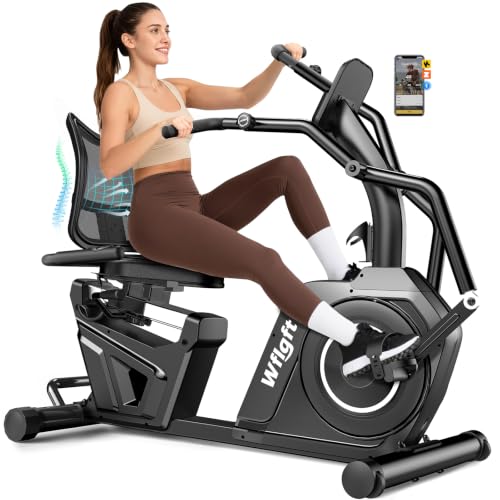
Integrated arm exerciser for full-body workout.
Adjustable seat ensures personalized comfort.
Quiet operation ideal for home use.

Smooth and quiet magnetic resistance system.
Comfortable seat with adjustable positions.
Easy-to-read digital display for tracking progress.
Whether a product works well depends first on safe access and fit. Look for a seat that can be reached without an unsafe step-over, a stable backrest, secure handholds, pedal straps or another way to limit foot slip, and enough seat travel for the rider's leg length. A stated height or inseam range is more useful than “senior-friendly” wording, but it remains a manufacturer claim unless supported by dimensional documentation or independent testing. Check the product footprint, required clearance, seat height, pedal reach, and the user's ability to transfer independently before buying.
Resistance should support comfortable starting effort and gradual progression. Sixteen levels, eight levels, or another number describes adjustment steps, not the actual workload, accuracy, or durability of the resistance system. Time, speed, distance, calories, pulse, cadence, watts, and app readings are often workout estimates. A credible product should disclose how important measurements are defined or calibrated; absent that, they should not guide medical or dietary decisions. Contact-pulse grips are not a substitute for clinical monitoring.
Weight capacity is one of the most important figures to verify. Several supplied products have conflicting limits, such as a higher marketplace number and a lower manual or manufacturer number. Use the lower documented limit until the seller provides consistent, model-specific evidence. A credible safety record would identify the exact product in testing to ASTM F1250 or ISO 20957-1 and ISO 20957-5, with a product-specific report from an ISO/IEC 17025-accredited laboratory. The laboratory's accreditation should be traceable through ANAB or another ILAC-MRA accreditation directory. CPSC recalls and SaferProducts.gov incident records are useful checks, but the absence of a recall is not proof of safety.
For powered or connected products, look for a traceable UL Product iQ or Intertek ETL listing where applicable, an OSHA-recognized NRTL mark, and FCC equipment authorization for Bluetooth or other radio functions. FCC authorization for a module does not certify the complete bike's mechanical stability. Claims about rehabilitation, physical therapy, joint protection, weight loss, “commercial grade,” silence, or precise heart-rate tracking should be treated cautiously unless supported by product-specific evidence and clear limits.
Across the supplied reviews, no product had publicly traceable complete-product certification to the applicable stationary-bike standards. Repeated concerns included unvalidated displays, manufacturer-only capacity claims, missing height or inseam information, and limited parts or recycling documentation. More serious recurring caveats were unsafe transfers for people with balance or mobility limitations, conflicting weight limits, and marketing that exceeded the evidence for rehabilitation or therapeutic use. One cross-trainer also had continuing pedal and linkage movement that created pinch and entrapment risks. Anyone with recent surgery, unstable cardiac symptoms, dizziness, severe balance impairment, significant transfer difficulty, or a need for prescribed rehabilitation should obtain individualized clinical guidance rather than treating a recumbent format as medical clearance.
The supplied products are best understood as home exercise equipment, not medical devices. Scores reflect the evidence and documentation available for each product; higher scores indicate stronger support or clearer controls, not a guarantee of safe use for every rider.
This measures whether claims about cardio, mobility, low-impact exercise, or senior health match evidence for stationary cycling at realistic use levels. A high score is supported by appropriately limited claims and older-adult exercise evidence; a low score is associated with rehabilitation or treatment language that outruns the evidence. Across the supplied products, scores ranged from 74 to 86.
This measures step-through access, seat travel, backrest, pedals, handholds, and stated size ranges. It matters because mounting and dismounting can be more consequential than pedaling once seated. Higher-scoring products supplied concrete adjustment or entry details; lower-scoring products lacked usable fit dimensions or used an upright format. Scores ranged from 55 to 78.
This measures resistance to tipping, slipping, frame or seat-rail failure, and pedal or crank failure at the advertised load. Buyers should compare the manual, listing, and any model-specific test report rather than relying on a headline capacity. Higher scores reflected stronger safety information or testing; conflicting or unsupported limits pulled scores down. Scores ranged from 50 to 88.
This measures foot retention, moving-part guards, pinch-point warnings, sharp-edge control, transport stability, and cord or holder hazards. Higher-scoring products documented straps, clearance, fastener checks, and warnings; lower scores reflected less complete control information. The category also includes machines whose pedals or linkages continue moving after use, which requires active attention around children, pets, and loose clothing.
This measures battery or adapter safety, Bluetooth and app features, radio approvals, and whether pulse or emergency-monitoring expectations are misleading. A high score requires traceable electrical or radio documentation and restrained health claims. A low score reflects unsupported connected features or medical-monitoring implications. Among the supplied products, the strongest scores were associated with clearer battery or FCC-module documentation.
This measures whether resistance, time, distance, calories, pulse, cadence, watts, and app data have defined methods or independent validation. It matters because calorie and pulse figures can be mistaken for medical information. Higher-scoring products clearly limited their readings to workout guidance or supplied more documentation; lower-scoring products made accuracy claims without calibration evidence. Scores ranged from 68 to 74.
This measures whether claims such as low-impact, joint-safe, physical-therapy, silent, heavy-duty, commercial-grade, or senior-friendly disclose important limits. Higher scores came from products whose manuals limited therapeutic interpretations; lower scores reflected marketing that conflicted with “not for therapeutic use” language or lacked clinical evidence. Scores ranged from 52 to 79.
This measures model-specific testing by an independent qualified body against applicable mechanical or electrical requirements. The strongest possible evidence would be a current certificate and full report identifying the exact model, with the laboratory accreditation traceable through an accepted directory. Scores were generally moderate, from 68 to 70, because no supplied product had publicly traceable complete-product certification to the relevant stationary-bike standards.
This measures external assessment of stability, comfort, assembly, resistance, durability, and usability using a stated method. It separates reproducible testing from seller claims and marketplace reviews. Most supplied products scored 68 to 70 because no exact-model independent performance report was located. The Schwinn 290 was the clear exception, with independent stability and performance-related evidence supporting a score of 87.
This measures whether parts, service instructions, warranty support, and repairable electronics can keep a bike in use. It matters because a large steel-and-electronics product creates more waste when a minor failure ends its service life. Higher-scoring products supplied parts diagrams, replacement components, or parts-after-warranty statements; lower scores lacked catalogs, manuals, or availability commitments. Scores ranged from 68 to 84.
This measures specific disclosure about materials, packaging, recycled content, hazardous components, batteries, electronics, recycling, and take-back. Most supplied products identified steel or alloy steel but did not provide packaging or end-of-life programs. Higher scores reflected clearer disposal or material information; lower scores reflected undocumented environmental claims. Scores ranged from 60 to 70, so none demonstrated a comprehensive lower-waste program.
This is a battery-powered, magnetic recumbent exercise bike for home use. It has eight manually selected resistance levels, a belt drive, pedal straps, an LCD monitor, hand-grip pulse contacts, Bluetooth app connectivity, and a 330 pound stated user limit. The manufacturer states an 85.3 pound product weight, a 48.03 by 23.62 inch footprint, and an eight-position seat intended for 17.72 to 35.43 inch inseams. The manual documents a rotating rear handle to aid seating, adjustable rear leveling feet, required fastener checks, and instructions to replace worn or damaged moving parts before use. Its Bluetooth module has an FCC equipment authorization, but no traceable product-specific ASTM or ISO stationary-bike safety certificate, accredited laboratory report, or independent performance test was located. The manual also says pulse readings are not a basis for medical treatment.
It suits an adult seeking seated, low-impact home cardio who can transfer independently into a recumbent seat, use pedals with straps, and fit the manufacturer-stated 17.72 to 35.43 inch inseam range. It is particularly relevant for people who prefer a backrest and a low, manually adjustable resistance range over upright cycling. It also suits users who treat the LCD and app as motivational tools, not medical monitoring. People restarting activity should begin at a manageable effort and progress gradually.
It is not designed for someone needing supervised rehabilitation, fall assistance, medical-grade heart-rate monitoring, or a device prescribed to treat a condition. Users with chest pain, unexplained dizziness, unstable cardiovascular symptoms, medication-related heart-rate concerns, severe neuropathy, or an unsafe transfer should seek individualized clinical guidance first. It is also unsuitable for commercial or rental use, children, and households unable to provide level flooring, the stated clearance, regular fastener checks, and safe storage away from children and pets.
Stationary cycling has credible support as a low-risk, non-weight-bearing aerobic option for older adults. A 2026 systematic review covering 47 studies found improvements reported in aerobic capacity, mobility, quality of life, and some cognitive outcomes, but the programs varied and do not establish this particular product as rehabilitation equipment. Federal guidance also advises older adults to include balance and strengthening work, not cardio alone, and to account for chronic conditions. The product's Bluetooth module is covered by an FCC authorization, but this is radio authorization rather than a full exercise-bike safety certification. No product-specific ASTM or ISO test certificate was found. The manual directs users to replace worn parts and return used batteries through local collection points, while the brand's current terms describe repair or replacement coverage. It does not provide public material composition, packaging reduction data, a product take-back program, or a public replacement-parts catalog. No product-specific CPSC recall or public safety warning was located in the searches performed.
This is a home-use recumbent exercise bike with a low seated riding position, a manually adjusted magnetic resistance system, an LCD monitor, grip pulse contacts, Bluetooth app connection, and a stated 300-pound user limit. It is intended for adult indoor exercise, not rehabilitation or medical monitoring. The product manual identifies a 57.3-pound unit with adjustable seat and backrest positions, plus rear leveling sleeves intended to reduce rocking on an uneven floor. The monitor reports time, speed, trip and total distance, estimated calories, and grip pulse. The manual expressly says the pulse reading must not be used as a basis for medical treatment. Its Bluetooth radio module carries an FCC identifier that corresponds to an authorized module, though this does not establish independent certification of the complete bike's mechanical safety or performance.
It suits an adult who wants a seated indoor cycling format for low-impact aerobic activity, has enough room for a roughly 52 by 25 inch footprint, and is comfortable completing periodic fastener and moving-part checks. The adjustable seat and backrest make it more suitable for users who need to set leg reach and back support than a fixed-position bike. It is most appropriate when the display is used for basic session tracking rather than precise training metrics or health decisions.
It is not suited to anyone who needs a medically supervised rehabilitation device, clinically reliable heart-rate tracking, or validated calorie and resistance measurements. People with chest pain, dizziness, irregular heartbeat, uncontrolled cardiovascular symptoms, or medication that affects heart rate should follow the manual's direction to seek clinician guidance before use. It is also unsuitable for children, commercial or rental use, users above the stated 300-pound limit, and households unable to provide a level floor, clearance space, and routine inspection.
Stationary-bike exercise has supportive, though not product-specific, evidence in adults age 60 and older for aerobic capacity, mobility, quality of life, and some cognitive outcomes. Benefits depend on regular activity and suitable intensity, not on the bike alone. Federal guidance commonly targets at least 150 minutes of moderate aerobic activity weekly for adults who can do so safely. The manual appropriately directs users with relevant health conditions to consult a clinician and states that grip pulse is not medical information. The product is primarily metal with a battery-powered monitor and Bluetooth electronics. Its manual documents a one-year limited warranty, troubleshooting steps, and a parts diagram, which can help with basic maintenance. However, no public environmental certification, recycled-content disclosure, packaging specification, parts-availability commitment, or electronics take-back program was located. At end of life, the monitor, batteries, and radio electronics should be separated where practical and sent through appropriate electronics and battery recycling channels.
This product is a home recumbent stationary bike with a reclined seat, backrest, magnetic resistance, belt drive, adjustable foot straps, hand-pulse grips, and a battery-powered LCD display. An independent retail listing matching this product reports 16 resistance levels, an alloy-steel construction, a stated 350-pound user limit, and dimensions of 47.08 by 26.18 by 43.5 inches. Those are seller and manufacturer specifications, not independently load-tested results. Stationary cycling is a low-impact aerobic activity. A 2026 systematic review of interventions in adults aged 60 and older found evidence of benefits including aerobic capacity, mobility, and quality of life, although exercise dose and program design varied. This particular product has no publicly traceable, model-specific ASTM or ISO conformity certificate, accredited lab report, or independent performance test. Its display and hand-pulse readings should therefore be treated as workout aids rather than clinical measurements.
This product fits an adult seeking seated, low-impact home cardio with manual resistance changes rather than interactive classes or powered programming. It may suit an older adult who can transfer safely into and out of a recumbent seat, can assemble or obtain help assembling the bike, and wants a basic LCD for session tracking. The stated adjustable seat, backrest, straps, and 16 resistance levels offer some fit and intensity flexibility. People recovering from an injury should use it only within guidance from their treating clinician or therapist.
It is not suitable for people who cannot safely mount, dismount, or reposition themselves on a recumbent bike without assistance, especially where a fall during transfer could cause harm. It is also not the right tool for someone needing medically validated heart-rate monitoring, prescribed rehabilitation equipment, highly accurate calorie or power data, or documented heavy-user load testing. Households that need public safety certification, readily orderable replacement parts, a detailed repair manual, or assured recycling support will find important information missing from the public record.
The useful health evidence applies to stationary cycling as an activity, not to this specific bike as a treatment. A systematic review in adults 60 and older found that stationary-bike programs can improve aerobic capacity, mobility, and quality of life. Federal guidance also supports regular aerobic activity, strength work, and balance activity for older adults. Cycling alone does not replace strength or balance training, and the product's hand-pulse and calorie readings are not validated for medical use. The frame is stated to be alloy steel and the display is battery powered. The brand publicly describes frame and parts warranty coverage, but does not provide a model-specific parts catalog, repair manual, parts-availability period, packaging details, recycled-material content, or take-back route for the display and batteries. No product-specific CPSC recall or FDA warning action was located in the reviewed public sources. Public model-specific third-party safety certification and performance testing were also not located.
This is a home recumbent exercise bike with a pedal-powered magnetic resistance system, a seat with backrest, foot straps, pulse grips, and a battery-powered LCD. The available manual describes 16 resistance levels, a lever-adjustable seat, front transport wheels, and a claimed 400-pound maximum user weight. Those are manufacturer-stated specifications, not independently verified load, stability, or comfort results. Stationary cycling has evidence as a low-impact aerobic activity for older adults when used consistently and at an appropriate intensity. This product can provide that exercise format, but no product-specific clinical, calibration, or independent performance testing was located. The display tracks time, speed, distance, calories, odometer, and grip pulse, yet the available documentation does not provide accuracy tolerances or a validation method.
This product fits an adult who wants seated, home-based aerobic exercise and can mount and dismount a recumbent frame safely without assistance. It is most relevant for someone who values a backrest, adjustable pedal straps, manually selected resistance, and a simple battery display rather than classes or connected training. Older adults who are starting activity can use short, easy sessions and build gradually, consistent with federal physical-activity guidance. The claimed 400-pound limit should be treated as manufacturer-stated rather than independently confirmed.
It is not appropriate to treat as rehabilitation equipment for a new injury, uncontrolled heart or breathing symptoms, severe balance impairment, or a condition requiring clinician-supervised exercise. People unable to secure the seat, pedal straps, and fasteners safely should not assemble or use it alone. It is also a poor fit for users who need validated heart-rate, calorie, distance, or resistance data, or who require a documented tested weight capacity. Households needing assured replacement parts or long-term service documentation should note that public support materials were not found.
Evidence supports stationary cycling as a potentially useful low-impact aerobic option for older adults, with studies reporting benefits in aerobic capacity, mobility, quality of life, and some cognitive outcomes. Those findings apply to regular stationary-bike exercise, not as proof that this particular product treats arthritis, provides rehabilitation, or delivers accurate physiological monitoring. Federal guidance advises older adults to start slowly and seek medical advice for symptoms such as chest pain or shortness of breath. The available manual identifies a metal frame, magnetic resistance, and replaceable display batteries. It also directs routine cleaning and checks of bolts, moving parts, pedals, and the seat lock. No public model-specific ASTM or ISO conformity record, electrical listing, recall notice, exposure warning, environmental certification, packaging specification, recycling instruction, or manufacturer take-back program was located in the sources reviewed. The absence of these records is an evidence gap, not proof of a defect.
This is a compact, battery-display recumbent exercise bike for seated home cardio. The catalog describes a 53 lb unit with magnetic resistance, 16 settings, Bluetooth app connection, pulse grips, transport wheels, and a 380 lb maximum user weight. Its stated 47 by 22 by 41 inch footprint is intended for a permanent floor location rather than a fold-away setup. VANSWE’s current product page for the matching 380 lb, 16-level, 47 by 22 by 41 inch configuration identifies it as a different model designation. That page manufacturer-states a step-through frame, padded back-supported seat, rider range of 5'1 to 6'1, and compatibility with Kinomap and Zwift. Stationary cycling has evidence of benefits for older adults when used regularly, but this product itself has not been clinically tested. Publicly traceable testing to stationary-equipment safety standards was not found.
It suits an adult seeking simple seated, low-impact home cardio in a modest space, especially someone within the manufacturer-stated 5'1 to 6'1 range who can independently step through, transfer to the seat, and operate a resistance knob. The 380 lb manufacturer-stated limit may also be relevant where lower-capacity compact bikes are unsuitable. It is most appropriate for gradual aerobic activity, starting at a comfortable effort and building duration over time. A clinician can help set intensity for people with cardiovascular disease, recent surgery, or complex mobility limitations.
It is not a substitute for prescribed rehabilitation or monitoring after surgery, for Parkinson's disease, arthritis, or other conditions. People with unstable balance, unsafe transfers, fainting risk, severe neuropathy, major foot-control limitations, or pain during pedaling need individualized clinical advice and may need supervision or different equipment. It also does not suit riders outside the published height range, people wanting vigorous standing or sprint workouts, or households that require independently documented load, electrical, radio, and stationary-equipment safety testing before use.
Stationary biking is a plausible low-impact aerobic option for many older adults. A 2026 systematic review of 47 intervention studies found improvements in outcomes including aerobic capacity, mobility, quality of life, and cognition, while also calling for stronger research to define the right dose. That supports regular, progressive exercise, not a promise that this particular product treats a disease or replaces physical therapy. VANSWE publishes a one-year warranty and U.S. support contact for the matching configuration. It describes a reinforced frame, padded seat, magnetic resistance, and battery-operated display, but does not publish a parts catalog, service-life commitment, packaging specification, recycled-material content, take-back program, or electronics-recycling instructions. No product-specific recall, FDA listing, FTC action, or public third-party safety certificate was located in the reviewed U.S. sources. Recycle the electronic display and batteries through local electronics channels rather than household trash.
This is a compact, manually adjusted recumbent stationary bike for indoor adult use. It uses a magnetic resistance system, a belt drive, a sliding padded seat and backrest, pedal straps, transport wheels, and a basic wired monitor with hand pulse contacts. The current manufacturer listing identifies it as the former RC-PRO and states 16 resistance levels, a 350 lb user limit, a 25 to 34 inch inseam range, and a 45 by 20 by 39 inch footprint. The manual provides assembly, pedal fitting, seat locking, leveling, inspection, and moving instructions. Those are useful documented controls, but no publicly traceable test report or certification for this exact product to stationary-equipment safety standards was found. The manufacturer promotes rehabilitation and joint-friendly use, while the manual specifically says the equipment is not suitable for therapeutic use.
It suits an adult who wants a basic indoor seated cycling option, has enough clear floor space, and can safely transfer into a recumbent seat without relying on the bike as a medical device. The stated 25 to 34 inch inseam range may fit many shorter to average-height riders, though it should be checked against the rider's own leg length. It is most appropriate for gradual, self-paced aerobic activity, with the seat locked, the frame leveled, and the manual's inspection routine followed.
It is not for someone seeking prescribed rehabilitation after surgery, a therapeutic device, or medically reliable heart-rate and calorie monitoring. People with unstable balance, severe transfer difficulty, chest symptoms, unexplained dizziness, or conditions affected by exercise should seek clinician-specific guidance before use. It is also unsuitable for households that cannot maintain the required clearance around the bike, users above the stated 350 lb limit, commercial settings, or buyers who require independently documented safety and performance testing before relying on a load rating.
Stationary cycling has human evidence for improving aerobic capacity, mobility, quality of life, and other outcomes in older adults, but those outcomes depend on a suitable exercise plan rather than on this particular product alone. Federal guidance also recommends that older adults include balance and muscle-strengthening activity, not aerobic work alone. The manual appropriately tells users to consult a clinician where medical conditions or medicines could affect safe exercise, and it says the product is not for therapeutic use. The product has a steel-based frame and a basic monitor, but accessible documentation does not provide a material breakdown, packaging specification, recycling instructions, take-back program, or parts-availability period. Its manual includes a California cancer and reproductive-harm exposure warning, yet does not name the chemical or component. No product-specific CPSC recall was located in the review, but the absence of a recall is not independent safety certification.
This product is a home-use recumbent cross trainer, not a conventional recumbent bike. It uses linked stepping pedals and moving handles, so users can work arms and legs while seated. Teeter lists 13 manually adjusted magnetic-resistance settings, a 300 lb user limit, a 4 ft 11 in to 6 ft 6 in stated height range, and a footprint of 62.1 by 32.7 by 55.4 inches. The console uses two AA batteries and displays time, speed, distance, and estimated calories. Its defining practical feature is fit adjustment. Teeter documents adjustable seat height, two seat mounting positions, three backrest recline positions, and eight handle positions. The manual also gives specific mounting, linkage-clearance, leveling, and inspection instructions. A systematic review of stationary-bike interventions in adults 60 and older supports potential aerobic, mobility, and quality-of-life benefits from regular stationary cycling, but it does not validate this exact product or guarantee pain relief or rehabilitation outcomes.
This product suits an older home exerciser who wants seated, low-impact cardio with both arm and leg movement, has enough dedicated floor space, and falls within Teeter's stated 4 ft 11 in to 6 ft 6 in and 300 lb limits. It is especially relevant for someone who benefits from a backrest, handholds, and multiple seat and handle adjustments rather than a standing elliptical. The buyer should be able to follow assembly and inspection instructions, or arrange help, and should begin at low resistance if deconditioned.
It is not for anyone over the stated 300 lb limit, anyone unable to mount, dismount, or control moving pedals while holding the handles, or households where children or pets may access the linkage unsupervised. It is also unsuitable for people needing a medically prescribed rehabilitation device, certified clinical measurements, fall-proof transfer support, or independently verified equipment conformity. People with new chest symptoms, dizziness, severe pain, an unstable medical condition, or recent surgery should seek clinician-specific clearance instead of relying on the product's therapy-oriented marketing.
Regular stationary cycling has human evidence for improving aerobic capacity and some mobility and quality-of-life outcomes in adults aged 60 and older when used consistently. That evidence supports exercise as an activity, not a promise that this product treats arthritis, back pain, or another condition. Teeter's own small comparison study found higher energy expenditure than one recumbent bike at self-selected perceived effort, but it was not a peer-reviewed, product-safety, or rehabilitation trial. The manual appropriately directs users to stop for pain, chest tightness, shortness of breath, dizziness, or light-headedness and seek medical advice. The LT3 uses a steel frame, polypropylene pedals with thermoplastic-rubber tread, PVC handle grips, a magnetic resistance system, and a two-AA-battery console. Teeter supplies a parts diagram, instructions, and warranty coverage, which supports repair rather than immediate replacement after some faults. No public product-specific environmental certification, recycled-content disclosure, packaging-material specification, take-back program, or disposal plan for the product was located. No FreeStep LT3 recall was identified in the CPSC recall search reviewed.
This product is a battery-powered, home recumbent stationary bike with moving arm handles. The manufacturer documents eight manually adjusted magnetic resistance levels, a belt drive, a padded backrest, and a slide rail intended for a 29 to 37 inch inseam range. Its published dimensions are 57 by 20 by 47 inches, and its manual identifies two AA batteries for the display and Bluetooth function. The design may allow seated arm and leg movement together, or either movement alone. Stationary cycling has human evidence for improving aerobic capacity, mobility, and quality of life in adults 60 and older when used regularly, but these studies did not test this specific product. Vanswe states a 400 pound user limit. That conflicts with the 450 pound capacity in the marketplace title, so the safer documented limit is 400 pounds. No model-specific independent safety certification, load test, or performance test was located.
This product fits an adult who wants low-impact, seated home cardio and can independently transfer through a step-through opening, sit securely with back support, and use moving arm handles. It is most concrete for a single rider within the manufacturer's 29 to 37 inch inseam range who wants manual resistance rather than programmed workouts. It can also suit a household willing to inspect and re-tighten fasteners, follow the manual, and treat the display as motivational tracking rather than clinical monitoring. Use near the documented 400 pound limit requires particular caution because the listing presents a conflicting higher capacity.
It is not appropriate for someone who needs medically supervised rehabilitation equipment, a validated heart-rate reading, or a prescribed post-surgical exercise protocol. People with dizziness, unstable transfers, severe balance limitations, or reduced ability to respond quickly to moving pedals and arm linkages should seek clinician guidance and may need supervision. It also does not suit users above the manufacturer's 400 pound rating, or anyone relying on the marketplace's conflicting 450 pound statement. Buyers requiring independently certified load safety, verified resistance accuracy, or publicly traceable electrical approvals will not find that evidence here.
The strongest health evidence applies to stationary cycling as an activity, not to this particular product. A systematic review of studies in adults age 60 and older found improvements in outcomes including aerobic capacity, mobility, and quality of life. Federal activity guidance recommends building toward 150 to 300 minutes of moderate aerobic activity weekly, while older adults should also include balance and strength work. The manual appropriately says to consult a physician before starting exercise and says its pulse value is not for medical treatment. The manufacturer supplies a detailed manual, a replacement monitor, and a one-year quality-assurance policy, which can help extend service life after a display failure. However, no independent safety or performance certification was found for this product. The company provides no verified recycled-material, packaging-reduction, electronics take-back, or end-of-life program disclosure. The AA-powered display and electronics should be routed through local battery and electronics recycling channels rather than ordinary curbside recycling.
This is a recumbent home exercise bike with pedals, moving arm handles, a padded backrest, hand-grip pulse sensors, an LCD console, Bluetooth app support, belt drive, and magnetic resistance. It is intended for seated indoor cardio and offers 16 resistance levels, according to the seller listing. The listing also says users can pedal and use the arm handles together or separately. The seller states that the steel-tube frame supports users up to 450 pounds and that the seat, handles, and pedal straps adjust. Those are manufacturer claims, not independently verified load, fit, or durability results. No model-specific safety certificate, accredited laboratory report, public manual, warranty terms, parts catalog, or independent performance test was located. Its “home rehab” language should not be read as evidence that this product is a medical or physical-therapy device.
It may suit an adult who wants a seated indoor cycling format and can independently transfer onto the seat, position the pedal straps, and assess fit during the return window. The use case is low to moderate effort cardio at home, not clinical rehabilitation. It is more appropriate for someone whose clinician has already cleared stationary cycling and who values seller-stated arm and leg movement options. The user should confirm seat reach, knee bend, handle reach, floor stability, and safe mounting before relying on regular use.
It is not suited to people who need a medically prescribed rehabilitation device, medically accurate pulse monitoring, or documented therapeutic outcomes. People with recent falls, severe balance impairment, limited hand function, transfer difficulty, unstable angina, uncontrolled blood pressure, or new joint symptoms need individualized clinical guidance before starting. It is also a poor fit for buyers who require independently certified load capacity, public safety test results, a verified Bluetooth authorization, readily available replacement parts, or documented long-term service support.
Stationary biking itself has supportive evidence in adults age 60 and older, including improvements reported for aerobic capacity, mobility, and quality of life in a 2026 systematic review. Federal guidance recommends that older adults tailor effort to their fitness and conditions, include balance and strength activities, and be as active as their abilities allow. That evidence supports appropriately progressed exercise, not a guarantee of rehabilitation from this specific product. The listing presents alloy steel construction and a battery-powered display with Bluetooth, but no material breakdown, packaging specification, recycled-content statement, battery disposal instructions, take-back program, environmental certification, public warranty, or repair-parts catalog was located. No product-specific CPSC recall or safety warning was located in the sources checked. Electronics should be reused or recycled through an appropriate program when replacement is necessary, but the brand provides no identified end-of-life pathway.
This is a battery-display, belt-driven recumbent stationary bike with magnetic resistance. The live product page describes 16 resistance levels, a padded seat, carbon-steel construction, a claimed 400-pound user limit, and a 47.1 by 20.4 by 31-inch footprint. It is intended for seated indoor-style pedaling, although the same page incorrectly labels its recommended use as outdoor. Stationary cycling can support aerobic fitness and mobility when used regularly at an appropriate intensity, including in adults over 60. That evidence applies to stationary cycling as an activity, not specifically to this product. The product page also invokes rehabilitation, but no product-specific clinical evidence, medical clearance, or therapeutic-device documentation was located. No model-specific independent safety certification, laboratory report, or performance test was found.
This product may suit an adult seeking simple, seated home pedaling who can independently mount and dismount a recumbent bike, has a level hard floor, and can confirm fit before regular use. The stated padded seat, magnetic resistance adjustment, and battery display fit low-complexity exercise routines. It is more appropriate for people using cycling as general activity rather than as prescribed rehabilitation. Users near the claimed 400-pound limit should seek written load-test documentation and confirm the assembled bike remains stable before relying on that limit.
It is not well documented for people with a recent fall, severe balance limitation, inability to transfer independently, major joint pain, neurological conditions, or a clinician-directed rehabilitation program. Those users need a product with verified access dimensions, documented pedal retention, a clear adjustment range, and independently tested stability. It is also a poor fit for households needing app connectivity, validated heart-rate or calorie data, outdoor storage, repair instructions, or assured replacement parts. Do not treat its display readings as medical measurements.
Evidence supports stationary cycling as a potentially useful low-impact aerobic activity for many older adults when it is performed consistently and matched to the person's health status. The product itself has not been clinically tested in the evidence located. Its rehabilitation wording should therefore not be read as proof of treatment value. People with symptoms, unstable medical conditions, recent surgery, or significant mobility limitations should obtain individualized clinical guidance before starting. The listing identifies carbon steel and a battery-powered display, but it provides no bill of materials, packaging details, recycled-content claim, electronics recycling plan, take-back program, or parts-support commitment. No product-specific recall, regulatory action, or exposure warning was located in the U.S. sources reviewed. Absence of a recall does not verify the claimed weight limit, stability, or long-term durability.



