Best Overall

Kohree RV Toilet with Soft Close Seat
Soft close seat prevents slamming noise.
Efficient gravity flush saves water.
Universal fit suits most RVs and campers.
 Daniel Kenitz
Soft close seat prevents slamming noise.
Efficient gravity flush saves water.
Universal fit suits most RVs and campers.

Easy installation with universal fit design.
Comfortable chair height for residential feel.
Soft-close seat prevents slamming noise.

No plumbing or water needed for use.
Compact design ideal for limited spaces.
Odor-free operation thanks to dry flush system.

Easy to install and maintain.
Comfortable high profile design.
Reliable and efficient flushing system.
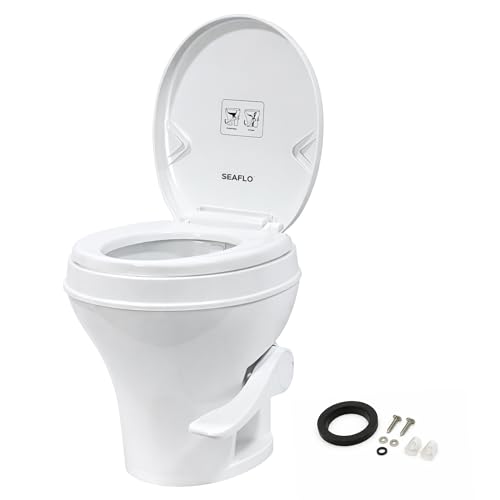
Soft-close seat prevents slamming noise.
Foot pedal ensures easy, hands-free operation.
4-year warranty offers long-term reliability.

Comfortable residential-style 18" chair height.
Soft-close seat for quieter operation.
Universal fit with easy 2-bolt mount.

Easy to install and maintain.
Comfortable seat height for users.
Efficient water-saving flush mechanism.

Lightweight design simplifies installation and handling.
Soft-close seat prevents loud slamming noises.
Universal fit ensures compatibility with most RVs.

Efficient water-saving flush system.
Comfortable and sturdy high-profile design.
Easy installation and maintenance process.
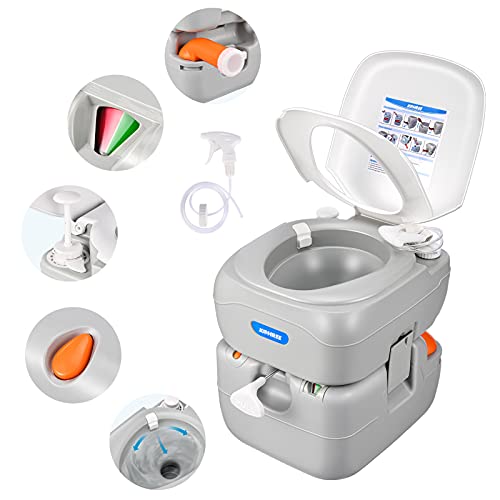
Large 5.8-gallon waste tank for fewer emptying trips.
Leak-proof design ensures a mess-free experience.
Clear level indicator prevents unexpected overflows.
For a permanent toilet, confirm the rough-in, bolt pattern, flange condition, outlet alignment, water inlet, clearances, seal arrangement, and installation limits against an exact-model manual and dimensional drawing. A product can be advertised as fitting most RVs while still requiring a particular two-bolt layout, an adapter, a replacement flange, a specific water connection, or additional rear clearance. Correct mounting, gasket compression, torque, water pressure, leak checking, and winterization are central to keeping sewage and water contained.
For a portable toilet, the important figures are usable fresh- and waste-tank capacity, maximum user load, stability on a level surface, sealing-ring condition, and the process for carrying and emptying the tank. A large stated capacity does not remove the need for safe lifting or lawful disposal. For a dry-flush toilet, consider the battery and charger, sealing-cycle claims, refill-film and coagulant requirements, bag handling, and disposal route. “Waterless” avoids flush water but can increase dependence on single-use consumables.
Headline performance claims need qualification. “Leak-proof,” “odorless,” “clog-free,” “360-degree rinse,” “water-saving,” “universal fit,” and “high capacity” are not equivalent to independently demonstrated performance. Water-per-flush should be a measured, exact-model figure; among the supplied products, only one manufacturer-stated one-pint figure and one manufacturer-stated 50 mL rinse figure were provided, and neither had independent confirmation. A tank’s advertised volume may not equal usable capacity, and an adjustable or unspecified flush cannot be compared precisely. Stated load limits are not the same as independent static-load, cyclic-load, impact, or stability testing.
The strongest supporting records in this category are exact-model installation manuals, parts diagrams, replacement-seal records, and full third-party reports that identify the model, test method, laboratory, date, pass criteria, and result. For plumbing products, look for traceable IAPMO, NSF/ANSI 24, or applicable ASME A112.19.2/CSA B45.1 documentation. For electrical dry-flush products, check UL Product iQ, Intertek ETL, CSA listings, and battery or end-product records such as UL 2054, IEC 62133-2, UL 62368-1, or UL 60335-1. Also check CPSC recalls and SaferProducts.gov incident reports rather than treating a clean search as proof of safety.
Across the supplied reviews, buyers should expect routine seal, valve, pedal, and flange maintenance; leaks can follow incorrect installation, mineral buildup, freezing, or worn seals. Permanent toilets require an RV holding tank and approved wastewater disposal. Portable and dry-flush toilets require careful emptying or bag handling, and disposal rules vary. Several products lack independent leak, load, flush, vibration, or durability testing. One dry-flush product has conflicting load limits and no traceable electrical certification; one product’s marketing and catalog identity conflict; and one portable model warns that releasing pressure when full can cause dirty-water overflow. These are reasons to verify the exact configuration and instructions before use, not assumptions to resolve from marketing language alone.
The supplied scores reward documented design and evidence, not popularity or price. A high score means the reviewed material gave stronger support for the topic; it does not mean a product is risk-free or independently tested in every relevant way.
This measures contact with fecal waste, splash, odors, and residue during use, emptying, and cleaning. Foot pedals, retained bowl water, controlled tank emptying, and sealed bags can help, but the supplied reviews often lacked independent splash, odor, or contamination testing. Higher-scoring examples reached 85; lower ones were around 70–73, usually where claims or handling procedures were less documented.
This covers tanks, valves, seals, joints, and floor connections during use, transport, and emptying. Permanent toilets depend on flange seals, valve condition, torque, mineral removal, and winterization; portable units depend on latches, slide valves, spouts, and sealing rings. Scores ranged from 62 to 90. The higher score reflected an independent plumbing listing plus detailed leak checks and service parts, not a guarantee of leak-free use.
This measures resistance to tipping, cracking, collapse, sharp edges, and seat or pedal failure at the stated load. A published load limit is useful, but it is not the same as independent static, cyclic, impact, or stability testing. The supplied products scored 68–75 on this topic. The strongest documentation included a stated maximum load and mounting instructions; many products had no exact-model load or stability report.
This applies mainly to rechargeable dry-flush toilets and considers the battery, charger, wiring, moisture protection, and overcharge controls. Manual gravity and pump toilets scored 96–100 because they have no electrical system to charge near a bathroom. The rechargeable model scored 68 because no UL, ETL, CSA, or traceable battery and charger certification record was located.
This measures whether dimensions, rough-in, bolt pattern, water connection, flange, seals, clearances, and installation limits are accurately specified. It matters because a poor fit can create sewage leaks or water damage. Scores ranged from 66 to 92. Higher-scoring products had exact manuals, torque values, leak checks, and independent plumbing listings; lower-scoring products made broad fit claims without drawings or compatibility data.
This covers bowl-rinse coverage, discharge, valve operation, clog resistance, flush volume, and cleaning effort. A high score requires exact-model performance evidence and clear approved-cleaner instructions, not just “powerful,” “full rinse,” or “no clog” language. Supplied scores ranged from 67 to 83. Most products lacked independent flush or durability reports, so even stronger scores should be read as relative evidence quality.
This measures whether claims such as leak-proof, odorless, universal-fit, water-saving, antimicrobial, biodegradable, or high-capacity are specific and supported for the exact product. Scores ranged from 51 to 82. Higher-scoring products qualified claims and supplied manuals or records; lower-scoring products had conflicting specifications, unsupported environmental or performance language, or marketing claims broader than the available evidence.
This measures traceable certification, full test reports, and the absence of unresolved recall or regulator records. The supplied scores ranged from 68 to 90. Stronger examples had named IAPMO, NSF/ANSI 24, or other plumbing listings and detailed exact-model documentation. No located recall is not proof of safety, and manufacturer testing without a public method, laboratory, date, and pass criteria is weaker than independently verifiable evidence.
This measures whether the toilet supports lawful wastewater disposal and avoids unsupported claims about chemicals, septic safety, or disposal anywhere. Permanent toilets discharge to holding tanks; portable and dry-flush products require controlled emptying or bag disposal. Scores ranged from 68 to 77. Higher-scoring reviews gave clearer instructions about approved facilities, toilet tissue, winterization, or chemical restrictions; lower scores involved unidentified additives or incomplete disposal guidance.
This considers verified water use, realistic usable capacity, disposable bags, chemicals, and replacement cartridges. A waterless toilet may still create material waste through film and coagulant, while a large tank may not reveal usable capacity. Scores ranged from 69 to 76. The clearest figure supplied was a manufacturer-stated one pint per flush; other water-saving or low-rinse claims were not independently measured.
This measures disclosure of major plastics, metals, batteries, seals, and replaceable wear parts, together with repair and disposal pathways. Higher-scoring products, up to 80, published parts lists for seals, valves, pedals, seats, or mounting hardware. Lower scores reflected vague or conflicting material descriptions and no replacement-parts record. Replaceability can support longer service life, but it does not establish recyclability or a complete end-of-life route.
This is a fixed, floor-mounted, nonpowered RV toilet intended to connect to an RV waste system. It uses a gravity-flush arrangement and a dual-action foot pedal that the manufacturer says adds water or flushes. The manufacturer also lists an integrated handheld bowl sprayer, a soft-close seat and cover, a floor flange, a toilet seal, and mounting screws in the package. Its defining feature is the manufacturer-stated 18.5-inch seating height and extended seat. The maker also claims a deeper smooth bowl, triple-jet rinse coverage, and more than 10,000 pedal presses of testing. Those performance claims are manufacturer statements, not published independent test results. The catalog identifies polypropylene, but the manufacturer page reviewed does not provide a material breakdown, exact water use, user load rating, or detailed installation manual.
This product suits an RV owner replacing a conventional floor-mounted gravity toilet who has measured the existing floor space, mounting pattern, waste connection, and water connection in advance. It is especially relevant for adults who prefer a manufacturer-stated 18.5-inch seat height and want a foot-operated flush rather than a hand lever. It also fits a DIY replacement project only when the installer can verify compatibility and inspect the seal and flange connection after installation.
It is not suited to installations where the bolt spacing, flange geometry, clearance around the bowl, water inlet, or height limit is unknown. It is also a poor fit for users needing a documented occupant weight rating, third-party structural testing, published valve-cycle testing, or readily documented replacement-parts support. Households relying on quantified low-water performance or proven clog resistance should not treat the manufacturer’s water-saving and no-clog statements as independently established.
The product is mechanically operated rather than battery powered, so there is no charger, battery pack, or electrical moisture-rating issue to assess. The manufacturer describes a pedal flush, gravity discharge, deeper bowl, sprayer, and soft-close seat, but no exact-model independent hygiene, leak, durability, or flush-performance report was found. A search of CPSC recall resources did not identify a product-specific recall or warning as of August 16, 2026. The catalog identifies polypropylene, but a full bill of materials, repair instructions, and replacement-seal availability were not located. No treatment chemical is listed as included. RV wastewater still needs disposal through an approved sewer or dump facility. EPA guidance also cautions against chemicals that can harm septic treatment, including some holding-tank deodorizers, and recommends flushing only human waste and toilet paper.
This is a floor-mounted, gravity-flush RV toilet designed to sit directly above a waste holding tank. The standard-height 410 has a round vitreous-ceramic bowl, polypropylene base and seat, foot pedal, flush-ball seal, and 18-inch seat height. Dometic’s current installation manual specifies a 17.75-inch depth, 15-inch width, 19.75-inch overall height, 3-inch discharge flange, 1/2-inch NPT water fitting, and a 7.625-inch minimum rough-in. The manufacturer documents a water-retaining bowl seal intended to limit holding-tank odors, plus serviceable flush-ball seal, water valve, vacuum breaker, hose, and floor seal parts. Installation is not universal without conditions. Existing two-bolt layouts are the simple case, while four-bolt installations need a separate universal mounting kit. No public independent performance, load, leakage-cycle, or plumbing certification report for this exact product was located.
This product suits an RV owner replacing a compatible gravity toilet directly over a holding tank, especially where a 7.625-inch or greater rough-in and standard two-bolt floor flange are already present. It is also suited to owners who want a residential-height, round ceramic bowl while retaining a mechanical, nonpowered flush system. The best fit is a buyer prepared to measure wall clearance, flange position, and water-line routing before installation, then winterize and maintain seals as instructed.
It is not for installations that need a self-contained portable toilet, dry toilet, macerating toilet, or a toilet connected through a long horizontal household-style drain run. It is also unsuitable where the floor flange, rear clearance, supply connection, or bolt layout does not meet the manual’s requirements, unless the installer can make the necessary compatible changes. Buyers needing independently published load, durability, water-per-flush, leak-cycle, or rinse-coverage results should seek a product with those reports available. It also needs proper winterization in freezing conditions.
The most useful health protections are mechanical and installation-dependent. Dometic directs users to retain about one inch of bowl water to block holding-tank odors, restrict flushing to bodily waste and rapid-dissolving toilet tissue, and test for leaks after installation. It also warns against chlorine, harsh drain products, automotive antifreeze, and freezing exposure, because these can damage seals or the water valve. The toilet is nonpowered, so it does not introduce charger, battery, or electrical moisture hazards. Material disclosure is unusually specific for this type of product, and several wear parts are identified as replaceable. The manual recommends non-toxic propylene-glycol antifreeze for winterizing. It does not include treatment chemicals, and any optional holding-tank deodorizer should be selected and disposed of carefully. EPA guidance calls for RV wastewater to go only to appropriate disposal facilities and cautions that tank additives can affect wastewater treatment. A retailer lists a Proposition 65 warning, though the chemical and exposure route were not established in the reviewed manufacturer materials.
This is a rechargeable, freestanding dry-flush toilet for temporary RV, van, camping, cabin, and marine use. Waste goes into a film bag, a packet of polymer absorbent is added before use, then the user holds the Start control to seal the bag. The manufacturer says sealing takes about two to three minutes and directs users to dispose of sealed waste under applicable waste rules. The manufacturer lists a 57.5 Wh lithium battery, a 14 V 2 A charger, 70 to 100 sealing cycles per charge, and a folded footprint of 17.5 by 16 by 10.75 inches. These are manufacturer-stated figures, not independently verified test results. The accessible instructions provide setup, bag replacement, troubleshooting, and removable-seat cleaning guidance, but do not provide independent leakage, load, electrical, or sanitation-performance reports for this product.
This product suits a solo traveler or small household that needs a compact, temporary toilet where plumbing and reliable water are unavailable, such as a van, roadside work vehicle, cabin, or emergency kit. It is most appropriate for users able to operate the controls, lift and replace film rolls, keep the unit level, use the supplied charger, and confirm local disposal options before travel. The foldable form and no-plumbing setup are especially relevant where storage space and installation access are limited.
It is not suited to a permanently installed household bathroom, or to use where plumbing-code compliance, a conventional sewer connection, or independently certified electrical equipment is required. It is also a poor fit for buyers who cannot manage bagged human waste, must avoid consumables, need documented high-load seating performance, or expect waterproof use. Households with children or pets should account for the fine absorbent powder, which the manufacturer says must not be ingested. Boaters must also follow applicable vessel-sewage and marina rules.
The main hygiene concept is physical separation. The manufacturer instructs users to add a polymer absorbent before use and run a sealing cycle afterward. It also warns that sealing may fail when battery level is below 25 percent, and says to stop use if thick smoke or unusual noise occurs. Those instructions are useful operational safeguards, but they are not replacements for independent electrical, seal-cycle, or leak testing. Water use is avoided during operation, but the tradeoff is a bag and absorbent for each use. Modiwell says its refill film complies with EN 13432, while also acknowledging that this European industrial-compostability standard does not by itself meet California compostability requirements. No matching ASTM or BPI certification record was located. The manufacturer advises following local solid-waste rules, which is important because disposal of human waste, especially from RV and marine use, is location-dependent. No relevant CPSC recall or public safety warning was located in the searched records.
This is a floor-mounted, fresh-water, gravity-discharge RV toilet that sends waste to the vehicle’s existing holding tank. The white high-profile version is a lightweight polypropylene unit with a foot pedal. A partial pedal press adds water to the bowl and a full press opens the flush. The manufacturer identifies this version as the high-profile model and lists a 10.75-pound carton weight, a residential-size soft-close seat and cover, and an 18-inch seat height. The installation manual specifies a 1/2-inch NPT water connection, a new closet-flange seal, and flange-height guidance. It also gives cleaning limits intended to protect plastic and rubber parts. The manufacturer offers individual replacement seals, water modules, pedals, nozzles, seats, cables, and flange seals. No full independent leak, load, flush-rinse, valve-cycle, or materials test report for this exact product was located.
It suits an RV owner replacing a conventional floor-mounted gravity toilet that connects to an existing black-water holding tank and has the required floor flange and 1/2-inch NPT water supply. It is particularly relevant where a higher seating position is useful for adults with reduced knee or hip flexibility, provided the available bathroom space matches the manufacturer’s dimensional drawing. It also fits owners willing to inspect seals, water fittings, and mounting hardware, and to follow the manual’s cleaner and winterizing restrictions.
It is not for a van, trailer, boat, cabin, or emergency setup without a compatible permanent holding tank, floor flange, water line, and legal wastewater-disposal route. It is also unsuitable for buyers seeking a self-contained cassette, composting, dry-flush, or macerating toilet. People who require independently published proof of leak resistance, flush performance, or exact-model load testing should not treat the manufacturer statements as equivalent evidence. Installation should not be improvised where the flange height, mounting surface, or water connection differs from the manual.
The key hygiene safeguard is conventional containment through the bowl, blade seal, closet-flange seal, water connection, and RV holding tank. The manufacturer documents installation checks for leaks and sells the main service parts, which creates a practical repair route when seals, the water module, or pedal components wear. Its manual also warns against aggressive cleaners that can damage plastic and rubber sealing parts. No electrical system, rechargeable battery, or charger is involved. The toilet itself is polypropylene and does not include a deodorizer, disinfectant, or other treatment chemical. Waste handling remains the user’s responsibility. EPA guidance for RV wastewater emphasizes disposal through appropriate facilities and cautions that some holding-tank chemicals can impair septic treatment or contaminate water. No matching CPSC recall was located in the searched recall resources as of August 16, 2026. Publicly located independent certification and exact-model laboratory performance reports were absent.
This is a floor-mounted, gravity-flush RV toilet with a foot pedal, an 18.5-inch overall height, and a plastic body. It connects to an RV floor flange and uses a mechanical flush-ball seal to retain water in the bowl, which helps block holding-tank odors. The manufacturer instructs users to retain about 1 inch of water after flushing and to use only bodily waste and rapid-dissolving toilet tissue. Its most consequential evidence is independent certification. Testing Engineers International lists this toilet family for IAPMO TS 1 mechanical-seal RV toilets and IAPMO Z124/CSA B45.5 plastic plumbing fixtures. SEAFLO's manual also gives unusually concrete installation directions, including flange fastening, mounting torque, water-connection torque, and an hour-long bowl leak check. Flush coverage, water use per flush, user load capacity, and valve-cycle results were not supplied as public test reports.
It suits an RV owner replacing a compatible gravity toilet who can confirm the existing floor flange, mounting geometry, water line, and available clearance before ordering. It is especially relevant where a residential-height seat is wanted without adding wiring, batteries, or a macerator. The detailed installation and maintenance instructions also make it a better fit for an owner or technician prepared to torque fittings correctly, perform the bowl leak check, keep water in the bowl seal, and winterize the water valve in freezing conditions.
It is not suited to buyers who need verified low water use, published flush-performance data, or a stated occupant load rating. It is also unsuitable for installations without a compatible RV floor flange, secure level mounting surface, or properly routed water supply. People who cannot inspect and clean the flush-ball seal periodically, or who store an RV in freezing conditions without winterizing the plumbing, face an increased risk of slow leaks or valve damage. It is not a dry toilet, portable cassette toilet, or self-contained waste-treatment system.
The important health protection is the independently listed mechanical-seal toilet design. The listing covers this product family under IAPMO TS 1 for mechanical-seal RV toilets and IAPMO Z124/CSA B45.5 for plastic plumbing fixtures. The manual reinforces containment with flange-seal instructions, torque guidance, an hour-long leak check, and directions to keep water in the bowl as an odor barrier. It also identifies mineral buildup at the ball and seal as a maintenance cause of slow leakage. The product uses a plastic fixture and has documented replaceable components, including the pedal, valves, nozzle, flush ball, seals, and gaskets. No disposable bags, batteries, or treatment chemicals are included with this toilet-only version. Waste handling remains the user's responsibility. EPA guidance says RV wastewater should go to appropriate disposal facilities and cautions that some holding-tank chemicals can harm wastewater treatment or contaminate water. The manual specifically warns against automotive ethylene glycol and directs users to non-toxic propylene glycol for winterization.
This is a floor-mounted, gravity-flush RV toilet designed to sit directly above a waste holding tank. The manufacturer specifies a vitreous-ceramic elongated bowl, polypropylene base and seat, an 18-inch seat height, 19-inch bowl depth, 15-inch width, and a 7.625-inch minimum rough-in. It uses a foot pedal to admit water and open a mechanical flush ball. The strongest documentation is installation and service guidance. Dometic specifies a 3-inch floor-flange opening, 0.5-inch NPT water connection, 30 to 100 psi static pressure, mounting torque, a one-hour bowl-water leak check, and replacement parts for the seal, valve, vacuum breaker, and hose. The brand also makes a qualified universal-fit claim, limited to RV toilets with at least a 7.625-inch rough-in. No exact-model third-party load, leak-cycle, rinse-coverage, or water-per-flush report was located.
It suits an RV owner replacing a conventional two-bolt, floor-mounted toilet above a holding tank, especially where the flange center is at least 7.625 inches from the rear wall. The 18-inch seat height and 19-inch elongated bowl are practical for adults who want a residential seating position in a compact bathroom. It also fits owners willing to follow water-pressure, mounting-torque, winterization, and periodic seal-cleaning instructions, and who value access to documented wear-part replacements without removing the whole toilet.
It is not for a new build with horizontal waste piping, a flange smaller than the specified 3-inch internal diameter, or a rough-in below 7.625 inches. It is also unsuitable for RVs exposed to freezing temperatures without reliable winterization. Buyers who need independently documented water-per-flush, structural load, valve-cycle, leak-transport, or rinse-performance results should seek a product with those exact-model reports. People unable to inspect seals, keep water in the bowl, or arrange repair after a cracked bowl should also avoid relying on this design.
The product has no electrical system or battery, removing charging, moisture-ingress, and battery-fire concerns. Its manual gives concrete hygiene safeguards, including bowl water to limit holding-tank odors, instructions to flush only bodily waste and rapid-dissolving tissue, and cleaning procedures for the flush ball and seal. The manual also warns against chlorine, bleach, drain openers, and automotive ethylene-glycol antifreeze because these can damage seals or create poisoning hazards. Material disclosure is stronger than usual for this category. Dometic identifies vitreous ceramic, polypropylene, ABS, nitrile rubber, and foam, and lists several replaceable wear parts. No treatment chemicals are included with the toilet. If deodorizers are used in the connected holding tank, EPA guidance is relevant, because some chemicals can harm septic treatment, corrode equipment, or contaminate water. No exact-model independent certification or test report was located in the verification work.
This is a permanent, fresh-water, gravity-flush RV toilet that mounts over a floor flange and connects to the RV water system. The white high-profile version has a polypropylene construction, a residential-size soft-close seat and cover, and an 18-inch seat height, all manufacturer-stated. The current product drawing identifies this version as a 12.3-pound model. A single foot pedal adds water partway through its travel and opens the waste-ball flush mechanism when fully pressed. The manufacturer states that the flush gives full bowl coverage, but no exact-model independent rinse, clog, valve-cycle, leak, or load-test report was located. The supplied manual gives concrete installation requirements, including a 3/8-inch inside-diameter water line, a 1/2-inch NPT connection, a new flange seal, and a post-install leak check.
This product suits an RV owner replacing an existing gravity-flush floor toilet who can confirm the 11-inch rough-in, floor-flange arrangement, water-line access, and surrounding clearance before ordering. It is especially relevant where a higher 18-inch stated seat height and low unit weight matter, such as a compact RV bathroom or a user who finds low-profile RV toilets difficult to use. The buyer should be comfortable following the seal and water-connection instructions, then testing for leaks and bowl water retention after installation.
It is not suited to buyers who need a self-contained portable toilet, a cassette toilet, a macerating system, or a product that can be installed without connection to an RV fresh-water supply and black-water holding system. It is also a poor fit where the floor flange, 11-inch rough-in, water fitting, or bathroom clearance has not been measured. Households needing independently documented load limits, extensive durability testing, or verified flush-performance testing should note that public exact-model reports were not located.
The product is a nonpowered fresh-water RV toilet, so it avoids battery and charging hazards. Its manual provides practical controls for hygiene and plumbing exposure, including a required post-install leak check, troubleshooting for leaks and a bowl that will not retain water, and instructions to replace worn seals or a faulty water valve. It also limits cleaning to nonabrasive products and warns against cleaners that can damage plastic surfaces and rubber seals. The polypropylene construction and a detailed parts list improve repair transparency. Listed replacement parts include the waste-ball seal, water valve, vacuum breaker, nozzle, pedal, seat and cover, and base. No treatment chemical is included with the product itself. Waste still enters the RV holding system, so disposal must follow dump-station and local rules. EPA guidance treats RV wastewater as material requiring safe, authorized disposal. No product-specific CPSC recall was located in the federal recall search, but no public independent certification or full exact-model performance report was found.
This product is a floor-mounted, gravity-flush RV toilet intended for installation directly above a waste holding tank. It has a round all-plastic bowl, a foot pedal that adds water with a partial press and opens the flush ball with a full press, plus a soft-close seat. The manufacturer lists a standard chair-height profile, a compact 17.75-inch depth, and a two-bolt installation system for RV bathrooms with at least a 7.625-inch rough-in. The operating manual gives meaningful contamination-control instructions. It directs users to leave about one inch of water in the bowl to maintain an airtight odor seal, restricts flushing to bodily waste and rapid-dissolving tissue, and warns against harsh chlorine products that can harm seals. Dometic states that the reinforced valve, sealed gravity-flush design, and front-load strength have been tested, but no public independent performance, load, leak, or flush-volume report for this exact product was located.
This product suits an RV owner replacing a gravity-flush toilet located directly over a black-water holding tank, particularly where rear clearance is limited. It is most appropriate for a measured replacement project with a two-bolt floor flange and at least 7.625 inches from flange center to the rear obstruction. The 18-inch chair-height format can be useful for adults who prefer a familiar residential-style sitting height. It also fits owners willing to follow routine seal, bowl-water, winterization, and chemical-use instructions.
It is not for a home bathroom, a cassette-toilet conversion, a composting setup, or plumbing that sends waste through a horizontal run before reaching a tank. It is also a poor fit for buyers who cannot confirm the floor flange condition, water-line routing, rear clearance, and bolt layout before installation. Households needing independently certified load limits, verified water-per-flush figures, or published laboratory leak and durability testing should not treat Dometic's internal performance statements as equivalent evidence. Do not use chlorine bleach, drain opener, wipes, or other prohibited materials in the system.
This is a non-powered toilet, so it does not introduce a battery, charger, or electrical moisture hazard. Its key hygiene control is a mechanical flush ball and retained bowl water. Dometic's manual says the water left after flushing creates an airtight seal, and it instructs users to add water before solids and toilet paper when needed. The manual also requires the toilet to discharge directly into a holding tank, which is important for avoiding improper plumbing arrangements. No product-specific CPSC recall or incident record was located in the public sources reviewed. The product itself includes no deodorizer or treatment chemical, but the manufacturer warns against chlorine and harsh chemicals because they can damage toilet and plumbing seals. EPA guidance also cautions RV users not to use wastewater chemicals that can disrupt septic treatment or contaminate water. Dispose of black-water contents only through an approved dump or wastewater system, and follow local rules. The manufacturer offers a replaceable flush-ball seal and directs users toward local recycling or specialist disposal options, but it does not provide detailed plastic composition or recycled-content disclosures.
This is a floor-mounted, fresh-water-flush permanent RV toilet for connection to an RV black-water holding tank. The high-profile white version measures 15 inches wide, 20 inches deep, and 19.5 inches high according to Thetford’s dimensional sheet. It has a ceramic bowl, polypropylene base, plastic soft-close seat and cover, and a mechanical single foot pedal that adds water or opens the flush path. The major independently confirmed point is its current NSF/ANSI 24 listing for recreational-vehicle plumbing components. Thetford also publishes installation, cleaning, winterizing, troubleshooting, and replacement-part documentation. Its claimed full-bowl rinse coverage is manufacturer-stated, not supported by a public third-party flush-performance report located in this review. Correct flush performance also depends on an RV water line with at least 2.5 gallons per minute flow, according to the owner manual.
This product suits an RV owner replacing a compatible permanent gravity toilet in a dedicated bathroom, especially where the existing floor flange and water supply meet Thetford’s installation requirements. It is appropriate for someone who values a ceramic bowl but needs less weight than an all-ceramic residential toilet. It also fits owners willing to maintain an RV black-water system, monitor the waste-ball seal and water valve, and use the published service kits instead of discarding the whole fixture after a wear-part failure.
It is not for a home bathroom or any installation outside a recreational vehicle, because its independent NSF listing is limited to RV use. It is also unsuitable where the floor flange, mounting pattern, clearance, or 3/8-inch water supply cannot meet the manual requirements. People unable to shut off water, remove the unit, or use protective equipment during waste-side repairs should arrange qualified service. Buyers seeking published independent evidence of exact flush volume, seat load, leak cycling, or transport durability will not find that evidence publicly available here.
The strongest health evidence is the current NSF/ANSI 24 listing, which is limited to recreational vehicles. The product has no battery, charger, heater, or electrical flush system, so it avoids electrical and battery hazards. Thetford’s manual provides concrete plumbing and maintenance instructions, including a new closet-flange seal at installation and leak checks after repair. It also identifies replaceable parts that can restore sealing and flushing functions. The ceramic bowl and polypropylene base are disclosed, and the availability of seals, valve parts, pedals, and waste-ball parts supports repair. The manual cautions against petroleum-based products, abrasive powders, strong acids, and concentrated cleaners because they can damage plastic and rubber seals. EPA guidance emphasizes using toilets only for waste and toilet paper, following chemical labels, minimizing deodorizers, and using lawful wastewater disposal routes. A historical 2012 seat-cover bulletin is relevant to older units, although no current CPSC recall for this toilet was located in this review.
This is a self-contained, floor-standing portable toilet for RV travel, camping, boats, and temporary indoor use. It separates into a fresh-water upper section and a detachable waste tank, then uses a manual piston pump rather than electricity. Kohree lists a 3.2-gallon fresh-water tank, a 5.8-gallon waste tank, and a stated 0.031 gallon of water per pump. The manufacturer identifies HDPE and PP plastics, side latches, a sliding seal valve, a rotating pour spout, a waste-level indicator, and a stated 440-pound load capacity. These are manufacturer claims, not independently tested results. The product is portable, not a plumbed permanent RV fixture, so it has no water inlet, flange, vent connection, or fixed mounting system. No battery or charger is involved.
This product suits an adult camper, boater, RV traveler, or household preparing for short-term sanitation needs who wants a non-electric toilet that can be carried, placed on a stable level floor, and emptied at an approved disposal point. Its stated 5.8-gallon waste capacity and 3.2-gallon rinse-water tank are useful for users who can manage the weight and hygiene demands of a filled detachable tank. It also fits situations where permanent plumbing, a power supply, and a battery-powered system are impractical.
It is not suited to households needing a permanently installed toilet with a verified plumbing connection, venting system, or certified fixture performance. People unable to lift, carry, clean, and empty a potentially heavy waste tank should not rely on it without assistance. It is also a poor fit where disposal access is uncertain, where users need independently verified leak and load performance, or where caregivers need a product with clear replacement-seal and service-part documentation. Do not treat it as a disposal option for open land or waterways.
The main health advantage is its non-electric design. The manual piston pump means there is no rechargeable battery, charger, wiring, or moisture-related electrical hazard to manage. Kohree identifies HDPE and PP construction and describes a detachable waste tank, latches, seal valve, level indicator, and rotating pour spout. Those features may help contain waste when properly used, but their leak resistance, odor control, load limit, and cleaning performance were not independently verified. No product-specific CPSC recall or safety warning was located in the checked public records. However, absence of a located record is not independent product certification. The product page does not identify included treatment chemicals. If users add deodorizers or cleaners, disposal must follow local dump-station, marina, campground, or wastewater rules. EPA guidance warns that some holding-tank additives can harm septic treatment, contaminate water, or create hazardous fumes when mixed with waste.


