Best Overall
20% off
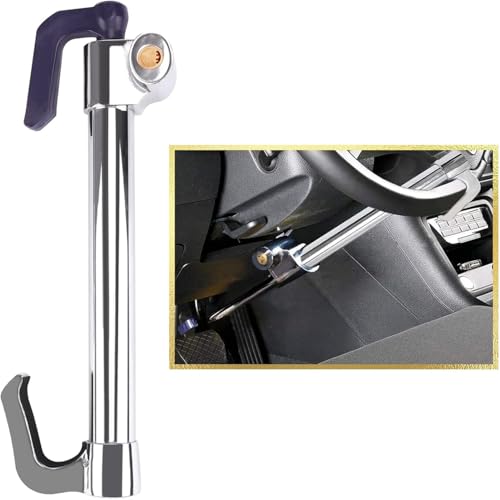
Tevlaphee Universal Car Security Lock
Adjustable length fits various vehicle types.
Strong build ensures high durability.
Comes with three keys for convenience.
 Daniel Kenitz
Adjustable length fits various vehicle types.
Strong build ensures high durability.
Comes with three keys for convenience.

Heavy-duty design enhances vehicle security.
Adjustable to fit various steering wheel sizes.
Includes three keys for added convenience.

Durable construction for long-lasting security.
Easy to install and remove quickly.
Universal fit for various steering wheels.

Built-in alarm for added security.
Heavy-duty construction deters theft.
Easy-to-use with two included keys.

Highly visible red color deters potential thieves.
Strong, durable construction ensures long-lasting use.
Easy to install and remove in seconds.
Easy to use and install on steering wheel.
Bright blue color deters potential thieves.
Strong steel construction enhances vehicle security.

Biometric and keypad for added security.
Dual alarm system deters potential thieves.
Adjustable for various steering wheel sizes.

Bright yellow color deters potential thieves.
Twin hook design provides extra security.
Easy installation on most steering wheels.

Strong and durable with thickened steel wire.
Convenient storage due to compact design.
Universally fits most cars and SUVs.

Dual-purpose design with built-in safety hammer.
Adjustable fit for various vehicle types.
Heavy-duty construction for enhanced durability.
The first practical test is fit. A stated range such as 4.9–13 inches, 8.9–16 inches, 9.7–16 inches, 13.8–33.5 inches, or a maximum 17-inch span is only a starting measurement. It does not prove that the hooks clear the spokes, horn pad, airbag cover, paddle shifters, stalks, seat-belt buckle, pedals, dashboard, or the driver’s legs. “Universal” and “fits most vehicles” are not vehicle-specific approval. Check the manufacturer’s fitment chart and installation instructions where available, then test the actual device while parked.
The most important security distinction is evidence about the complete installed system. A steel or alloy-steel bar, “cut resistant” feature, anti-drill claim, copper cylinder, or “unbreakable” wording is not a test result. Look for the exact model in the Sold Secure Approved Product Register or Secured by Design directory, or for a model-matched independent laboratory report that identifies the tools used, attack methods, test duration, and pass criteria. The model number must match the product being sold. The supplied reviews found no current model-specific approval or comparable independent security certification for the products assessed. One hands-on test found a cable-based design quickly defeated with bolt cutters; another found a twin-hook bar loosened by a hammer and cut with bolt cutters. Those results show why the whole installed design matters more than the headline material claim.
Key security also deserves separate attention. Three keys may provide practical spares, but they do not establish pick, drill, duplication, or override resistance. Ask whether replacement keys, key codes, lockout help, and warranty support are documented. Electronic access adds its own questions: enrollment, lost-card and lost-code recovery, emergency override, low-battery behavior, charging safety, and predictable failure. An alarm’s advertised decibel number or sensitivity setting is not proof that it will work reliably in a real vehicle or remain safe around occupants.
Finally, read the instructions before buying. A correctly installed lock should never remain attached while driving. Several reviews raised missing or unclear drive-off warnings, while the better-documented products address pinch points, automatic seat or steering-wheel movement, loose-object storage, and keeping sharp glass-breaker tips away from occupants. No category-wide contraindication beyond these recurring requirements was found in the supplied data: confirm vehicle-specific clearance, remove the device before driving, store it securely, and do not treat a deterrent as a guarantee against theft.
These topics describe the practical safety, accountability, fit, security evidence, reliability, and lifecycle issues that distinguish a responsibly documented steering-wheel lock from a product supported mainly by broad marketplace claims.
This measures clear warnings about parked-only use, pinch points, sharp or projectile hazards, pedals, airbags, alarms, and glass breakers. It matters because a rigid lock can interfere with steering or controls if left fitted. Supplied scores ranged from 58 to 82: higher-scoring products had explicit removal and storage instructions, while lower scores reflected missing drive-off warnings or unsafe-feature uncertainty.
This measures whether the maker is identifiable and reachable, with model-level instructions, warranty, key or lockout support, and corrective-action information. That matters if the device jams, breaks, or is recalled. Scores ranged from 68 to 83. Higher-scoring products had named manufacturers, posted contact details, manuals, and warranty information; lower-scoring products lacked clear importer, warranty, replacement-part, or response documentation.
This measures specific, credible information about wheel, spoke, pedal, buckle, airbag, steering-column, and driver clearance. It matters because a broad universal claim can leave a lock loose, damage controls, or obstruct the driver. Scores ranged from 62 to 72. Higher scores had measurable ranges or clearer fit checks; lower scores relied on “most vehicles” without vehicle-specific guidance.
This measures tested resistance of the entire installed system, including the wheel, hooks, cable, bar, and cylinder. A steel label alone does not show performance. Scores ranged from 42 to 70. The higher scores still lacked model-matched independent attack reports in the supplied set, while lower scores reflected confirmed weaknesses such as cable cutting or hammer defeat.
This measures whether the exact sold model appears in a traceable certification register or has a complete third-party report, rather than a seller-issued badge. It matters because “anti-theft,” “cut resistant,” and “maximum security” are otherwise difficult to compare. Scores ranged from 68 to 70, but the reviews found no current exact-model certification or comparable independent security approval among the supplied products.
This measures key uniqueness, duplication controls, pick and drill protection, overrides, enrollment, and recovery after lost keys or credentials. It matters because a strong bar can still be undermined by weak access control or an unusable lockout process. Scores ranged from 68 to 72. Higher scores reflected documented individual keys, multiple access routes, or replacement-key information; lower scores lacked cylinder detail or key support.
This measures resistance to jamming, corrosion, wear, heat, cold, and repeated-use failure in bars, hooks, padding, cylinders, and electronics. It matters because a lock that sticks may be abandoned or become difficult to remove safely. Scores ranged from 64 to 74. Higher scores were supported by warranty or maintenance guidance, while most products lacked model-specific cycle, corrosion, or environmental testing.
For alarms, batteries, cards, biometrics, keypads, or wireless features, this measures documented operation during low power, misuse, and bypass attempts, along with battery and charger safety. It matters because an electronic lock can fail differently from a mechanical one. Scores ranged from 54 to 100: battery-free mechanical products scored highest, while powered products generally lacked low-battery, override, battery-safety, or compliance documentation.
This measures whether theft, “unbreakable,” universal-fit, insurance, and anti-theft claims are qualified and supported for the exact model. It matters because a visible deterrent is not guaranteed prevention. Scores ranged from 35 to 81. Higher-scoring products clearly described deterrence and limitations; lower scores used categorical claims that conflicted with independent defeat findings or lacked tested support.
This measures practical fitting, locking confirmation, removal, storage, key handling, and instructions for wheel, pedal, or buckle connections. It matters because a difficult device may be misinstalled or left unused, while a forgotten device can interfere with driving. Scores ranged from 68 to 85. Higher scores reflected clear instructions, quick fitting, compact storage, or self-locking designs; lower scores had unclear fit or removal guidance.
This measures durable construction, material disclosure, replaceable parts or batteries, packaging information, and realistic recycling routes. Mechanical steel products avoid battery waste, but mixed coatings, plastics, electronics, and glass-breaker components complicate disposal. Scores ranged from 68 to 72, showing modest separation: primarily metal, battery-free designs scored somewhat better, while no supplied product had strong lifecycle documentation or a verified take-back program.
This is a mechanical, key-operated bar that connects the steering wheel to the brake or clutch pedal. It is intended to make steering and pedal operation impractical while parked. The supplied product manual lists a maximum extended length of 33.5 inches, a 3.9-pound weight, three keys, and two contact pads. It describes a 95% alloy-steel and 5% plastic construction. Its core benefit is visible, physical delay rather than electronic immobilization or tracking. The manual says each unit is keyed differently and gives four basic fitting steps, but it does not provide a vehicle fitment chart, pedal dimensions, steering-wheel clearance requirements, or an explicit instruction never to drive with the device installed. No model-specific independent attack test or recognized security certification was located in the checked registers.
This product suits an owner seeking a visible, mechanical parking deterrent for a car, truck, SUV, or van, provided they can test-fit it safely while stationary. It is most appropriate for a driver who has a clear line between the lower steering wheel and brake or clutch pedal, can consistently remove and store a 3.9-pound device before driving, and wants a non-electronic layer alongside the vehicle's existing locks and immobilizer. The supplied pads may also matter for owners concerned about contact marks.
It is not suited to drivers who cannot confirm clearance around steering-wheel controls, airbag areas, dashboard trim, or unusually shaped pedals. Do not rely on it as the sole theft-control measure for a high-risk vehicle or where a certified security requirement applies, because no model-specific independent security rating was found. It is also unsuitable where several drivers may forget removal, where keys cannot be securely managed, or where children could access it. The manual says it is not recommended for children under 14.
The supplied manual identifies the product as 95% alloy steel and 5% plastic. It has no battery, alarm, radio, charging system, or app, so it avoids routine battery replacement and the associated electronic waste. Its primarily steel construction should have an established scrap-metal recycling route when the product reaches end of life, although the manufacturer does not provide disassembly, recycling, packaging, or replacement-part guidance. Safety documentation is limited. The manual provides cleaning, dry-storage, lubrication, lost-key, and wheel-scratch guidance, and it says the product is not recommended for children under 14. It gives a five-year limited warranty and a support email, but no identifiable importer address, recall procedure, or public model-level corrective-action information was found. Searches of U.S. consumer-product and vehicle-safety recall sources did not locate a Tevlaphee record for this product.
This is a keyed, adjustable steering-wheel bar lock for cars, SUVs, vans, pickups, and trucks. It uses twin bars and four hooks to grip the wheel, then limits steering-wheel rotation against the cabin. The product includes three keys and is listed at 27.36 inches long and 4.7 pounds. It has no alarm, battery, app, or wireless function. The stated fit range is steering wheels with a 4.9 to 13 inch inner diameter. That is a useful measurement, but it is manufacturer-stated and is not a vehicle-specific fitment chart. The product is listed as alloy steel with a plastic-dipped exterior. Its four-hook, twin-bar layout is confirmed by the current marketplace listing, while claims about superior resistance to cutting, prying, or lock attack were not supported by a model-specific laboratory report or security certification.
This product suits an owner seeking a plainly visible, non-electronic parking deterrent for a vehicle whose steering wheel has a measured 4.9 to 13 inch inner opening and enough clearance around the spokes and airbag hub. It is most practical for someone comfortable carrying and fitting a 4.7 pound bar each time they park, who keeps a spare key outside the vehicle. It can add a manual obstacle to a vehicle already using its factory immobilizer and normal locking routine.
It is not suited to drivers who need vehicle-specific fitment assurance, have unusually shaped wheels, closely spaced spokes, prominent steering-wheel controls, or uncertain airbag-hub clearance. Do not rely on it as the sole protection for a vehicle at elevated theft risk, because independent certification and model-specific forced-entry testing were not located. It is also a poor match for anyone likely to misplace keys, struggle with repetitive bending or reaching, or leave the bar loose in the driver footwell. Remove it completely before driving.
This is a mechanical product with no battery, alarm, wireless transmitter, or charging system. That avoids battery exposure, low-power failure, and radio compliance issues. The marketplace listing identifies alloy steel construction with a plastic-dipped finish, and claims a copper lock core. Those material and lock-core details are manufacturer-stated, not backed by a published bill of materials or laboratory analysis. Searches did not identify a U.S. CPSC recall or a model-specific regulatory safety warning for this product. The maker can be reached through the marketplace and its brand site, but readily accessible model-specific instructions, corrective-action information, spare parts, corrosion testing, and end-of-life guidance were not found. Steel has established scrap-recycling routes, but the mixed steel, plastic coating, lock cylinder, and keys should be separated where local recycling programs accept them.
This is a mechanical, key-operated steering-wheel-to-brake-pedal lock. It uses a U-shaped alloy-steel bar and is stated to adjust across a 13.8 to 33.5 inch distance between the steering wheel and brake pedal. The intended effect is to make steering and brake-pedal operation impractical while the device is installed. An independent retailer listing matches the model number and identifies alloy steel, but it does not provide hardness, wall thickness, cylinder construction, or a test report. The manufacturer sells the product directly and provides a customer-service email, yet no model-specific instruction manual, fitment chart, warranty terms, or third-party attack test was located. It is a passive device with no stated battery, alarm, or wireless function.
This product suits an owner seeking a visible, low-tech theft-delay layer for a parked car, van, SUV, or pickup, provided they can measure the steering-wheel-to-brake-pedal distance first. It is most appropriate for someone comfortable using and storing a long mechanical bar, keeping track of keys, and confirming that the hooks sit securely without contacting airbag controls, steering-wheel switches, pedal linkages, or trim. Its stated adjustment range is useful for preliminary fit checking, not a substitute for vehicle-specific confirmation.
It is not suited to drivers who need independently certified resistance to cutting, drilling, prying, picking, or steering-wheel defeat. It also is not suited to anyone unable to verify clear clearance around their specific brake pedal, steering-wheel spokes, airbag module, dashboard controls, and driver entry path. Do not rely on it as a guarantee against theft, or leave it fitted while driving. Buyers needing documented lost-key support, a defined warranty, corrosion data, or replacement components need product-specific documentation that was not located here.
The main safety consideration is correct removal before driving and careful placement while parked. This product is intended to obstruct the steering wheel and brake pedal, so it must not be treated as a driving accessory. A retailer also describes an emergency hammer function, but no model-specific instructions or safety limits for that feature were located. No product-specific CPSC recall or safety warning was located in the reviewed CPSC recall resources. The body is listed as alloy steel, a durable and widely recyclable material if the product reaches end of life. However, the maker does not provide a material breakdown, coating disclosure, packaging information, replacement-key policy, repair parts, or end-of-life guidance. It is a mechanical product with no stated battery or wireless electronics, which avoids a battery disposal stream, but the lack of lifecycle documentation limits confidence about its broader environmental footprint.
This is a three-fork, key-operated steering wheel lock with a vibration-triggered LED and audible alarm. The supplied manual says to clamp the three-fork section to the wheel, remove the key, then push the lock into position. It also says the wheel's three-crossing spoke area must be 7 cm or narrower, so this is not a fit-all device despite the broad vehicle claim. The manufacturer states that the bar is hardened steel, that the alarm enters warning mode after 15 seconds, and that it emits a 130 dB alarm if not opened after a further 15 seconds. It requires three batteries and includes two keys. Those performance and material claims are manufacturer statements, not independently verified test results. No model-matched independent security certification or full attack-resistance report was located.
This product suits an owner seeking a conspicuous, removable parking deterrent for a vehicle whose steering-wheel spoke junction can be measured at 7 cm or less. It is most appropriate for someone willing to fit and remove the lock every time, keep both keys separate from the vehicle, and supply replacement batteries. The documented delayed alarm may suit drivers who want attention-drawing noise after tampering, but only as an additional layer alongside the vehicle's factory immobilizer and sensible parking practices.
It is not suitable for drivers who cannot confirm the 7 cm spoke-junction limit, whose wheel design leaves poor clearance around airbag controls, or who need vehicle-specific fitment assurance. It is also a poor fit for households with young children who could access the heavy lock or batteries, since the manual says it is not recommended for children under 14. Buyers who require independently certified resistance to cutting, picking, drilling, or wheel defeat should use a product supported by a model-specific test report.
The supplied manual gives some basic handling information. It says to store the lock dry, use only mild soap and water for cleaning, avoid overtightening, and call a locksmith for removal if keys are lost to reduce the chance of vehicle damage. It also says the product is not recommended for children under 14. However, it does not explicitly warn users not to drive with the lock fitted, and it does not give vehicle-specific airbag or control-clearance instructions. The manufacturer describes hardened-steel construction and a minimum five-year lifespan, but provides no material breakdown, corrosion test, replacement-parts program, or independent durability report. The alarm requires three batteries, yet no battery chemistry, low-battery indication, battery safety testing, or disposal guidance is documented. Searches did not locate a matching CPSC or NHTSA recall, but no model-specific regulatory certification was found for the alarm or security claims.
This is a red, key-operated steering-wheel bar lock with two extending hooks and a long handle intended to stop normal rotation of a parked vehicle’s wheel. The manufacturer identifies this version as The Original Club, model 1000, and states that it has solid steel hooks and fits cars, vans, and SUVs. It is a purely mechanical device with no alarm, battery, app, or wireless feature. Its instructions are unusually specific about safe handling. They require the vehicle to be off, direct users to grip only the handles or vinyl-covered areas, warn against the moving metal rod and lock housing, and say never to start or drive with it fitted. The manual also presents the lock as a theft deterrent, not a theft-proof device. No current model-specific independent security certification or full attack-test report was located.
This suits an owner seeking a visible, non-electronic layer of delay for a routinely parked car, van, or SUV with a conventional steering wheel and room to store a two-pound bar away from pedals and controls. It is most appropriate for someone willing to test the lock and both included keys before first use, follow the fitment steps every time, and keep the spare key outside the vehicle. It can complement, rather than replace, the vehicle’s built-in immobilizer and alarm systems.
It is not suited to drivers who need independently rated resistance to sustained physical attack, or who expect a steering lock to make a vehicle theft-proof. Owners of vehicles with unusually shaped wheels, crowded spoke controls, sensitive horn pads, automatic steering-column movement, or uncertain clearance should confirm physical fit before relying on it. It also is unsuitable for anyone likely to leave it loose in the cabin, drive before removing it, or who cannot safely manage a key-operated device that may need periodic dry lubrication or locksmith removal if jammed.
The main direct safety issue is physical handling, not chemicals or electronics. The instructions warn that fingers can be pinched near the moving metal rod and lock housing. They also require the vehicle to be off during fitting and removal, prohibit driving with the lock installed, and say to store it where it cannot obstruct pedals or controls or become a moving object in a sudden stop. The manufacturer advises testing locking and unlocking before vehicle use. The product is a largely steel mechanical device with vinyl-covered grip areas, which avoids battery waste and electronic disposal. Steel has established recycling routes, but the manufacturer does not provide a bill of materials, recycled-content claim, packaging details, replacement-part plan, or product-specific recycling guidance. A California Proposition 65 warning is displayed by a reseller for this product, but no product-specific exposure measurement or chemical disclosure was located in the manufacturer documentation reviewed. No relevant current U.S. recall was located.
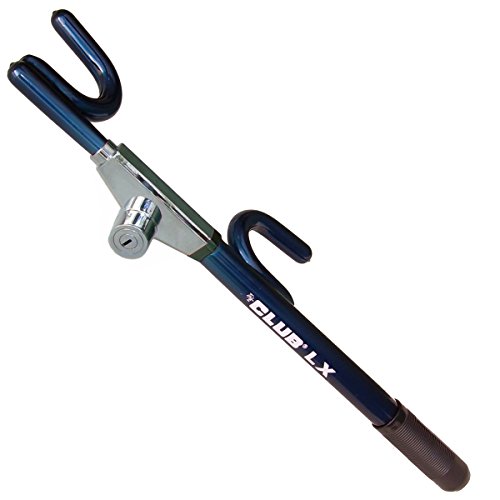
This is a blue, telescoping, keyed bar that spans a steering-wheel rim. Its protruding handle is intended to stop a wheel from being turned far enough to drive normally. The product record specifies alloy steel construction, a chrome-plated finish, and three keys. A separate retailer description for this blue LX version also describes a chrome-plated lock housing and laser-encrypted keys, but those security claims were not supported by a model-specific independent test report. Winner International’s current LX page confirms the same basic one-pull self-locking format and states an 8 3/8 to 16 3/8 inch locking length for its current LX version. The maker describes LX fit as “one size fits most,” rather than providing vehicle-by-vehicle compatibility. The available Club instructions give unusually specific safe-use directions, including never driving with the lock attached, keeping fingers clear of the spiral rod, and securing the removed bar so it cannot become a moving hazard.
This suits an owner seeking a visible, entirely mechanical parking deterrent for a car, van, truck, or SUV whose steering wheel can accept the stated LX locking range. It is most practical for someone willing to remove and stow a 4.2 pound bar on every trip, test it before first use, retain all three supplied keys, and follow the maker’s handling cautions. It can fit a layered theft-deterrence routine where a visible delay device is desired, rather than a documented high-security certification.
It is not suited to drivers who need confirmed fitment for a specific steering-wheel shape, spoke layout, airbag area, or adjustable-column arrangement. It is also a poor match for anyone unable to reliably remove and secure the bar before driving, including households where the keys may be routinely misplaced. Buyers needing independently demonstrated resistance to power tools, picking, drilling, or steering-wheel cutting should use a product with a current model-specific third-party test report or certification. It has no documented alarm or smart alert feature.
The main safety positive is the instruction set. It tells users to keep hands clear of pinch points, never start or drive with the lock mounted, and secure the removed device so it cannot obstruct pedals or become a projectile in a sudden stop. It also warns users to wait until automatically adjusting steering wheels, seats, and pedals have stopped moving before fitting or removing the lock. Winner International identifies itself, publishes customer-service contact information, and explains that no master keys are retained. For LX products, however, the maker says replacement keys and blanks are unavailable. The device is a mechanical steel lock with no documented battery or wireless electronics, which avoids battery disposal and e-waste concerns. Material disclosure remains limited, and no packaging, recycled-content, replaceable-part, or end-of-life program was found. Winner’s posted California warning materials identify lead and lead compounds as a potential exposure concern for products covered by that warning.
This is an adjustable electronic steering-wheel bar lock intended to make a parked vehicle harder to steer if entered without authorization. It combines a physical locking beam with fingerprint, numeric keypad, card, and physical-key access. The product is listed as 21.6 inches long and includes a USB-C charging cable, reset pin, two cards, two keys, and an integrated window breaker. A retailer reproducing the product information states that it fits standard or D-shaped wheels from 9.7 to 16 inches in diameter, provided the center protrusion is under 2 inches. That is more useful than an unqualified universal-fit claim, but it is not a vehicle-specific fitment chart. The same manufacturer-stated information describes a 120-second audible and flashing-light alarm after repeated failed access attempts, forced opening of the disassembly panel, or a stated electromagnetic-interference trigger. No model-specific independent attack test, security certification, or environmental durability report was located.
This product suits an owner of a parked passenger vehicle who wants a visible steering-wheel deterrent and has first measured a conventional or D-shaped wheel within the stated 9.7 to 16 inch range. It is most relevant where a physical bar is practical to fit and remove on every trip, and where backup entry methods matter because fingerprint reading can be inconvenient in dirty, wet, cold, or rushed conditions. The buyer should be comfortable charging an electronic accessory and storing physical keys and cards securely.
It is not suited to drivers who need documented resistance against serious, tool-equipped theft attempts, because no independent certification or model-specific attack report was located. Avoid it if the wheel has an unusually deep center hub, irregular spoke layout, prominent controls, or airbag-related clearance concerns that prevent a secure fit. It is also unsuitable for anyone unwilling to check removal before every drive, maintain battery charge, or keep backup keys and cards from being accessible inside the vehicle.
This product adds two practical safety considerations beyond a basic mechanical bar. It is an electronic device with a rechargeable power system, and it includes a window breaker. Publicly available product information did not provide model-specific battery test documentation, charger certification, low-battery behavior, or detailed emergency-release instructions. Use it only while parked, confirm it is fully removed before driving, and keep the pointed glass-breaking end from contacting occupants or loose cargo. The stated stainless-steel construction should have a recyclable metal pathway at end of life, but the electronic components and rechargeable battery require electronics recycling rather than disposal with ordinary household trash. No public materials bill, battery-removal guidance, replacement-parts program, recycled-content claim, or packaging disclosure was located. eRapta provides public contact information and says its products are made in Shenzhen, China, but the public material reviewed did not identify a model-specific manufacturer or importer. No matching CPSC or NHTSA recall was located in the sources checked.
This is a yellow, key-operated steering-wheel bar with two hooked ends, designed to limit steering-wheel rotation when the vehicle is parked. The maker identifies it as model 3000, with a cro-moly steel body, solid steel hooks, a yellow vinyl wheel-contact finish, automatic locking as the bar is extended, and a maximum inside-hook opening of 14.4 inches. Those are manufacturer-stated specifications. Independent confirmation is limited. A retailer independently describes the same model as a twin-hook, cro-moly-steel lock and gives an 8 to 14-5/16 inch wheel-opening range, which is broadly consistent with the maker's maximum. No current model-specific Sold Secure, Secured by Design, UL, ETL, or CSA security certification or full third-party attack-test report was located. This is a visible delay-and-deterrence device, not evidence of theft-proof protection.
This product suits an owner seeking a conspicuous, non-electronic parking deterrent for a car, van, or SUV whose steering wheel can be measured and confirmed to fit within the stated hook-opening limit. It is most practical for someone willing to attach and remove a 3.5-pound bar every time the vehicle is parked, keep the keys controlled, and follow the maker's instructions to test locking before first vehicle use. It is also suitable only where the hooks clear wheel spokes, controls, trim, and the airbag module.
It is not suited to drivers who need certified resistance to determined attacks, documented pick or drill protection, or a tested time-delay rating. Choose another security approach if the vehicle has an unusual wheel profile, thick rim, obstructing spokes, hand controls, sensitive trim, or power-adjusting steering and seating systems that cannot be fully stabilized before fitting or removal. It is also unsuitable for anyone likely to leave it fitted while driving, or for households that cannot reliably retain the keys and arrange locksmith help if it jams.
The product has no battery, alarm, radio, app, or charger. That avoids battery and electronic-waste concerns, and it is primarily steel, which has established metal-recycling routes when separated from its coating and other nonmetal parts. However, the maker does not publish a bill of materials, recycled-content figure, packaging specification, replacement-parts plan, or end-of-life instructions for this model. A retailer's California Proposition 65 warning names diethylhexyl phthalate, or DEHP, as a chemical to which the product may expose users. California lists DEHP for cancer and developmental and male reproductive toxicity. The warning does not establish the actual exposure from ordinary use, but it is relevant for people seeking lower-chemical accessories. Keep the product away from children, avoid unnecessary handling of coated surfaces, and wash hands after use. No model-specific CPSC or NHTSA recall was located in the reviewed public sources.
This is a two-pack mechanical cable lock that joins a vehicle steering wheel to a seat belt buckle. The product is intended to leave the wheel unable to turn normally when parked, then coil up for storage after removal. A reseller record independently matches the model name, two-lock pack, 26 by 2 by 2 inch overall dimensions, 1.19 kg listed weight, and three included keys. The 17-inch maximum locking reach, 5 mm braided steel cable, PVC coating, and compatibility with most vehicles are manufacturer-stated claims repeated by resellers, not independently tested specifications. Fit depends on the distance between the wheel and an accessible seat belt buckle, plus clearance from controls and the driver area. No product-specific instruction manual, vehicle fitment chart, warranty terms, or independent attack report was located.
This product suits an owner seeking a visible, low-complexity parking deterrent for a vehicle whose steering wheel can be connected tightly to a front-seat belt buckle within the manufacturer-stated 17-inch range. It is most practical for someone who wants a compact mechanical device, has a predictable parking routine, and will check that it is fully removed and stowed before driving. The two-lock package may also suit a household with two compatible vehicles.
It is not suited to owners who need independently demonstrated resistance to cutting, prying, drilling, picking, or steering-wheel defeat. It is also a poor fit where seat belt buckle placement, seat travel, steering-wheel spokes, airbags, or driver controls prevent a tight and unobstructed installation. Drivers who may forget to remove a steering restraint before moving the vehicle should use a security arrangement with clearer operating safeguards. It is not an immobilizer, tracking system, or theft-recovery service.
The main physical safety issue is driving interference. This product restrains the steering wheel through a seat belt connection, so it must be removed completely before the vehicle is moved and stored where it cannot obstruct pedals or controls. No product-specific CPSC recall, NHTSA recall, or CPSC public unsafe-product report was found in the searches performed through October 4, 2026. That is not proof of safety, especially because no installation manual or fitment instructions were located. The product is described as braided steel with a PVC coating. Steel has an established recycling route, but TaShow provides no located material disclosure, replacement-parts program, packaging information, recycled-content claim, or end-of-life guidance. There are no batteries or electronics, so it does not create a battery disposal or wireless compliance burden. No independent certification, corrosion report, or durability test was located for this product.
This is a manually operated, T-shaped steering-wheel bar intended to make normal steering difficult when a parked vehicle is unattended. Independent retailer listings describe a zinc-alloy body or handle, foam padding, a pin-tumbler key lock, three keys, and a rear glass-breaking hammer. The published adjustable span is approximately 6.6 to 12.8 inches, though it is not a vehicle-specific fitment specification. The product is a passive visual and physical deterrent, not an immobilizer, alarm, tracker, or replacement for the vehicle's factory anti-theft systems. The maker states that its B+ cylinder and coated construction resist common attacks and corrosion, but no model-specific laboratory attack report, lock specification, warranty terms, or independent security certification was located. Sold Secure's steering-wheel-lock register lists other approved models, not this product.
This product suits an owner seeking a simple, visible, non-electronic layer of parking deterrence for a car, truck, SUV, or van, provided they can physically test the 6.6 to 12.8 inch adjustment range on their own steering wheel before relying on it. It is most practical for someone comfortable carrying and fitting a manual lock each time the vehicle is parked, who wants three supplied keys and may value the integrated glass-breaking tool. Its published size also favors buyers with room to store a 16.9-inch bar inside the vehicle.
It is not suited to drivers who need a security product with independently documented resistance to cutting, drilling, picking, or wheel defeat, or a recognized security certification for insurance or fleet requirements. It is also a poor fit where steering-wheel spokes, paddle shifters, controls, trim, or airbag areas leave uncertain clearance, because no vehicle-specific compatibility chart was found. Drivers unable to reliably remove and stow a rigid bar before every trip, or households where an exposed emergency hammer poses an avoidable handling concern, should use another arrangement.
No product-specific CPSC recall, NHTSA recall, or regulator warning was identified in the searches performed. That is not proof of safety or quality. The main practical safety limit is procedural, the device is for a parked vehicle and must be fully removed before driving. Its rear escape hammer can offer a manual emergency window-breaking option, but its pointed striking tip also warrants secure storage and careful handling. The product is a passive mechanical device, so it avoids disposable batteries, charging hardware, wireless electronics, and related e-waste. Retail listings identify zinc alloy or zinc construction and a coated finish, but no bill of materials, recycled-content claim, packaging disclosure, replacement-parts program, corrosion-test report, or end-of-life guidance was located. Metal recycling may be possible through local scrap channels, but the maker does not document a take-back route.


