Best Overall
6% off

EVIQO Level 2 48 Amp EV Charger for Tesla
Compatible with Tesla NACS for seamless charging.
High 48 Amp output for faster charging.
Long 25' cord offers flexible installation.
 Daniel Kenitz
Compatible with Tesla NACS for seamless charging.
High 48 Amp output for faster charging.
Long 25' cord offers flexible installation.

Compatible with Tesla's NACS charging system.
Long 25-foot cord for flexible parking.
High 40 Amp output for faster charging.

Fast Charging: Up to 48A when hardwired and 40A plug-in
Universal Compatibility: J1772 connector for all EVs
Features improved Wi-Fi, reset button, and Optimized Holster
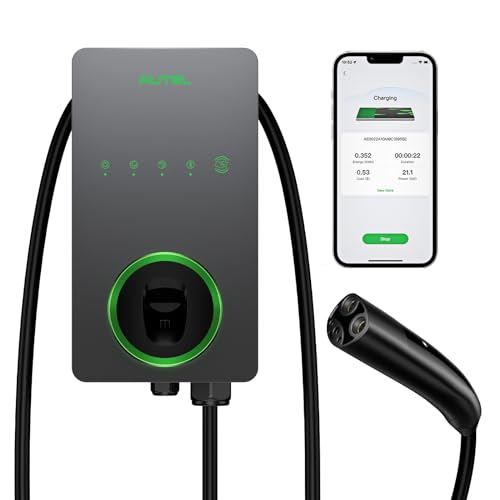
Supports up to 50Amp for faster charging.
25-foot flexible cable offers extended reach.
Compatible with Tesla, ensuring versatile use.
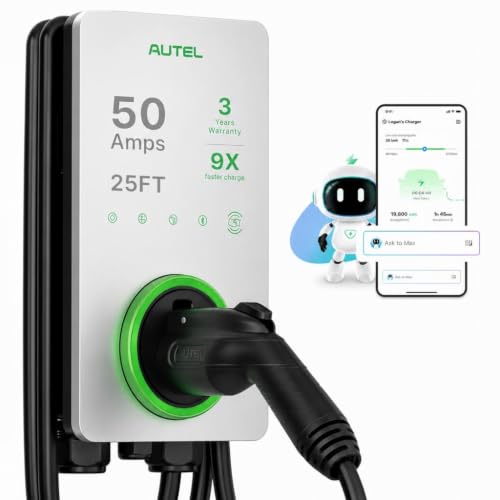
Fast charging with up to 50Amp capacity
Convenient 25-foot cable for easy reach
Wi-Fi and Bluetooth for smart control

Adjustable current for flexible charging options.
21ft cable offers extended reach and convenience.
Compatible with multiple plug types for versatility.

Compatible with all Tesla models.
Convenient 16.4-foot charging cable.
Easy plug-and-play NEMA 5-15 connection.

Versatile charging options with dual voltage support.
Long 25ft cable for flexible parking setups.
Compact and portable for convenient home use.

ETL certified for reliable safety standards.
25ft cable offers extended charging reach.
Compatible with multiple Tesla models.

Fast charging with 48Amp power output.
Energy-efficient with Energy Star certification.
Compatible with Tesla vehicles.
Start with the connector. A native NACS connector is the direct fit for Tesla vehicles and other vehicles with a NACS inlet. A J1772 charger requires a compatible vehicle-side adapter for Tesla use. Product descriptions should identify the connector standard, supported vehicles, current limit, and whether an adapter is required. Claims that one NACS connector fits every electric vehicle deserve scrutiny because J1772-only vehicles do not directly mate with it.
Next, match continuous charging current to the home circuit. The supplied reviews repeatedly distinguish the charging current from the breaker size: 40-amp charging generally needs a dedicated 50-amp circuit, 48-amp charging needs a dedicated 60-amp circuit, and 50-amp charging needs a correctly sized 70-amp branch circuit where the installation instructions call for 125% continuous-load protection. A 16-amp charger on a NEMA 6-20 outlet belongs on a dedicated 20-amp circuit. Standard NEMA 5-15 charging is limited to 12 amps in the supplied Tesla guidance; a product that permits 13 or 16 amps through that arrangement raises a serious circuit-fit concern. Do not use extension cords, improvised adapters, shared circuits, worn receptacles, or heat-damaged outlets.
For safety certification, look for a model-matched listing—not merely a logo or a statement that a component is UL recognized. The exact charger, cord, plug, and connector configuration should be traceable in UL Product iQ, Intertek’s ETL directory, or the CSA Group database. Relevant evidence includes ANSI/UL 2594 for EV supply equipment, ANSI/UL 2231-1 and -2 for personnel protection, and where applicable UL 2251 for vehicle connectors. The laboratory should be an OSHA-recognized Nationally Recognized Testing Laboratory, and the listing should be current and match the product sold.
A credible product also documents ground-fault protection, loss-of-ground response, overcurrent, overheating, welded-relay or control faults, connector and plug temperature protection, and clear fault indication. Outdoor claims need the same exact-configuration discipline: NEMA enclosure type or an IP rating should be supported by the product’s certification or test documentation, not only a marketplace title. Type 3R, NEMA 4 or 4X, and IP54 or IP66 are not interchangeable claims.
For performance and environmental impact, prefer exact-model ENERGY STAR records or disclosed independent testing. Useful figures include output at stated voltage and current, no-vehicle power, idle power, charging losses, and test conditions. A product claiming 9.6 kW should be checked against its continuous rating and circuit instructions. Smart features should have identifiable FCC authorization where required, explain offline operation, updates, privacy, and cloud dependence, and should not make basic charging unusable when an app fails.
Across the supplied products, the recurring cautions are clear: professional electrical evaluation is needed for high-current or hardwired installations; several products make certification or weather claims that could not be matched to an exact public listing; J1772 products need an appropriate Tesla adapter; and some portable products give unsafe or unclear 120-volt current instructions. Severe evidence gaps also recur around outdoor exposure, replacement parts, recycling, and long-term software support. A charger should not be treated as suitable merely because its headline amperage, connector, or certification logo appears on a product page.
These topics separate a charger that is merely advertised from one whose electrical fit, protection, performance, and environmental claims are supported by the supplied review evidence. Scores are comparative signals within this group; they do not replace an electrician’s installation assessment or a model-matched certification record.
This checks whether the exact charger configuration—including cord, plug, and connector—is listed by an OSHA-recognized testing laboratory to applicable EVSE standards. It matters because a logo on a product page may not cover the configuration sold. Among these products, the strongest score was Tesla’s Universal Wall Connector at 94; several portable and plug-in products scored in the high 60s because their claimed listings could not be publicly matched.
This measures documented protection against ground faults, lost grounding, welded relays, overcurrent, overheating, and hot plugs or connectors, ideally covered by the exact safety listing and manual. These protections matter during long, high-current charging sessions. Scores ranged from 68 to 89: higher-scoring products provided more detailed protection evidence, while lower-scoring portable products relied mainly on manufacturer claims without independent exact-product testing.
This measures whether amperage, voltage, plug type, breaker, branch-circuit size, hardwiring, and continuous-load instructions agree. It is especially important because EV charging is a long-duration load. The supplied products show why: scores reached 91 for Tesla’s hardwired unit, while some products scored near the low 50s because they paired full-current charging with unsafe or incomplete circuit guidance, particularly around 40-amp charging or 120-volt adapters.
This checks whether the connector, adapter requirement, current limit, and named vehicle coverage are accurate. A native NACS unit should connect directly to Tesla vehicles with that inlet; a J1772 unit needs a compatible adapter. The strongest score was Tesla’s Universal Wall Connector at 93 because it integrates NACS and J1772 capability. Products using J1772 or unclear connector documentation scored lower, despite broad compatibility language.
This measures whether outdoor use, water and dust resistance, temperature range, strain relief, and cable claims are supported for the exact configuration. It matters because moisture, freezing, sun, and cable handling can affect shock, trip, and overheating risks. Scores were highest for Tesla’s documented Type 3R/IP54 unit at 91; lower scores reflected unverified IP or NEMA claims, conflicting ratings, or cold-weather cable concerns.
This measures whether output, standby power, enclosure performance, cable behavior, and smart functions have traceable third-party support. Exact ENERGY STAR records and disclosed instrumented testing carry more weight than marketing text. Tesla’s Universal Wall Connector and Autel’s J1772 unit scored 90 and 91, respectively, while products with only seller specifications or related-model evidence scored closer to the high 60s or 70s.
This measures whether output, standby power, enclosure performance, cable behavior, and smart functions have traceable third-party support. Exact ENERGY STAR records and disclosed instrumented testing carry more weight than marketing text. Tesla’s Universal Wall Connector and Autel’s J1772 unit scored 90 and 91, respectively, while products with only seller specifications or related-model evidence scored closer to the high 60s or 70s.
This checks whether safety marks, weather ratings, compatibility, warranty terms, and charging claims match the exact product. It matters because several supplied listings used UL, ETL, CSA, IP, NEMA, or ENERGY STAR language that could not be matched to the sold configuration. Scores ranged from 38 for a product with internally inconsistent current and power claims to 80 for Autel’s J1772 unit, whose specifications and evidence aligned more closely.
This measures whether the brand provides a U.S. contact, model and serial traceability, warranty terms, safety notices, and a workable remedy process. It matters because an electrical defect must be identifiable and correctable. Scores ranged from 70 to 78. The reviews generally found no product-specific CPSC recall, but support quality varied and several products lacked clear long-term accountability or detailed remedy documentation.
This measures Wi-Fi, Bluetooth, app, scheduling, firmware, offline charging, privacy, and required FCC authorization. Smart controls should not make basic charging dependent on a cloud service, and buyers should understand what data the app collects. Scores reached 91 for Tesla’s Universal Wall Connector, which documents offline update capability, while lower-scoring products had unclear support lifecycles, privacy practices, or app dependence.
This measures charging efficiency and electricity drawn while no vehicle is connected or charging is paused. Idle waste matters because a wallbox can remain energized for long periods. The strongest supplied scores were 95 for AIMILER, 94 for EVIQO’s J1772 unit and Autel’s J1772 unit, supported by ENERGY STAR measurements. Products without exact-model efficiency or standby data generally scored around 68–70.
This measures warranty, service support, replacement parts, repair information, and electronics-recycling or take-back options. Longer service can reduce premature replacement and e-waste. Scores were relatively compressed, from 70 to 78, because warranties and support contacts were common but public parts catalogs, repair procedures, and recycling programs were rarely documented. A warranty alone does not establish repairability or responsible end-of-life handling.
This is a wall-mounted, hardwired Level 2 AC charging station with a native NACS vehicle connector, a 25-foot charging cable, Wi-Fi app functions, and adjustable charging current. It is intended for Tesla vehicles and other vehicles with a compatible NACS inlet. Other North American vehicles need a separate NACS-to-J1772 adapter. The exact NACS model is listed by EPA ENERGY STAR at 240V, 48A maximum output, 11.52 kW, and a 25-foot output cord. ENERGY STAR eligibility requires a safety listing by a Nationally Recognized Testing Laboratory, which provides meaningful independent support for electrical safety and efficiency. EVIQO specifies hardwired installation on a dedicated 60A circuit by a licensed electrician. Its product page also uses conflicting 48A and 50A descriptions, so the independently listed 48A rating is the clearer operating limit.
This product suits a Tesla household that has, or is prepared to add, a dedicated 60A branch circuit and wants a permanently installed NACS home charger. It is especially relevant where the vehicle parks far enough from the electrical panel or wall location that a 25-foot cable is useful. It also fits a household that values scheduled charging and energy tracking, but can accept that those smart functions depend on a 2.4 GHz Wi-Fi connection. Full-rate installation should be planned and completed by a licensed electrician.
It is not suited to renters, households that need a portable charger, or homes without sufficient panel capacity for a dedicated 60A circuit. It is also a poor fit for buyers who need an independently published UL or Intertek certificate showing the exact model, connector, and covered standards before installation. Non-Tesla vehicles without a NACS inlet require a separate adapter. Buyers who need dependable app-independent scheduling, detailed radio documentation, repair parts, or a documented recycling route should seek clearer evidence before relying on this product.
The strongest safety evidence is the exact model's active ENERGY STAR certification for the United States and Canada. EPA requires ENERGY STAR EV charging equipment to have an NRTL safety listing, and the record independently confirms 48A, 11.52 kW, and a 25-foot output cord. EVIQO also specifies a dedicated 60A circuit and licensed-electrician installation for 48A operation. These requirements matter because EV charging is a sustained electrical load. The same ENERGY STAR record reports 2.43W with no vehicle connected and 4.99W in idle mode, which limits wasted electricity when the charger is not actively supplying a car. EVIQO states a three-year warranty and U.S.-based support. No EVIQO charger recall was found in the checked CPSC recall resources. However, public evidence for exact-model UL or ETL certificates, outdoor enclosure testing, replacement parts, repair instructions, and electronics recycling was not located. The conflicting 48A and 50A marketing language also warrants care.
This is a wall-mounted Level 2 home charging station with a built-in NACS connector, a NEMA 14-50 plug, Wi-Fi app functions, and a 25-foot vehicle cable. It is intended for Tesla vehicles and other NACS-equipped vehicles, without an adapter. The manufacturer also says a NACS-to-J1772 adapter can be used for other North American EVs, but that adapter is not included. EPA ENERGY STAR independently lists the matching 40 A NACS plug-in configuration at 240 V and 9.6 kW, with a 25-foot, 10 AWG output cable. The manufacturer states IP66 and NEMA 4 weather protection, fault protections, 2.4 GHz Wi-Fi, adjustable 6 to 40 A charging, and a three-year warranty. Its claimed UL and ETL safety status could not be matched to a public exact-configuration NRTL listing during this review.
This product suits a Tesla household with a properly installed dedicated 50 A NEMA 14-50 circuit, a need for up to 40 A of AC charging, and a parking layout that benefits from a 25-foot cable. It also fits users who value independently verified low standby use and want app-based scheduling or energy tracking. It is most straightforward for a Tesla that accepts NACS AC charging directly, rather than a household that needs the charger to serve mixed connector types without separate adapters.
It is not suited to a household with an existing 40 A branch circuit, an unknown receptacle condition, aluminum wiring concerns, or no qualified electrician able to assess panel capacity and the outlet. Do not treat the NEMA 14-50 plug as permission to use any existing dryer or range receptacle. It also does not suit drivers needing native J1772 service for several vehicles, buyers who require a publicly traceable exact-model NRTL listing before installation, or those unwilling to use an internet-connected app and accept its data collection terms.
The most concrete ecology finding is the exact matching ENERGY STAR record. It confirms 9.6 kW maximum output, 2.36 W no-vehicle power, 4.74 W idle power, and measured charging losses at several current levels. Lower no-vehicle draw helps limit routine electricity waste when the station is installed but not charging. The 25-foot cable and 10 AWG output-cable specification are also independently recorded. For electrical safety, the manufacturer documents ground-fault, overcurrent, overtemperature, surge, control-pilot, overvoltage, and undervoltage protections. It also claims UL and ETL status, but an exact public NRTL listing record was not found. The NACS wireless configuration has an identifiable FCC authorization. No current U.S. CPSC recall was located in this review. EVIQO publishes U.S. support contacts and states a three-year warranty, though parts availability, repair procedures, recycling, and take-back arrangements were not documented.
This is a wall-mounted Level 2 home charging station with a J1772 vehicle connector, a 25-foot cable, a NEMA 14-50 plug, and Wi-Fi app functions. It is configured for up to 40 amps from a 240-volt supply, which is 9.6 kW. Its installation guidance calls for a dedicated 50-amp circuit at the full 40-amp setting, reflecting EV charging's continuous-load requirement. EPA ENERGY STAR independently lists the matching 40-amp J1772 configuration at 9.6 kW with a 25-foot output cord. Independent hands-on testing of the Gen 2 40-amp plug-in version reported successful full-load heat, cold-cable, automatic-restart, and connector-drop checks. The manufacturer states IP66 and NEMA 4 outdoor protection, ETL safety certification, and a three-year warranty. The claimed ETL listing could not be independently matched to an accessible exact-product directory record during this assessment.
This product suits an owner of a North American J1772 electric vehicle or plug-in hybrid who already has a professionally installed NEMA 14-50 receptacle on a dedicated 50-amp circuit. It also fits a Tesla household that already has the standard SAE J1772 adapter. The 25-foot cable is useful where the parking position or charge-port side varies. It is best for people who want 40-amp overnight Level 2 charging, basic scheduling, and energy monitoring, while accepting that actual range added depends on the vehicle.
It is not suited to a home with an unknown, aging, loose, or undersized NEMA 14-50 outlet, or with no dedicated 50-amp circuit available. Do not use adapters, extension cords, or a shared circuit to make the plug fit. It is also not the right connector for Tesla owners who do not want to use a J1772 adapter. Buyers who need independently traceable proof of the exact product's NRTL listing, exact enclosure tests, plug-temperature monitoring, advanced load management, or a clearly unified warranty document need more documentation than was available here.
The important safety point is installation. At its full setting, this charger draws 40 amps continuously and needs a dedicated 50-amp circuit and a sound NEMA 14-50 receptacle. The published guidance is internally consistent on that point. Independent testing of the Gen 2 plug-in version found that it continued operating through controlled heat, cold, restart, and connector-drop checks. Tesla documents that J1772 stations work with its SAE J1772 adapter. EPA ENERGY STAR independently lists the matching 40-amp J1772 configuration and measured 2.36 watts in no-vehicle mode, 2.17 watts in partial-on mode, and 4.74 watts in idle mode. That supplies meaningful evidence on standby use rather than relying only on marketing. No relevant U.S. CPSC recall was found in this assessment. The company provides support contact information and states a three-year warranty on its current product page, but its published terms contain an older 24-month warranty statement. The exact ETL and UL listing records, as well as exact enclosure test documentation, were not accessible for confirmation.
This is a wall-mounted, hardwired Level 2 home charging station with a NACS connector, a 25-foot cable, and selectable output from 16 to 50 A. It is intended for Tesla and other NACS-equipped electric vehicles, with app-based monitoring, scheduling, and optional RFID access. It is not a portable plug-in charger. Its 12 kW, 50 A maximum and 25-foot cord length are independently recorded for the Maxi US AC LW12 model in the EPA ENERGY STAR database. The current installation manual identifies this NACS version as hardwired and requires a 70 A breaker for full 50 A operation, because EV charging is a continuous load. Autel states that the enclosure is NEMA 4X for indoor or outdoor installation and that it has a 20 mA ground-fault detector with automatic retry. The manual lists UL safety standards and CSA C22.2 No. 280, but a public exact-configuration NRTL certificate was not located during verification.
This product suits a homeowner or condo owner with a licensed electrician, a dedicated 240 V branch circuit, and a Tesla or other vehicle fitted with a NACS inlet. It is especially relevant where a fixed wall unit and a 25-foot cable help reach a normal parking position. The buyer should have electrical capacity for a 70 A breaker if the full 50 A setting is needed, or be willing to have the installer set the rotary selector to the circuit's lower safe limit. App scheduling can be useful for time-of-use electricity plans.
It does not suit renters or users needing a portable plug-in charger, because this unit is hardwired. It also does not directly suit vehicles with a J1772 inlet unless the vehicle maker permits use of an appropriate NACS-to-J1772 adapter. Homes with only a 40 A or 50 A available charging circuit should not expect the stated 50 A output, and should have the installer lock the unit to 32 A or 40 A as appropriate. Households unable to obtain qualified electrical installation, permits, or inspection should not treat this as a do-it-yourself appliance.
The main household safety strengths are the documented hardwired installation instructions, 125 percent continuous-load breaker sizing, equipment grounding requirement, 20 mA ground-fault detection, and listed fault responses for ground fault, overvoltage, undervoltage, residual current, and overheating. Autel also identifies a U.S. support phone number, email address, serial-number-based support process, and three-year warranty. No product-specific CPSC recall was located in the public recall search during verification. The strongest environmental evidence is the EPA ENERGY STAR record for the Maxi US AC LW12. It reports 3.5 W in no-vehicle mode, 5.77 W idle input power, and measured full-current loss of 168 W. That is more useful than a general efficiency claim because the figures come from the ENERGY STAR certification record. Autel states NEMA 4X outdoor protection, but the public evidence reviewed did not establish a repair manual, formal take-back program, or product-specific electronics-recycling route.
This is a wall-mounted, hardwired Level 2 home EV charging station with a SAE J1772 vehicle connector and a 25-foot cable. It is intended for 208 or 240 V single-phase service and can be set from lower current levels up to a 50 A, 12 kW maximum. The product is a J1772 charger, not a native Tesla or NACS charger. Its 50 A output, 12 kW rating, cable length, Wi-Fi or Ethernet capability, and ENERGY STAR certification are independently listed in EPA records for this exact model. The manufacturer manual also specifies a NEMA 4X enclosure, a 20 mA charge-circuit interrupting device with automatic retry, and overcurrent, voltage, and surge protections. Those safety specifications are detailed, but this review could not independently match the hardwired configuration to a current public NRTL listing certificate.
This product fits an owner of a J1772-equipped battery electric or plug-in hybrid vehicle who has a licensed electrician install a dedicated 208 or 240 V hardwired circuit. It is also workable for a Tesla owner who already has the official J1772 adapter supplied with the vehicle. It is most suitable where the cable must reach around a garage bay or driveway parking position, since the independently listed 25-foot cable provides more placement flexibility than a short lead. The electrician should set the charging current to the actual breaker and conductor capacity.
It is not for someone expecting a direct NACS connection, since this product uses J1772 and a Tesla requires an adapter. It is also not for a do-it-yourself installation, or for homes with only a 50 A branch circuit that expect to use the full 50 A charging setting. A continuous 50 A load needs a larger correctly wired circuit. Buyers who require a publicly verifiable current NRTL certificate for the exact hardwired configuration, or documented long-term app and firmware support, need further documentation before relying on those requirements.
The main safety-positive evidence is the detailed manufacturer manual. It identifies a 20 mA charge-circuit interrupting device with automatic retry, grounding requirements, and protection against overcurrent, abnormal voltage, and surges. It also instructs that EV charging is a continuous load and that branch-circuit capacity must be sized accordingly. These claims are plausible and align with the kind of protections expected for home EV supply equipment, but a current public NRTL listing record for this precise hardwired configuration was not located. For energy use, the evidence is stronger. EPA lists this exact model as ENERGY STAR certified and reports 3.5 W with no vehicle connected, 5.77 W in idle mode, and measured charging losses at several load levels. The manufacturer provides a three-year warranty and a U.S. support contact in the manual. No CPSC recall specific to this product was located in the review, but clear replacement-parts availability and a product-specific electronics take-back program were not established.
This is a portable Tesla and NACS vehicle charging cord with a 21-foot cable, integrated display, delay timer, adjustable current controls, a NEMA 5-15 adapter for 120V outlets, and a NEMA 6-20 connection for 240V outlets. The available product manual identifies 8A, 10A, 12A, and 16A settings, while the product record describes a 12A to 16A version. That discrepancy means buyers should confirm the rating label and included plug set before use. At 240V and 16A, its stated maximum is 3.84 kW. Tesla documents that a correctly installed NEMA 6-20 outlet supports 16A charging, so this capacity is electrically plausible. The product claims protection features, an outdoor rating, and FCC, CE, and RoHS credentials, but no exact-product U.S. NRTL safety listing or independent performance report was located.
This product suits a Tesla or other NACS vehicle owner who already has a sound, grounded NEMA 6-20 receptacle on a properly sized 240V circuit and needs a lower-power portable charging cord rather than a permanently installed station. It can also suit occasional 120V charging from a NEMA 5-15 outlet when the current is limited to 12A and the receptacle is in good condition. The display and delay control may be useful for users who want local controls without relying on an app.
It is not suited to households that need confirmed U.S. third-party electrical safety certification, documented outdoor installation suitability, or independently verified fault and thermal protection. Do not use it to compensate for a worn, loose, ungrounded, shared, or unknown outlet, and do not use outlet adapters or extension cords to create a NEMA 6-20 connection. It is also a poor fit for buyers needing higher-power home charging, published standby-efficiency data, replacement parts, or a clearly established U.S. service and recall process.
Electrical safety is the main unresolved issue. The product materials claim overcurrent, overvoltage, and overheating protection, plus a fire-resistant housing, but those are manufacturer statements rather than protections confirmed through an exact-product U.S. NRTL listing or independent test report. FCC, CE, and RoHS are listed, but they do not establish that this charging cord is listed to the U.S. EVSE safety standards used for shock and fire protection. The conflicting IP65 and IP66 claims also leave the outdoor exposure limit unclear. A 16A load at 240V is compatible with a properly installed NEMA 6-20 circuit, and the lower 12A limit for a standard NEMA 5-15 outlet is consistent with continuous-load practice. No exact-product ENERGY STAR record, measured standby-power result, recycling program, replacement-parts listing, or public U.S. recall notice was identified. The stated two-year warranty is useful, but repair and end-of-life support remain unclear.
This is a portable Tesla-compatible AC charging cord with a NEMA 5-15 household plug, a 16.4-foot cable, an inline display, and user-selectable 8A, 10A, 12A, or 16A settings. It is intended to charge Tesla Model 3, Model Y, Model S, Model X, and Cybertruck vehicles from a standard 120V outlet. The product-specific manual also describes fault messages and a two-year manufacturer warranty. Its defining issue is the 16A setting paired with a NEMA 5-15 plug. Tesla specifies 12A, about 1.3 kW at 120V, for its own NEMA 5-15 adapter, while 16A is associated with a 20A circuit and NEMA 5-20 outlet. The product's stated 3.5 kW output also cannot be delivered from a 110V to 120V, 16A connection. The manual claims UL, FCC, CE, and RoHS credentials, but no exact-model UL, ETL, CSA, ENERGY STAR, or independent test record was located.
This product fits a Tesla owner who only needs low-rate overnight charging from a nearby, properly grounded 120V household outlet and who will manually keep the setting at 12A or below. It is most relevant where a portable cable and its stated 16.4-foot reach are useful, rather than a permanently installed charging unit. The user should understand household circuits, inspect the receptacle for heat or wear, avoid extension cords, and treat the claimed 16A option as unsuitable for a typical NEMA 5-15 outlet.
It is not suited to anyone expecting a 3.5 kW Level 1 charge rate, rapid daily energy recovery, or a charging setup that can be left unattended without attention to circuit condition. It is especially unsuitable for use at the stated 16A setting with an ordinary NEMA 5-15, 15A household outlet. Households with old, loose, warm, damaged, shared, or unknown-condition receptacles should not rely on this configuration. Buyers requiring an exact-model NRTL listing, verified weather rating, or independently tested charging efficiency need documentation that was not located.
The main health and safety concern is electrical heat and fire risk from the documented 16A setting on a NEMA 5-15 plug. Tesla's charging documentation limits its own NEMA 5-15 adapter to 12A, while it reserves 16A charging for a 20A outlet configuration. The product manual describes overheat, ground, leakage, overcurrent, and voltage protections, but public exact-model certification evidence was not found to independently establish how those protections were tested. A search of the U.S. Consumer Product Safety Commission recall database did not identify a recall for this product as of August 16, 2026. The stated two-year warranty is helpful for accountability, but no replacement-parts catalog, repair instructions, take-back program, or electronics-recycling program was located. No exact-model ENERGY STAR certification or measured standby-power result was found, so electricity waste and charging-loss performance remain unverified.
This is a portable Tesla charging cord with a direct NACS vehicle connector, a 25-foot cable, a NEMA 6-20 plug for 240 V power, and a supplied adapter for a standard NEMA 5-15 household outlet. The available product manual states 12 A charging at 120 V and 16 A charging at 240 V, equal to 1.44 kW and 3.68 kW respectively. It is intended for Tesla Model 3, Model Y, Model S, Model X, and Cybertruck vehicles. Its 240 V rating is technically consistent with Tesla's documented NEMA 6-20 setup, which uses a 20 A breaker and permits 16 A output. The manual also claims IP66 water resistance, a -22°F to 113°F operating range, and protections for leakage, grounding, voltage, overcharging, and overheating. Those protection and weather claims were not supported by a model-matched public NRTL test record. The advertised ETL status also could not be confirmed in Intertek's public directory for this exact product.
This product fits a Tesla owner who already has a properly grounded, charging-approved NEMA 6-20 receptacle on a dedicated 20 A circuit and wants a portable 16 A charging cord for home or travel. It can also serve occasional Level 1 charging from a sound NEMA 5-15 receptacle at its stated 12 A limit. The buyer should be comfortable checking the receptacle condition, circuit rating, and cable condition before use, because the available documentation is limited.
It is not suited to households without a verified, grounded charging circuit, to anyone planning to use extension cords, outlet adapters, dryer outlets, or improvised plug conversions. It is also a poor fit for buyers who need independently documented electrical listing, public test evidence for fault protection or weather resistance, app controls, energy-use data, repair support, or a higher-power permanent home charging installation. Outdoor users should not treat the IP66 statement as independently verified evidence of all-weather installation suitability.
The main safety issue is evidence quality, not a confirmed defect. The product's available manual claims electrical fault protections and IP66 water resistance, but no model-matched public NRTL certificate was located to verify the complete charger, cable, plug, and vehicle connector against applicable EVSE safety standards. Intertek's directory is the appropriate public route for validating an ETL mark, yet the exact product could not be confirmed there. No product-specific CPSC recall or SaferProducts incident was located in the searches performed. For electrical fit, 16 A at 240 V belongs on a 20 A NEMA 6-20 circuit. The 120 V mode is stated at 12 A. The manual offers a 12-month guarantee, but public replacement-parts, repair, recycling, and take-back information was not found. There is also no located ENERGY STAR listing or published standby-power measurement, so electricity waste and long-term service life remain unverified.
This is a portable AC EV charging cable for Tesla vehicles, with a claimed NACS vehicle connector, fixed NEMA 6-20 wall plug, NEMA 5-15 adapter, adjustable current and delay settings, and a 25-foot cable. The product page states 16 A and 3.84 kW at 240 V from a dedicated NEMA 6-20 outlet. Tesla's charging documentation independently confirms that a NEMA 6-20 outlet supports up to 16 A and about 3.8 kW with its own Mobile Connector. The product page also claims ETL certification and compatibility with Tesla Model 3, Model S, Model X, Model Y, and Cybertruck. However, an exact-model record in an NRTL product directory was not located during verification, so the ETL claim could not be independently confirmed. Its own instructions conflict on Level 1 current, referring to 12 A in one place and manual settings of 13 A and up to 15 A elsewhere.
This product fits a Tesla owner who already has a professionally evaluated, dedicated NEMA 6-20 receptacle on a 20 A circuit and needs a portable charging cable with a long reach. Its stated 16 A Level 2 rate is appropriate for overnight or extended dwell charging, rather than rapid replenishment. It can also suit occasional travel use where a known-good 120 V receptacle is available, provided the user sets the Level 1 current conservatively and follows the vehicle and outlet guidance.
It is not suited to households that need a verified, documentable safety listing for permitting, insurance, landlord approval, or a workplace installation, because the exact ETL record was not independently confirmed. It is also unsuitable for use outdoors unless the seller provides an exact weather rating and installation guidance. Do not use it on damaged, loose, wet, shared, or unknown receptacles. Buyers should avoid relying on the listing's 13 A or 15 A Level 1 language for a normal 15 A household circuit.
The principal safety concern is electrical fit, not chemical exposure. The product page claims an ETL mark, but an exact-model listing to applicable EVSE standards was not independently located. Independent electrical-safety guidance recommends NRTL-listed charging equipment, a dedicated circuit, a qualified electrical assessment, and keeping charging equipment away from water. The page's conflicting Level 1 current instructions matter because prolonged EV charging is treated as a continuous electrical load. No recall or regulatory action for this brand or product was located in the checked U.S. recall sources. That is not proof that future issues will be communicated quickly. The product has no located ENERGY STAR entry, so idle consumption and charging losses are unverified. A one-year manufacturer warranty is stated in product data, but no replacement-parts, repair, take-back, or electronics-recycling documentation was located.
This product is a hardwired 240 V Level 2 wall charger with an SAE J3400 NACS connector for Tesla-compatible AC charging. It is specified at up to 48 A and 11.52 kW, with adjustable current, Wi-Fi app functions, RFID access, and an energy meter option for load balancing. The manufacturer says a licensed electrician and a dedicated 60 A breaker are required for the full 48 A setting. Two independent records substantiate its core electrical claims. Intertek lists this product family for UL 2594 EVSE safety certification, and the EPA ENERGY STAR record confirms 240 V, 48 A, 11.52 kW, connected functions, and measured low-power results. Documentation is less consistent on the supplied output-cable length. ENERGY STAR records 18 feet, while the manufacturer describes 25 feet, so the delivered cable length should be confirmed before installation.
This product suits a Tesla household that can have a licensed electrician install a dedicated 60 A, 240 V hardwired circuit and wants a direct NACS connector rather than relying on a vehicle-side adapter. It is also suited to an owner who values independently documented standby consumption and wants app-based scheduling, RFID access, energy records, or load balancing with the compatible meter. The 48 A rating is most useful when the vehicle can accept that AC charging rate and the home's electrical service has adequate capacity.
It is not for renters or households limited to an existing 14-50 receptacle, because this configuration is intended for hardwired installation and full output needs a 60 A dedicated circuit. It is also not for drivers of J1772-equipped vehicles unless they have a compatible, properly rated connector solution. Buyers who need a fully documented outdoor corrosion rating, confirmed cable length before purchase, published privacy terms, or readily available replacement parts and recycling instructions should seek those details before relying on this unit.
The central safety result is independently verified. Intertek lists the product family under Evra Energy for UL 2594 EVSE requirements and Canadian EVSE requirements. The manufacturer additionally describes ground-fault protection, overtemperature protection, surge protection, connector temperature sensing, and fault indication. Those individual protection details are useful, but the public listing does not publish their separate test results. Its strongest environmental evidence is the EPA ENERGY STAR certification. The record reports 1.31 W in idle mode and 1.19 W in no-vehicle mode, which limits electricity use while the charger is waiting. The same record confirms 48 A and 11.52 kW at 240 V. No current CPSC recall or publicly indexed incident record was located in the review. A three-year manufacturer warranty is stated, but published replacement-parts, repair, take-back, and electronics-recycling information is limited.


