Best Overall
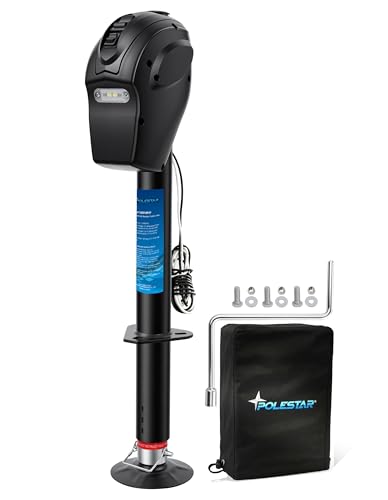
Polestar Electric Trailer Jack 5000lbs
Effortless lifting with motorized operation.
Durable design supports up to 5000 lbs.
User-friendly controls for easy adjustments.
 Daniel Kenitz
Effortless lifting with motorized operation.
Durable design supports up to 5000 lbs.
User-friendly controls for easy adjustments.

Smooth and quiet lifting operation.
Durable construction ensures long-lasting use.
Easy-to-use controls for quick setup.

Durable marine-grade construction for longevity.
Convenient folding design saves storage space.
Smooth-rolling wheel for easy maneuverability.

High weight capacity enhances stability and safety.
Durable construction ensures long-lasting performance.
Easy installation offers user-friendly setup experience.

Supports up to 5000 lbs weight capacity.
Provides 15" smooth vertical travel.
Adjustable drop leg for versatile use.

Quick and effortless trailer lifting.
Durable construction for long-lasting use.
Compatible with most electric drills.

Easy swivel design for quick mobility.
Sturdy 8" wheel for smooth transport.
Strong 1500 lbs capacity for heavy loads.

Durable build supports heavy loads effortlessly.
Easy maneuverability with ergonomic handle design.
Versatile fit for various trailer types.

High weight capacity for heavy-duty use.
Adjustable drop leg enhances versatility.
Easy manual operation for user convenience.
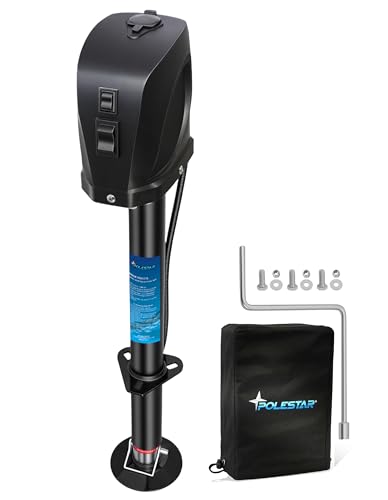
The POLESTAR Electric Trailer Jack is a reliable and powerful choice for lifting your travel trailer, camper, or RV with ease. With a 7500 lbs capacity, this A-Frame tongue jack features a 12V DC motor and a 7-way plug for straightforward connectivity. Buyers appreciate its adjustable lift range of 9" to 27", making it versatile for various hitch heights. The included waterproof protective cover ensures durability against the elements, while the integrated LED light enhances visibility during nighttime operations. Praised for its user-friendly design, this electric jack simplifies trailer hitching with efficiency and convenience.
The first number to verify is the jack's **tongue-load capacity**, not the trailer's gross vehicle weight. The supplied products commonly claim 1,000 to 8,000 pounds, but those figures are generally manufacturer-stated. A credible capacity record should identify the exact product and configuration and document proof-load, overload, and functional testing through an ISO/IEC 17025-accredited laboratory or an applicable jack standard such as ISO 12140-1 or ASME B30.1. No supplied product had an independent proof-load report for the exact product. Some ratings also need careful interpretation: one product's materials distinguish a 7,000-pound lifting capacity from an 8,000-pound static-support figure.
Fit is equally important. Check the trailer maker's tongue dimensions, mounting pattern, frame height, hole spacing, fastener grade, tightening torque, and any reinforcement requirements. A bolt-on jack should not be treated as universal merely because a listing says “universal fit.” A weld-on jack needs clear weld dimensions and qualified welding requirements. The supplied reviews repeatedly found missing mounting drawings, torque values, tongue-thickness limits, or reinforcement criteria. One product also had conflicting descriptions of whether installation was bolt-on or weld-on; another had conflicting minimum-height figures.
A safe jack needs more than a footplate or wheel. Look for instructions that require firm, level ground, wheel chocks, trailer-roll prevention, full engagement of drop-leg or swivel pins, avoidance of side loads, and keeping people and body parts out from beneath the supported load. A jack is not a substitute for rated jack stands and should not be used for tire changes, brake or axle work, or other under-trailer service unless the instructions and support system specifically allow it. Wheels help with limited repositioning, but they do not make soft, sloped, sandy, or unstable ground safe.
Powered models add another layer of evidence. Check for a wiring diagram, fuse or circuit-breaker specification, weather-protected controls, stated current draw, and a usable manual recovery method. A certification claim should be traceable to an exact model in UL Product iQ, the Intertek ETL directory, or the CSA listing database. None of the supplied powered products had a located exact-model electrical listing. Drill-operated products are not automatically safer: the available reviews often lacked drill speed, torque, or operating limits.
Corrosion claims also need evidence. “Rust-resistant,” “marine grade,” galvanized, powder-coated, and waterproof descriptions are marketing or manufacturer statements unless supported by coating details and test records such as ASTM B117 salt-spray or ASTM D3359 adhesion testing. Maintenance guidance, replaceable wear parts, a parts diagram, warranty contact, and durable model identification matter because repair can prevent premature disposal.
Across the supplied products, the recurring safety caveats are clear: do not rely on trailer GVWR instead of measured tongue load; do not work beneath a trailer supported only by a jack; do not use uncertain mounting hardware, unqualified welds, or an unverified fit; and do not operate on soft, sloped, or unstable ground. Buyers needing independently documented capacity, electrical certification, corrosion validation, or complete installation details should not treat an unsupported headline rating as sufficient evidence.
These topics address the risks and evidence that matter when a trailer jack carries a trailer tongue. Scores are comparative within the supplied products; a higher score means the review found stronger support or fewer gaps for that topic, not that the product is certified safe.
This measures warnings and instructions that reduce collapse, pinch, runaway, and misuse risks. For trailer jacks, strong evidence includes wheel-chocking, firm level ground, no-under-trailer warnings, load limits, and safe pin or operating controls. The supplied scores range from 69 to 82. The higher-scoring products provide product-specific anti-roll and no-under-load guidance; lower-scoring products lack a complete manual or warning record.
This measures whether the stated capacity is supported for the actual jack configuration and tongue load by proof, overload, and functional testing. A high score requires an exact-product report from an appropriately accredited laboratory, not just a pound figure. Scores range from 55 to 72. The strongest supplied reviews still describe ratings as manufacturer-stated; the lowest score reflects especially unclear or unsupported capacity language.
This measures whether mounting type, dimensions, fasteners, welding, and reinforcement requirements are specified well enough to prevent a loose or mismatched installation. Scores range from 55 to 78. Higher-scoring products provide clearer bolt patterns or weld instructions, while lower-scoring products omit mounting drawings, hardware grades, torque values, tongue limits, or even give conflicting bolt-on and weld-on descriptions.
This measures resistance to tipping, sinking, rolling, and unintended swivel movement during hitching and parking. A strong product explains foot or wheel limits, pin engagement, stowage, and firm-level-ground use. Scores range from 70 to 79. Products with exact manuals and rectangular footplates or defined pin controls score higher; products making broad uneven-ground claims without stability evidence score lower.
This measures protection against binding, stripping, lost pins or handles, wheel failure, drop-leg release, and unintended descent. It also considers inspection, lubrication, endurance, and retained critical parts. Scores range from 68 to 77. Higher-scoring products include inspection and lubrication guidance or clearer retention features; lower-scoring products lack service diagrams, endurance evidence, or replacement-part information.
For powered models, this measures wiring, fuse or circuit protection, weather-protected controls, current information, and usable manual recovery. Manual products avoid battery, motor, wiring, and fuse failure modes. Scores range from 72 to 100 because manual models receive little electrical exposure while powered products vary in documented backup and protection. The best evidence includes a manual crank or handle and overload protection.
This measures whether coatings, plated parts, seals, drainage, and maintenance protect load-bearing and electrical parts from water, salt, and storage exposure. Scores range from 69 to 72, showing little separation because nearly all corrosion claims lack test evidence. Galvanized, powder-coated, or rust-resistant construction is useful information, but ASTM B117, ASTM D3359, coating details, or comparable records would make the claim stronger.
This measures whether capacity, lift, tongue-load use, fit, weatherproofing, and power claims are specific and internally consistent. Scores range from 50 to 74. Higher-scoring listings distinguish tongue load from trailer weight and keep dimensions consistent. Lower-scoring products have conflicting height figures, vague “heavy-duty” language, unclear lifting versus support ratings, or unsupported corrosion and compatibility claims.
This measures whether an exact product has a verifiable certification, inspection, or accredited test record naming the manufacturer, model, standard, scope, and current status. Scores range from 68 to 70, with little differentiation because no supplied product had a located exact-model independent certification or accredited test record. A seller badge or generic certification statement is not equivalent to a searchable UL, ETL, CSA, or laboratory record.
This measures whether the responsible manufacturer, model identification, manuals, replacement parts, warranty contact, and safety remedy are accessible. Scores range from 70 to 76. Higher-scoring products have clearer support channels, manuals, or warranty information. Across the set, exact-product parts catalogs and serial traceability were often missing. No product-specific recall was located for the reviewed jacks, but that is not a certification of safety.
This measures whether maintainable construction, replaceable wear parts, repair information, corrosion resistance, and material disclosure can reduce replacement and disposal. Scores range from 70 to 74. Higher-scoring products provide lubrication guidance, serviceable mechanical parts, or clearer maintenance instructions. However, the supplied reviews generally found no complete parts catalog, repair program, recycled-content evidence, or independently supported environmental claim.
This is a bolt-on, 12 V DC electric tongue jack for A-frame travel, boat, utility, and cargo trailers. It raises and lowers the trailer tongue with an up and down switch, rather than routine hand cranking. The product is sold with a removable drop leg, LED work light, protective cover, and emergency crank. The claimed lift capacity is 5,000 lb, with a stated 22.5 inch total travel and a 9 to 31.5 inch height range including the 4.5 inch drop leg. The capacity, weather resistance, and waterproofing statements are manufacturer or retailer claims, not independently certified performance results. Accessible documentation for a closely matched version specifies level ground, wheel chocks, a fully inserted drop-leg pin, and no blocks stacked beneath the foot. It also documents Grade 5 mounting bolts, a 15 to 20 ft-lb mounting torque, overload circuit protection, and manual recovery after loss of power. Exact-model accredited load, endurance, corrosion, and electrical safety test reports were not located.
This product fits an owner of a conventional A-frame trailer who needs powered tongue lifting for routine coupling, uncoupling, and modest leveling work, and can verify that their actual tongue weight, A-frame coupler hole, mounting pattern, battery condition, and ground conditions are suitable. It is most appropriate where the installer can use the specified Grade 5 hardware and torque, hard-wire the 12 V connection correctly, and retain the emergency crank for power-loss recovery. The buyer should treat 5,000 lb as a claimed jack limit, not trailer GVWR.
It is not for anyone who needs an independently certified or documented proof-tested lifting system, or who must meet a fleet, workplace, insurer, or engineering requirement for traceable test records. Do not use it to support people, work beneath a trailer, compensate for poor ground, or lift a tongue whose verified load exceeds the jack rating. It is also unsuitable where an A-frame top-mount fit cannot be confirmed, where a safe battery connection and grounding path cannot be installed, or where high road-salt exposure demands documented corrosion testing.
The principal safety issue is crush and instability risk inherent to tongue jacks. The closest accessible instruction set gives meaningful operational controls, including wheel chocks, level ground, support of the tongue during installation, a locked drop leg, and a warning against stacked blocks. It also describes an overload-reset action and hand-crank recovery. Those are useful controls, but they are not a substitute for confirmed capacity, secure mounting, and never placing any person beneath a supported trailer. Steel is identified by independent retail listings, while the marketplace description calls the construction alloy steel. No corrosion-test report, coating specification, or environmental certification was located. A separately marketed listing of the same model carries a California Proposition 65 warning without accessible chemical detail, so exposure cannot be characterized from the available evidence. The documented assembly lists replaceable mechanical and electrical components, which could support repair, but no public exact-product parts catalog or long-term service program was found.
This is a hard-wired 12 V electric A-frame tongue jack for coupling, uncoupling, and supporting the front of an RV, horse, utility, or similar trailer. The product page states a 3,500-pound load capacity, a roughly 9 to 32 inch operating range, an LED light, a rain cover, and a manual crank for a power outage. The capacity, overload cutoff, weather protection, and hand-crank recovery are manufacturer-stated. No downloadable product manual, wiring diagram, mounting drawing, accredited load-test report, or independent certification record for this exact product was located in the reviewed sources. The listing also conflicts on construction, describing carbon steel in its feature text while its specification table lists aluminum, steel, and zinc alloy.
This product suits an owner of a conventional A-frame trailer whose actual measured tongue load is comfortably below 3,500 pounds and who can verify the trailer tongue pattern, electrical supply, grounding, and required circuit protection before installation. It is most relevant where powered raising and lowering is useful but a hand crank is still wanted as a backup. The buyer should be prepared to use wheel chocks, firm level ground, and independent support when working around the trailer.
It is not suited to anyone who needs independently documented load testing, electrical listing, published installation torque values, or readily available replacement parts before putting a jack into service. Do not treat it as a trailer-lifting or under-trailer work support device. Buyers with tongue loads near the stated limit, corrosive salt exposure, uncertain A-frame fit, damaged wiring, or a need for formal fleet maintenance documentation should use a product with a complete manual, verified test evidence, and a clearly specified electrical protection system.
The main safety-relevant claims are manufacturer-stated rather than independently substantiated. The product page says the jack uses a 12 V motor, includes a manual crank, and has an automatic overload cutoff. Those features can be useful only when the installation is correctly fused, grounded, secured to the tongue, and used on firm, level ground with the trailer wheels chocked. A product-specific manual and wiring diagram were not located. The page claims an anti-rust coating and a waterproof cover, but provides no coating specification, salt-spray result, drainage details, or corrosion warranty. It also gives conflicting material descriptions. Searches of the CPSC and NHTSA recall resources did not identify a product-specific KYX recall or regulatory action, but no independent certification, accredited test report, repair guide, or replacement-parts catalog was located. Metal construction may support a longer service life, but maintainability and end-of-life handling are not documented.
This is a manually operated, bolt-on swivel tongue jack for a boat, utility, camper, or yard trailer. The single-wheel version is manufacturer-rated for a 1,200-pound tongue load, with a side crank, removable 6-inch wheel, 2-inch shaft, and a stated height range of 15 to 24.5 inches. It is intended to raise and lower the trailer tongue for hitching or parking, then swing upward for towing. Better Boat identifies carbon steel construction, mounting hardware, a securing pin, and fit for trailer tongues up to 3 by 5 inches. Its instructions say the tongue and mounting position must support the jack and load, and call for annual lubrication of the gears and bushings. No accredited proof-load report, independent certification, corrosion test report, or detailed safe-use manual was located for this specific product.
This product suits an owner of a modest trailer whose actual loaded tongue weight is comfortably within the manufacturer-stated 1,200-pound limit, and whose straight tongue is no larger than 3 by 5 inches. It is most suited to routine hitching, unhitching, and limited hand repositioning on firm, level pavement or a shop floor. The buyer should be able to verify tongue weight and mounting clearance, install and periodically inspect the supplied fasteners, lubricate the mechanism annually, and use separate wheel chocks before uncoupling.
It is not suited to anyone who needs independently documented load testing, corrosion testing, or a listed third-party safety certification for fleet, commercial, or high-consequence use. It should not be treated as a trailer-lifting device for under-trailer work, a substitute for rated jack stands, or a way to manage an unchocked trailer on a slope. Buyers with tongue weights near or above 1,200 pounds, tongues outside the stated fit range, soft or loose parking surfaces, or frequent saltwater immersion need more application-specific documentation and support provisions.
The product is a manual carbon-steel jack with no battery, motor, wiring, or electronic waste stream. Better Boat states that it has a corrosion-resistant marine-grade coating and gives annual lubrication guidance for its gears and bushings. Maintaining the mechanism and replacing worn serviceable parts where available can extend use, although no parts catalog, repair diagram, coating specification, or corrosion-test report was found. The manufacturer displays a California Proposition 65 warning for cancer and reproductive harm. That warning does not identify the relevant chemical or exposure route for this product. California's guidance for recreational marine parts notes that some parts can involve listed chemicals, including lead and phthalates, and recommends gloves during handling and handwashing afterward. No product-specific CPSC or NHTSA recall record was located in the searches performed.
This is a manually cranked, side-wind square-tube trailer tongue jack intended to be permanently direct-welded to a trailer frame. It has a drop leg and rectangular footplate for hitching, unhitching, and leveling, not for supporting a trailer during service or tire changes. The manufacturer lists 15.28 inches of screw stroke, a 24.88-inch minimum product height, and an 8,000-pound load capacity. The safety instructions are unusually concrete for this type of product. They require chocking against rolling, firm and level ground, a properly fitted footpad, no body parts below the load, and full insertion of the drop-leg pin. Installation is specified as a full-length 3/16-inch fillet weld by a certified welder. However, an independent trailer-parts listing for the same model distinguishes 8,000 pounds static support capacity from 7,000 pounds lifting capacity. No accredited proof-test report or certification record for this product was located.
This product suits an experienced trailer owner or fleet operator replacing a welded square-tube tongue jack on a trailer whose frame, tongue load, coupler clearance, and jack location have already been assessed. It is also suited where a qualified welder can make the specified full-length fillet weld and where the trailer is used primarily on firm, level ground. The manual’s drop leg can shorten hand-cranking during routine hitching and leveling. Capacity planning should use the actual tongue load and treat the unresolved 7,000 versus 8,000 pound lifting distinction cautiously.
It is not for anyone seeking a bolt-on installation, an electric jack, a swivel-away design, or a jack intended to lift a trailer for wheel, brake, or underbody work. It is also unsuitable where the trailer frame cannot safely accept a welded jack, where a certified welder is unavailable, or where soft and sloped ground is routine without an appropriate engineered support arrangement. Buyers needing independently documented lifting performance, accredited test evidence, or a clearly separated dynamic lifting rating should select a product with those records available.
The principal safety positives are operational controls, not third-party certification. The available manual tells users to stop the trailer from rolling, use level hard ground, avoid side loading, keep clear of the load, and never use the jack for service or tire changes. It also requires the drop-leg pin to be fully inserted before loading. This is a manual product, so it has no battery, wiring, motor, or powered-operation failure mode. The manufacturer states that the product uses carbon steel, a galvanized inner tube, and powder finish. Those materials and the specified lubrication, cleaning, inspection, and fresh-water rinse after marine use can support a longer service life if followed. Yet no corrosion-test report, independent load-test report, or certification listing was located. No recall specific to this trailer jack appeared on the manufacturer’s current recall page, but the brand’s recall page does list recalls for other product categories. A responsible owner should retain the manual and inspect the tube, pin, weld, fasteners, and mechanism before use.
This is a manual, side-wind A-frame trailer tongue jack for bolting through the top of a compatible A-frame coupler. The manufacturer manual identifies a 5,000 lb capacity, 15-inch screw travel, a five-hole drop leg with 7.87 inches of travel, and a 5.3-inch round footpad. It is intended for raising, lowering, and stabilizing a trailer during hitching, not for lifting a trailer for tire service or work underneath. The manual has unusually useful operating warnings, including use on firm, level ground, prevention of trailer rolling, full insertion of the drop-leg pin, and keeping people clear of the supported load. Its stated carbon-steel construction, rust-resistant coating, and galvanized base are manufacturer claims. No accredited independent proof-load, overload, endurance, corrosion, or certification record for this exact product was located. Published height ranges conflict across the product materials, so fit should be measured directly before installation.
This product suits an owner of a conventional A-frame utility, horse, boat, or travel trailer who has already confirmed that the coupler accepts the three-hole bolt pattern and that the actual tongue load stays within the manufacturer-stated 5,000 lb limit. It is most appropriate for routine hitching and parking on firm, level pavement or compacted ground, where the trailer can be chocked and the round footpad is fully supported. It also suits users willing to perform annual gear lubrication and pre-use inspections.
It is not appropriate for anyone needing a jack to lift a trailer for wheel changes, under-trailer service, or prolonged work beneath a raised load. Avoid it where the A-frame coupler pattern, bolt grade, or mounting thickness cannot be confirmed, or where welding or structural modification would be needed without qualified guidance. It is also a poor fit for soft, sloped, uneven, or poorly drained ground unless a suitable engineered support arrangement is used without stacking blocks. Buyers needing documented third-party capacity testing or corrosion validation need more evidence than is published here.
The key safety positive is the product-specific manual. It tells users to prevent trailer rolling, work only on a flat, hard surface that can carry the load, keep body parts out from under the jack or load, and insert the drop-leg pin through both tube walls. Those instructions matter because this is a manual mechanical support device with crush and runaway risks if it is used outside its limits. The exact product is described by the manufacturer as carbon steel with a rust-resistant coating and galvanized base. The manual also directs users to lubricate its internal gearing and bushings annually, inspect tubes before use, and flush and relubricate it after marine exposure. These steps may extend service life, but no independent corrosion or durability report was found. The brand maintains a public recall page and support channel, but no recall specific to this trailer jack was located in the reviewed recall sources.
This is a manually operated A-frame trailer tongue jack that can also be turned by a separately supplied 20 to 24V cordless drill using the included drill socket. It is intended to raise, lower, and support the trailer tongue during hitching and unhitching, not to support people or provide under-trailer service support. Kohree states an 8,000-pound tongue-load capacity, a 4.7 to 33.4 inch adjustment range, galvanized high-strength steel construction, and a detachable manual handle. The product page usefully distinguishes tongue weight from total trailer weight and states that the tongue load must remain below 8,000 pounds. It also specifies included brackets and four long bolts for A-frames under 5 inches high. However, no downloadable product manual, dimensional installation drawing, accredited load-test report, or third-party certification record for this exact product was located.
This product suits an owner of an A-frame utility, boat, horse, or RV trailer who has measured both the actual tongue load and the A-frame dimensions. It is especially relevant where hand cranking is acceptable but a compatible 20 to 24V cordless drill is already available for quicker adjustment. The owner should be comfortable confirming that the included brackets fit an A-frame under 5 inches high, using the manual handle if needed, and following conservative trailer-jack practices such as chocking wheels and working on firm, level ground.
It is not suited to anyone who needs independently documented load testing, a listed electrical system, or formal certification for commercial, fleet, or safety-controlled work. It is also unsuitable for a trailer whose tongue load is unknown, approaches 8,000 pounds, or whose A-frame is taller than the stated bracket limit. Do not treat it as a lifting point for under-trailer maintenance, a substitute for jack stands, or a solution for soft, sloped, or unstable ground. Buyers requiring weld-on installation instructions should use a product with qualified welding specifications.
The main safety positive is that Kohree identifies the rating as tongue weight and supplies both drill-compatible and manual operation. The page also claims galvanized steel tubing, an oversized foot plate, a reinforced inner gear system, and a colored height-limit indicator. These are manufacturer statements, not independently verified performance findings. The published page does not provide the operating manual needed to confirm core controls such as wheel chocking, level-ground requirements, inspection steps, drill operating limits, and warnings against going beneath a supported trailer. No product-specific CPSC or NHTSA recall result was located in the checks performed. Kohree publishes a one-year warranty for manufacturing defects and customer-service contact, but no parts catalog, repair diagram, corrosion-test report, or accredited test documentation for this product was located. Galvanized steel may help extend service life, but coating durability in salt, standing water, and road-spray exposure remains unproven.
This is a manual, side-mounted swivel trailer tongue jack with a stated 1,500-pound capacity, a single 8-inch polypropylene wheel, and 10.6 inches of stated vertical lift. It is intended for hitching, unhitching, leveling, and limited movement of compatible boat, utility, horse, and RV trailers. The product page identifies carbon steel as the material and describes a hand-crank operating layout. The stated capacity, lift, wheel size, anti-rust coating, swivel stowage, and bolt-on or weld-on installation are manufacturer claims on the Amazon product page. No downloadable manual, dimensional installation drawing, proof-load report, corrosion-test report, accredited laboratory record, or third-party certification for this exact product was located. It is a manual jack, so it has no battery, motor, wiring, or electrical recovery system to maintain.
This product suits an owner of a small trailer whose actual measured tongue load is comfortably within the stated 1,500-pound limit, and who needs a basic hand-crank jack for occasional hitching and modest height adjustment. It is most appropriate where the trailer tongue, mounting geometry, hardware, and stowed clearance can be checked before installation. The user should be prepared to obtain suitable installation guidance, chock the trailer wheels, use firm level ground, and inspect the fasteners and swivel lock routinely.
It is not suited to anyone selecting a jack from trailer gross weight rather than measured tongue load, or to trailers with uncertain mounting dimensions, damaged tongues, or a need for engineered weld-on work. Buyers needing a documented proof-tested capacity, certified inspection record, published mounting torque, replacement gears or wheels, or detailed maintenance instructions should choose a product with those records. It is also unsuitable for lifting a trailer for service, supporting people beneath the trailer, or relying on the wheel in soft, sloped, sandy, or unstable ground.
The key safety consideration is mechanical support, not electrical safety. This is a hand-crank product, so there is no battery, motor, fuse, exposed wiring, or manual override issue. The manufacturer states a 1,500-pound capacity, but no independent report was found showing proof loading, overload testing, endurance testing, or testing to a named jack standard. Treat the rating as a tongue-load limit only, verify the real tongue load, and do not use it to support a trailer while anyone is underneath. The product page identifies carbon steel and claims an anti-rust coating for marine and outdoor use. Carbon steel can be durable and recyclable, but the coating system, salt-spray testing, drainage design, lubrication instructions, and replacement-part availability were not documented. No relevant product-specific CPSC or NHTSA recall was identified in searches conducted for this review. That is not equivalent to a safety certification or evidence of long-term corrosion performance.
This is a manually cranked, side-wind, bolt-on trailer tongue jack with a single 6-inch polypropylene caster wheel. Its manual identifies a 1,000-pound capacity, 10-inch screw travel, and a 12.8 to 23-inch operating range. It is intended for hitching, unhitching, and positioning compatible trailer tongues, not for lifting a trailer for tire service or working beneath it. The original instruction manual provides unusually concrete operating controls for this type of product, including a no-under-load warning, rolling prevention, level hard-ground use, pull-pin engagement, and periodic fastener checks. The manufacturer also specifies steel construction with a corrosion-resistant coating, though no salt-spray result or independent load-test report was located. Published height information is confusing, because the retail specification also lists a 25-inch minimum and 48.2-inch maximum height alongside the 12.8 to 23-inch lift range.
This product suits an owner of a light trailer whose actual tongue load is comfortably within the manufacturer-stated 1,000-pound limit and whose tongue can accept the supplied bolt-on bracket. It is most suitable for routine hitching, unhitching, and short repositioning on firm, level pavement or compact ground. The buyer should be prepared to measure the installed height and bracket fit before installation, secure the trailer against rolling, inspect the pin and fasteners, and perform periodic lubrication.
It is not suited to anyone who needs a jack for tire changes, under-trailer service, lifting from uneven or soft ground, or supporting a trailer where people may be underneath. It is also a poor fit when the tongue load approaches or exceeds 1,000 pounds, when the trailer has an unusual tongue shape or mounting area, or when exact corrosion performance must be documented. Buyers needing certified load testing, published mounting torque, or a clear footpad setup should select a product with those records.
The useful safety evidence is the product manual. It directs users to stop trailer rolling, use firm and level ground, keep clear of the supported load, stay within the stated capacity, fully retract before moving, and re-engage the swivel pull pin. These controls matter because trailer-jack failures can create crush and runaway hazards. No independent load, overload, endurance, or corrosion test record was located for this exact product. The manufacturer states alloy-steel construction, a corrosion-resistant finish, and a polypropylene wheel. Its maintenance instructions call for cleaning, lubrication, pre-use inspection for bent tubes, and fresh-water flushing after marine use, which can extend service life and reduce replacement waste. No environmental certification or quantified coating durability evidence was found. The brand's recall page lists other product recalls, but it did not list this trailer jack at the time checked. A retailer lists a one-year warranty.
This is a manual, side-mount bolt-on tongue jack for the front of a boat, utility, horse, or camping trailer. It uses a detachable side crank and five-position drop leg to raise, lower, and support the trailer tongue during hitching, unhitching, and leveling. It has no motor, battery wiring, or electrical controls. Kohree states an 8,000-pound capacity, a 24.8 to 53.5 inch height range, 2.24 inch outer and 2 inch inner square tubes, zinc finishing, and fit for 2 to 5 inch trailer frames. The maker also states that the package uses four mounting bolts and two support brackets, includes a grease fitting, and has an extra-wide foot plate. No model-specific independent proof-load report, accredited laboratory report, certification listing, or downloadable operating manual was located in this review.
This product suits an owner of a non-powered boat, utility, cargo, horse, or camping trailer whose tongue frame is actually 2 to 5 inches thick and whose measured tongue load is comfortably below the manufacturer-stated 8,000-pound limit. It is most relevant where long adjustment range and a drop leg help with changing hitch heights or uneven parking areas. The installer should be able to verify frame condition, bracket clearance, mounting hardware fit, and safe support practices rather than relying on a broad trailer-type claim.
It is not suited to anyone who needs documented independent load testing, a certified product, or a complete published installation and safety manual. Do not treat the 8,000-pound figure as permission to lift a trailer by gross trailer weight, or to support people beneath a trailer. It is also a poor match where the tongue frame is outside the stated 2 to 5 inch range, is corroded or damaged, needs engineered reinforcement, or where soft, sloped ground cannot be stabilized with suitable pads and wheel chocks.
The main safety benefit is simplicity. This is a fully manual jack, so there is no 12-volt circuit, battery drain, motor fault, or electrical override issue. Kohree identifies a bolt-on mounting format, a five-position drop leg, an extra-wide foot plate, and a grease fitting, all of which can support controlled setup and maintenance. Those are manufacturer statements, not independent safety verification. The steel construction and grease fitting may support a longer service life if the product is kept lubricated and protected from corrosion. Kohree states that the tubes have zinc finishing, but it does not publish the steel grade, coating thickness, salt-spray data, coating-adhesion test, replacement-parts catalog, or repair diagram. No recall or regulatory action specific to this product was located in the reviewed U.S. recall sources. Kohree publishes a 12-month warranty and support contact, though replacement-part availability was not confirmed.


