Best Overall
10% off

Electric Under Desk Elliptical Machine
Quiet operation perfect for home or office.
Remote control offers convenient speed adjustments.
Compact design fits easily under desks.
 Brianna York
Quiet operation perfect for home or office.
Remote control offers convenient speed adjustments.
Compact design fits easily under desks.

Combines cycling and resistance training effectively.
Compact design fits easily under desks.
Includes fitness app for guided workouts.

Lightweight design enables easy portability.
Suitable for both arms and legs.
Compact size fits under desks.
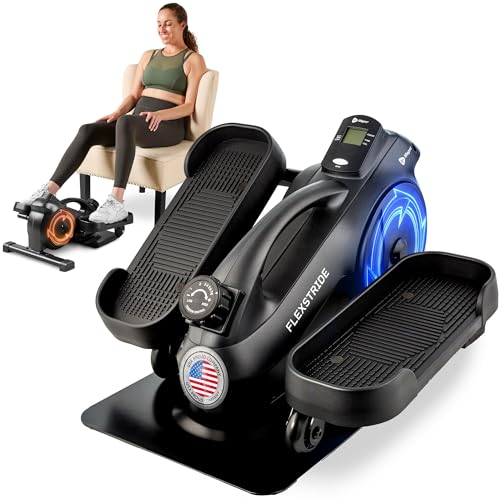
Quiet operation, perfect for home or office use.
Motorized assistance for low-impact, effortless workouts.
Compatible fitness app tracks progress and goals.
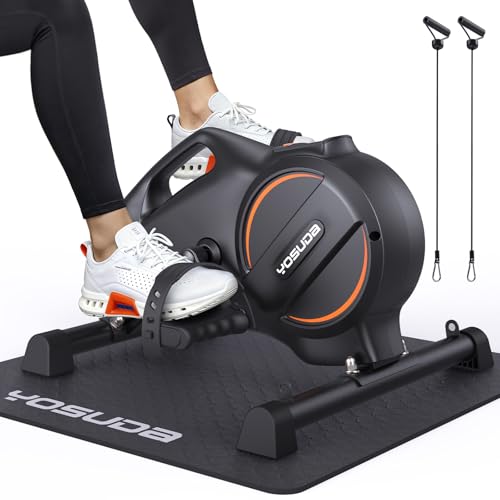
Bluetooth connectivity for easy progress tracking.
Includes resistance bands for full-body workout.
Compact design fits neatly under desks.
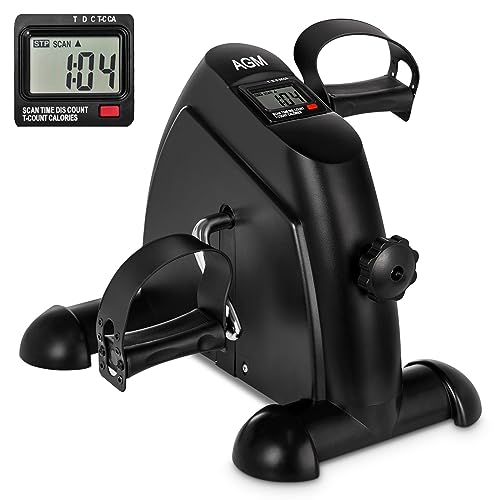
Compact design fits under most desks.
LCD screen tracks time and calories.
Suitable for both arms and legs.
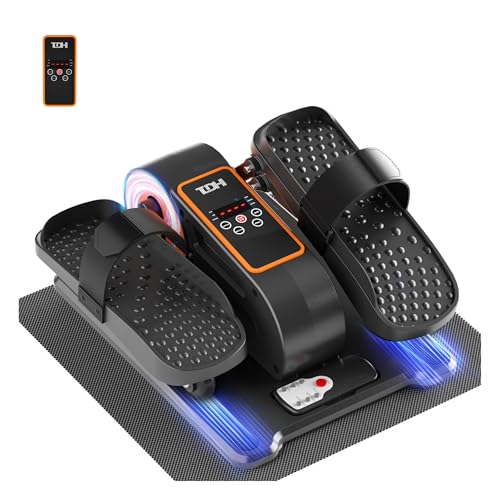
Quiet operation for a peaceful exercise experience.
Compact design fits neatly under desks.
Electric assistance offers smooth, adjustable resistance.

Quiet operation suitable for home use.
Fully assembled and ready to use.
Ideal for seniors' low-impact exercise.

300 Lb High Weight Capacity, Sturdy for All Workouts
Exclusive App & Fitness Courses, Smart Workout Experience
Magnetic Quiet Design, Low-Noise Indoor Riding

Compact and easy to store design.
Dual-purpose for arms and legs exercise.
Adjustable tension for personalized workouts.
A product works well only when it fits the person, chair, and desk. Check the full dimensions, pedal travel, knee and desk clearance, foot retention, chair stability, and whether the instructions explain a neutral seated position. A stable, non-wheeled or securely braked chair is important. Foot straps, adjustable pedal width, a tether, stabilizer bars, gripper feet, or a non-slip mat can address sliding and foot-loss risks, but their presence does not prove that every workstation is safe. Overall height alone can mislead: it does not show how far the pedals travel or whether your knees will strike the desk.
Separate manual from motorized operation before comparing products. Manual models avoid motor-forced movement, overheating, power adapters, and mains cords, although they still have cranks, pedals, pinch points, sliding risks, and wear parts. Motorized products should document controlled start and stop behavior, overheating protection, cord and adapter details, and what happens during a fault. A remote may reduce bending to floor-level controls, but it does not replace safe placement or a reachable stop control.
Headline numbers need careful reading. “Resistance levels,” speed, distance, calories, noise, and capacity are often manufacturer-stated without test conditions, accuracy limits, or independent validation. A display calorie figure may be only an estimate; one supplied manual explicitly classified its tracker as low accuracy. Conflicting dimensions, weights, motor ratings, resistance descriptions, or warranty terms are reasons to verify the exact model before buying. A category study of seated pedaling does not validate a particular product’s motor, resistance calibration, therapeutic claims, or display.
For electrical or exercise-equipment safety, look for a complete-product listing that can be confirmed in UL Solutions Product iQ, Intertek’s ETL directory, or the CSA product database, or an accredited report identifying the exact model and the relevant ASTM F1250, ISO 20957-5, or, where applicable, ISO 20957-9 method. A self-issued conformity statement, FCC authorization for Bluetooth, or a component-only certification is not the same as equipment-safety verification. Also look for a named manufacturer or importer, exact model information, support contact, warranty terms, recall history, replacement parts, maintenance instructions, and a clear corrective-action route.
Across the supplied products, recurring cautions are significant. Do not stand on seated pedals. Confirm clearance and use a stable chair; rolling or swivel chairs need reliable immobilization. Start gently and stop for pain, dizziness, faintness, unusual noise, overheating, instability, or difficulty removing your feet. Several products were marketed for therapy, circulation, joint relief, strengthening, recovery, or weight loss without product-specific clinical evidence. People with recent surgery or injury, impaired sensation, balance limitations, unstable joints, severe pain, involuntary leg movement, or clinician-directed activity restrictions should obtain individualized medical guidance. Keep moving parts, cords, batteries, and motorized pedals away from unsupervised children and pets.
The review separates realistic seated activity from fit, mechanical safety, electrical risks, long-term support, environmental claims, and evidence quality. Scores reflect the supplied product reviews; they do not turn missing certification or testing into proof of safety.
This measures whether a product supports a credible goal—light seated movement and less sitting—without implying treatment, rehabilitation, or guaranteed weight loss. Higher-scoring products stayed closer to the human evidence for seated pedaling, generally scoring in the 72–78 range. Lower scores reflected broader circulation, recovery, strengthening, pain, or weight-loss language unsupported by product-specific trials.
This measures pedal travel, height, clearance, foot retention, adjustability, and setup guidance for a neutral seated position. It matters because an under-desk product can strike the desk or create knee, hip, or back strain. Higher scores came with clearer straps, pedal adjustment, chair guidance, or setup instructions; lower scores reflected missing travel, clearance, chair, or posture information.
This measures resistance to sliding and rocking, secure pedals and cranks, sharp edges, pinch points, and foot loss. Mats, straps, tethers, stabilizers, and non-slip feet help, but do not replace a stable chair or exact testing. Higher-scoring products documented more concrete stability measures; lower-scoring products had loose-pedal warnings, movement reports, or limited guidance.
For powered models, this measures the power supply, overheating response, cord safety, controlled start and stop, and failure behavior. It matters because a motor can unexpectedly move or trap the feet. Manual products avoid powered-motion and mains risks. Higher scores reflected documented shutoffs or overheating responses; low scores reflected missing adapter, thermal, certification, or fault details.
This measures wear-part durability, maintenance, warranty coverage, service support, and replacement parts. Under-desk products repeatedly stress pedals, cranks, belts, bearings, resistance parts, and motors. Higher-scoring products offered clearer service guidance, parts information, or meaningful coverage. Lower scores reflected loose-hardware concerns, conflicting warranties, limited parts support, or no repair pathway.
This measures whether claims about calories, circulation, strengthening, rehabilitation, pain, mobility, quietness, and weight loss are precise and supported for the exact product. Higher-scoring products labeled estimates or stayed closer to light activity. Lower scores were associated with unqualified therapy, recovery, circulation, joint, or weight-loss claims that exceeded the category evidence.
This measures whether a recognized body or accredited laboratory verifies the complete exact model, rather than a component or self-issued badge. It matters especially for corded or motorized products. Scores varied, but the reviews repeatedly found no UL, ETL, CSA, ASTM, or ISO listing or exact-model report. A Bluetooth FCC authorization alone does not verify exercise-equipment safety.
This measures whether resistance, speed, distance, calories, noise, and motor figures have defined methods, conditions, and accuracy limits. It matters because displays can look precise while being estimates. Higher scores reflected somewhat clearer specifications, but no supplied product had strong independent validation. Missing test methods, conflicting ratings, and unexplained figures lowered confidence.
This measures whether buyers can identify the manufacturer or importer, exact model, support channel, warranty, recall history, and remedy process. Higher-scoring products named a maker, supplied contact details, and documented support or warranties. Lower scores had conflicting warranty information, sparse manufacturer details, or no clear replacement and corrective-action route. Traceability helps, but is not certification.
This measures expected service life, repairability, spare-part access, packaging disclosure, and end-of-life guidance. Manual products generally avoid motor and power-adapter waste, while battery displays and powered units still need responsible handling. Higher scores reflected repair-or-replace coverage or maintenance information; lower scores reflected absent parts catalogs, repair instructions, take-back programs, or recycling routes.
This measures whether claims such as recyclable, recycled, non-toxic, or eco-friendly identify the covered material and have supporting evidence. It matters because a steel-and-plastic product with a battery or motor cannot be described broadly without qualification. Higher scores generally reflected restrained or specific claims; lower scores reflected vague messaging or missing disclosure. No supplied product had strong environmental verification.
This is a compact, corded electric seated pedal trainer for use from a chair, rather than a conventional stand-on elliptical. The documented manual identifies a 60 W unit measuring about 15.6 by 14.9 by 7.4 inches and weighing about 11.1 pounds. It has automatic programs, 12 manual speed levels, forward and reverse motion, a handheld remote, and a 15-minute automatic stop. The format is suited to light movement while sitting, but desk clearance and chair stability still need to be checked in the user’s own setup. Small human studies of seated pedaling support feasibility for replacing some sedentary time at light intensity, not treatment or rapid rehabilitation. MERACH’s own product page goes further, with circulation, muscle-tension, and recovery language that was not accompanied by product-specific clinical evidence or independent performance testing.
This product fits an adult who wants low-intensity, seated leg movement during television, reading, or desk work and has enough open space beneath the desk for the full pedal path. It is especially relevant for someone who cannot or does not want to use a stand-on machine, provided they can place it on a level floor, use a stable chair, keep feet centered on the pedals, and begin at a low speed. The remote and automatic stop may be useful where bending to adjust floor-level controls is difficult.
It is not for standing exercise, vigorous cardio training, or anyone expecting the display’s calories, distance, or speed to be validated fitness measurements. People with unstable seating, limited foot sensation, uncontrolled heart or blood-pressure conditions, acute joint injury, recent surgery, severe balance problems, or a clinician-directed rehabilitation plan should not treat it as a substitute for professional guidance. It also does not suit households where children or pets can access the moving pedals and power cord without close supervision.
For health, the strongest support is for the modest use case, seated pedaling can add light movement and help replace some sedentary time. The product manual includes meaningful basic precautions, including seated-only use, a 250-pound stated limit, level-surface placement, keeping children and pets away, unplugging before cleaning, and stopping use if the cord or plug is damaged. Its timed automatic stop is also documented. Important gaps remain. No exact-product independent electrical or exercise-equipment certification was located, and no independent accuracy or durability testing was found. The manufacturer’s recovery and circulation claims should therefore be read as marketing, not clinical outcomes. No product-specific recycled-content, recyclability, packaging, take-back, or repair disclosures were found. Because it contains powered electronics, its motorized unit and remote batteries should be directed to appropriate electronics and battery recycling channels at end of life rather than ordinary trash.
This is a manual, seated under-desk pedal exerciser for light leg activity at home. The manufacturer manual lists a 20.9 by 17.5 by 13.2 inch footprint, 18.1 pound weight, eight manually selected resistance levels, foot straps, a chair tether, front and rear stabilizers, resistance bands, and an LCD for time, RPM, distance, calories, and stride count. The manual states that the monitor uses two AAA batteries and that the unit is for home use, not commercial, institutional, or therapeutic settings. Human studies of related seated-pedaling devices support feasibility for interrupting sedentary time and indicate that low work rates can be compatible with desk work. They do not validate this product's calorie display, strength claims, rehabilitation use, or a particular health outcome. The manual's 30 to 75 dB noise figure and tracker measures are manufacturer-stated, with no located independent test method or accuracy limits.
It suits an adult who wants low-impact, self-paced leg movement while seated at home, especially someone with a stable chair and enough desk clearance for a 13.2 inch high pedal path. It is also relevant for people trying to break up sedentary time rather than complete a high-intensity workout. The 18.1 pound unit and manual tension control favor a fixed home setup. Use is most appropriate when the user can install the stabilizers, secure the pedals, and tether a wheeled chair when needed.
It is not suited to anyone seeking prescribed rehabilitation, treatment for pain or circulation problems, or a reliably measured calorie-burn program. The manual specifically limits it to home use and not therapeutic settings. People with uncontrolled cardiac symptoms, chest pain, marked shortness of breath, new joint pain, or balance limitations should seek clinical guidance before exercise. It also is a poor fit for desks with inadequate knee or pedal clearance, unstable seating, users unable to check fasteners, or homes where a rolling chair cannot be securely tethered.
The health evidence is modest but relevant. Research on similar seated-pedaling devices supports feasible light activity and reduced sedentary time, including in older adults. That evidence does not establish disease treatment, rehabilitation results, or the accuracy of this product's calorie display. The manual directs users to start at low resistance, increase gradually, keep fasteners tight, and stop for concerning symptoms. No exact-product recall or public CPSC incident report was identified in the searches performed for this review. The manual identifies a battery-powered monitor and tells users to dispose of the product, batteries, and parts according to local rules. Lifepro states it will provide replacement parts or replace an unrepairable product under its lifetime warranty, which can extend usable life. No product-specific take-back program, packaging-material disclosure, recycled-content disclosure, or third-party environmental certification was located. No broad environmental marketing claims were identified.
This is a compact, manual pedal unit for seated leg pedaling on the floor or arm pedaling from a table. Independent retail reproductions identify an iron and ABS construction and a stated weight of 1.9 kg. The tension is adjusted with a knob, and the seller describes five resistance settings. It is not a motorized exerciser and does not require mains power. Its plausible role is adding light movement while sitting, rather than replacing regular aerobic or strength exercise. Human studies of seated pedaling support short-term reductions in sedentary time, but they do not validate this specific product for post-surgery rehabilitation, circulation treatment, pain relief, or measurable weight loss. The available product material does not provide dimensions, desk-clearance guidance, resistance output, or independent safety and performance test results.
This suits an adult who wants a very light, self-paced movement break while seated, has a stable chair and enough open space in front of it, and can stop if knee, hip, ankle, or back discomfort develops. Its manual format can also suit someone who wants occasional arm pedaling from a sturdy tabletop. It is most appropriate when treated as low-intensity activity that may reduce sitting time, not as prescribed rehabilitation or a substitute for a full exercise program.
It is not suited to people who need clinician-directed post-operative or neurological rehabilitation, reliable resistance targets, documented calorie measurement, or a device adapted to limited foot control. People with recent joint surgery, uncontrolled pain, severe balance limitations, neuropathy, swelling, or circulation symptoms need guidance from a qualified clinician before using a pedal exerciser. It is also unsuitable where chair stability cannot be maintained, desk clearance is tight, children could access moving parts, or a household needs verified safety certification and replacement-part support.
The health evidence supports a narrow use case. Studies of seated pedaling devices found that light pedaling can reduce sedentary time, and a controlled office study found that 17 watts was more comfortable than 25 watts for inactive adults. Those findings support gentle, self-limited use, but not the product-specific claims about recovery after surgery, circulation improvement, or restored mobility. The product is manual, so it avoids a mains adapter, motor, and associated electrical failure route. No exact-model third-party safety certification, laboratory performance report, recall, or public incident record was located. Retail material identifies iron and ABS plastic, but no recycled-content, packaging, parts, take-back, or recycling guidance was found. The lack of broad environmental marketing claims avoids an unsupported green claim, but it also leaves end-of-life handling and repairability undocumented.
This is a compact, manually pedaled under-desk elliptical for seated home use. The manufacturer manual describes eight resistance levels, forward or reverse pedaling, a battery-powered display for time, strides, distance, RPM, and estimated calories, plus a chair tether for slippery floors. The manual lists a 22.1 by 18.1 by 13 inch footprint and 28.1 pound unit weight. Those are manufacturer-stated specifications. Light seated pedaling can realistically replace some sedentary time. Human studies found short-term reductions in sedentary behavior and preserved desk-task performance at light work rates, but they do not establish disease treatment, rehabilitation, or large calorie-burning outcomes for this product. The listing family also promotes red and near-infrared light claims for circulation, pain, swelling, healing, and cellular repair. Those claims were not supported by product-specific independent testing located in this review.
It suits an adult home user with a stable chair, sufficient desk clearance, and a goal of adding gentle leg movement during otherwise sedentary periods. It is most appropriate for someone willing to begin at low resistance, set the unit far enough away to keep the knees slightly bent at full reach, and check fasteners before sessions. It can also fit a user who values a compact exercise device with a manufacturer-stated tether and a stated lifetime parts and repair policy.
It is not appropriate for children, unsupervised people with reduced physical, sensory, or mental capacity, or households where pets or loose clothing can reach moving parts. People with recent surgery, blood clots, heart or vascular conditions, serious back, hip, knee, or balance problems, or symptoms such as pain or dizziness should seek clinician guidance before use. It is also a poor fit for anyone needing verified rehabilitation equipment, certified electrical safety, accurate calorie tracking, or proven red-light treatment outcomes.
The strongest health case is modest. Independent human research supports light seated pedaling as a way to replace some sedentary time, and one controlled study found comparable desk-task performance at light pedaling work rates. That evidence supports movement breaks, not treatment or recovery promises. The manual also includes useful cautions about loose hardware, pinch points, children, medical conditions, and stopping with pain or dizziness. No independently confirmed whole-product UL, ETL, CSA, ASTM, or ISO certification was located. No FlexStride recall was identified in the searched public CPSC recall materials. Lifepro publishes support contact details and promises replacement parts and repair guidance under its lifetime warranty, which may extend usable life. However, no product-specific packaging disclosure, recycled-content claim, take-back program, or electronics recycling program was located. The display uses an AAA battery, which should be handled through appropriate local battery recycling options where available.
This is a compact, manually pedaled under-desk bike for seated leg use, with optional arm use and resistance bands. Independent retailer information describes a 17.9-pound steel-frame unit measuring 19.69 by 17.71 by 12.99 inches, with magnetic resistance and a one-year limited warranty. It uses no mains power or drive motor. Its display and Bluetooth functions are for tracking, not powered motion. The defining limitation is evidence consistency. The current retailer listing states 16 resistance levels, app connectivity, a mat, gripper feet, and under-10 dB noise, but these are manufacturer-supplied claims without an independent test report. A manual published for the closely named YSD-MS-01 model instead describes eight resistance settings and an ASTM-tested household unit. That mismatch makes the advertised resistance count, display values, and noise figure unsuitable for precise performance decisions.
It suits an adult with a stable, non-wheeled chair, adequate knee-to-desk clearance, and a goal of adding low-intensity movement during otherwise seated time. It is most appropriate for people who can independently position the unit on a flat floor, fasten and check the pedals, and treat the display as a rough activity prompt rather than a fitness measurement. The compact size and manual operation also fit users who want simple seated movement without a power outlet or motorized pedal action. People near the stated 220-pound user limit should follow the manufacturer limit rather than assume extra margin.
It is not appropriate as a substitute for clinician-directed rehabilitation, treatment of pain or circulation problems, or a weight-loss program. People with recent surgery, unstable cardiac symptoms, dizziness, severe balance limitations, or conditions that affect foot sensation or control should seek individualized clinical guidance before using a strapped pedal device. It also does not suit low desks, chairs that roll or tip, users unable to inspect and tighten hardware, or households where children or pets could reach moving cranks and pedals. Anyone needing verified calorie, distance, resistance, or noise measurements needs more documentation than this product provides.
Light seated pedaling has credible but limited human evidence. In a one-week home study of older adults, scheduled light pedaling reduced sedentary time on days used. A controlled office study found that 17 and 25 watt desk pedaling did not reduce tested work performance, with better reported comfort at 17 watts. These findings support modest movement and sedentary-time reduction, not rehabilitation, disease treatment, pain relief, or assured calorie and weight-loss outcomes. The product is passive, with battery-powered display electronics rather than a motor or mains adapter. A published manual provides basic mechanical safety instructions and says the unit passed an ASTM household test, but no certificate, laboratory report, or listing in a recognized third-party certification register was located for this product. No specific recycled-content, recyclable, eco-friendly, packaging, take-back, or battery-recycling claim was found. The manual identifies belts, bearings, cranks, and other components, yet public spare-parts access and end-of-life guidance remain unclear.
This is a compact, manually pedaled arm and leg exerciser intended for seated home or desk use. The published product documentation gives dimensions of about 40.5 by 35 by 31 cm, a 100 kg user limit, adjustable pedal width and a single AAA battery for the LCD. The battery powers the display, not the pedaling mechanism. Its practical safety features are manufacturer-stated rather than independently certified. The manual lists adjustable foot straps, an anti-slip pad, a chair or desk securing strap, a seated-only instruction, and a 13-inch knee-to-desk clearance guideline. It labels calorie consumption as approximate. The same manual says the product is for private use and is not medical or therapeutic equipment. Human studies support light seated pedaling as a way to replace some sedentary time, but they do not establish disease treatment, rehabilitation outcomes, or reliable weight loss from this particular unit.
It suits an adult who wants a low-intensity way to add movement while seated at a desk, on a stable chair, or during home sitting time. It is most appropriate for someone able to position the unit on a non-slip surface, secure it to the chair or desk when needed, and maintain the manual's 13-inch knee clearance. It can also suit users seeking simple leg or arm motion rather than a quantified training program, provided they regard the LCD calorie figure as an estimate and use clinician advice where needed.
It is not for standing exercise, vigorous cycling, or anyone expecting medically supervised rehabilitation, pain treatment, circulation treatment, or dependable weight-loss results. People with recent surgery, unstable joints, severe arthritis, significant balance limitations, impaired sensation, or conditions affecting safe foot placement should obtain individualized clinical advice first. It is also unsuitable for children because the manual says it is not designed for them and the removable AAA battery presents an ingestion hazard. Desks without adequate knee clearance and unstable rolling chairs are poor setups.
Light seated pedaling has human evidence as a feasible way to replace some sedentary time. A seven-day study in older adults found reductions in sedentary behavior on pedaling days, while a workplace study found light pedaling at 17 or 25 watts did not reduce measured task performance. These findings support modest activity use, not treatment or guaranteed body-composition results. The product manual appropriately says it is not for medical or therapeutic use, and its calorie display is only approximate. The stated construction includes metal, ABS plastic, and other plastic, with a small AAA-powered display. This avoids a mains-powered motor and its associated cord and overheating issues, but creates a small battery waste stream. The manual instructs users to dispose of batteries according to local rules, yet no US product take-back program, recycled-content claim, packaging disclosure, or independently verified environmental certification was located. No US recall or public safety warning specific to this product was located in the searches performed.
This is a plug-in under-desk elliptical intended for seated leg movement while working, reading, or watching television. The live product listing describes 12 manual speeds, seven automatic programs, reverse pedaling, a remote, foot straps, and an LCD that displays speed, distance, time, and calories. It lists a 15 by 7 by 8 inch plastic body and a claimed 13 pound weight. The realistic use is light seated activity to interrupt prolonged sitting, not a substitute for walking, structured aerobic exercise, or clinical rehabilitation. Human studies of seated pedaling support short-term feasibility and reduced sedentary time, including among older adults, but they did not test this particular product. The seller's under-15 dB noise figure, display accuracy, resistance performance, electrical protections, and product-level safety certification were not backed by an accessible independent test report or certification listing.
It suits an adult with an ordinary stable chair and sufficient desk clearance who wants gentle, low-intensity leg movement during otherwise seated time. The compact manufacturer-stated dimensions may fit a small home office or shared room, and the remote may reduce repeated bending to alter a setting. It is most appropriate when used conservatively, with the chair prevented from rolling and the user able to stop or reposition the product easily. The intended benefit is breaking up sitting, not obtaining a demanding cardio workout.
It is not appropriate as a self-directed rehabilitation device for someone recovering from surgery, stroke, a serious joint injury, or a neurologic condition without advice from the treating clinician. People with unstable balance, impaired foot sensation, severe knee, hip, ankle, or back symptoms, or difficulty withdrawing their feet quickly should avoid motor-driven use unless cleared and supervised. It also does not suit users needing verified calorie, distance, resistance, noise, or electrical-safety performance, because those measures were not independently documented for this product.
Research on seated pedaling supports a narrow, realistic health role. In a one-week study of older adults, light seated pedaling reduced sedentary time on pedaling days. A separate controlled study found that light desk pedaling at 17 or 25 watts did not worsen several office-task measures, with better comfort reported at 17 watts. These findings do not establish treatment, rehabilitation, pain-relief, flexibility, circulation, or muscle-strengthening outcomes for this product. The listing makes no environmental benefit claims and identifies the body material only as plastic. No packaging materials disclosure, take-back program, repair instructions, spare-parts catalog, or end-of-life guidance was found. Because this is a powered electronic product, end-of-life handling should use an appropriate electronics recycler rather than curbside recycling. No product-specific recall or public federal incident report was located in the searches performed, but that does not establish long-term safety or durability.
This is a plug-in, motorized seated elliptical intended to sit under a desk or in front of a chair. It has forward and reverse pedal motion, three automatic programs, 12 stated manual speed levels, a remote, and an LCD that reports time, count, speed, distance, and estimated calories. The product is for seated use only, not standing exercise. The brand describes an alloy-steel orange unit with auto modes and 12 manual speeds. A manual mirror for the listed part number gives safety instructions to use a flat surface, keep children and pets away, inspect moving parts, and unplug before cleaning. However, the product records conflict on key physical specifications. One source lists 16.3 by 12.4 by 9.6 inches and 13.7 pounds, while the supplied retail record lists 14.76 by 13.78 by 6.3 inches and 8.1 pounds. No independent certification or performance test report was located.
It suits an adult who spends long periods seated and wants gentle, low-intensity leg movement at a desk, sofa, or accessible chair. It is most appropriate for someone able to position a stable chair and verify clearance before use, especially if they can begin at a low setting and stop if discomfort occurs. The remote may be useful for people who find reaching the floor difficult. The realistic use is breaking up sitting time, not replacing walking, strength training, or clinical rehabilitation.
It is not suited to anyone who needs a medically prescribed rehabilitation device, a verified therapeutic circulation intervention, or accurate calorie and distance tracking. People with unstable balance, reduced foot control, severe joint pain, recent surgery, new swelling, numbness, or a condition affected by forced leg movement should seek clinician guidance before using a powered pedal device. It also is a poor fit where desk clearance is tight, where children or pets can access moving pedals and cords, or where the chair rolls or shifts.
Human evidence supports seated pedaling as light activity that can reduce sedentary time. In one small one-week home study of older adults, daily seated elliptical use reduced sedentary time on days used. A larger laboratory study found that light desk pedaling at 17 or 25 watts did not worsen tested work performance, with better comfort reported at the lower work rate. Those studies support modest movement breaks, not disease treatment, rehabilitation outcomes, or assured weight loss. The brand identifies alloy steel, but its product information conflicts on dimensions and weight. The available instructions include basic cord, placement, and moving-part precautions, and state a two-year warranty. No exact-product listing in the major U.S. third-party safety certification directories or independent test report was located. No environmental claims, recycled-content disclosure, packaging disclosure, spare-parts catalog, take-back program, or electronics-recycling instructions were located. The absence of broad green claims avoids an unsubstantiated eco-friendly message, but it does not establish low lifecycle waste.
This is a conventional upright indoor cycling bike, not a compact under-desk pedal exerciser. It has a saddle, handlebars, flywheel, belt drive, manually adjusted resistance, cage-style pedals, a tablet holder, and a battery-powered ride display. It is intended for seated home cycling rather than pedaling while working at a desk. Independent product records identify a 300-pound stated rider limit, friction resistance, belt drive, and battery-powered console. Product materials describe a four-way seat adjustment and two-way handlebar adjustment, plus app connectivity and a display for time, speed, distance, calories, and odometer readings. The most important limitation is inconsistent marketing language. The product has been described as both brake-pad or friction resistance and magnetic resistance, so buyers cannot rely on the resistance-system description, noise claims, or stated 100 resistance levels as independently established performance figures.
This product fits an adult who wants a manually operated upright home bike for low to moderate seated cycling, has dedicated floor space, and is prepared to adjust the saddle and handlebars before use. It is most appropriate for someone who values a battery-powered basic display and tablet placement, but does not require independently validated tracker accuracy or a certified noise rating. The stated 300-pound capacity should be treated as a manufacturer specification, not as a substitute for choosing a bike that fits the rider’s reach and inseam.
It is not for desk pedaling, small workstations, or users seeking a portable unit that slides under furniture. It is also not the appropriate choice for people who need a rehabilitation device, medically supervised exercise equipment, or a product with independently confirmed safety certification and metric accuracy. Riders with balance limitations, significant knee, hip, back, or cardiovascular conditions should seek individualized clinical guidance before beginning cycling. Households with young children or pets need to keep them away from the exposed pedals, cranks, flywheel area, and moving belt components during use.
Seated cycling can be a realistic way to add activity and replace some sedentary time, but the relevant human studies evaluated light seated pedaling devices at defined workloads, not this particular upright bike. Those studies support modest sedentary-time reduction and suggest lower work rates may be more comfortable for inactive adults. They do not establish that this product treats pain, restores mobility, provides rehabilitation, or produces a specific weight-loss result. The product has a battery-powered console rather than a drive motor, which reduces electrical complexity. The available materials identify metal construction, a belt, pedals, bearings, and a basic service contact, but do not provide a product-specific recycling route, take-back program, packaging disclosure, or accessible spare-parts catalog. A search of CPSC recall materials did not identify an exact-product recall notice. Claimed SGS and ASTM language could not be confirmed through an issuing-body product register for this complete product.
This product is a compact, foldable pedal exerciser for seated leg pedaling on the floor or arm pedaling on a tabletop. Independent retailer listings identify it as the manual MC06 model, at about 18 by 15 by 14 inches and roughly 5.5 pounds. It uses a resistance knob, has foot straps, and is intended for low-intensity movement rather than a full cycling workout. The manufacturer-stated design uses reinforced steel tubing and ABS plastic, folds for storage, and arrives assembled. The available product information does not show a motor, plug, display, stated resistance range, or stated user weight limit. Human evidence supports seated pedaling as a practical way to replace some sedentary time, but it does not establish that this particular unit treats joint disease, causes weight loss, or provides post-surgical rehabilitation results.
This product suits an adult seeking a very light, self-paced seated movement option at home or at a desk, especially where space is limited and the unit must be moved or stored between uses. It is most appropriate for users who can sit in a stable chair, set the pedals far enough from the desk to avoid knee contact, and treat it as light activity. It may also suit people who want occasional tabletop arm pedaling, provided the surface is stable.
It is not suited to anyone who needs prescribed rehabilitation after surgery, has unstable balance, significant foot numbness, severe joint pain, or cannot independently position and secure their feet. People using rolling office chairs should not pedal without first preventing chair movement. It is also a poor fit for users seeking measurable training loads, accurate calorie or distance tracking, high-resistance cardio exercise, or documented compliance with stationary-exercise equipment safety standards.
The realistic health use is light seated movement and sedentary-time interruption. A small seven-day human study of seated pedaling found less sedentary time on days participants pedaled, but long-term health outcomes were not established. The product listing language goes further by referring to post-surgery knee and shoulder recovery, without product-specific clinical evidence or clear qualification. That is a meaningful evidence gap for a health-related claim. This is a manual product, so it has no motor, mains adapter, or battery to become electronic waste. Available retailer information describes iron or reinforced steel construction with ABS plastic, but no parts catalog, take-back option, repair instructions, packaging disclosure, or recycling guidance was located. No environmental marketing claims were identified, and no product-specific recall or public safety warning was found in the checked sources. No complete-product UL, ETL, CSA, ASTM, or ISO certification could be verified.



