Best Overall
10% off

Electric Under Desk Elliptical Machine
Quiet operation perfect for home or office.
Remote control offers convenient speed adjustments.
Compact design fits easily under desks.
 Brianna York
Quiet operation perfect for home or office.
Remote control offers convenient speed adjustments.
Compact design fits easily under desks.
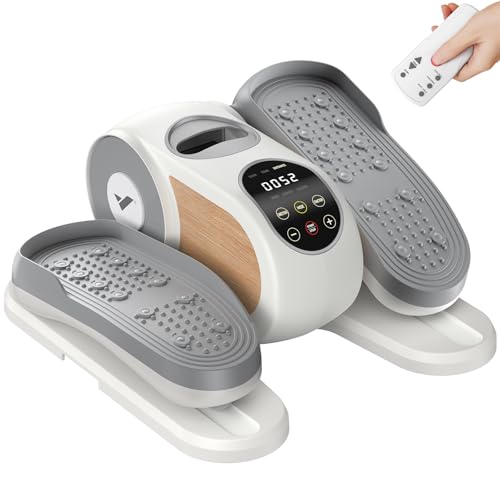
Compact design fits easily under desks.
Quiet operation for uninterrupted work.
Adjustable resistance for personalized workouts.
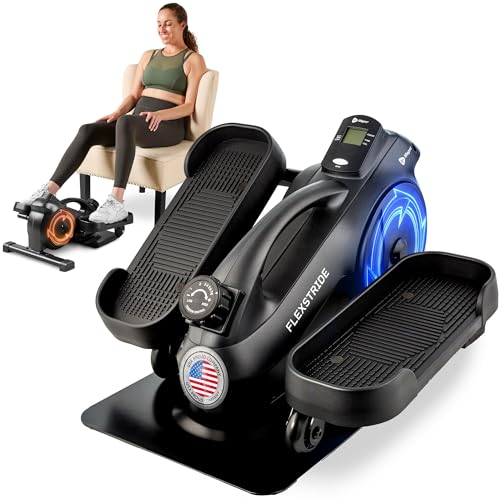
Quiet operation, perfect for home or office use.
Motorized assistance for low-impact, effortless workouts.
Compatible fitness app tracks progress and goals.

Fully assembled for immediate use.
Quiet operation for uninterrupted activities.
Adjustable speeds for personalized workouts.

Combines cycling and resistance training effectively.
Compact design fits easily under desks.
Includes fitness app for guided workouts.

Quiet operation suitable for home use.
Fully assembled and ready to use.
Ideal for seniors' low-impact exercise.

Lightweight design enables easy portability.
Suitable for both arms and legs.
Compact size fits under desks.

Quiet operation ensures minimal workplace disturbance.
Compact design fits easily under desks.
Low-impact exercise suitable for all fitness levels.

Quiet operation for peaceful exercise sessions.
Remote control for easy speed adjustments.
Compact design ideal for small spaces.

Easy remote control for effortless adjustments.
Compact design fits under any desk.
Offers 12 customizable speed settings.
Whether one works for you depends first on fit and setup. Check the product’s height, pedal path, stride, chair position, and available knee and desk clearance. A seated user should be able to sit upright or otherwise stable, keep both feet positioned safely, and move without the knees, hips, or ankles being forced into an uncomfortable range. Foot straps, a non-slip mat, wheel stoppers for rolling chairs, and clear instructions to use the machine seated can improve stability, but they do not remove the need to inspect pedals, screws, cords, and attachment points.
Decide between manual and motorized models. Manual machines avoid a motor, wall adapter, and some electrical and thermal hazards, but require the user to pedal actively. Powered models may offer remotes, automatic programs, directional changes, timed shutoffs, and multiple speed settings; they also introduce questions about the complete motor, adapter, cord, controls, overheating protection, and unexpected starts or stops. For a powered product, look for a model-specific listing in UL Product iQ, Intertek’s ETL directory, or the CSA Group database. A CE or UKCA mark in the supplied materials is not a U.S. electrical-safety certification.
Headline numbers need careful interpretation. “Quiet” claims such as below 15 dB are not meaningful without a stated test method, conditions, and a model-specific report. Calorie, distance, speed, step, RPM, and repetition displays are estimates unless their calculation method, test conditions, accuracy limits, and independent validation are disclosed. Stated resistance levels, stride length, user capacity, noise, and durability are seller or manufacturer claims unless an accredited laboratory has tested the exact model. A credible performance report should identify an ISO/IEC 17025-accredited laboratory, the model, date, method, conditions, and results; relevant checks may include ISO 20957-9, ASTM F2276, and, for noise, ISO 3744 or ISO 11201.
Also compare the support record, not just the feature list. A higher-quality disclosure identifies the responsible maker or importer, model and serial-number route, warranty contact, replacement parts, repair guidance, and corrective-action history. Repeated gaps in the supplied products include no public U.S. electrical listing, no independent mechanical or noise testing, uncertain display accuracy, incomplete desk-clearance guidance, and limited replacement-parts or recycling information.
Across the supplied reviews, these products are not for standing use, unsupervised children or pets, unstable chairs or floors, damaged cords, or workspaces without safe pedal and knee clearance. Stop for chest pain, unusual breathlessness, dizziness, faintness, nausea, irregular heartbeat, joint pain, or abnormal noise. Seek clinician-specific advice before use after surgery or with significant joint, heart, blood-pressure, vascular, neurological, balance, circulation, or mobility concerns; do not treat a marketing claim as a rehabilitation protocol. One product’s documentation specifically warns against use with pacemakers, and several reviews noted that senior- or rehabilitation-oriented claims lacked adequate clinical warnings. Follow the lower documented weight limit when product information conflicts.
These topics distinguish a useful seated-movement aid from a product whose safety, environmental burden, or headline performance is mostly asserted. Scores are based on the supplied reviews and topic-specific evidence, not on price, ratings, or sales position.
This measures whether the product can realistically add light activity or reduce sedentary time without promising weight loss, circulation treatment, or disease benefits. For this category, a high score reflects the human evidence for comparable compact ellipticals plus realistic seated use; the supplied products scored about 72–79. Lower scores reflected unsupported therapeutic claims or confusion between light movement and a full exercise program.
This covers stride, pedal path, foot support, resistance range, chair posture, and desk clearance. A high score requires enough guidance for a stable, comfortable seated motion across different users. Scores ranged roughly from 68 to 78: stronger products provided seated-only instructions, gradual resistance guidance, straps, mats, or clearance advice, while lower-scoring products left knee, hip, and chair compatibility uncertain.
This measures sliding, tipping, loose pedals, fasteners, unintended movement, and pinch or entrapment hazards. It matters because a compact machine sits near feet, cords, chairs, children, and pets. Scores in the supplied set were about 64–77. Higher scores had concrete placement, strap, wheel-stopper, inspection, or stop-use instructions; lower scores had acknowledged movement or loose-pedal concerns without independent mechanical testing.
This applies mainly to powered models and covers shock, overheating, fire, damaged cords, and unsafe starts or stops. A high score requires credible evaluation of the complete product and supplied adapter, not merely a regional compliance mark. The supplied powered products generally scored 68–75, while the manual, battery-display stepper scored 88 because it avoids a mains motor and adapter. No powered model had a publicly located UL, ETL, or CSA listing.
This measures whether senior, circulation, recovery, and rehabilitation marketing is paired with usable limitations, stop-use advice, and clinician referral rather than treatment implications. Scores ranged about 54–78. Higher-scoring products gave clearer medical warnings and symptom guidance; lower-scoring products made rehabilitation or circulation claims without product-specific clinical evidence or adequate contraindications. No product should be treated as prescribed therapy.
This measures whether claims about calories, quietness, speed, resistance, toning, circulation, productivity, and rehabilitation are specific and supported for the exact product. Scores ranged about 52–74. Higher-scoring products kept the category-level light-activity claim within evidence; lower-scoring listings expanded into circulation, disease prevention, recovery, or rehabilitation without model-specific support.
This requires public testing of the exact model by an accredited independent laboratory for advertised resistance, speed, noise, display accuracy, durability, or use limits. Scores clustered around 68–70 because no supplied product had a publicly checkable model-specific report. A high-scoring product would identify an ISO/IEC 17025 laboratory, method, date, conditions, and results rather than rely on seller assertions.
This measures whether calorie, distance, speed, resistance, step, RPM, and decibel figures disclose their method, conditions, and limitations. Scores ranged about 57–72. Higher scores identified tracked metrics more clearly, but the supplied reviews still commonly found no validation or error range. Treat these displays as workout cues unless exact-model testing supports greater precision.
This measures whether the responsible seller or importer, model identity, serial or batch route, warranty contact, and corrective-action history are clear. Scores ranged about 63–79. Higher-scoring products documented manufacturer, importer, serial field, support, and warranty details; lower-scoring products had conflicting model information or limited seller traceability. A recall search finding is not proof that a product is defect-free.
This measures expected service life, wear resistance, replacement pedals, belts, bearings, adapters, remotes, repair instructions, warranty, and support. It matters because an early failure creates replacement waste. Scores ranged about 52–76. Higher-scoring products documented warranty, support, serial information, or replacement-parts routes; lower-scoring products had short or conflicting warranty information and no public parts catalog or repair procedure.
This measures materials and packaging transparency, unnecessary electronics, mixed-material burden, and recycling or take-back instructions for the machine, adapter, and batteries. Scores were approximately 68–75. The manually pedaled Cubii disclosed a broader material mix and button-cell disposal guidance, while most others lacked a take-back route, detailed material breakdown, or U.S.-specific recycling instructions. No unsupported recycled-content or environmental certification claim should be inferred.
This product is a compact, corded electric under-desk elliptical for seated leg movement at a desk, sofa, or chair. The manufacturer describes a 60 W motor, 12 manual speed settings, 12 automatic programs, forward and reverse pedal motion, a display, and a remote. Its published safety information sets a 250-pound user limit, says not to stand on it, and suggests 15-minute sessions with breaks. The realistic health role is light activity that can interrupt sedentary time, not a substitute for walking, strength training, or medical rehabilitation. Human studies of comparable compact seated ellipticals, rather than this exact product, found increased energy expenditure versus seated rest, including among older adults. The product's calorie, distance, and speed readings are best treated as activity prompts because no model-specific validation method or accuracy results were located.
This product fits an adult who must remain seated for work, television, or reading and wants a compact way to add gentle leg movement in short sessions. It is most aligned with people under the stated 250-pound limit who have enough clearance beneath their desk and can position a chair securely on a level floor. It may also suit an older adult who values the remote, provided they can follow the seated-only instruction and have clinician clearance when they have relevant health conditions.
It is not appropriate for anyone intending to stand, perform vigorous cardio, train upper-body fitness, or rely on precise calorie and distance tracking. People with acute injury, unexplained leg swelling or pain, recent cardiovascular events, uncontrolled blood pressure, pregnancy concerns, major balance limitations, or a clinician-directed rehabilitation plan should not treat it as therapy. It also does not suit households where children or pets could approach its moving pedals during use, or buyers requiring independently verified electrical safety and performance data.
Comparable compact seated ellipticals can meaningfully increase energy expenditure above quiet sitting, but the evidence supports light activity and reduced sedentary time rather than disease treatment or guaranteed rehabilitation. MERACH's published guidance usefully says to remain seated, avoid use during pregnancy, suspend use with high blood pressure or heart-attack concerns, and stop lengthy continuous sessions. Those warnings are important given the product's senior and rehabilitation-oriented marketing. The manual for the European version identifies a Chinese manufacturer and importer, and describes CE and UKCA marking. Those marks do not establish a U.S. UL, ETL, or CSA listing for the motorized product or its adapter. The manual also gives packaging, device, and battery disposal guidance for its market, but no U.S.-specific recycling or take-back program was located. The product combines metal, plastics, electronics, a power cord, and remote batteries, so repair support and proper local e-waste handling matter at end of life.
This is a plug-in, motorized under-desk elliptical for seated leg movement, controlled from the unit or a remote. The instruction manual identifies 12 motor-speed settings, forward or reverse motion, 15-minute programmed modes, pedal straps, and a 15-minute automatic shutoff. It also specifies 100 to 240 V input and 50 W rated power. These are manufacturer-stated operating details, not independently tested performance results. Human studies of compact seated ellipticals, not this exact product, show that voluntary pedaling can raise energy expenditure versus sitting. That supports modest activity and sedentary-time reduction, not a treatment, rehabilitation, or weight-loss promise. The manual calls for seated-only use, a level surface, and stopping for symptoms such as chest pain, dizziness, or shortness of breath. Its stated 7 kg weight and 455 by 392 by 245 mm dimensions conflict with the catalog record, so buyers should confirm the delivered product label and clearance before use.
This product fits an adult who wants low-level leg motion while seated at a desk, reading, or watching television, has enough clearance in front of a stable chair, and can place both feet securely on the pedals. It is most appropriate for someone who understands that its likely role is adding light movement rather than replacing walking, strength training, or prescribed therapy. The remote and motorized preset motion can reduce the need to bend to the floor for adjustments. People managing stable health conditions should follow the manual's clinician-consultation guidance first.
It is not suited to standing exercise, vigorous cardio training, or anyone expecting verified resistance training, precise calorie tracking, or a rehabilitation device. The manual says not to use it while standing, warns of moving parts, and advises against use for people with certain conditions unless appropriately cleared. Pregnant users, people with uncontrolled blood pressure, a recent heart event, chest pain, dizziness, irregular heartbeat, or medical electronic devices should not treat it as routine exercise without clinician guidance. It also needs a dry indoor setting, clear vents, and supervision around children.
The strongest health evidence applies to the product category, not this exact machine. Controlled human studies found that compact seated ellipticals can increase energy expenditure compared with sitting, including in older adults. That supports a limited claim of added light movement. The manual is comparatively clear that the product is not for treatment, is seated-only, and should be stopped if concerning symptoms occur. It also notes motor-overheating protection, cord precautions, and a 15-minute automatic stop. The examined manual identifies the maker and importer, serial-number location, support route, and 12-month warranty. It shows CE and UKCA marks and gives European disposal guidance for electronics, batteries, and packaging. Those marks do not establish US electrical safety certification, and no publicly checkable US UL, ETL, or CSA listing or model-specific independent test report was located. No product-specific CPSC recall was identified in the records checked. Material and US end-of-life disclosures remain limited.
This is a manual, seated under-desk elliptical for moving the legs while working, reading, or watching television. The manufacturer lists eight resistance levels, forward and reverse pedaling, textured pedals, and a 22.7 by 18.5 by 12.9 inch footprint. Its current product page lists a 29 pound weight, while the available product manual lists 26.5 pounds. The available manual supports a battery-powered display rather than a powered drive system. It specifies one AAA battery for the monitor and describes a tether strap for securing the machine to a chair on slippery floors. Human studies of compact seated ellipticals support a modest increase in energy expenditure and a way to reduce inactive sitting, but they do not establish the product as a treatment, rehabilitation device, or reliable route to major calorie burn.
It fits an adult who wants a compact way to interrupt long seated periods at a home desk, couch, or stable chair, and who has enough clearance for a 12.9 inch high pedal path. It is most appropriate for someone able to pedal independently, start at low resistance, and treat the display as a basic activity counter rather than a personal health measurement. A buyer should also be comfortable checking the delivered product, manual, and warranty terms because the available specifications conflict on power source, weight, and coverage period.
It is not suited to anyone seeking a motor-assisted exerciser, Bluetooth training data, red-light treatment, or a clinically validated rehabilitation device. People with new or worsening joint pain, spinal injuries, osteoporosis, fractures, significant cardiovascular conditions, or balance limitations should follow the manual's clinician-consultation warning before use. It is also unsuitable where there is insufficient desk clearance, a rolling chair cannot be stabilized, or children and pets can access the moving pedals. Do not stand or sit on the machine.
The strongest health case is modest and practical. Research on compact seated ellipticals supports extra movement and energy use during sedentary tasks, while national activity guidance emphasizes moving more and sitting less. That supports light activity, not the manufacturer’s broader implications about circulation, mobility, muscle tone, calorie burn, or rehabilitation. The manual includes start-slow advice, posture guidance, adult-only use, and clinician consultation for people over 35 or with relevant health or orthopedic conditions. The manual identifies a Chinese-made machine with a battery-powered monitor, but does not provide a full material breakdown, packaging disclosure, take-back scheme, or model-specific recycling instructions beyond following local regulations. It does advise removing the AAA battery before long storage. No matching CPSC recall was identified in the searched recall sources, but no public independent safety certification or model-specific mechanical test report was located. Electronics and batteries should be handled through appropriate local recycling channels.
This is a corded, motor-driven under-desk elliptical for seated use, not a stand-on trainer. The manual identifies a 13.9-pound unit measuring 17.5 by 15.4 by 9.7 inches, with foot straps, a remote, 12 programmed modes, and 12 manual motor-speed settings from 42 to 95 revolutions per minute. It is designed around short, low-intensity seated sessions, with a stated 15-minute automatic shutoff. Research on other compact ellipticals, including a study in older adults, found that self-paced seated pedaling increased energy expenditure versus sitting. That supports modest movement and less sedentary time, not disease treatment, rehabilitation, or precise calorie outcomes for this motorized product. The manual includes useful seated-only, stop-use, cord, water, and medical-device warnings. However, no public model-specific independent test report, US electrical listing, or validation for the display and noise claims was located.
It suits an adult who spends long periods seated at a desk, sofa, or table and wants a compact way to add gentle leg movement in short sessions. It is most appropriate for someone who can sit stably in a chair, has enough open space for the moving feet and knees, can keep the unit on a level floor, and understands that the motorized motion is light activity rather than a substitute for walking, strength work, or a clinically supervised exercise plan. The remote can reduce the need to reach down for routine controls.
It is not appropriate for standing exercise, vigorous cardio training, or anyone relying on it to treat circulation problems, recover from surgery, or rehabilitate an injury. People who are pregnant, have uncontrolled high blood pressure, recent heart symptoms, dizziness, chest pain, or take medicines affecting heart rate or blood pressure should follow the manual's clinician-referral advice before use. The manual also says not to use it with pacemakers, ECG equipment, or other medical electronic devices. It is unsuitable where a chair or desk leaves too little knee or pedal clearance.
The product's strongest health safeguard is its manual, which clearly says to use it only while seated, on a stable level surface, and to stop for chest pain, irregular heartbeat, shortness of breath, dizziness, or discomfort. It also advises against use with certain medical electronic devices and describes a 15-minute shutoff plus a motor-overheating protection response. Those are manufacturer statements, not independent safety certification. The manual shows CE and UKCA markings and gives disposal advice for packaging, electronics, and remote batteries. Those markings are European and UK conformity declarations, not a substitute for a verified US electrical listing. No public US NRTL certification, independent laboratory report, manufacturer take-back program, detailed materials disclosure, or product-specific recycling route was located. The one-year warranty and serial-number field aid service traceability, but an official parts catalog or repair guide for this product was not found.
This is a compact, manually pedaled under-desk cycle for seated leg exercise, with optional hand pedals and resistance bands. Its documented size is 20.9 by 17.5 by 13.2 inches and documented weight is 18.1 pounds. The manual describes eight manually adjusted resistance levels, front and rear stabilizers, a chair tether for slippery floors, and a 110-pound limit per pedal. The monitor and Bluetooth feature use two AAA batteries according to the manual, rather than an external power adapter. The manual also identifies a Bluetooth radio authorization for this product family. Evidence for the general format is meaningful but modest. Human studies of compact portable ellipticals found higher energy expenditure than seated rest, including among older adults, but they did not test this specific product or establish treatment benefits. Its health role is light activity and less uninterrupted sitting, not a substitute for prescribed rehabilitation or regular moderate-intensity exercise.
It suits an adult who spends long periods seated at a desk, reading, or watching television and wants a compact way to add gentle leg movement. It is particularly relevant for people who can sit securely in a stable chair, have adequate knee-to-desk clearance, and are comfortable checking pedal fasteners and using a tether if flooring is slippery. The documented 18.1-pound machine is also more suitable for a fixed home or office spot than for frequent carrying. Users should begin at the lowest resistance and increase time gradually.
It is not suited to anyone seeking a medically supervised rehabilitation device, a treatment for circulation problems, chronic pain, hypertension, or bone loss. People with recent surgery, unstable cardiac symptoms, significant balance limitations, severe joint pain, or medication that affects heart rate or blood pressure should first follow advice from their clinician. It is also unsuitable for standing exercise, commercial or institutional use, children, unsupervised adults with diminished capacity, and households unable to keep pets or children away from moving pedals and small batteries.
The clearest health benefit is modest and evidence-based. Research on compact seated ellipticals found increased energy expenditure versus sitting, including in older adults. That supports using it to add light movement during otherwise sedentary time. It does not validate the manual's broader promises about lowering blood pressure, reducing chronic pain, increasing bone density, or producing weight loss. The manual does provide clinician-referral and stop-exercise warnings, but its therapeutic marketing is wider than the product-specific evidence. The Bluetooth radio for the blue version has an FCC authorization, which addresses wireless compliance rather than mechanical, electrical, or exercise safety. No matching CPSC recall or public safety report was located in the searched U.S. databases. The product uses a metal frame plus electronic display and AAA batteries, but LifePro does not publicly provide detailed material, packaging, take-back, or component-recycling information. The manual advises disposal under local rules and removal of batteries for long storage.
This is a corded, motorized under-desk elliptical for seated use. It is intended to move the feet through a small forward or reverse pedal path while a person sits at a desk, chair, or sofa. The catalog lists 12 speed settings, three automatic programs, an LCD display, remote control, alloy-steel construction, and a two-year manufacturer warranty. The available product instructions support seated-only use, a flat stable surface, unplugging before cleaning, and stopping use with a damaged cord. They also say the display reports time, speed, distance, stride count, and estimated calories. Compact elliptical studies, including studies in older adults, show that seated pedaling can raise energy expenditure above sitting. Those studies do not validate this exact motorized product, its calorie display, its claimed stride figure, or rehabilitation outcomes.
This product fits an adult who can sit upright in a stable chair, has enough under-desk knee clearance, and wants gentle leg movement while reading, watching television, or doing low-demand desk work. It is most appropriate when used as a way to break up sedentary time rather than as the main source of aerobic or strength training. A user should be able to place it on a firm, level surface, monitor comfort, and reach the stop control or have assistance available.
It is not suited to anyone who needs a clinician-prescribed rehabilitation device, relies on accurate calorie or distance measurements, or expects a substitute for walking, balance work, or full-body conditioning. People with recent surgery, severe joint pain, uncontrolled cardiovascular symptoms, neuropathy, poor foot control, or a condition that makes involuntary motorized leg movement unsafe should seek clinical advice first. It is also unsuitable for standing use, households where children or pets can reach moving pedals, and desks with insufficient knee clearance.
The credible health case is modest but real. Research on compact seated ellipticals found higher energy expenditure than ordinary sitting, including among older adults. That supports use as light movement that may help reduce prolonged sedentary time. It does not establish weight-loss, circulation-treatment, cardiopulmonary-treatment, or rehabilitation benefits for this particular motorized product. The instructions include basic safeguards, including seated-only use, flat-surface placement, damaged-cord avoidance, and clinician consultation before a new exercise program. No publicly checkable electrical certification, independent laboratory report, recall record, or model-specific performance validation was located in the reviewed sources. The stated alloy-steel construction may aid structural durability, and a two-year manufacturer warranty is listed, but no replacement-parts catalog, repair procedure, material composition detail, packaging disclosure, take-back program, or electronics recycling instructions were found. At end of life, the corded motorized unit and adapter should be handled through appropriate local electronics recycling routes rather than routine trash.
This is a compact, manual pedal exerciser for seated leg pedaling or tabletop arm pedaling. An Amazon-derived record identifies a 16 by 14 by 9 inch format, a tension-adjustment knob, and steel-pipe and ABS-plastic construction. It is not a powered under-desk elliptical, so it has no motor, charging system, or supplied power adapter. Its realistic role is gentle movement while seated at a desk or watching television, not vigorous cardio. Controlled studies of compact seated ellipticals, not this product, found higher energy expenditure than sitting. That supports modest activity and less uninterrupted sitting, but does not establish this product's calorie burn, rehabilitation effect, or clinical benefit. No model-specific independent performance, noise, load, durability, or safety test report was located.
It suits an adult who wants a small, manual way to introduce very light leg or arm movement while seated, especially during television viewing or low-demand computer time. The stated compact footprint can suit a small apartment, home office, or rehabilitation setting where a clinician has already approved gentle motion. It is most appropriate when the user can sit in a stable chair, keep the unit from sliding, begin with low resistance, and treat any activity or calorie figure as an estimate rather than a medical measurement.
It is not for someone seeking a proven rehabilitation device after surgery, or anyone who has been told to limit lower-limb or shoulder movement. People with new or worsening joint pain, dizziness, chest symptoms, uncontrolled cardiovascular disease, significant balance limitations, neuropathy, or impaired sensation should obtain clinician guidance before use. It also does not suit users needing vigorous cardio, a verified resistance level, accurate calorie tracking, a documented user-weight limit, or equipment that has public independent safety and durability testing.
The strongest health case is modest, not therapeutic. Human studies on compact seated ellipticals show that similar seated movement can raise energy expenditure above sitting, but those studies did not test this pedal exerciser. The product's own marketing includes recovery and post-surgery language, yet no model-specific clinical evidence, FDA clearance record, or clear public warning material was found to support using it as treatment. Health-related advertising should be supported by evidence relevant to the exact product and claimed use. The manual format avoids batteries, a motor, and an external adapter, reducing electrical and electronic disposal burdens. The published material description is steel pipe and ABS plastic, which makes the product a mixed-material item. No public take-back program, recycling instructions, packaging disclosure, replacement-parts catalog, or independent durability report was located. No product-specific CPSC recall or public incident result was identified in the searches performed, but the public manufacturer and service information remains limited.
This is a manually powered, seated under-desk elliptical for pedaling from an office chair, sofa, or similar stable seat. It measures 23.2 by 17.6 by 9.8 inches, weighs about 25.4 pounds, and has eight manually adjusted resistance levels. The display shows strides, estimated calories, distance, time, and RPM. These specifications come from Cubii's owner manual. Its meaningful use is light activity while otherwise seated, not a substitute for walking or a full cardio machine. Human research on compact seated ellipticals, though not this exact product, found higher energy expenditure than sitting at self-selected and added-resistance pedaling. Cubii provides unusually specific seated-use guidance, including chair wheel stoppers, desk-clearance adjustments, level-surface use, pedal checks, and a 300-pound seated user limit. No model-specific accredited performance or safety test report was located.
It suits an adult who spends long periods seated and wants a self-powered way to add gentle leg movement during computer work, reading, or television. It is especially relevant for someone with enough open floor space, a stable chair, and a desk that can accommodate knee movement after chair-height adjustment. The 25.4-pound unit is best treated as a fixed home or office item rather than something frequently carried between rooms. Users should be comfortable beginning at low resistance and checking pedal tightness periodically.
It is not appropriate for standing exercise, for homes where children or pets could access it during use, or for a loose rug or unstable chair setup. Buyers seeking a motorized passive-motion device, high-intensity training, medically supervised rehabilitation equipment, or validated calorie and resistance measurements need another type of product. People with chest pain, diagnosed heart conditions, joint or bone problems, dizziness, mobility limitations, or cardiac or blood-pressure medication should follow the manual's direction to consult a clinician before starting.
The strongest health point is proportionate rather than therapeutic. Comparable compact ellipticals have increased measured energy expenditure during seated activities, including in older-adult research, but that evidence supports light movement and reduced sitting time, not disease treatment, guaranteed circulation improvement, or weight loss. Cubii's manual gives useful safeguards for the seniors and rehabilitation audience, including clinician consultation for relevant conditions, stop-use advice for faintness or dizziness, seated-only operation, closed-toe shoes, and warnings to keep children and pets away. This is predominantly a metal-and-plastic mechanical product with a replaceable LR44 button-cell display battery, not a motorized appliance. Cubii provides battery disposal advice, but does not provide detailed material chemistry, packaging disclosures, machine recycling instructions, or a take-back program. The manual identifies Fitness Cubed, provides product labeling and support details, and documents replacement-parts requests. Searches of U.S. CPSC recall resources did not identify a matching Cubii JR1 recall, and no applicable UL or ETL listing was found. This manual model does not use a power adapter.
This is a compact, corded, motorized seated leg exerciser for use under a desk or in front of a chair. It has foot straps, a remote, a PVC floor mat, an LCD display, forward and reverse motion, 12 programmed speed settings, and manual sessions set for 15 to 30 minutes. The manufacturer says it is for seated use only and should not be stood on. The safety instructions provide useful basics, including flat-surface placement, use of the supplied adapter, unplugging before cleaning, and stopping for pain, dizziness, or faintness. Human studies of compact seated ellipticals support light activity and higher energy expenditure than ordinary sitting, but they tested user-pedaled devices rather than this exact motor-driven product. No publicly checkable independent laboratory report was located for this product's safety, noise, display accuracy, durability, or performance claims.
It fits an adult who wants a compact, seated movement option during television, reading, or desk work and can position it on a level floor with enough clearance for the moving pedals. It is most suited to someone treating it as light activity or a way to break up prolonged sitting, not as a primary cardio session. The remote, foot straps, and 15 to 30 minute timed settings may be especially practical for users who prefer not to repeatedly bend to the floor controls.
It is not for anyone who intends to stand on the pedals, needs a device proven for rehabilitation, or expects medically meaningful circulation treatment, weight loss, or physical therapy outcomes. The manufacturer specifically says not to use it with a pacemaker. People with recent surgery, unstable balance, severe joint pain, uncontrolled cardiovascular conditions, neuropathy, or reduced ability to respond to discomfort should seek individualized clinical advice first. It is also unsuitable where children or pets can reach its moving pedals during operation.
Evidence supports the general idea that actively using a compact seated elliptical can raise energy expenditure above sitting, including in older adults. That does not validate the same calorie effect for this motor-driven product, especially when the motor is moving the pedals. The manufacturer includes basic warnings to remain seated, use a flat surface, stop for symptoms, and consult a clinician for pre-existing conditions. Its pacemaker warning is important, but the senior and rehabilitation marketing is broader than the product-specific evidence. The manufacturer states that the unit uses aluminum and includes a PVC mat, cord, remote, and other electronics. No public materials breakdown, recycled-content disclosure, take-back program, replacement-parts catalog, or U.S.-specific recycling instructions was located. The official product page offers a one-year warranty, but public documentation conflicts on warranty length and does not provide repair procedures or verified availability of replacement pedals, belts, motors, remotes, or adapters. No product-specific U.S. recall was located in the reviewed CPSC results.
This is a corded, motorized seated pedal elliptical intended to sit beneath a desk or in front of a chair. The product is listed at 13.7 by 13.5 by 7.4 inches, with a stated alloy-steel construction and 12 speed settings. It is meant for gentle leg movement while reading, watching television, or doing computer work, rather than for standing cardio training. The Amazon listing states that it has three automatic programs, forward and reverse motion, a 30-minute timer, a remote, and a touch panel. It also claims non-slip pedals and a display for time, speed, distance, and calories. Human studies of compact seated ellipticals support a meaningful increase in energy expenditure versus sitting, including in older adults, but those studies did not test this specific product or validate its display and performance claims.
It suits an adult who spends long periods seated and wants a compact way to add light leg movement during television, reading, or computer tasks. It is most plausible for someone with enough clearance beneath a desk and a stable chair, who can independently position the unit, manage its cord, and stop if discomfort develops. The remote may be useful for a user who finds repeated reaching toward the floor inconvenient. Expectations should center on reducing sedentary time, not replacing walking, strength work, or prescribed rehabilitation.
It is not a substitute for a clinician-designed rehabilitation device, particularly for people with recent surgery, unstable joint symptoms, severe neuropathy, uncontrolled cardiovascular symptoms, marked leg swelling, or a condition that affects safe pedal control. Buyers who need independently verified electrical certification, measured noise data, accurate calorie tracking, documented repair parts, or a validated high-intensity workout should choose a product with that documentation. It also may not suit desks without enough knee and pedal clearance, rolling chairs without a secure setup, or homes where cords create a trip hazard.
Compact-elliptical research in inactive adults and older adults shows that seated pedaling can raise energy expenditure above sitting. That supports a proportionate health use, adding light activity and interrupting sedentary time. Federal guidance also supports moving more and sitting less, while emphasizing that adults receive the most health benefit from regular moderate aerobic activity and muscle-strengthening work. This product has not been independently studied, so its circulation, whole-body exercise, and calorie implications should remain limited. The accessible product information identifies alloy steel but does not provide a full materials list, packaging details, recycled-content disclosure, chemical warning, take-back program, or electronics recycling directions. No exact-product recall was found in the CPSC recall search reviewed. Amazon's Transparency badge helps verify individual product codes before shipping, but it is an authenticity program, not a safety, electrical, or performance certification. Public model-specific safety testing and replacement-parts information were not located.



