Best Overall
23% off

Bidirectional Scan Tool
Free updates keep the tool current.
US-based support for quick assistance.
Bidirectional control for comprehensive diagnostics.
 Daniel Kenitz
Free updates keep the tool current.
US-based support for quick assistance.
Bidirectional control for comprehensive diagnostics.

Reads and erases ABS codes effortlessly.
Compatible with both iOS and Android.
Provides real-time live data analysis.

Free lifetime WiFi updates.
Supports advanced diagnostics and resets.
Multi-system scanner with auto VIN detection.

Easy-to-read display with clear instructions.
Compatible with all OBD II protocols.
No batteries required, powered by vehicle.

Comprehensive diagnostics for various vehicle systems.
User-friendly interface simplifies operation.
Compatible with numerous car makes and models.

Comprehensive diagnostics for multiple car systems.
User-friendly interface and clear instructions.
Compatible with a wide range of vehicles.

Comprehensive diagnostics for multiple car systems.
Lifetime free Wi-Fi updates included.
User-friendly interface with AutoVIN feature.

Displays real-time vehicle data and error codes.
User-friendly interface with clear instructions.
Durable design suitable for professional use.
Real-time diagnostic and repair reports.
Compatible with all OBD2 vehicles.
Intuitive app interface for easy use.
Easy plug-and-play setup for quick diagnostics.
Supports live data and freeze frame functionality.
Compatible with all OBDII vehicles post-1996.
The first question is not how many functions a listing names, but whether the function works on the exact vehicle. Generic emissions OBD functions are different from enhanced access to a particular make, model, year, engine, region, module, or security gateway. A buyer should use the manufacturer’s current coverage checker, downloadable coverage list, manual, and firmware notes before purchase. “All vehicles,” “full system,” and large model counts can conceal important limits. A product may support only certain modules, may require a subscription or account, or may offer a function on one vehicle but not another. Some supplied reviews also found conflicts between current listing claims and older or broader manuals.
Diagnostic accuracy is another important distinction. A credible product-specific evaluation should identify the vehicles and faults tested, compare results with reference scan tools, and come from an ISO/IEC 17025-accredited laboratory whose accreditation scope covers the work. Standard claims should be considered against SAE J1979/J1979DA and ISO 15031-5. FCC authorization in the FCC Equipment Authorization System matters for a Bluetooth or Wi-Fi radio, but a filing for a related product family does not automatically prove that the complete product uses the same hardware. Bluetooth claims can also be checked against the Bluetooth SIG Qualified Products Database.
Battery tests, repair suggestions, reset functions, and “bidirectional” features need similar caution. A code identifies a diagnostic direction; it does not prove which part failed or repair the vehicle. Readiness status shows whether monitors have run, not whether every repair is correct. Clearing codes can delete freeze-frame or other diagnostic data and reset emissions monitors, so it should follow diagnosis and repair rather than prepare a vehicle for inspection. A product should clearly disclose these limits instead of implying that clearing a code fixes the fault.
For physical use, look for instructions covering ignition-off connection, damaged ports, vehicle voltage, cable routing, hot and moving parts, battery or fuel vapors, ventilation, securing the vehicle, and no operation while driving. Resets, calibrations, ABS bleeding, injector coding, DPF regeneration, and bidirectional controls can alter learned settings or affect safety-critical systems; they require the vehicle maker’s procedure, prerequisites, and appropriate equipment. Wireless products also add pairing, update, VIN, location, and diagnostic-data concerns. Across the supplied reviews, no product had an accredited diagnostic-accuracy report, and advanced coverage remained vehicle-dependent. Several products lacked a clear radio authorization for the exact hardware. Buyers should therefore treat manufacturer claims and informal testing as limited evidence, not as proof of universal or dealer-equivalent capability.
A code reader is both a diagnostic instrument and a device connected directly to a vehicle network. The topics below distinguish physical workshop safety, emissions and waste concerns, and the evidence needed to judge whether a product’s claims are dependable.
This measures warnings, prerequisites, confirmations, and vehicle-specific instructions for commands that alter settings or actuate components. It matters because ABS bleeding, steering calibration, battery registration, DPF regeneration, and similar functions can affect braking, steering, or learned values. Higher-scoring products included guided confirmations and stronger manuals; lower scores reflected broad instructions without complete vehicle-specific procedures.
This measures protection and guidance against damaged ports, incorrect connection, low voltage, short circuits, heat, overload, moving parts, and use while driving. For a reader attached to a live vehicle network, poor connection practice can damage equipment or create unsafe working conditions. Scores were generally strongest where manuals specified ignition-off connection, ventilation, cable routing, wheel blocking, and battery precautions.
This measures whether Bluetooth or Wi-Fi hardware has traceable authorization for the exact radio design. It matters because wireless readers communicate near the vehicle and must operate lawfully without relying only on a seller’s statement. The supplied products ranged from very high scores for radios tied to identifiable FCC grants to lower scores where a related filing existed but could not be linked clearly to the complete product.
This measures pairing security, update protection, account requirements, data minimization, and disclosure of VIN, diagnostic, location, and usage information. It matters because an app-connected reader can expose vehicle and driving data, and wireless access can create a vehicle-network risk. Wired, app-free products scored highest; app-dependent products scored lower when policies were broad or security controls were unclear. One wireless product had documented concerns about unauthorized Bluetooth access and arbitrary CAN-frame transmission.
This measures whether the product, radio, brand, app, importer, or supplied power equipment has a relevant unresolved recall, warning, or enforcement issue. It matters because a clean searchable record is a basic safety screen, not proof of quality. Most supplied products scored in the roughly 66–76 range because no relevant U.S. action was identified, while the lowest score reflected a documented cybersecurity history rather than a physical recall.
This measures reproducible results for standard OBD functions and advertised enhanced functions on named vehicles, compared with known faults and reference tools. It matters because a readable code is not automatically a correct diagnosis. Every supplied product lacked the strongest form of evidence: an ISO/IEC 17025-accredited, product-specific laboratory comparison. Scores therefore clustered around 68–78 rather than demonstrating dealer-equivalent accuracy.
This measures whether coverage, diagnostics, battery tests, resets, wireless operation, and safety claims have current, traceable third-party support. It matters because manuals and listings are manufacturer evidence, not independent verification. The strongest supplied examples had hands-on testing or traceable radio records, but none had complete accredited verification; lower scores reflected reliance on seller materials or mismatched product-family documentation.
This measures whether a listing separates universal emissions functions from make-, model-, year-, engine-, region-, module-, and subscription-dependent features. It matters because “1996 and newer,” “10,000 models,” or “all-system” language can hide major gaps. Higher scores came from current coverage checkers and explicit limits; lower scores came from broad claims, missing vehicle-by-function matrices, or uncertainty for newer vehicles.
This measures whether diagnostic, battery, reset, TPMS, ABS/SRS, bidirectional, and repair claims are specific and do not imply that reading or clearing a code repairs the vehicle. It matters because several supplied products marketed repair suggestions or broad functions more strongly than their manuals supported. Higher scores reflected clear limits and erase warnings; the lowest scores reflected “fix,” replacement, or full-system language that could mislead buyers.
This measures whether the product explains that clearing codes resets readiness monitors and avoids presenting clearing or monitor manipulation as a repair. It matters because a reader can make a vehicle appear temporarily different without fixing its emissions fault. Higher scores went to products with explicit erase warnings, readiness displays, and drive-cycle explanations; lower scores reflected weaker disclosures or marketing that risked overstating what clearing achieves.
This measures update availability, support duration, recovery options, replaceable cables or batteries, parts, and dependence on subscriptions. It matters because a reader becomes waste sooner if software or a cable cannot be maintained. Higher-scoring products offered free or lifetime updates, recovery instructions, or replaceable power options; lower scores lacked a stated support end date, repair pathway, or parts commitment.
This measures material disclosure, accessory and packaging reduction, take-back, battery removal, and certified recycling guidance. It matters because code readers contain electronic components and some contain rechargeable batteries. Scores were tightly grouped and modest because the reviews generally found no manufacturer take-back route, certified recycling pathway, packaging specification, or battery-removal instructions. A buyer should plan local certified electronics recycling at end of life.
This is a handheld, vehicle-powered diagnostic reader with a 3.5-inch screen, physical controls, an OBD cable, USB cable, protective boot, storage pouch, and optional phone app connection. It is intended for North American OBD2 vehicles, with core use centered on reading fault codes, freeze-frame information, live data, monitor status, and clearing codes after diagnosis and repair. Innova states that the product can also scan multiple vehicle systems and, on supported vehicles, run bidirectional active tests, calibrations, relearns, brake bleeding, electronic parking-brake functions, and battery-related resets. The manufacturer provides a vehicle coverage checker and explicitly says feature availability varies by make, model, year, and vehicle configuration. Its manual independently confirms important operating limits, including that a fault code alone does not identify the failed part and that clearing codes resets readiness monitors. No product-specific accredited laboratory comparison against reference scan tools was located.
It suits an experienced home mechanic or technician working mainly on U.S. or Canadian OBD2 vehicles who will verify coverage before purchase and use the vehicle maker's service procedures alongside the tool. It is especially relevant where the specific vehicle is confirmed to support the needed enhanced feature, such as live module data, an active test, or a listed reset. It also fits users who want a standalone handheld for core code and readiness checks rather than relying on a phone for every scan.
It is not suitable for anyone who expects every active test, reset, calibration, or module scan to work across all vehicles. It is also a poor fit for users planning brake bleeding, electronic parking-brake work, steering-angle calibration, or other safety-critical procedures without manufacturer repair instructions and the required mechanical tools. Buyers outside the United States and Canada should avoid assuming compatibility. Privacy-sensitive users who do not want vehicle and account data processed should use the handheld without the optional app where possible.
The product's strongest safety evidence is its manual. It instructs users to work in a ventilated area, avoid hot and moving parts, secure the vehicle before testing, and switch ignition off before connecting or disconnecting the tool. It also warns against operating the scanner while driving, and it requires a confirmation before code clearing. Clearing codes resets readiness monitors, so the manual does not present it as a way to pass an emissions inspection. The product is vehicle-powered for ordinary use and the manufacturer states that updates are free, which can help extend functional life. The manual also describes replaceable AA batteries for standalone use. A one-year limited warranty is published. No product-specific take-back program, certified recycling route, packaging specification, or comprehensive replacement-parts catalog was located. No relevant product recall or safety enforcement record was identified in the searched U.S. recall resources, but that is not equivalent to independent safety certification.
This is a vehicle-powered handheld code reader with an attached diagnostic-port cable, a 2.8-inch display, buttons, and optional phone connectivity through the RepairSolutions2 app. It is intended for 1996-and-newer North American OBD-equipped vehicles, according to Innova, with actual enhanced-function coverage dependent on the specific year, make, model, and engine. The manufacturer manual documents generic trouble-code retrieval, freeze-frame data, live sensor data, readiness monitors, Mode 6 results, battery and alternator checks, and limited enhanced diagnostics. Its enhanced-code section specifically identifies Ford and Mazda, while ABS and other functions can vary by vehicle. The app is optional for handheld use, although it adds saved reports and repair information. No product-specific independent laboratory comparison against known faults or reference scan tools was located, so diagnostic performance beyond the documented functions remains unverified.
This product suits a home user with a 1996-or-newer North American vehicle who wants a wired handheld tool for basic check-engine investigation, readiness checks, stored-code review, and simple battery or charging-system screening. It is particularly appropriate for someone who wants the tool to work on its own, but may choose to pair a phone for saved reports and manufacturer-provided repair guidance. Confirm the exact vehicle in Innova’s coverage checker before relying on ABS or enhanced functions.
It is not for a technician or owner who needs independently validated diagnostic accuracy, repeatable battery conductance testing, broad module access, programming, or bidirectional control. It is also unsuitable for a buyer who cannot confirm their exact vehicle’s enhanced coverage, or who needs support outside the United States and Canada. Drivers should not operate the tool while driving. The manual instructs users to have a second person observe live data when a road test is necessary.
The manual contains meaningful operating safeguards. It directs users to follow the vehicle service manual, keep the engine’s carbon monoxide risk in mind, connect with ignition off, and avoid operating the tool while driving. For code clearing, it requires confirmation, warns that useful diagnostic records can be lost, and explains that readiness monitors reset. That aligns with EPA guidance that readiness status matters during emissions inspection. The optional app reports encrypted data in transit and allows deletion requests in Google Play’s developer-provided data-safety disclosure. Its Apple privacy label also reports possible tracking through identifiers, usage data, and diagnostics, so app use involves a data tradeoff. No product-specific take-back program, battery-removal guidance, replaceable-cable information, stated support period, or certified recycling route was located. Searches did not identify a product-specific CPSC or NHTSA recall, but no independent wireless authorization or laboratory verification was located for this product.
This handheld vehicle diagnostic product combines a 5-inch touchscreen, built-in lithium battery, wired diagnostic-port cable, and Wi-Fi connectivity. It is intended for passenger-car fault finding, showing standard emissions-related diagnostic information, live data, readiness status, and basic checks of engine, transmission, ABS, and airbag systems. The manufacturer also states that the current version provides seven special functions, but exact availability depends on vehicle, country, model year, and system. The manufacturer documentation is unusually clear that a trouble code is a starting point for diagnosis, not proof of a failed part, and that clearing codes does not repair the underlying fault. An exact-model FCC filing independently supports the presence of 2.4 GHz Wi-Fi hardware. No identified independent laboratory comparison was found showing that this product's diagnostic results or enhanced functions match factory tools across defined vehicles and induced faults.
This product suits an informed home mechanic working on a passenger vehicle who wants a wired handheld tool for reading emissions-related codes, checking readiness, viewing live data, and doing preliminary checks of engine, transmission, ABS, and airbag systems. It is most appropriate when the buyer will confirm vehicle coverage first, retain codes and reports before clearing anything, and use the result to guide proper service information or a repair professional. The screen, built-in battery, and documented safety instructions support occasional garage diagnosis rather than roadside use while driving.
It is not suited to a buyer who needs independently proven factory-tool-equivalent results, guaranteed coverage of every module, or verified support for a particular service reset on a particular vehicle. It is also unsuitable for anyone planning to use code clearing as a repair, emissions-test, or inspection workaround. Drivers should not operate it while moving. Users working on brakes, steering-angle systems, diesel particulate filters, or battery-management procedures should use the vehicle maker's procedure and confirm prerequisites, because incorrect resets can lose learned values or leave service work incomplete.
The principal health and safety strength is the manual's concrete workshop guidance. It tells users not to watch or operate the product while driving, to work in a ventilated area, keep clear of moving and hot parts, secure the vehicle, and avoid connecting or disconnecting test equipment with ignition on or the engine running. The exact-model FCC record also supports US authorization of its 2.4 GHz Wi-Fi radio. No relevant US recall or enforcement action was located in the searches performed. For emissions, the manual correctly says code clearing does not repair a vehicle. This matters because clearing fault memory can reset emissions readiness monitors, and EPA guidance explains that an unset readiness state can prevent a valid inspection result. The product supports firmware updates and recovery, which can extend useful life. However, public evidence of replaceable batteries, spare cables or parts, take-back, packaging reduction, and certified end-of-life recycling was not identified.
This is a compact, wired handheld reader that plugs into a vehicle's 16-pin diagnostic port and takes power from the vehicle. It is intended for generic engine and emissions diagnostics, including stored fault codes, live data, freeze-frame information, vehicle information, and inspection and maintenance readiness. The manufacturer states it supports nine legacy and CAN OBD protocols, has a 128 by 64 LCD, and works with most qualifying U.S., European, and Asian vehicles. Its own compatibility guide is more limited than the broad headline suggests, listing different starting years by brand and excluding some vehicles. Manufacturer documentation also says it does not read airbag, ABS, brake, suspension, maintenance-reset, or battery-registration functions. A published hands-on test reported successful basic use on a Toyota but failed connections on two older European vehicles. No product-specific accredited laboratory comparison against reference scan tools was located.
This product suits a driver with a known compatible U.S. vehicle who wants a simple, corded way to read generic check-engine and emissions codes, view a small set of live engine data, and check readiness status before an inspection appointment. It is also appropriate for someone who prefers not to install an app, create an account, or connect a wireless diagnostic device to a vehicle. The buyer should first match the exact vehicle against the supplied compatibility guide and retain fault data before clearing anything.
It is not suited to users who need airbag, ABS, braking, suspension, transmission, service-reset, battery-registration, coding, programming, or bidirectional functions. It is also a poor fit where reliable coverage of an older or European vehicle is essential, because the broad compatibility wording is narrowed in the product guide and a hands-on test found connection failures on older European examples. Do not use it as the basis for replacing parts, or clear codes immediately before an emissions inspection or professional diagnosis.
There is no wireless radio or companion app in the documented design, which removes Bluetooth and Wi-Fi exposure, pairing, and app-based vehicle-data concerns. The manual includes useful workshop precautions: secure the vehicle, keep clear of hot and moving engine parts, avoid battery sparks, and switch the ignition off before connecting or disconnecting the reader. It also warns that erasing codes deletes freeze-frame and manufacturer-enhanced data, which can make later diagnosis harder. For emissions integrity, the manual says to repair the fault before clearing it, and EPA guidance confirms that clearing diagnostic information can leave readiness monitors unset. The product carries no supplied AC charger, but no independent electrical safety certification or product-specific electrical test report was found. No relevant U.S. recall or regulatory action was located in the searched public records. The maker's materials do not provide a take-back route, battery-removal guidance, packaging specification, repair parts catalog, or stated update-support period.
This is a handheld, vehicle-powered diagnostic reader that plugs into the 16-pin diagnostic connector. It reads emissions-related diagnostic trouble codes, monitor status, freeze-frame information, live data, and selected enhanced vehicle-system information. Its current manufacturer manual also describes battery and alternator checks, oil-maintenance reset, and battery-monitor reset functions on supported vehicles. Manufacturer documentation is detailed about operating limits. Enhanced functions depend on the vehicle, and the product's compatibility checker states support only through model year 2022 while later coverage was still being developed. The manual says it supports diagnostics for vehicles sold in the United States and Canada, with only malfunction-indicator-light functions for vehicles made for other markets. No product-specific accredited laboratory comparison against known faults or reference scan tools was located.
This product suits a United States or Canadian DIY owner of a supported 1996 or newer OBD2 vehicle who wants to read fault codes, check emissions readiness, view freeze-frame or live data, and document a problem before consulting a repair manual or technician. It also fits owners whose exact vehicle is confirmed in Innova's coverage checker for ABS, SRS, battery-monitor reset, or maintenance-light functions. It is best used while parked, with the supplied manual and the vehicle maker's repair information available.
It is not for buyers who need independently proven fault-detection accuracy, accredited test evidence, or guaranteed coverage of every module on a particular newer vehicle. It is also unsuitable for diagnosing vehicles built for markets outside the United States and Canada beyond basic malfunction-indicator-light functions. Do not use it while driving or treat code clearing as a repair. Owners who do not want linked diagnostic, device, usage, and other app data collected or potentially used for tracking should avoid pairing it with the companion app.
The manual has useful vehicle-work safety instructions. It directs users to connect with ignition off, use the keyed connector, keep sparks and flames away from battery and fuel vapors, avoid loose clothing and jewelry, and have another person observe live data if driving is necessary. Battery and alternator tests require the parking brake and Park or Neutral, and the product flags low voltage that can affect accuracy. The manufacturer manual includes an FCC Part 15 compliance statement and RF exposure instructions, but the reviewed product documents did not identify a traceable equipment-authorization record for this exact radio hardware. The companion app declares tracking and collection of identifiers, usage data, and diagnostics. Firmware updates and a one-year materials-and-workmanship warranty are documented, but no published take-back, recycling, replaceable-parts, or end-of-support policy was found. No relevant product-specific recall or enforcement action was located in the reviewed U.S. safety sources.
This handheld vehicle code reader connects to a vehicle's diagnostic port for engine, transmission, ABS, and airbag fault-code reading. FOXWELL states that it also provides generic OBD functions, I/M readiness, live data, automatic VIN identification, battery-voltage display, and coverage across major American, Asian, and European makes. Exact enhanced coverage still depends on the vehicle, module, model year, and installed software. Its published manual documents reading current, pending, and history codes, recording live data, viewing freeze-frame data, and clearing codes. The manual also clearly says clearing codes does not repair the underlying fault and can erase temporary ECU information. A current wireless version of this exact model has an FCC equipment authorization for its Wi-Fi radio, while the product's principal vehicle connection remains wired.
It suits a hands-on owner or small home garage that wants a dedicated wired scanner for investigating a check-engine, ABS, airbag, or transmission warning before arranging repair. It is most appropriate when the buyer will verify exact vehicle coverage first and use the tool to collect codes, live data, freeze-frame information, and readiness status. Its documented update path and lack of a stated subscription fee also fit an owner who expects to keep the reader for routine diagnostics across supported vehicles.
It is not for a buyer who needs independently validated diagnostic equivalence to dealer equipment, guaranteed access to every module, or confirmed support for a specific repair procedure. It is also unsuitable for using code clearing as a substitute for repair or as an emissions-inspection shortcut. The manual says clearing codes does not repair the fault, and emissions readiness can be reset after codes are cleared. Brake, airbag, steering, and other safety-system repairs should follow the vehicle maker's service procedure.
The main safety positives are operational rather than medical. The published manual directs users to follow vehicle-maker test procedures, specifies ignition conditions for clearing codes, warns that clearing can remove temporary ECU information, and says faults should be corrected before codes are erased. It also warns against USB power while the tool is communicating with a vehicle. A current Wi-Fi version has an FCC authorization for this exact model, including 2.4 GHz and 5 GHz operation. For emissions, the product documentation appropriately distinguishes clearing a code from fixing its cause. That matters because EPA guidance explains that resetting OBD information can leave readiness monitors incomplete before inspection. FOXWELL provides updates and states lifetime free updates, which can extend useful compatibility. However, no independently published accuracy testing, public product-security program, or manufacturer electronics take-back and recycling instructions were located. No relevant unresolved U.S. recall or enforcement record was found in the searched databases.
This product is a wired, tablet-style vehicle code reader with a 5-inch touch screen, 32 GB storage, a 3,350 mAh battery, Wi-Fi setup, and a cable that plugs into the vehicle diagnostic port. It reads generic emissions information and is intended to access engine, transmission, ABS, and airbag-related information on supported vehicles. The manufacturer documents six maintenance functions, oil, throttle, electronic parking brake, steering-angle, battery-management, and TPMS resets, with availability dependent on the vehicle. An independent hands-on evaluation confirmed that it identified an intentionally disconnected oil-temperature sensor, displayed and graphed live data, generated a health report, and used Wi-Fi for updates and sharing reports. This is meaningful practical evidence, but it is not an accredited multi-vehicle accuracy study against OEM diagnostic tools. The manufacturer manual also states that some functions may not be available for every make, so enhanced diagnostics and resets need vehicle-specific confirmation before service begins.
This product suits a hands-on owner or independent repair hobbyist who wants more than a basic check-engine reader, has a supported passenger vehicle, and can verify feature coverage before starting work. It is useful for recording live data, checking generic emissions readiness, reading fault information, and documenting a repair conversation. It is especially appropriate when the user understands that a fault code identifies a diagnostic direction, not a confirmed failed part, and can consult the vehicle service information before using any reset function.
It is not suited to anyone who needs documented OEM-level coverage, validated fault accuracy across a fleet, or a tool approved for professional programming and calibration work. Do not rely on it alone for brake, steering-angle, airbag, TPMS, battery-registration, or throttle procedures without the exact vehicle manufacturer instructions. It is also unsuitable for drivers who intend to monitor live data while moving, for users without dependable Wi-Fi and an email account, or for anyone expecting code clearing to repair a fault or bypass an emissions inspection.
The manufacturer manual gives practical garage-safety instructions that matter for this type of product. It says to work in a ventilated area because an operating vehicle produces carbon monoxide, keep clear of hot and moving parts, avoid sparks and flames near fuel or battery vapors, and switch the ignition off before connecting or disconnecting the diagnostic cable. It also says not to interact with the product while driving, and to use a second person if live data must be viewed during a drive. The manual identifies FCC ID 2AVYW-AD500O3 and states FCC Part 15 compliance. Searches of the principal U.S. recall resources did not identify a product-specific recall or safety warning for this code reader. The product has a rechargeable battery and manufacturer-documented software and firmware update paths, which can extend useful life. However, no product-specific recycling, take-back, battery-removal, or packaging-material guidance was located, so disposal should follow local electronics and rechargeable-battery rules.
This is a wired handheld OBD-II and EOBD code reader with a 2.8-inch color screen. It plugs into the vehicle diagnostic port, draws power from the vehicle, and is intended to read and clear emissions-related trouble codes, show readiness status, display live data, capture freeze-frame information, retrieve vehicle information, and print or log results through a Windows computer. FOXWELL states that the product supports all 10 standard OBD-II service modes, live graphing, I/M readiness indicators, DTC help, and lifetime updates. Its official quick-start guide also identifies Windows-based updating through NT Wonder and says some monitor tests depend on the vehicle. No product-specific ISO/IEC 17025 laboratory report, identified reference-tool comparison, or independently verified vehicle-and-fault test set was located in this review.
This product suits a vehicle owner with a 1996 or newer U.S. light-duty vehicle who wants a corded tool for basic engine-emissions troubleshooting. It is most appropriate for reading a check-engine code, recording freeze-frame and live sensor data, checking readiness before an inspection, and taking the information to a repair professional. It also fits someone with a Windows computer who is comfortable using a USB update utility and understands that a code is a diagnostic clue, not a confirmed repair diagnosis.
It is not suited to buyers who need confirmed coverage for ABS, airbags, transmission modules, hybrid or electric systems, manufacturer service routines, coding, programming, key functions, or reliable active tests. It is also unsuitable for someone who expects a code reader to identify the failed part automatically or to make a vehicle inspection-ready immediately after clearing codes. Do not use it as a substitute for manufacturer repair instructions when brakes, steering, restraint systems, high-voltage systems, or recalls are involved.
The main safety advantage is its corded, standalone format. The reviewed documentation describes vehicle-port use and Windows USB updating rather than Bluetooth, Wi-Fi, or a mobile app, so there is no radio authorization or app-based location and driving-data collection issue identified for normal use. However, no product-specific electrical safety listing, environmental qualification report, or independent cybersecurity assessment was located. No relevant product recall, CPSC recall, NHTSA recall, or FCC enforcement record was located in the searches performed. That is not a certification of safety. FOXWELL publishes a one-year limited warranty and states lifetime updates, which can extend usefulness, but it does not publish a defined support end date, replacement-cable parts program, take-back route, or electronics recycling instructions. Clearing diagnostic memory resets readiness monitors, so the reader should support diagnosis and completed repair, not emissions-test evasion.
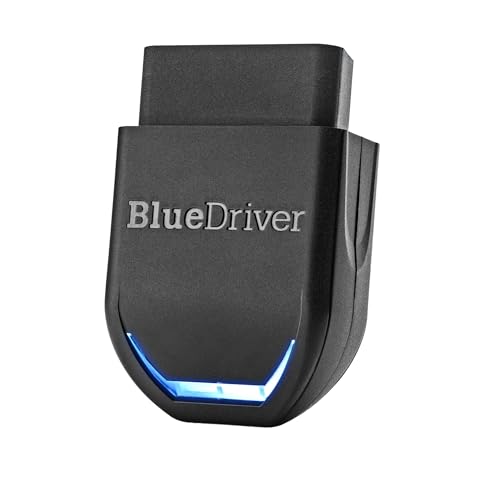
This is a compact, vehicle-powered Bluetooth Low Energy reader that plugs into a vehicle diagnostic port and works through BlueDriver's iOS or Android app. It is intended to read standard engine fault information, live data, freeze-frame information, readiness status, and some manufacturer-specific modules. The manufacturer states that there are no subscription fees and that basic functions can be used as a guest without an account. The maker publishes a useful compatibility breakdown for enhanced ABS, airbag, transmission, and TPMS coverage, including model-year limits for several brands. That is more specific than a blanket all-vehicle claim, although exact coverage should still be checked before connection. Its radio hardware has a traceable FCC authorization. I did not locate a product-specific ISO/IEC 17025 laboratory report comparing its diagnostic results with identified faults and professional reference tools.
This product suits a North American gasoline-vehicle owner who wants a phone-based way to read engine codes, view live data, check readiness before an emissions inspection, and save diagnostic reports. It is especially relevant for a DIY user whose exact vehicle appears in BlueDriver's published enhanced-diagnostics coverage and who wants app-guided explanations rather than a standalone handheld tool. It also fits users who prefer to scan as a guest and keep scan history on their phone, rather than creating an online account.
It is not for a technician or safety-critical repairer who needs independently validated diagnostic accuracy, documented bidirectional commands, calibrations, relearns, programming, or vehicle-specific service procedures. It is also unsuitable for buyers who assume every 1996-and-newer vehicle receives ABS, airbag, TPMS, or transmission coverage. Do not use code clearing as a repair substitute or immediately before an emissions inspection. Clearing codes resets readiness monitors and can conceal information needed for proper diagnosis.
The main safety positive is that this is a passive diagnostic reader, not a charger or programming device, and its Bluetooth transmitter has a traceable FCC authorization. The manufacturer provides connection steps and model-specific ignition guidance for some clearing operations. Its support material also correctly warns that clearing trouble codes resets emissions-monitor readiness, and that a recurring code requires repair rather than repeated clearing. The companion app may collect device identifiers, product-interaction data, crash diagnostics, and support content that Apple lists as not linked to identity. BlueDriver says guest use is available and says stored data is encrypted, but the public materials reviewed do not provide enough detail to independently assess pairing security, update signing, or vulnerability handling. No relevant recall or enforcement action was located in the searched U.S. databases. No take-back program was located, so the device should be sent to an R2 or e-Stewards certified electronics recycler at end of life.
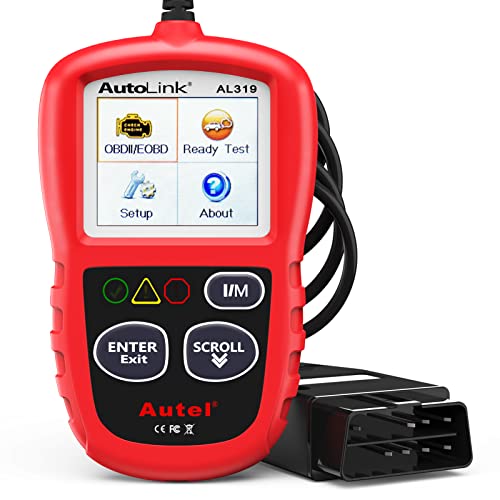
The Autel AL319 is a compact, wired OBD-II and CAN code reader that plugs into a vehicle’s 16-pin diagnostic connector and draws 8 to 18 V from the vehicle. Autel specifies a 220 by 176 color display, built-in speaker and LED readiness indicators, with a listed body size of 4.61 by 2.83 by 0.71 inches. It does not use Bluetooth, Wi-Fi, a phone app, or an external charger. According to Autel’s product documentation, it reads stored, pending and permanent powertrain codes, freeze-frame data, live PCM data, VIN-related information and emissions readiness on OBD-II-compliant vehicles. The manual provides useful limits: clearing codes also clears freeze-frame and manufacturer-specific data, resets readiness monitors, and does not fix an underlying fault. Independent reviews describe successful basic code retrieval, but no product-specific ISO/IEC 17025 laboratory comparison against identified vehicle faults and reference tools was located.
This is suited to a driver or home mechanic with an OBD-II-compliant car or light truck who wants a wired, screen-based way to inspect a check-engine light, record generic powertrain codes, view basic live values, and check readiness before an emissions inspection. It fits people who can use the result as a starting point, preserve codes and freeze-frame data before clearing anything, and consult vehicle-specific service information or a technician for the repair diagnosis. Its compact size also suits occasional glove-box use.
It is not for technicians or owners who need confirmed coverage of ABS, airbag, body, hybrid, electric-drive, TPMS, battery-registration, active tests, calibrations, coding, or module programming. It is also unsuitable for non-OBD-II vehicles, heavy-duty applications outside its documented scope, or anyone needing independently accredited proof that readings match a reference scan tool on a particular vehicle. Do not operate it while driving, and do not clear codes immediately before an emissions inspection or before documenting the fault.
The main safety positive is that this is a wired reader with no documented Bluetooth or Wi-Fi radio, companion app, cloud account, or supplied AC charger. That reduces radio-compliance questions and avoids app-based collection of VIN, location, and driving data during normal use. Autel’s manual includes practical vehicle-work warnings, including ventilation, eye protection, securing the vehicle, avoiding hot or moving parts, and not connecting or disconnecting test equipment with ignition on or the engine running. Its code-clearing instructions are unusually important for emissions integrity. The manual says clearing codes resets readiness monitors and does not remove a continuing fault. EPA guidance likewise explains that cleared or unset readiness monitors can make inspection results indeterminate or lead to rejection. No product-specific U.S. recall, safety warning, or enforcement action was located in the checked public recall sources, but no independent electrical-environmental test report or manufacturer electronics take-back and recycling route was located either. The product can be updated by PC, which may extend usefulness, although Autel does not state a support end date.


